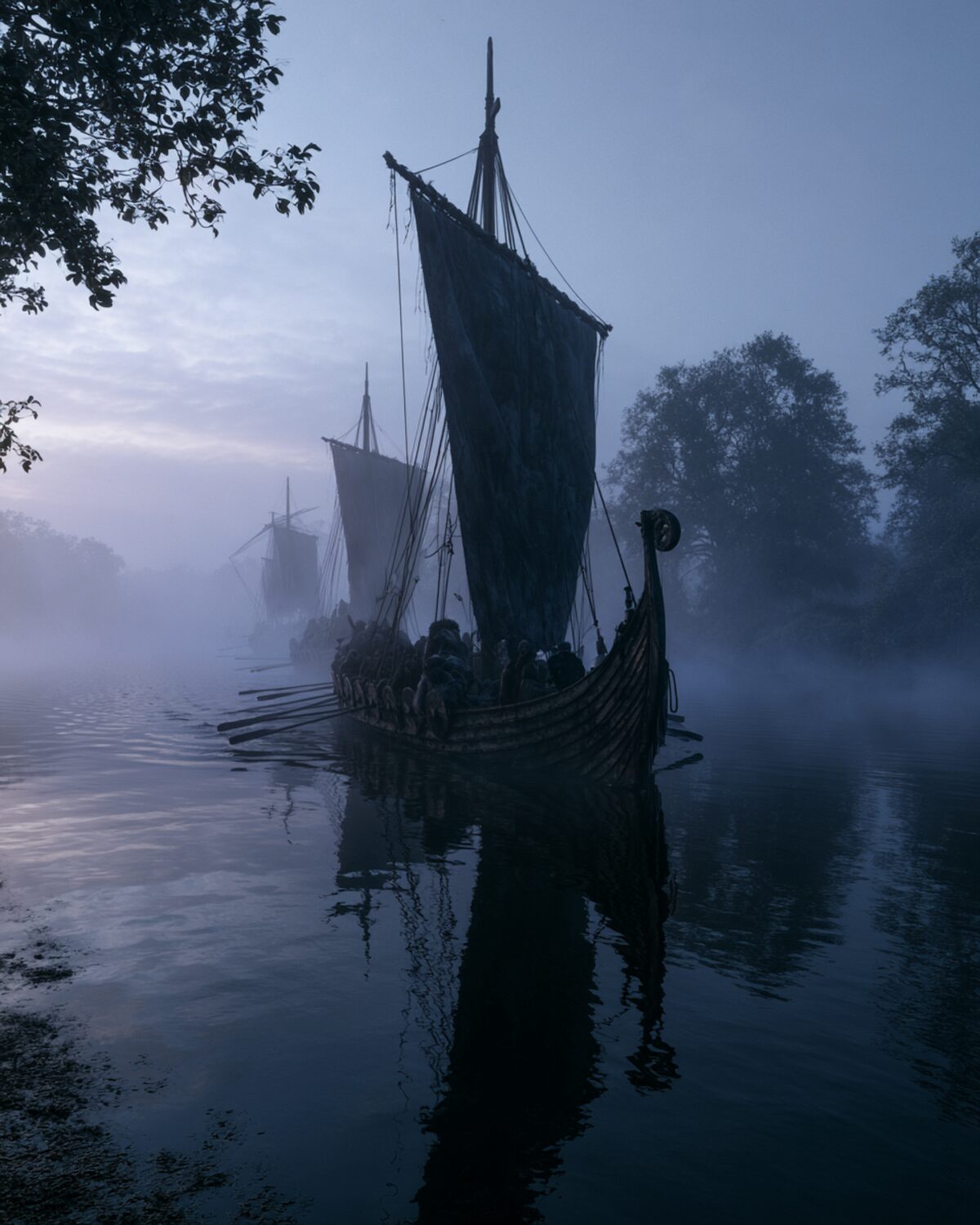
 Between Oder and Vistula lived a Slavic people "by the sea" – with rich trading towns, the three-headed god Triglav and a conversion that took two missionary journeys.
Their name says where they lived: Pomeranians – "those by the sea" (Slavic po morje). Between the Oder and the Vistula, on the southern Baltic coast, sat this West Slavic people who gave the land of Pomerania its name. Unlike the inland tribes, the Pomeranians lived much from the sea and long-distance trade – and clung to their old faith especially long.
The Pomeranians held some of the richest trading places of the southern Baltic. Wolin (Jumne) at the mouth of the Oder was a great town of long-distance trade where Slavs, Scandinavians and merchants from all over met – often linked with the legendary Jomsborg of the Vikings (see Wolin). To these came Stettin (Szczecin) on the Oder and Kolberg. These towns made the Pomeranians rich and self-confident – and for missionaries at once alluring and dangerous.
As with the Rani, at the centre of Pomeranian belief stood a many-headed god: Triglav ("three-head"). His statues in Stettin and Wolin had three heads, whose eyes and mouth were veiled with a golden cloth – a sign that the god ruled over heaven, earth and underworld and would not see the sins of men. To Triglav a black sacred horse was dedicated, led for the oracle over crossed spears as among Rani and Liutizi. The cult is recorded with astonishing precision in the lives of Otto of Bamberg.
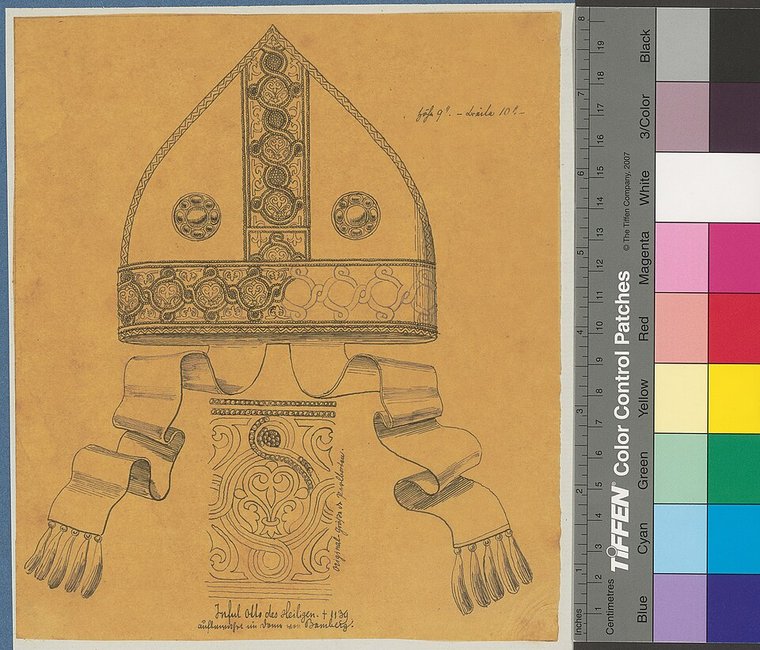
The Christianisation of Pomerania succeeded only after several attempts. After the Polish duke Bolesław III had subdued the Pomeranians, bishop Otto of Bamberg travelled into the land in 1124/25 and again in 1128. Unlike earlier missionaries he came with a large retinue, gifts and patience – and had success: Duke Wartislaw I and many towns accepted the new faith, and the Triglav temples were destroyed. The three lives of Otto (by Ebo, Herbord and a Prüfening monk) are our main source – at once a vivid account and a pious missionary legend.
Pomerania lay in the force-field of three powers: the Polish Piasts, the Danish kings and the German empire. Duke Wartislaw founded the House of Griffins, which would rule Pomerania until 1637 – a dynasty of Slavic descent, much like in Mecklenburg. Over the centuries the land became Christian and partly German in character, yet remained a duchy of its own. So Pomeranian independence ended not abruptly but in a long transition.
The name Pomerania (Polish Pomorze) keeps the Pomeranians alive to this day; the Kashubians in eastern Pomerania still speak a West Slavic language and are regarded as their heirs. Trading towns like Stettin and the finds of Wolin tell of a time when the southern Baltic was a Slavic-Scandinavian contact zone. For us the Pomeranians round out the picture: the "Viking north" was never only Scandinavian, but a web of Norsemen and Slavs on a shared sea.
The Pomeranians were a people of the coast. Their towns lived from Baltic trade: amber, fish (especially herring), salt, grain and slaves passed through their harbours, along with silver and luxury goods from across the Baltic. Wolin at the mouth of the Oder was one of the largest towns of the north in the 10th/11th century, a melting pot of Slavs, Scandinavians and distant merchants. This openness made the Pomeranians wealthy – and explains at once why they resisted conversion so long: their riches and their gods belonged inseparably together.
Otto of Bamberg was not the first to try. An earlier missionary, the Spaniard Bernard, had failed at Wolin: coming barefoot and poor, he was mocked by the Pomeranians – a rich god, they scoffed, does not send beggars. Otto learned from this. In 1124 he came with wagons full of gifts, priestly splendour and the backing of the Polish duke – and was taken seriously. This episode is more than an anecdote: it shows that mission on the Baltic was also a matter of power, prestige and diplomacy, not only of faith. Only the second journey of 1128 secured the success for good.
From Wartislaw's duchy grew the House of Griffins, which ruled Pomerania for over 500 years until 1637 – like in Mecklenburg a dynasty of Slavic origin that became part of the empire without denying its descent. The heraldic beast, the griffin, became the emblem of Pomerania that is still valid today. Over the centuries Slavic and German populations merged, yet in eastern Pomerania the Kashubians held on as a West Slavic language island – living heirs of the old Pomeranians. So Pomerania, like Mecklenburg and Brandenburg, is a land on a Slavic foundation.
For the picture of the Viking Age the Pomeranians are indispensable: on the southern Baltic, Norsemen and Slavs met not as strangers but as neighbours, trading partners and sometimes foes. Wolin, Hedeby and Birka belonged to the same network. Whoever thinks of the north as merely "Scandinavian" overlooks half the story – the other half is Slavic, and it begins on the Pomeranian shore.
Almost all written sources on the Slavic history of the north come from their opponents: from German and Danish clerics such as Thietmar of Merseburg, Adam of Bremen, Helmold of Bosau or Saxo Grammaticus. They wrote from a Christian view about "pagans" – often at second hand, with a clear message. That is why archaeology matters so much: ringforts, pottery, silver hoards and grave finds correct and complement the skewed picture of the chronicles. Only both together give an honest picture. This source-criticism matters to us – we cleanly separate what is documented from what remains interpretation, and invent nothing.
"The image of Triglav had three heads; its eyes and lips, however, were veiled with a golden band."after the Life of Otto of Bamberg (Herbord, public domain, own translation)
Wolin & Jomsborg · The Rani (Rügen) · The Jomsvikings.
All History & Finds articles →
King Hákon the Good, a son of Harald Fairhair, fought all his life against the sons of his brother Eric Bloodaxe. Two …
Read more →