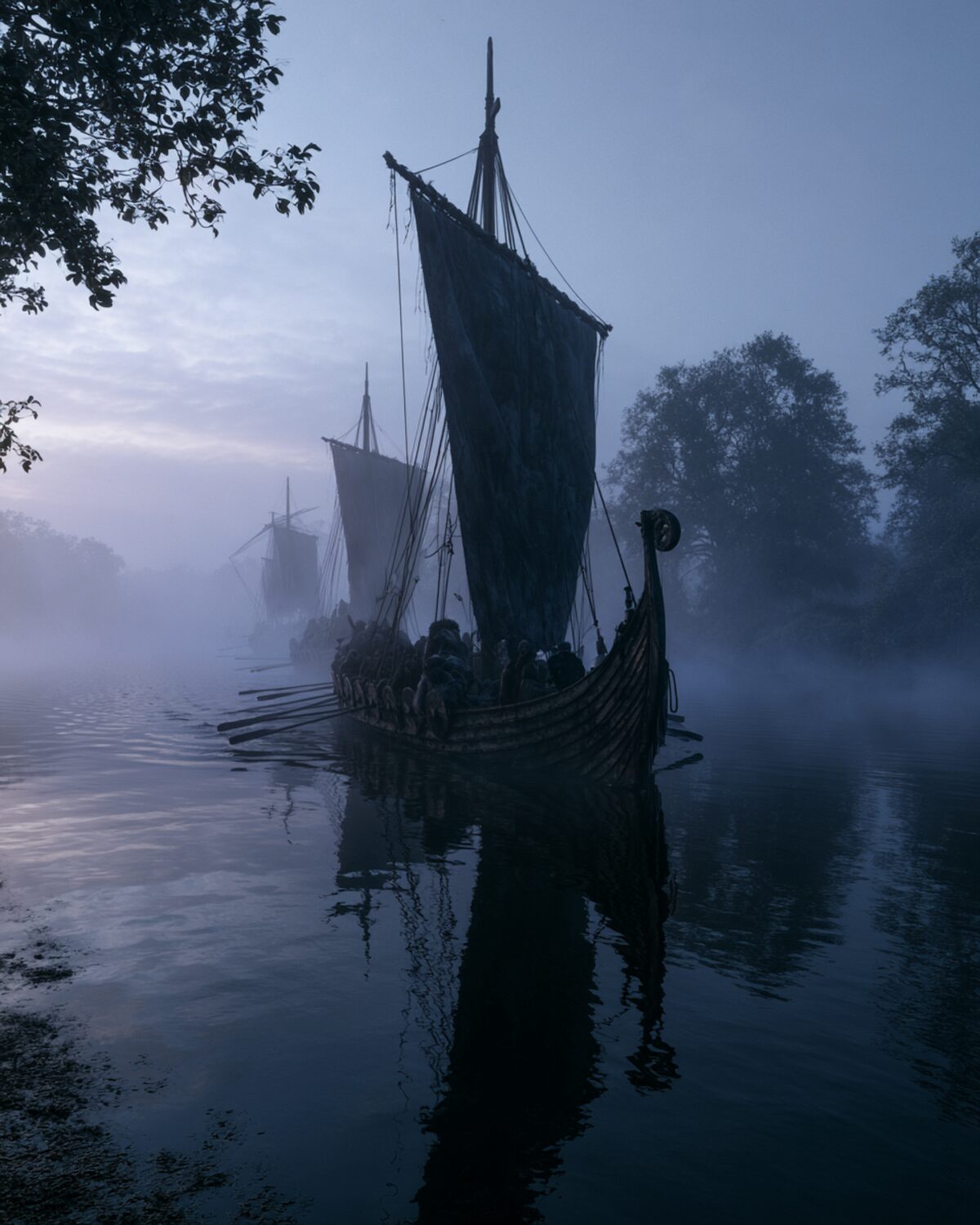
 On Rügen, above the Baltic, throned the mightiest sanctuary of all the Slavs – the temple-fortress of Arkona with the four-headed god Svantevit, whose oracle even Christian kings feared.
Of all the Elbe and Baltic Slavs, the Rani (Rujani) were the most headstrong: an island people on Rügen, feared seafarers and sea-raiders – and keepers of the holiest place in the entire Slavic world. Their power rested not only on ships and swords but on a god.
The Rani ruled Rügen and the neighbouring coast. Like the Vikings they lived largely from the sea: from fishing, from trade – and from raids against the Danish coasts and islands. Their fleets made them a power that Danes, Saxons and Poles had to reckon with. While other Slavic leagues had long been Christian or subjugated, the Rani clung stubbornly to their independence and their old faith.
At the northern tip of Rügen, on the chalk cliffs of Cape Arkona dropping steeply into the sea, lay their holy fortress – the Jaromarsburg. Protected by the sea and a huge rampart, it held the temple of the god Svantevit. Pilgrims and gifts streamed here from all Slavic lands; the temple treasure was so rich that Arkona was at once sanctuary, treasury and centre of power. The Danish chronicler Saxo Grammaticus described the place and its cult as precisely as almost no other pagan sanctuary of the north.
Svantevit was a god with four heads that looked in all directions of the sky – a lord of war and harvest. In one hand his wooden statue held a drinking horn, which the priest refilled with wine each year: if it was emptied by the next feast, a bad year threatened; if full, it promised a rich harvest. To the god belonged a white sacred horse, which none but the priest might ride. Before every campaign it was led over crossed spears: if it stepped first with the right foot, the omen was good. So Svantevit was war-lord and farmers' god in one – and his oracle bound the whole people to Arkona.
Arkona's fame reached far beyond Rügen. According to Saxo, even foreign, indeed Christian rulers sent gifts to Svantevit to keep his oracle favourable – so great was the fear of his power. The temple held its own lands, a standing force of 300 mounted warriors and a share of all plunder. No Slavic sanctuary was richer or more respected; after the decline of Rethra, Arkona was the last great centre of Slavic paganism on the Baltic.
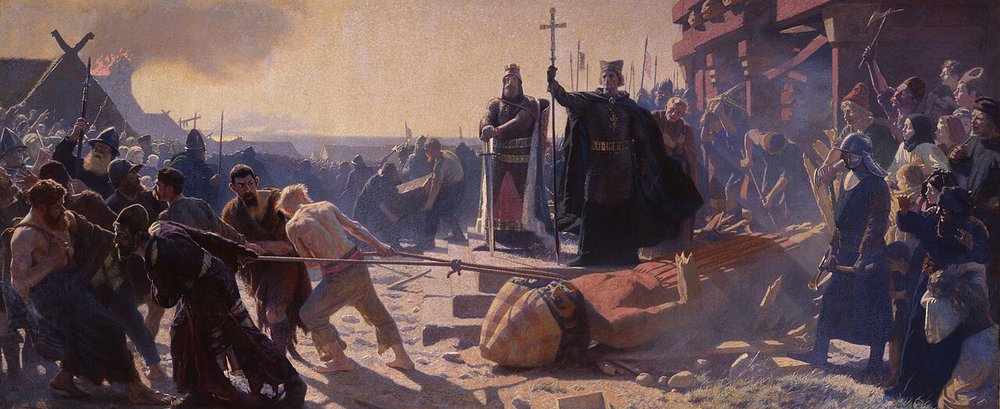
The end came from the sea. In 1168 the Danish king Waldemar I landed on Rügen with his army and bishop Absalon and besieged Arkona. When the wooden bulwark caught fire, the Rani surrendered. Absalon had the temple torn down and the huge Svantevit statue pulled down with ropes, hacked apart and burned; the temple treasure fell to the Danes. Prince Jaromar submitted, accepted the Christian faith and became a Danish vassal. With Arkona fell the last great sanctuary of the Baltic Slavs – a date often taken as the end of Slavic paganism in the north.
The Rani did not vanish at once, but their independence was broken. Over the following centuries Rügen became Christian and gradually Germanised; the island's Slavic tongue ("Rugian") died out late in the Middle Ages. What remains is the island's name, Slavic place names and the fame of Cape Arkona, where the ramparts of the old temple-fortress still lie above the sea – a silent witness to the age when the mightiest god of the Slavs throned here.
The power of the Rani rested on their ships. Like the Vikings they were feared sea-raiders who fell upon Danish coasts and islands, plundered churches and sold captives as slaves. For decades Danish territories effectively paid the Rani tribute to be left in peace. This sea power explains why Denmark of all realms – itself a descendant of the Vikings – finally made the greatest effort to subdue Rügen: it was not only about faith but about the safety of its own coasts.
Arkona was rich. Saxo reports that a third of all war booty fell to the temple, along with dues from all Slavic lands and gifts from foreign rulers. From this wealth Svantevit maintained his own standing force of 300 mounted warriors, whose plunder belonged entirely to the god. The priest of Svantevit counted as mightier than the prince – a rare case in medieval Europe where spiritual power outshone the worldly. Arkona was thus not only a sanctuary but the real state of the Rani.
Svantevit was the greatest but not the only god of the Rani. In the fort of Charenza (Garz), according to Saxo, further many-headed gods were worshipped: Rugievit with seven faces, Porevit and Porenut. This many-headedness – faces in all directions – seems to have been a hallmark of the West Slavic image of the gods, as the Zbruch find and the reports about Rethra also show. After the fall of Arkona, Bishop Absalon had these images destroyed too.
Of the temple-fortress the huge ramparts at the northern tip of Rügen survive to this day. Part of the former fortress area, however, has long since collapsed into the sea – the chalk cliffs of Cape Arkona are still eroding. The archaeologist Carl Schuchhardt excavated the site in 1921 and tried to reconstruct temple and rampart. So Arkona remains a place where history, legend and landscape interlock: the last great mountain of the gods of the Baltic Slavs, high above the sea.
With the fall of Arkona not only a cult ended but a whole epoch: Rügen was the last pagan bastion on the southern Baltic. What happened here in 1168 was for the Slavic world as decisive as the felling of the Donar oak for the Germani – the violent end of an old order. All the more important, then, to remember this heritage honestly and with dignity.
"With four necks and as many heads the statue seemed to rise, two breasts turned to the front, two to the back."after Saxo Grammaticus, Gesta Danorum (public domain, own translation)
The Abodrites · The Liutizi · The Jomsvikings.
All History & Finds articles →
King Hákon the Good, a son of Harald Fairhair, fought all his life against the sons of his brother Eric Bloodaxe. Two …
Read more →Long before there were Vikings in the sense of the sagas, there was already a town in south-west Jutland: Ribe, founded …
Read more →