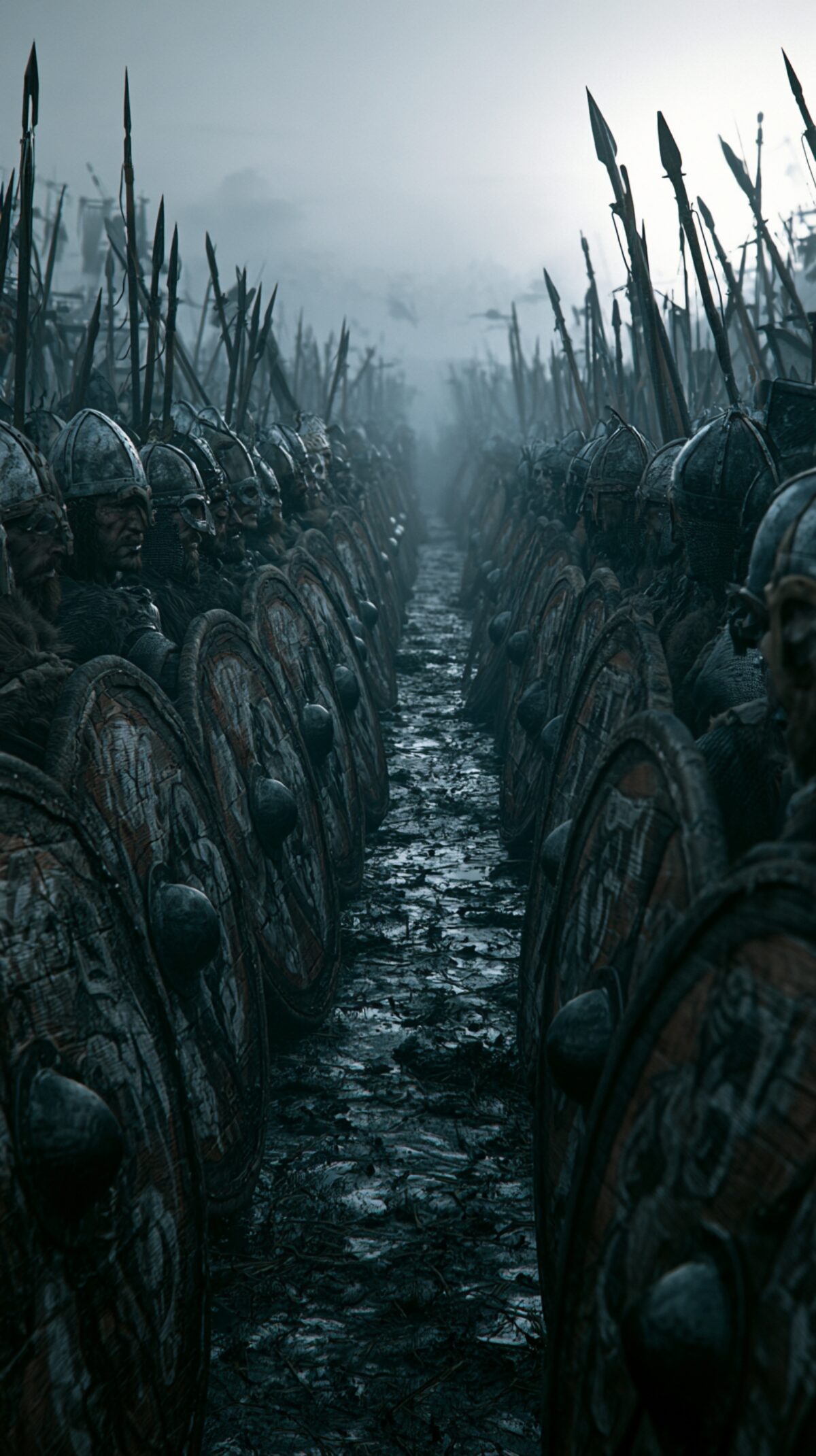
 Where Mecklenburg and eastern Holstein lie today, the mightiest Slavic federation of the west once ruled – allies of Charlemagne and stubborn foes of the Saxon dukes.
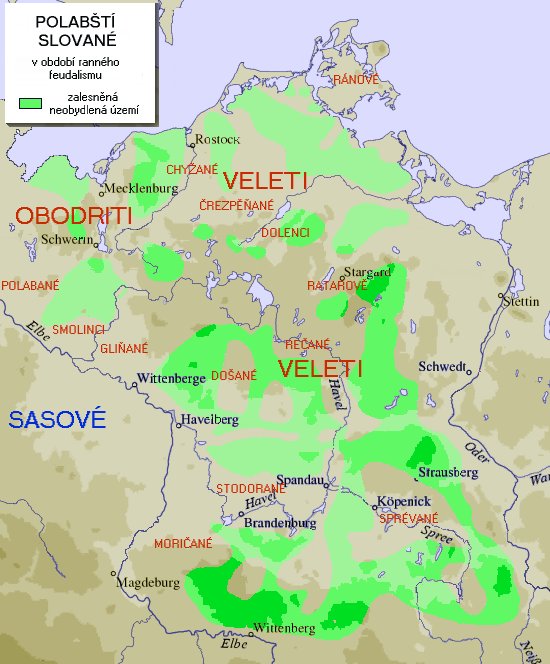
Between the 7th and 12th centuries, the land between the lower Elbe and the Baltic was not Germanic but Slavic. The most powerful federation there were the Abodrites (Obodrites), an alliance of several tribes in today's Mecklenburg and eastern Holstein. They are a piece of German history often forgotten – yet whole regions still bear their name and legacy.
"Abodrites" was a collective name. It included the Abodrites proper around the Mecklenburg, the Wagri in eastern Holstein, the Polabians on the Elbe and the Warnabi. Their German neighbours lumped them together as "Wends". Their world was one of countless ringfort strongholds, fishing villages and trading places along the coast and rivers – a rural, warlike society led by princes (knezes), but without a fixed realm in the modern sense.
Unexpectedly, the Abodrites were often allies of the Franks. In Charlemagne's Saxon wars they fought on the Frankish side against the rebellious Saxons – and were rewarded: after the subjugation of the land north of the Elbe, they received parts of Saxon territory. The Frankish annals name their prince Drasco (Thrasco). The alliance came at a high price: in 808 the Danish king Godfred invaded, ravaged the Abodrite land and destroyed their flourishing trading place Reric – a blow that also launched Hedeby's rise. Drasco was murdered in 809 at Godfred's command.
The Abodrites sat on one of the most important trade axes of the Viking Age. Reric – by today's reading probably the site of Groß Strömkendorf near Wismar – was an international emporium where Slavic, Scandinavian and Frisian merchants exchanged goods. That a Danish king sent a whole fleet to destroy this market and resettle its merchants at Hedeby shows how significant Abodrite trade was. Later, places like Old Lübeck (Liubice) took over this role – the nucleus of later Lübeck.
The heart of the land was the Mecklenburg ("Michelenburg", the great fort) near Wismar – a huge ringwork that gave the later state its name. From here the princely house of the Nakonids ruled in the 11th century. A second seat of power was Starigard (Oldenburg in Holstein), the fortress of the Wagri. These forts were not only defences but princely seats, market places and cult sites in one.
Abodrite history is a constant struggle between adaptation and resistance. Prince Gottschalk promoted Christianity in the 11th century – and was slain in the pagan revolt of 1066; the heathen Kruto seized power. Only Gottschalk's son Henry restored Christian rule. The final chapter belongs to Prince Niklot, who resisted Henry the Lion and the Wendish Crusade of 1147 to the last and fell in battle in 1160. His son Pribislav, however, submitted, became a Christian and imperial prince – and founded the house of Mecklenburg, a dynasty of Slavic descent that ruled until 1918. So Abodrite independence ended not in extinction but in fusion.
Like all Elbe Slavs, the Abodrites were long pagan. The chronicler Helmold of Bosau describes their sacred groves, idols and temples, such as the cult of Prove near Oldenburg or of Radegast/Svarožić. Trees and springs were held sacred, priests read the lot and the sacred horse. Much of this we know only from the hostile outside view of Christian chroniclers – a problem Slavic religion shares with Germanic.
The Abodrites did not vanish – they merged. Their name lives on in the land of Mecklenburg and its princely house; countless place names ending in -ow, -itz and -in (Bützow, Malchow, Teterow) are of Slavic origin. And in Lusatia the Sorbs keep a Slavic language and culture alive to this day – the last direct heirs of that world which once stretched from the Elbe to the Baltic.
The Abodrites lived from farming, cattle and fishing, but above all from trade. From their workshops comes the typical Slavic pottery (Feldberg, Fresendorf and Menkendorf ware) that archaeologists still use as a dating marker. Honey and wax, furs, grain and – as with all Baltic peoples of the time – slaves passed through their markets. Silver came into the land as Arabic dirhams and western coins; hacksilver hoards prove that the same weight-money economy prevailed here as among the Vikings. The Abodrites were thus no isolated "barbarian people" but part of the great Baltic trade network from Hedeby through Birka to Novgorod.
The most striking legacy of the Abodrites are their ringforts. Hundreds of such sites still mark the landscape of Mecklenburg and eastern Holstein – circular ramparts of wood, earth and stone that served as princely seat, refuge and cult place. The best-studied is the site of Groß Raden, where archaeologists uncovered, besides houses and workshops, a building with carved planks interpreted as a temple. Such finds give a tangible face to what the chroniclers only hint at.
A turning point was the Wendish Crusade of 1147 – a papally sanctioned crusade not to the Holy Land but against the pagan neighbours in the east. Saxon and Danish armies marched against the Abodrites under Niklot, who answered with a pre-emptive strike by sea. Militarily the campaign ended without a clear victory, but it heralded the end: from now on conquest, Christianisation and German eastward settlement went hand in hand. Within a few decades the Slavic land became the Christian principality of Mecklenburg.
The position of the Abodrites was a constant balancing act between three powers: the Danish kingdom to the north, the Saxon dukes to the west and the Polish Piasts to the east. Now they allied with one against another, now they paid tribute, now they struck back. This in-between position made them for centuries an independent power on the Baltic – and explains at the same time why their land was finally ground up between the rising Christian realms. Anyone who wants to understand the history of northern Germany cannot pass over this Slavic chapter.
"The Abodrites, whom today we call Wends … were brave men and often loyal allies of the Franks."after Helmold of Bosau, Chronica Slavorum (public domain, own translation)
Reric · The Saxons · Viking traces in Germany.
