 In the south of Gaul, where the earth is red and the mountains held silver, sat the Ruteni. Their name lives on to this day in the region of Rouergue – and even travelled as far as Eastern Europe.
The Ruteni were a Celtic tribe of southern Gaul, in the highlands between the Massif Central and the valley of the Tarn – in the area of today's Aveyron department. Their chief town was Segodunum, today's Rodez. They belong to those tribes remarkable less for great battles than for their wealth, their name and their afterlife in the landscape.
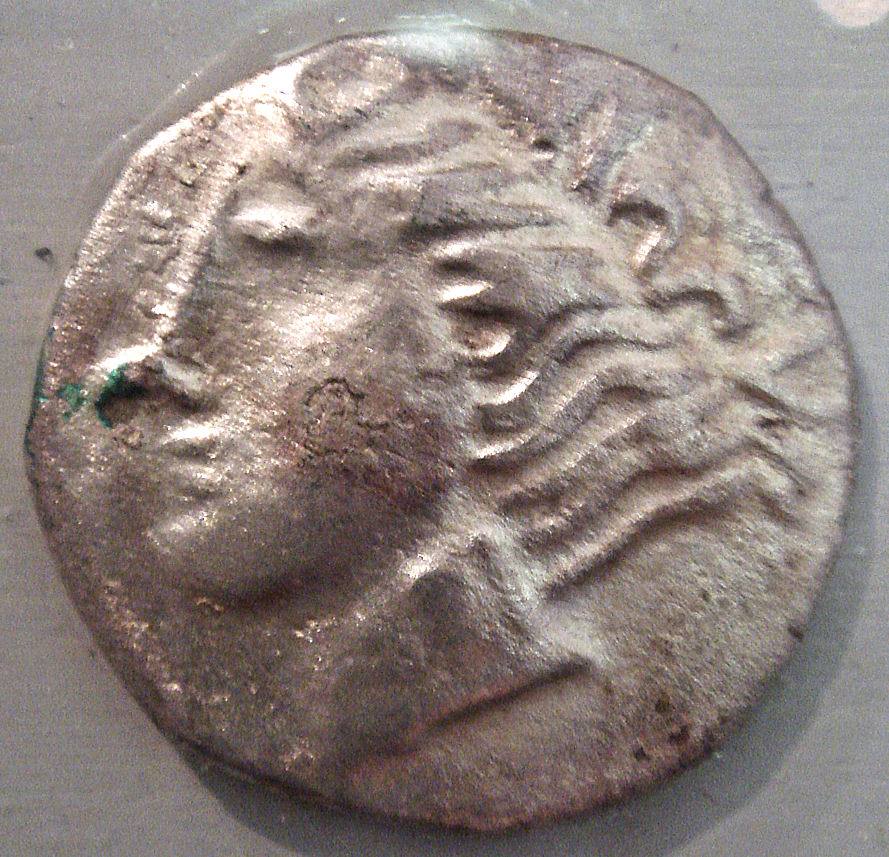
The land of the Ruteni was rough and mountainous, marked by high plateaus (the Causses), deeply cut river valleys and – strikingly – red earth that gives the soil of many areas its characteristic colour. The Ruteni practised stock-raising, farming in the valleys and, what distinguished them especially, mining. In their mountains lay silver deposits, and the region was later known for its silver. Wealth from the mountain made the tribe more important than its remote position suggests.
The Ruteni sat on an important frontier: part of their territory belonged early to the Roman province of Gallia Narbonensis (the "provincia rutenorum"), the other part lay in free Gaul. This divided position made them border-crossers between two worlds. Caesar mentions them several times in his account of the Gallic War – partly as provincials, partly as rebels. Their land was thus early and intensively bound to Rome.
In the great revolt of 52 BC the Ruteni joined the freedom struggle of Vercingetorix. Caesar names them among the peoples who supplied troops to the Gaulish levy. Like so many tribes they too had to acknowledge Roman rule after the defeat at Alesia. Their silver and their strategic position ensured, however, that the region did not grow poor under Rome but was woven into the network of the Gallo-Roman economy.
The chief town Segodunum ("victory fort" or "strong fortress") developed under Rome into a flourishing town and became the centre of the civitas Rutenorum. From the tribal name came the town name: "civitas Rutenorum" became, over the centuries, Rodez. So today's prefecture of the Aveyron still carries the name of its Celtic founding people – a model of how Gaulish tribal names live on in the French map.
Even more clearly the tribal name lives on in the historic region of Rouergue, which covers the territory of the old Ruteni and whose name derives directly from Rutenicum. Until the French Revolution the Rouergue was a province of its own; even today the name is alive in regional consciousness. So a Celtic mountain people became a region, a bishopric and an identity that outlasted the millennia.
With a people of the "red earth" the question is obvious whether the name itself means "red". Indeed Ruteni echoes Latin rutilus ("reddish"), and the strikingly red earth of the region has made this reading popular. Linguistically, however, the connection is not secured: Celtic tribal names often cannot be derived unambiguously, and the similarity could be chance. We keep it honest here: the red earth is real and formative, but the reading "the red ones" remains an attractive, unproven guess.
A curious footnote: in medieval Latin the name Rutheni became the learned term for the Ruthenians – the East Slavs of the Rus, the ancestors of Ukrainians and Belarusians. This had nothing to do with the Celtic Ruteni; medieval scholars simply took up an ancient name and transferred it to a quite different people. So a small Gaulish mountain tribe happens to bear the same Latin name as half the Slavic world – a fine example of the tangled nature of name-history.
The Ruteni are no people of great battles but one of wealth and afterlife. Their silver made them important, their border position between province and free Gaul interesting, and their name outlasted the millennia in Rodez and the Rouergue. For a complete picture of the Celtic world such tribes belong too: not only the warriors of Alesia, but also the miners, farmers and town-builders from whose names today's map has grown.
The Ruteni are reported above all by Caesar (De bello Gallico) and the geographer Strabo, plus later Roman sources on the provincial division. The picture is filled out by the archaeology of Rodez/Segodunum and by place-name research (Rodez, Rouergue). Where the texts judge or abbreviate, archaeology asks about the finds. We keep evidence and interpretation apart: position, silver and name-survival are well attested; the derivation "the red ones" remains a guess.
The divided position of the Ruteni had concrete consequences. The southern part, the Ruteni provinciales, belonged to the pacified province of Gallia Narbonensis and lived early on Roman lines; the northern part lay in the more restless free Gaul. Caesar therefore had to distinguish carefully which Ruteni he was dealing with. After the Gallic War both parts grew together, and the whole territory was administered as Roman. This double nature – half province, half free Gaul – makes the Ruteni an instructive example of how fluid Rome's borders really were.
The true wealth of the Ruteni lay in the ground. Their silver deposits bound the region into the money economy of the empire, and through the river valleys ran trade routes linking southern Gaul with the Massif Central. Under Rome, Segodunum and the smaller places flourished; villas, crafts and agriculture shaped the picture. The prosperity from mining and trade explains why the remote mountain region was by no means marginal in Roman times but a wealthy piece of the Gallo-Roman world.
After the end of Rome the civitas Rutenorum lived on as an ecclesiastical and secular unit. Rodez became an episcopal see, the Rouergue a county over which counts and the kings of France contended in the Middle Ages. So the old tribal division outlasted the centuries in a new form: the Celtic people of the Ruteni became a diocese, a county and finally a department – an unbroken thread from the Iron Age to the present.
"Vercingetorix sent the Ruteni to the neighbouring provincial tribes to win these too for the revolt."after Caesar, De bello Gallico VII (public domain, own translation)
The Arverni · The Salluvii · The Vocontii.
All History & Finds articles →
The Viking battle was no wild scramble but a hard struggle shield to shield. A look at tactics and weapons beyond the …
Read more →