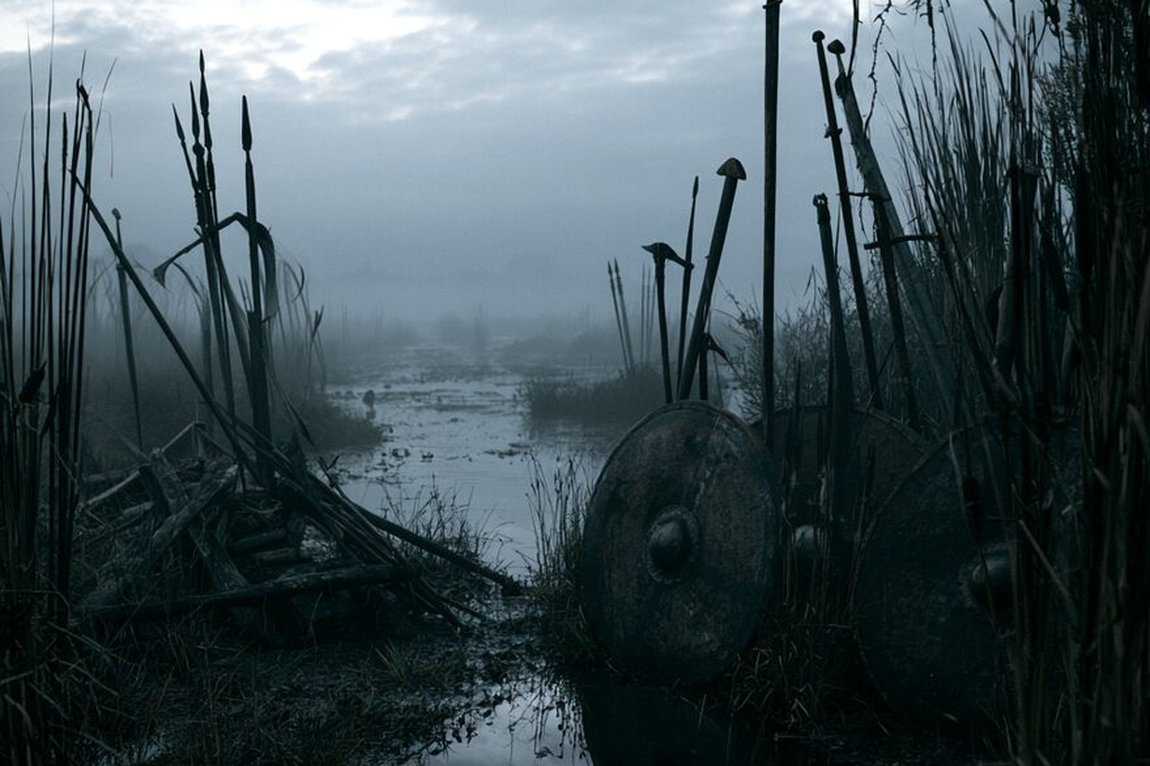
 In the middle of Germany a powerful Germanic kingdom arose after the Migration Period: that of the Thuringians. Its fall in 531 is among the most dramatic turns of early German history.
The Thuringians (Latin Thoringi, Toringi) were a Germanic people in the middle of Germany who built their own kingdom in the Migration Period. Unlike many tribes that appear only as a name in Tacitus, the Thuringians belong to the Germanic peoples who formed a real state power – and whose name still bears a whole German federal state today.
The origin of the Thuringians is disputed. They are often connected with the Hermunduri, an Elbe-Germanic tribe that Tacitus already knew in the 1st century and that sat in the same central-German area. Whether the Thuringians descended directly from the Hermunduri or were a new confederation of several groups cannot be said for certain. What is sure: in the 4th and 5th centuries a powerful people appears with the Thuringians between the Harz, the Werra and the Elbe.
At the height of its power the Thuringian realm reached far beyond today's Thuringia – north to the borders of the Saxons, south to the Alemanni and Bavarians. The Thuringians were a power factor between the great realms of the Franks in the west and the Ostrogoths in Italy. King Bisinus (Basin) bound himself by marriage to other Germanic royal houses; his family was woven into the great dynastic politics of the Migration Period.
The Thuringians were famous for their horses and their cavalry. Even the later-recorded law book and the legendary tradition recall the importance of the horse in their culture. In an age when mounted warriors decided victory and defeat, that was an important power factor. The central-German plains offered good pasture – and the breeding of strong horses belonged to the backbone of Thuringian strength.
The end came quickly and brutally. Around 531 the Franks under the kings Theuderic and Chlothar allied with the Saxons against the Thuringian realm. In a decisive battle on the Unstrut the Thuringians were crushingly defeated. Their king Hermanafrid lost the realm; his land was divided between Franks and Saxons. Thus the independence of the Thuringian kingdom ended after only a few generations.
The fate of Hermanafrid is especially grim. Gregory of Tours reports that the Frankish king Theuderic invited the defeated Thuringian king to negotiations at Zülpich (Tolbiacum) – to the same town on the edge of the Eifel where Clovis had earlier defeated the Alemanni. There, according to tradition, Hermanafrid fell "by whoever's instigation" from the town wall to his death. Whether accident or murder, Gregory leaves open – but the message is clear: the end of the Thuringian king fell of all places in the Rhineland.
Out of the downfall rises a remarkable figure: Radegund, a Thuringian king's daughter who came to the Frankish court as war booty and was married to King Chlothar. She later fled the marriage, founded a convent in Poitiers and became, as Saint Radegund, one of the best-known women of the Frankish realm. Her life links the fallen Thuringia with the Christian culture of Gaul – a human epilogue to the political catastrophe.
Even after the end of the kingdom the Thuringians remained a people of their own with their own law. The "Law of the Thuringians" (Lex Thuringorum), recorded in Carolingian times around 802/803, hands down old Thuringian law – on wergild, inheritance and status differences. It shows that Thuringian identity outlasted the political downfall and that the Carolingians recognised the people as a legal community of its own. As with all leges, however: the text is younger than the world it describes and must be read carefully.
The most important thing the Thuringians left behind is their name. Out of the fallen kingdom grew a lasting region: the medieval landgraviate of Thuringia, later the state of Thuringia, which exists to this day. Hardly any other Germanic people of the Migration Period has carried its name so unbroken into the present. The Wartburg, the landgraves and the rich history of central Germany all stand on the foundation this early-fallen people laid.
The Thuringians show the whole drama of the Migration Period: the rise of a Germanic kingdom in the middle of Europe, its role in the game of the great powers, the sudden downfall through an alliance of neighbours and the survival in law, legend and regional name. For us the Rhineland connection is also remarkable: the last Thuringian king met his end at Zülpich, only a few kilometres from our home.
The most important source is Gregory of Tours (History of the Franks, 6th c.), plus the Lex Thuringorum and scattered notices in other Frankish authors. All these sources are Frankish or Christian and see the Thuringians from outside and mostly as the defeated. The archaeology of central Germany (rich graves of the Migration Period, such as the "Thuringian" find group) fills out the picture. We keep evidence and interpretation apart: realm, Unstrut battle and name-survival are well attested; the descent from the Hermunduri remains hypothesis.
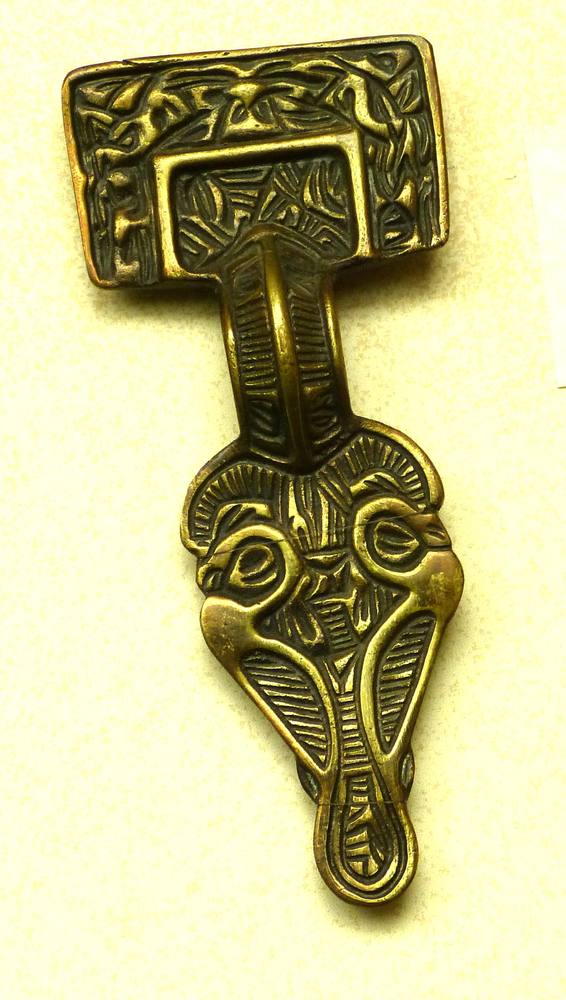
The archaeology of central Germany has worked out a distinct "Thuringian" find group for the Migration Period: rich inhumation graves with artful bow brooches, beads, weapons and horse harness. The women's graves in particular show elaborate costume jewellery pointing to far-reaching contacts as far as Scandinavia and the Frankish realm. These finds confirm the picture of the written sources: a prosperous, well-connected people with a self-assured upper class. The horse burials also underline the recorded importance of Thuringian cavalry.
After 531 the Thuringians did not vanish, but their independence was gone. Their land became Frankish borderland against Saxons and Slavs; later dukes ruled here, then the famous landgraves of Thuringia with their seat on the Wartburg. From the landgrave era a long line runs through the age of the Reformation (Luther on the Wartburg) to today's federal state. So an early-fallen Germanic kingdom became one of the most history-laden regions of Germany – but the name remained the same over a millennium and a half.
"But Hermanafrid, while he stood on the wall and spoke with Theuderic, fell down by whoever's hand and died."after Gregory of Tours, Histories III (public domain, own translation)
The Hermunduri · Battle of Zülpich · The Franks.
All History & Finds articles →
A king raises a stone for his wife and calls her on it “Denmark's adornment.” A son sets both parents an even greater …
Read more →A lake named after a god. A lord’s hall the size of a church. Weapons sunk in the water, and a gold ring heavier than …
Read more →Its name means “the god's lake.” On the shore of Tissø on the Danish island of Zealand lay, for centuries, one of the …
Read more →Sometimes a whole world of gods sits on a thumb-sized piece of bronze. The four Torslunda dies from the island of Öland …
Read more →