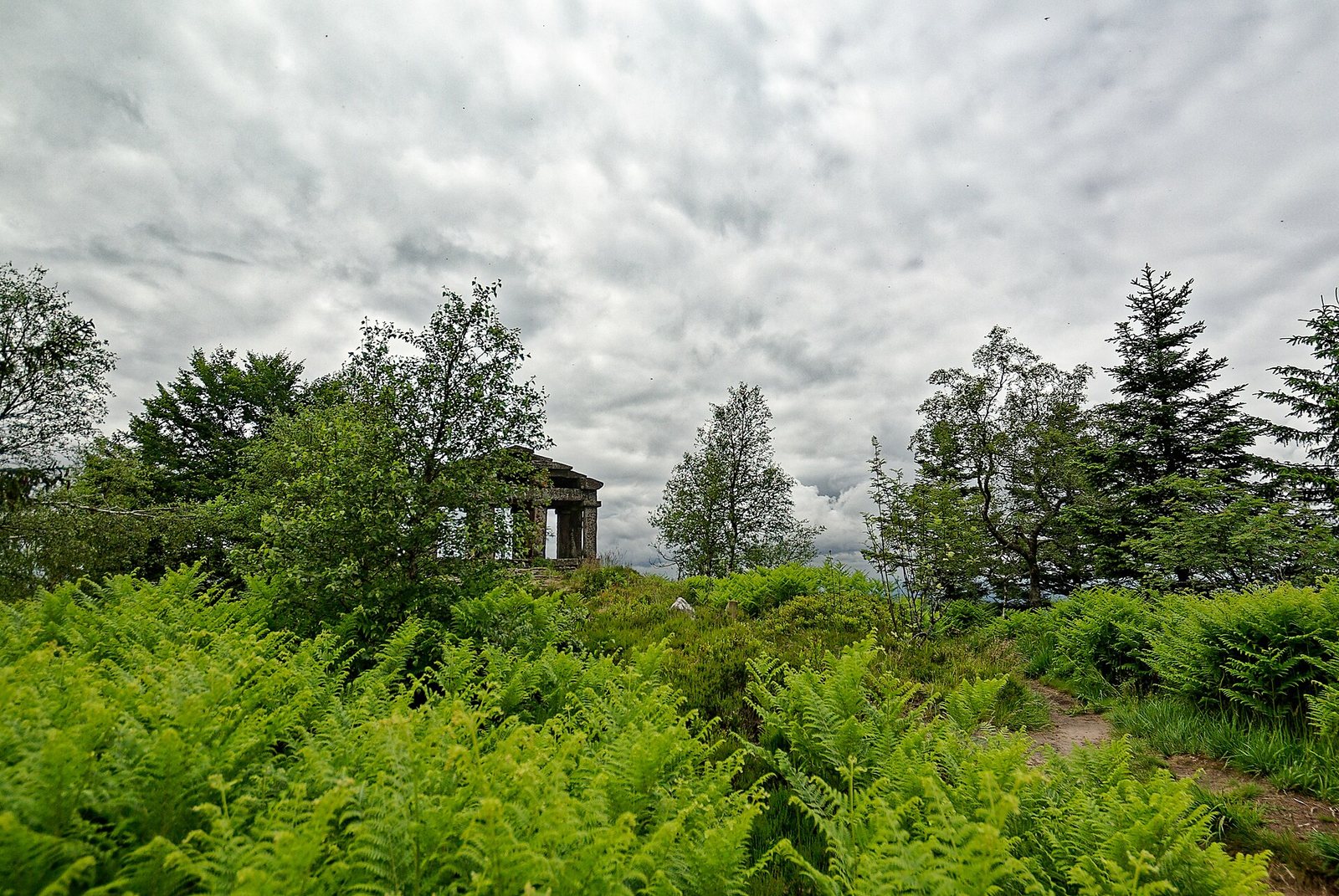
The Triboci were a Germanic tribe on the left Upper Rhine, in the area of today's Alsace around Strasbourg. Tacitus names them together with the Nemetes and Vangiones as Germanic Rhine peoples.
"The Vangiones, Triboci and Nemetes, without doubt Germani, inhabit the bank of the Rhine."after Tacitus, Germania 28 (public domain, own translation)
The Triboci were a Germanic tribe on the Upper Rhine, in today's Alsace. Like their neighbours the Nemetes and Vangiones, they sat in a border zone where Germanic origin and Celtic-Roman culture mixed.
Caesar counts the Triboci among the peoples said to have crossed the Rhine into Gaul with the Suebian war-leader Ariovistus around 58 BC. After his defeat they stayed on the Upper Rhine and became part of the Roman frontier order.
Under Rome the Triboci formed a civitas with the chief town Brocomagus (Brumath). Their land was crossed by military roads, forts and country estates – a typical stretch of the heavily fortified Rhine frontier.
In the territory of the Triboci lay the Roman legionary camp of Argentorate, from which today's Strasbourg arose. Thus the small tribe links the early Germanic age with one of the most important cities on the Upper Rhine.
The Triboci are a prime example of the borderland on the Rhine: a Germanic people living on once Celtic soil, Romanised under Roman rule and yet preserving their own origin. Rhine and Vosges were no dividing line but a zone of mixture.
The Upper Rhine and Alsace belong to our wider home. At GLANZ & GRAVUR we like to tell the history of such Rhine peoples, because it shows how deeply the Germanic-Roman past is rooted in the Rhine landscape.
The Triboci belong to the Rhine-Germani trio. Continue with the Nemetes and Vangiones.

The Nemetes · The Vangiones · The Ubii · The Treveri · The Sugambri.
All History & Finds articles →
On a field south of Lund, where today only a small church stands, lay for almost a thousand years one of the largest …
Read more →No place stands more for the pagan cult of the North than Gamla Uppsala: the golden temple, the great sacrifice every …
Read more →