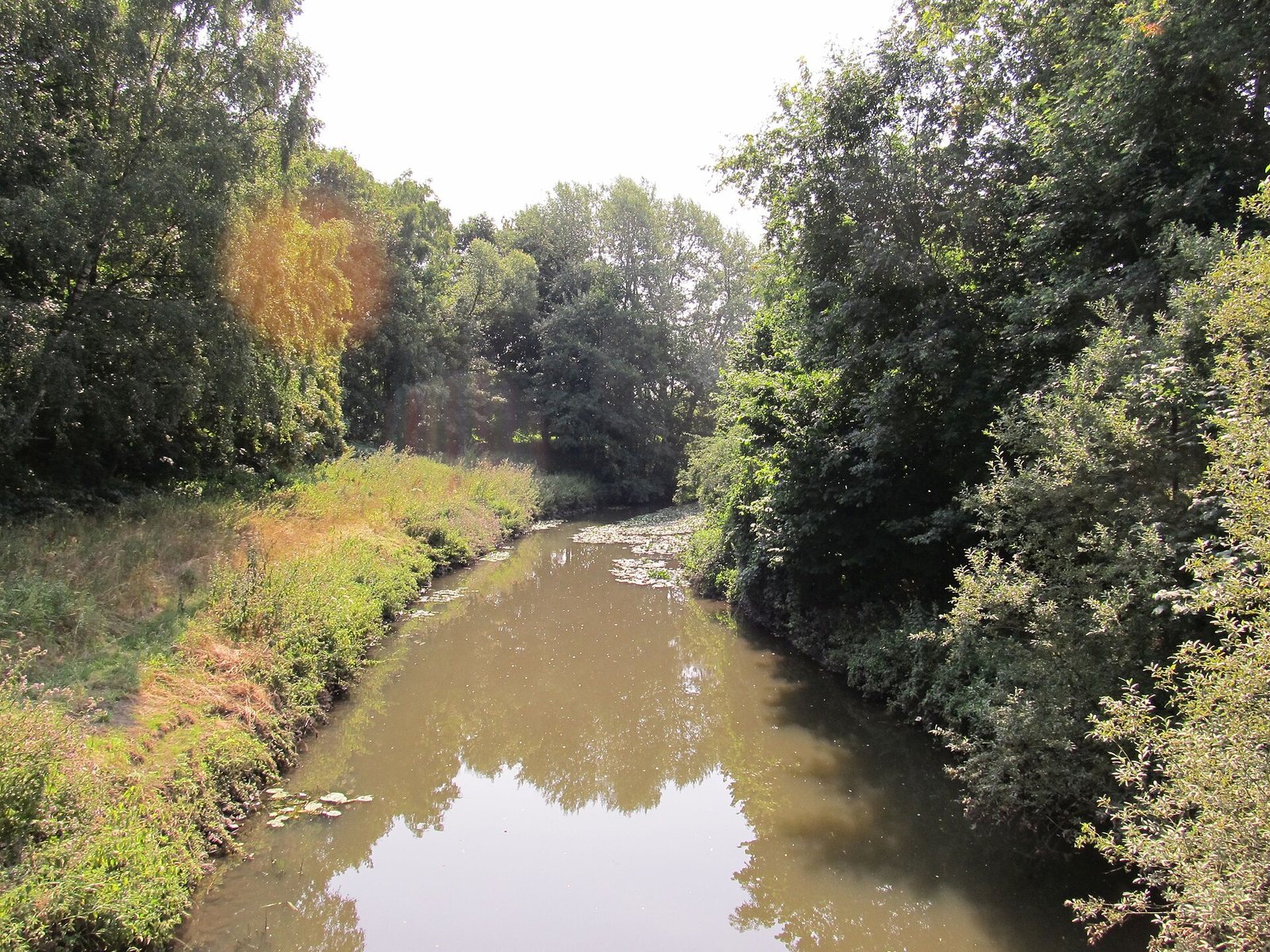
 In the northwest of Germania, probably on the river Hase, sat a small tribe known to Tacitus and Ptolemy: the Chasuarii. Their name may lead into the landscape to this day.
The Chasuarii were a small Germanic tribe in the northwest of free Germania. Their name is often connected with the river Hase in today's Emsland and Osnabrück region – "those dwelling on the Hase". Like many small Rhine-frontier and northwestern peoples, they are graspable in only a few ancient lines, but they belong to the dense web of Germanic tribes that Rome never permanently ruled.
The Chasuarii appear in Tacitus' "Germania" and in the geographer Ptolemy. Tacitus names them in connection with other northwestern tribes; Ptolemy records them on his map of Germania. The sources give little more. The common reading that their name contains that of the Hase (Germanic roughly *Hasu-warioz, "Hase-dwellers") fits the approximate position well but is not definitively secured linguistically – as so often with small tribes, the exact location remains an approximation.
The Chasuarii sat in the midst of better-known neighbours: the Chamavi, the Bructeri, the Tubantes and the Angrivarii. Tacitus describes this area as a world in motion, in which tribes displaced one another and shifted their seats. So he reports how the Chamavi and Angrivarii moved into the land of the almost destroyed Bructeri. In this coming and going, small tribes like the Chasuarii were at once vulnerable and mobile.
As a northwestern Germanic tribe, the Chasuarii lived far from the Roman province, in a landscape of river valleys, forests, heath and moor. Their everyday life was rural: stock-raising, simple farming, hunting and fishing. Roman goods reached even this marginal position through trade and booty, but Roman rule never took hold here. The Chasuarii belonged to that Germanic world east of the Rhine that Rome knew, named and occasionally fought, but never subdued.
Like almost all small northwestern tribes, the Chasuarii vanished as an independent people in the Migration Period. In the 3rd to 5th centuries the many individual tribes of the northwest merged into the great confederations of the Saxons and Franks. The land on the Hase later became Saxon and belonged in the Middle Ages to the Osnabrück/Emsland area. But the tribal name may have outlasted the political downfall – as part of river and landscape names.
Whether the name of the Chasuarii really lives on in the Hase and perhaps in the medieval "Hasegau" is an attractive but cautiously-to-be-handled question. River names are often older than the tribes that dwelt on them; it is therefore quite possible that the Chasuarii were named after the Hase and not the other way round. What is certain is only: the name of the tribe and that of the river belong together linguistically. Thus the Chasuarii join the many cases in which Germanic tribal and landscape names are closely interwoven.
The Germanic world did not consist of a few great peoples but of dozens of small tribes like the Chasuarii. Only in their sum do they form the picture of free Germania. Each had its own name, its own seats and its own self-assurance. To know them guards against the error that "the Germani" were a unified people. The Chasuarii stand for all those small peoples of the northwest that never founded a realm but shaped the Germanic landscape.
Precisely because so little is known about them, the Chasuarii are instructive: they show the limits of our knowledge. The ancient sources throw only a weak light on the Germanic northwest; much of what we say about small tribes remains approximation. An honest handling of this source situation – clearly separating what is documented from what remains conjecture – is more important than apparent certainty. The Chasuarii are a good example of how one can write honestly even about a "small" people.
Of the Chasuarii we know almost only through Tacitus (Germania) and Ptolemy (Geography) – both Greco-Roman, from a distance and at second hand. Archaeologically the tribe cannot be securely grasped; the connection to the Hase is provided by place-name research but remains uncertain. What is secure – the existence of the tribe and its approximate position in the northwest – we separate carefully from what remains interpretation: the exact location, the name derivation and the question of survival in the landscape name.
A common stumbling block is the confusion of the Chasuarii with the Chattuarii. The names are similar but mean different tribes: the Chattuarii were relatives of the Chatti and later settled on the Lower Rhine (Gau Hattuaria/Hetter), while the Chasuarii sat in the northwest on the Hase. Even in the ancient manuscripts the names were occasionally mixed up, and modern maps diverge from one another. Whoever writes about the Chasuarii must know this danger of confusion – a good example of how uncertain the tradition of small tribes is.
Besides Tacitus, the geographer Ptolemy (2nd c.) is the second source that names the Chasuarii. He arranged the peoples of Germania on a coordinate grid – a remarkable attempt, yet his data are often imprecise for the north and can only with difficulty be transferred to today's map. For the Chasuarii, Ptolemy at least confirms that they belonged to the known peoples of the Germanic northwest. More cannot be securely derived from his figures – a typical picture for the thin source situation of this region.
The Chasuarii are one of many small windows into a largely lost world: that of free Germania north and east of the Rhine. Of most of these tribes we know hardly more than the name. And yet they were real communities with their own leaders, cults and borders – farmers and warriors who lived on the edge of the Roman gaze. To take them seriously, rather than blurring them under "the Germani", belongs to an honest picture of prehistory. The Chasuarii stand for the many names behind which hide people whose history we can only guess at.
"Beyond the Chamavi and Angrivarii dwell the Dulgubnii and Chasuarii and other, less known peoples."after Tacitus, Germania 34 (public domain, own translation)

The Chamavi · The Bructeri · The Tubantes.