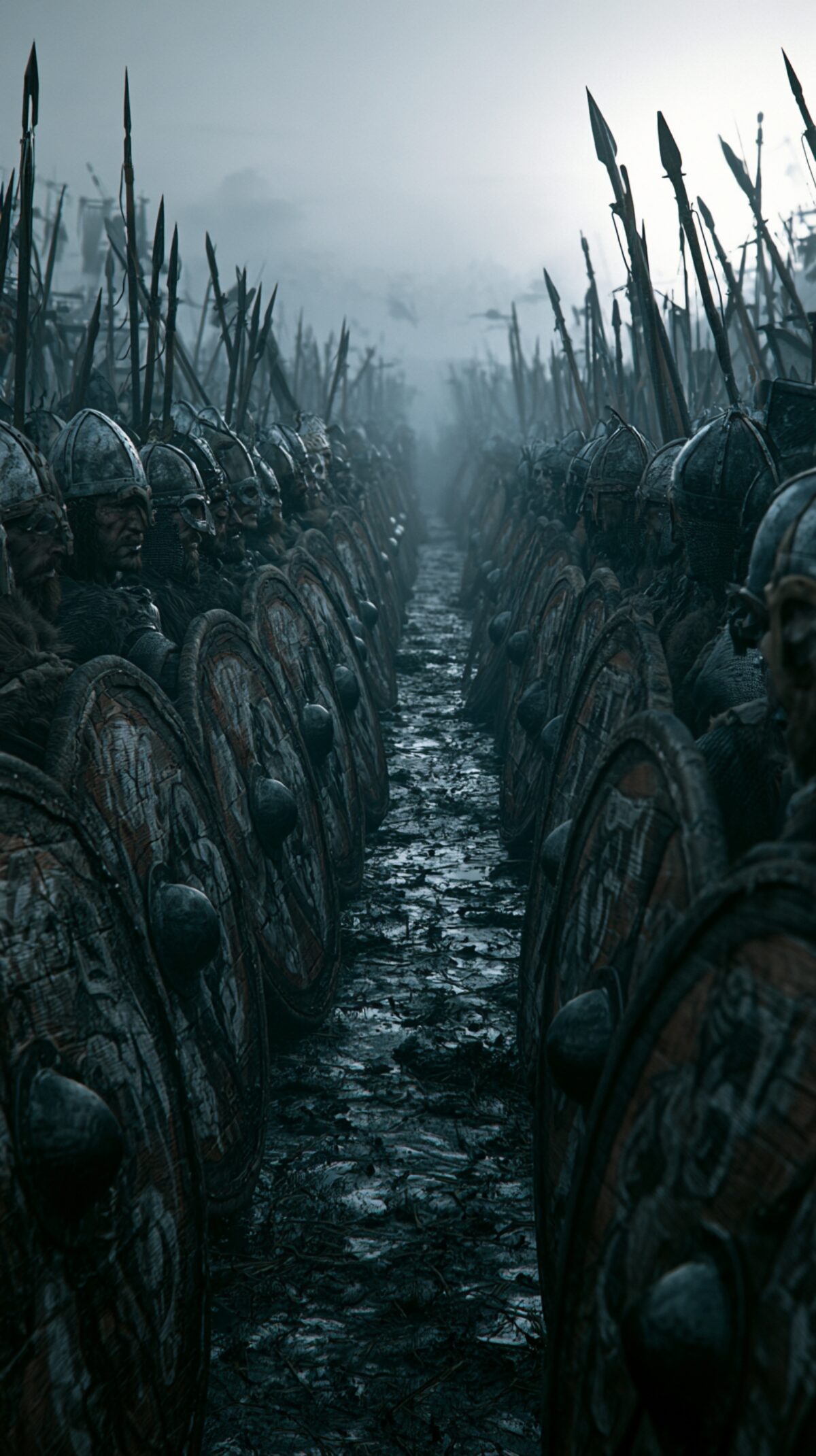
 On an island in the Havel stood the fortress from which a whole country grew – the realm of the Hevelli, from which, by roundabout ways, Brandenburg and Prussia arose.
Between the Abodrites and the Liutizi, on the middle Havel, sat a Slavic tribe with an astonishing legacy: the Hevelli (called Stodorane in their own sources). From their heartland grew, over the centuries, the March of Brandenburg – and from it later Prussia. Hardly any Slavic tribe shaped German history so deeply.
The Hevelli lived in the water-rich landscape around today's city of Brandenburg an der Havel, which goes back to their fortress Brennaburg (Brenna). Their land was a web of lakes, marshes and islands – hard to conquer and easy to defend. Like their neighbours they relied on ringforts; the most important stood on the cathedral island of Brandenburg. Berlin and Cölln too later arose on Hevelli soil – the names of both are of Slavic origin.
In 928/929 Henry I crossed the ice of the Havel in winter and took the Brennaburg – a key event of German eastern policy. But rule remained fragile. The chronicler Widukind tells the story of the Hevelli prince Tugumir, who in German captivity defected for silver, returned home, had the rightful heir murdered and handed the fortress to the Germans. Such tales of betrayal and alliance show how much the Slavic principalities wavered between resistance and adaptation.
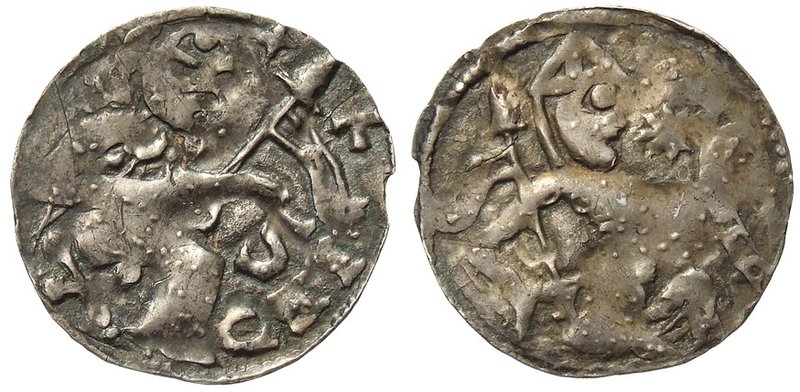
At the end stood a prince who carried out the turn himself: Pribislav-Heinrich, Christian Hevelli prince of Brandenburg in the 12th century. Childless and aware that his realm had no future between the rising powers, he named the Ascanian margrave Albert the Bear his heir. When Pribislav died in 1150, Albert took up the inheritance; after fighting a Slavic rival he finally seized the Brandenburg in 1157 and thereafter called himself Margrave of Brandenburg. So the Hevelli land became, by inheritance rather than mere conquest, the nucleus of a new state.
With Albert the Bear German eastward settlement began on a grand scale: farmers, monks and towns came into the land, marshes were drained, churches built. The Slavic population merged over the generations into the new order – but the substrate remained: in place names, field names, in the population itself. That the capital of Germany bears a Slavic name is the quietest and at once greatest monument to the Hevelli.
The Hevelli are no "vanished" people in the sense of extinction – they are the foundation on which Brandenburg and Berlin stand. Their forts lie beneath the cities, their names on the map, their heritage in the self-understanding of a region born from the meeting of Slavs and Germans. Whoever wants to understand the history of eastern Germany begins on the Havel.
The Hevelli too were long pagan. Their land was opened to the church in 948 with the bishoprics of Havelberg and Brandenburg – but the great Slavic revolt of 983 swept these young bishoprics away for almost two centuries, and the Hevelli returned to the old faith. Only in the 12th century did Christianity finally prevail. As among the neighbouring tribes, sacred places, ringfort sanctuaries and lot-oracles shaped their belief; it is preserved only from a Christian outside view, yet the tenacity of the return to paganism speaks for how deeply it was rooted.
The Hevelli heartland was ideally protected: a labyrinth of Havel channels, lakes and marshes in which the forts lay on islands and peninsulas. This position explains why the German kings had to conquer the Brennaburg again and again – once taken, it was easily lost. The Hevelli lived well from fishing, from farming on the drier ridges and from trade on the waterways. Only the systematic draining of the marshes in the High Middle Ages turned this Slavic water-world into the farmland that later became Brandenburg's wealth.
How deeply the Hevelli shaped the soil of Brandenburg is shown by archaeology. Beneath the cathedral island of Brandenburg an der Havel lie the remains of their ringfort; excavations brought Slavic houses, workshops and pottery to light. Whoever wants to see what such a Slavic fort looked like will find at Raddusch in the Spreewald a faithfully reconstructed site. These finds give a face to what the chroniclers mention only in war reports: a rural-princely world of wood, earth and water.
That the capital of Germany, Berlin, bears a Slavic name, and that Brandenburg and Prussia arose on Hevelli soil, makes this tribe one of the most consequential in the whole Slavic world. For us it is a prime example of our core conviction: the German east grew from the meeting of Slavs and Germans. Whoever engraves a Slavic motif celebrates not a foreign but a native heritage – as native as the name of the Havel itself.
Almost all written sources on the Slavic history of the north come from their opponents: from German and Danish clerics such as Thietmar of Merseburg, Adam of Bremen, Helmold of Bosau or Saxo Grammaticus. They wrote from a Christian view about "pagans" – often at second hand, with a clear message. That is why archaeology matters so much: ringforts, pottery, silver hoards and grave finds correct and complement the skewed picture of the chronicles. Only both together give an honest picture. This source-criticism matters to us – we cleanly separate what is documented from what remains interpretation, and invent nothing.
It is worth grasping the scale of it: from the small Brennaburg on the Havel came the March of Brandenburg, from the march the electorate, from the electorate the Kingdom of Prussia – and from Prussia, in large part, modern Germany arose. At the beginning of this long chain stand a Slavic tribe and a prince who passed on his inheritance wisely. Hardly anywhere do Slavic and German history lie as close together as here on the Havel.
"But Tugumir, lured by silver, promised to hand over himself and his people to the king."after Widukind of Corvey, Res gestae Saxonicae (public domain, own translation)

The Liutizi · The Sorbs · The Abodrites.
All History & Finds articles →
The most famous eyewitness account of the Vikings comes not from the North, but from Baghdad. In 921 the Caliph sent …
Read more →Carved in stone over 1,000 years ago, a king proclaims the unification and baptism of Denmark – the same king whose …
Read more →