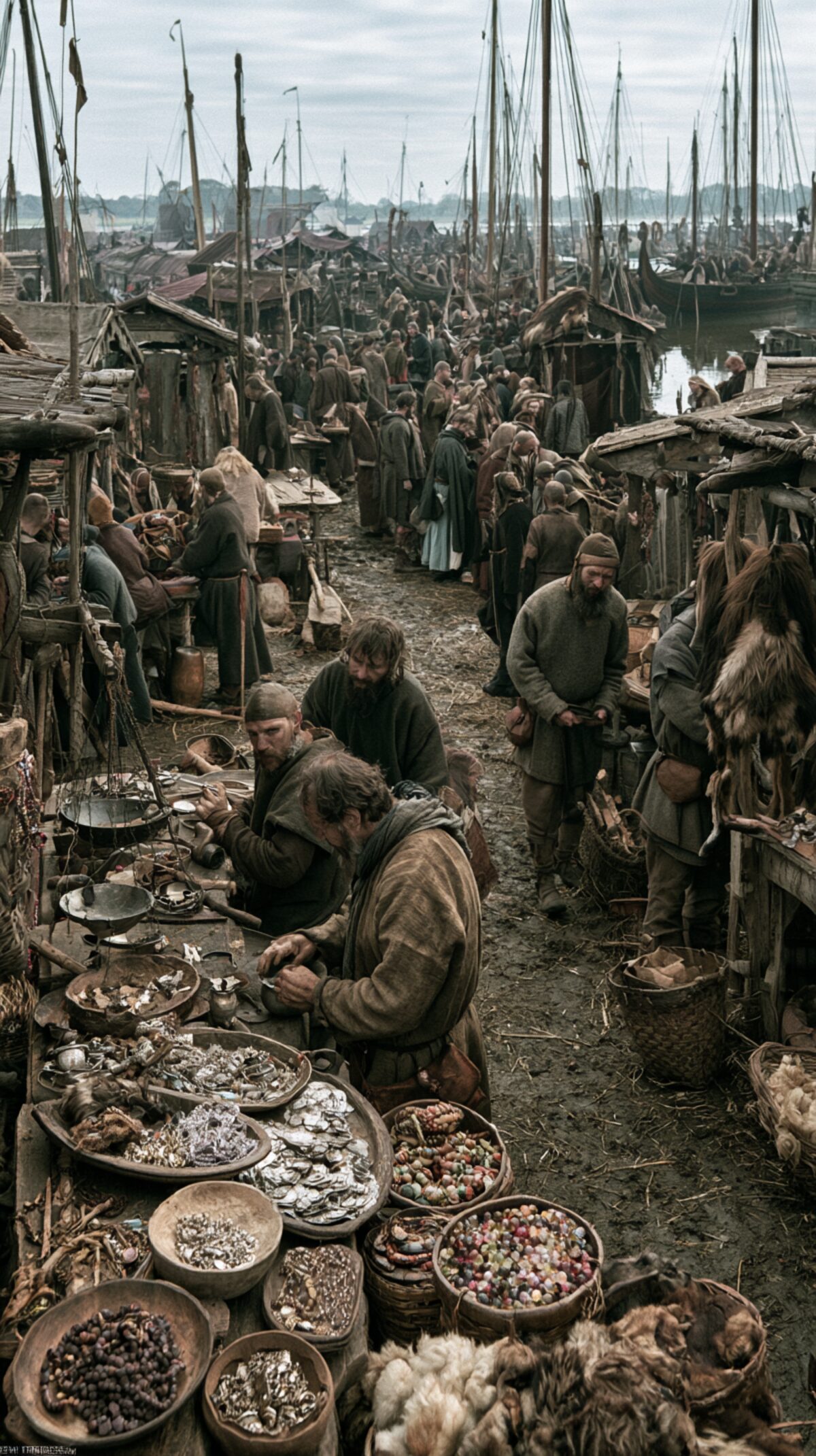
When we picture Vikings, we see longships, axes and raids. Yet the overwhelming majority of Northern people never plundered a foreign monastery. They walked behind the plough, herded sheep, cut hay and worried about the harvest. To truly understand the Viking Age, you have to look at the farm - because it was there, not on the battlefield, that prosperity, standing and sheer survival were decided.
The image of the Viking as pure warrior is a distortion, inherited from the chronicles of his victims and from later sagas. In reality, the vast majority of free Northern people lived from the land. The free farmer - the bóndi - was the load-bearing figure of society: he owned land, kept livestock, fed his family and servants, and he had a voice at the Thing. Standing was measured not only in deeds of arms but in the farm, in full storehouses, in good land.
Even notorious seafarers were farmers at heart. Trading voyages and raids fell in summer, between sowing and harvest; in autumn men returned home to slaughter livestock and secure winter stores. A man could sow in spring, sail west in high summer and stand on his own field again in autumn. Agriculture was not the dull flip side of Viking life - it was its foundation.
The most important grain of the Viking Age was barley, specifically the hardy, cold-tolerant six-row variety. It thrived where wheat long since gave up: on poor soils, in short summers, far to the north. From barley people baked their daily bread - mostly flat, often unleavened cakes - and from barley they brewed the ale that was indispensable at every feast and every blót. Whoever had barley had food and festive drink in one.
Alongside it grew oats, which also coped with harsh climates and served as porridge and animal feed. Rye gained ground over the course of the Viking Age, especially in Denmark and southern Scandinavia, where it produced better bread flour. Wheat remained rare and was a luxury of the elite. Added to this were legumes such as peas and field beans, and flax, from which linen for clothing and oil from the seeds were obtained.
The plough of the Viking Age was usually the ard, or scratch-plough: a wooden frame with an iron share that broke open the soil rather than turning it like the later mouldboard plough. An ard was light, could be pulled by a team of oxen or horses, and suited the often stony, thin soils of the North well. On the heavier soils of Denmark and southern Sweden, sturdier ploughs with mouldboard elements appeared over time.
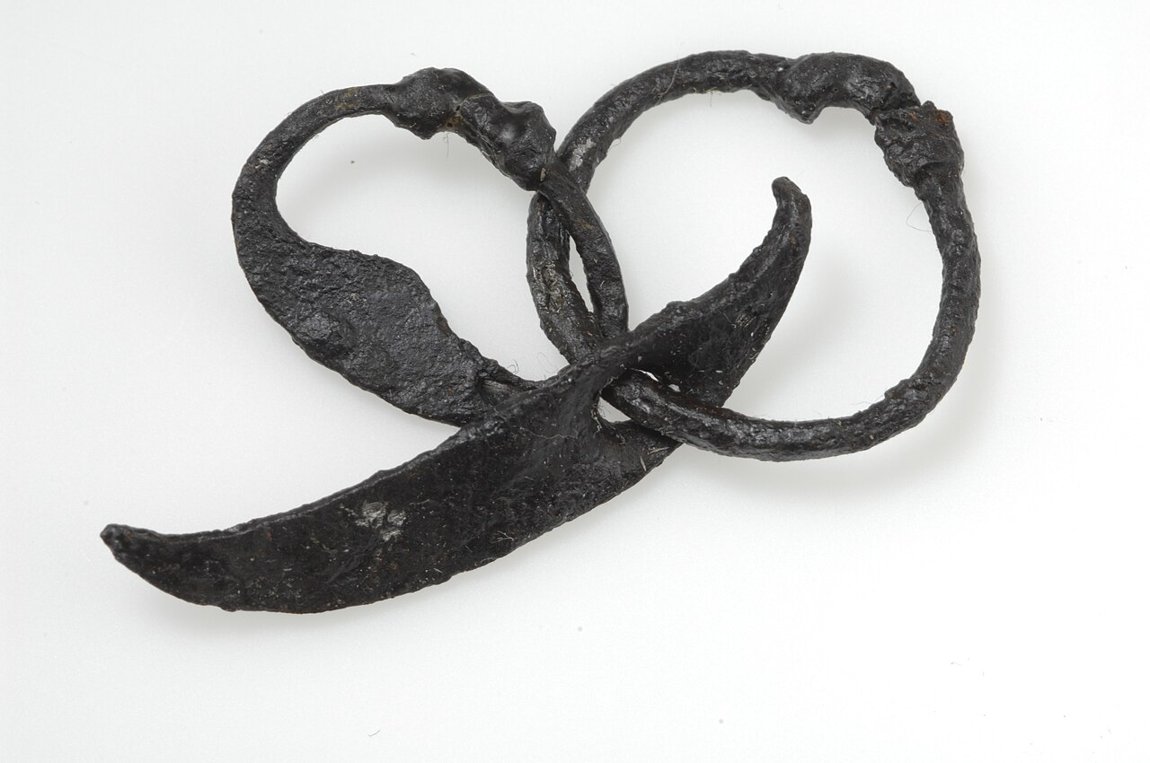
For the harvest people used the sickle - a short, curved iron blade - to cut stalk by stalk. The long-bladed scythe served above all for the hay harvest on the meadows. Iron was precious and used sparingly: blades were re-forged and maintained, wooden parts replaced. The kit included whetstones, iron-edged spades, hoes and forks. The famous tool find from Mästermyr on Gotland shows how comprehensively a Northern craftsman and farmer could be equipped.
A farm of your own is better, even if small, everyone's someone at home; though he have but two goats and a roughly roofed house, still it is better than begging.Hávamál 36, after Henry Adams Bellows / Karl Simrock (public domain)
No farm managed without livestock. Cattle stood at the top: they gave milk, meat, hides and traction, and were at the same time a measure of value - wealth was often reckoned in cows. Sheep were almost equally important, for their wool was the raw material for clothing and, crucially, for the sails of ships. A single large sail consumed the wool of many animals and the labour of many months. Goats gave milk and meat and coped even with meagre land.
Pigs were popular meat providers that could be fattened in forests on acorns and beechnuts. Horses served as riding, draught and pack animals and carried high status; they played a role in cult, and horse meat was a prized festive dish until Christianisation. Chickens, geese and ducks rounded out the farm and supplied eggs and feathers. The make-up of the herd depended heavily on region: in Norway and Iceland sheep and cattle dominated, while in Denmark the pig carried greater weight.
Milk was a staple food, but fresh milk spoils quickly. So processing was decisive. From milk people made butter, which also served as a store and trade good, as well as various cheeses. Especially famous is skyr, a thick, curd-like soured-milk product that kept for a long time and is still eaten in Iceland today. Even whey was not wasted: in it, meat and other foods were preserved.
Dairy processing lay largely in the hands of women and was highly respected, responsible work. Whoever skilfully laid in butter and cheese over the summer had fat and protein on the table in winter. Preservation as a whole - smoking, drying, salting, pickling in whey or seawater - decided whether a family survived the long, dark winter.
No aspect of Northern agriculture was so vital to survival, and is so often overlooked, as the hay harvest. Through the long winter, livestock found no food outdoors. Whoever wanted to bring his animals through had to mow, dry and store enough hay in the short summer to feed cattle, sheep and horses for months in the byre. If the hay ran short, the only option was to slaughter animals early - and thereby destroy the basis for the next year.
In a rainy summer the hay could not dry properly and rotted; an early onset of winter shortened the grazing season. Such setbacks could make the difference between a secure and a starving farm. Especially in Iceland, at the edge of what was possible, the survival of whole families hung on the amount of hay. The struggle for winter fodder was the real, silent war of the Northern farmer - year after year, without glory, but relentless.
The centre of every holding was the longhouse - an elongated building with load-bearing wooden posts, walls of wattle and daub, of planks or of turf sods, and a roof of reed, wooden shingles or grass sods. In many farms, especially in colder regions, people and animals lived under one roof: the long hearth burned in the living quarters, the other part served as byre. The body heat of the animals helped to warm the house in winter.
Around the longhouse were grouped outbuildings: storehouses, barns for hay and grain, forges, boathouses on the coast. A prosperous farm was a small, largely self-sufficient world. The infield, well manured and close to the house, bore the grain; the more distant areas and the common land served as pasture and hay meadow.
In the upland regions of Norway, Sweden and on the islands people used an ingenious system: the sæter or shieling. In summer the livestock was driven to higher mountain pastures, often hours from the farm. There lived mostly women and young people in simple summer huts, herding the animals, milking and processing the milk on the spot into butter and cheese.
This practice spared the valuable valley meadows needed for the hay harvest, while at the same time using the rich summer grass of the heights. In this way Northern agriculture cleverly combined two goals: feeding the livestock and still bringing in enough winter fodder. The sæter system survived in parts of Scandinavia into modern times.
The Northern farm aimed first at self-sufficiency: its own grain, its own meat, its own milk, its own wool, its own linen. But good farms produced a surplus, and this surplus was the foundation of the famous Viking trade. Wool and woollen cloth (vaðmál), hides, butter, dried fish, tallow, feathers, amber and - in darker chapters - enslaved people moved through the markets of Hedeby, Birka and Kaupang into distant lands.
From agriculture, then, flowed not only the daily bread but also the wealth with which iron, silver, salt, wine and luxury goods were exchanged. The farmer and the merchant were often the same person. Only this agricultural surplus made it possible at all to equip ships, recruit followers and undertake the great voyages.
A farm ran only because everyone lent a hand. The mistress of the house - the húsfreyja - ran the interior operation: dairy processing, food storage, textile production from shearing through spinning to weaving, the provisioning of the servants. The symbolic bunch of keys on her belt stood for her authority over house and stores. Without the months of textile work by women, no ship would ever have had a sail.
The household also included male and female servants and - under coercion - enslaved people who performed the hardest field and byre work. Viking society was strongly stratified, and the prosperity of the free farmers rested in part on unfree labour. That belongs to an honest picture of this age.
Whoever sees the Vikings as pure plunderers misses the essential thing. Their culture grew from the soil: from barley fields, sheep pastures, milk pails and hay stacks. Their world of gods reflects this - Freyr, who stood for a good year and peace (ár ok friðr), was one of the most important gods of all, and many blót feasts revolved around harvest and fertility. The Northern person did not first ask his gods for victory, but for a good harvest.
This farming heritage still lives in the Northern visual world today: in the world tree as an image of life, in symbols of fertility, in a deep respect for nature and the turning year. It is a more honest, more earth-bound Viking world than that of pure battle romance - and it is precisely for that reason that we love to keep telling it.
Everyday Viking life · Viking food & drink · Viking Trade · Mead – the drink of gods · Viking women.
All Everyday Life & Craft articles →
The shining swords, the fine brooches, the carved ships – behind all of it stood a craftsman with his tools. What those …
Read more →From honey, water and time comes the oldest intoxicating drink of the North. But mead was more than a drink – it was …
Read more →Few gemstones carry a name as poetic and as misleading as moonstone. It has nothing to do with the moon – and yet a …
Read more →