 Between the forests of Upper Lusatia, around the stronghold of Bautzen on the Spree, a West Slavic tribe sat in the early Middle Ages: the Milceni. Their land was a landscape of hillforts on the frontier with the Frankish empire, their name stands in the region's oldest sources – and their legacy lives on to this day in the Sorbian people.
Not only Germani and Celts shaped our landscapes. Large parts of today's eastern Germany were Slavic land in the early Middle Ages. Between Elbe and Oder, in Mecklenburg, Brandenburg, Saxony and Lusatia lived West Slavic tribes whose names still echo today in places, rivers and regions. One of them sat in Upper Lusatia, around the town of Bautzen on the Spree: the Milceni.
The Milceni settled in the core of today's Upper Lusatia, with a focus around Bautzen (Sorbian Budyšin). It was a land of hills, forests and river valleys, well suited to farming and stock-raising. Like the other Elbe Slavs the Milceni lived in villages and, above all, in fortified strongholds – ring-ramparts of earth and timber that served as refuges, seats of power and places of assembly. Their land was practically a landscape of hillforts.
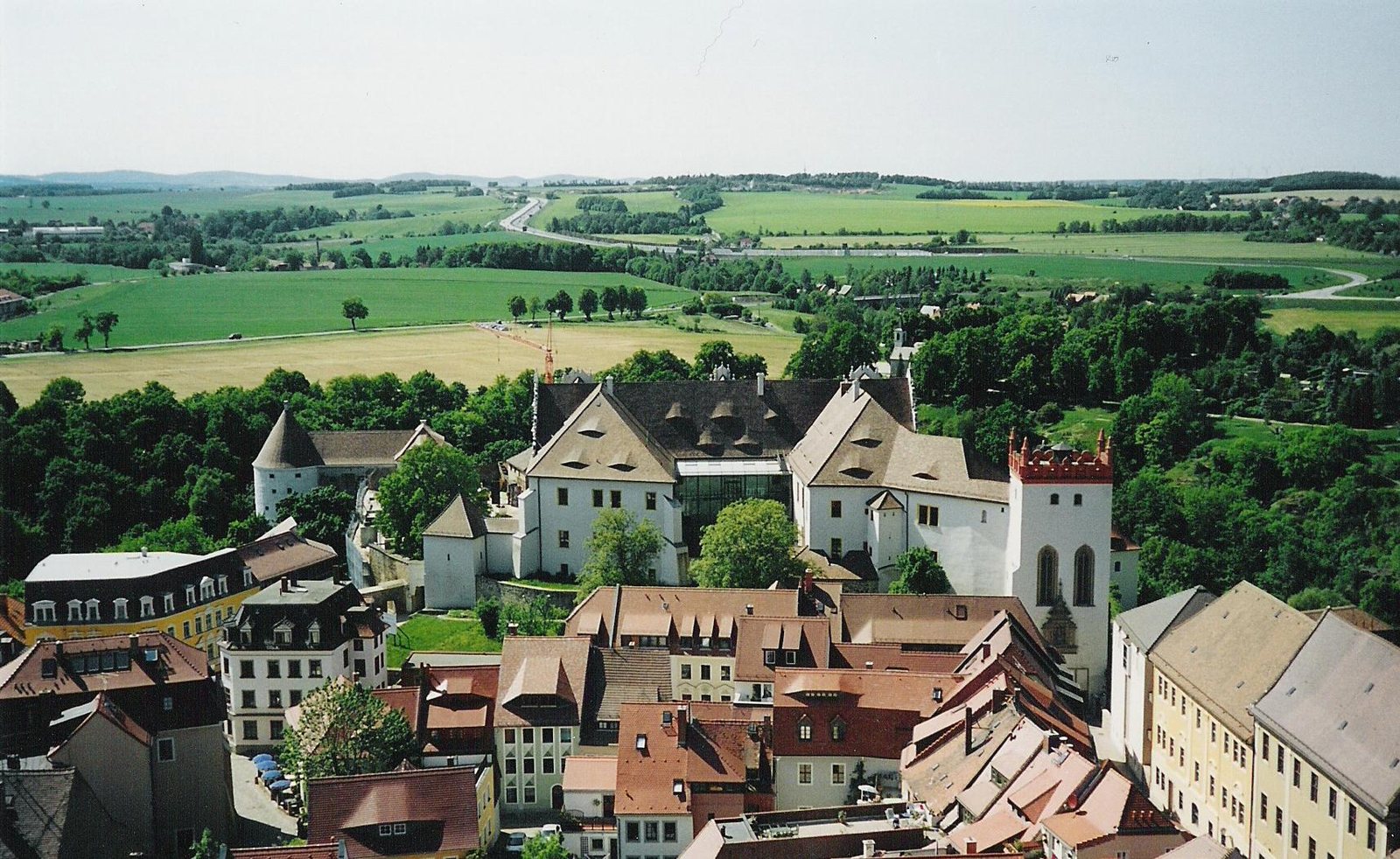
Best known is the stronghold on the rock above the Spree, out of which the later Ortenburg and the town of Bautzen grew. Such forts were the backbone of Slavic society: from here a district was controlled, here people sought protection in wartime, here the leading families sat.
The earliest written report about the Milceni stands in a curious source of the 9th century, the so-called Bavarian Geographer – a Latin list of peoples east of the Frankish empire with the number of their "forts" (civitates). There the Milceni (Milzane) appear with a considerable number of fortified places.
The Milceni have thirty forts.Bavarian Geographer, 9th century (paraphrased from the Latin list)
Whether this number is exact cannot be checked – such lists are second-hand estimates. But they confirm the archaeological picture: Upper Lusatia was densely set with Slavic ring-forts. The "thirty forts" stand for a land that knew how to defend itself.
The land of the Milceni lay on the eastern frontier of the East Frankish–German empire. This brought them – like their neighbours, the Sorbs and the Liutizi – into the sights of the Saxon kings, who extended their rule eastward. In the 10th century the systematic pressure began: tribute, campaigns, the building of imperial castles.
King Henry I subjugated the Milceni in the 920s/930s and forced them to pay tribute. His commander and later margrave Gero continued the subjugation of the Elbe Slavs with great harshness. Upper Lusatia became part of the East Frankish frontier system, the marches – those militarily administered border zones from which the empire controlled the Slavic land and gradually drew it into its sphere.
The rock above the Spree, once a Milceni fort, became the core of German rule in Upper Lusatia. Here arose the Ortenburg, here Bautzen grew into a town. The chronicler Thietmar of Merseburg, our most important source for the Slav wars of the 10th/11th centuries, names the fort of Budusin (Bautzen) several times – it was a contested key point in the wars between the empire and the Polish duke Bolesław Chrobry, who seized Upper Lusatia for a time.
So the Milceni land became a borderland between empire, Bohemia and Poland – a region fought over for centuries. Upper Lusatia changed rulers several times but always remained shaped by its Slavic population.
Unlike many Elbe Slavs, whose language vanished over the course of the Middle Ages and modern times, a Slavic people has survived in Lusatia to this day: the Sorbs (Upper Sorbian Serbja). The Milceni are among their ancestors – together with the neighbouring Lusici, who gave Lusatia its name. In Upper Lusatia around Bautzen Upper Sorbian is still spoken today; Bautzen is the cultural centre of the Sorbs, with its own newspaper, schools and the umbrella organisation Domowina.
Thus the Milceni are no vanished people like so many Germanic or Celtic tribes, but a living part of the prehistory of a minority that still exists. Anyone driving through Upper Lusatia and seeing the bilingual town signs is looking at the distant legacy of the Milceni.
About the religion, the legends and the daily life of the Milceni in particular we know little for certain. The West Slavic tribes worshipped gods such as Perun and kept cult sites in groves and on hills, but for the Milceni specifically detailed reports are lacking – most of what one reads applies generally to the Elbe Slavs. The line between "Milceni" and "Sorbs" is also no sharp boundary: they are modern ordering terms for a web of related groups.
Precisely this honesty matters to us. At GLANZ & GRAVUR we tell the Slavic roots of Central Europe just as carefully as the Germanic and Celtic ones: with a clear eye for what the sources really give – the Bavarian Geographer, Thietmar, the ring-forts in the ground – and for what remains interpretation. The Milceni deserve to be shown as what they were: a hardy fortress-people of Upper Lusatia whose legacy lives on to this day.
The Slavic society of Upper Lusatia was organised around its ring-forts. These ramparts of earth, timber and stone often lay on spurs or at river crossings; around them spread villages with sunken huts, fields and pastures. The fort was refuge, storehouse and seat of power at once – here the leading families sat, here people gathered in danger. Archaeology has traced many such ramparts in Upper Lusatia and thereby confirms the picture of the "many forts" from the written sources.
The Milceni lived from farming, stock-raising, crafts and trade. Their position on the frontier made them both mediators and victims: goods, ideas and armies passed through their land. This border position explains both their wealth of forts and their vulnerability to the mighty neighbours in west and east.

The Sorbs · The Liutizi · The Abodrites.
All History & Finds articles →
Whoever won did not always keep the spoils. In the Roman Iron Age, Germanic victors sank the entire equipment of …
Read more →