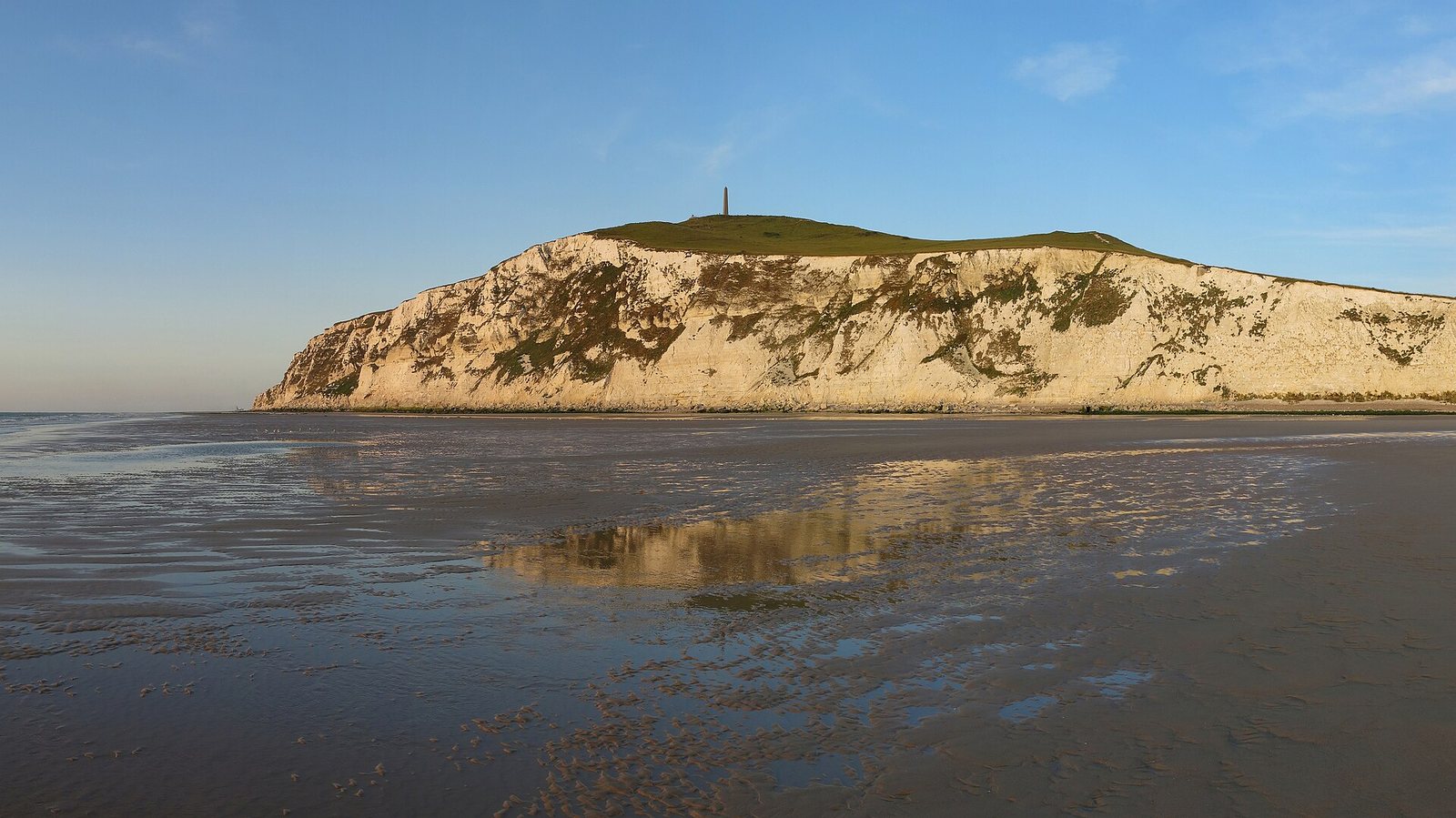
The Morini were a Belgic-Celtic coastal people on the English Channel, in the area of today's French-Belgian border region. Their name means roughly "those dwelling by the sea".
"… and the Morini, the most remote of men."Virgil, Aeneid 8 (public domain, own translation)
The Morini lived on the Channel coast of today's northern France and Belgium, around Thérouanne and Boulogne. The poet Virgil called them in his "Aeneid" the extremi hominum – "the furthest of men", because their land lay at the edge of the world known to the Romans, where beyond the sea the mysterious Britain began.
Caesar felt the tenacity of the Morini. Instead of facing open battle they withdrew into forests and marshes and waged a small war that wore down the legions. Only after several campaigns did Rome finally subdue the coastal peoples.
Precisely because of their position the Morini were strategically important for Rome: from their coastal land Caesar set sail for Britain in 55 and 54 BC. The harbour Portus Itius, usually assumed near Boulogne, became the starting point of the first Roman expeditions to Britain.
Under Roman rule Boulogne (Gesoriacum/Bononia) became the most important Channel harbour and home base of the Classis Britannica, the Roman fleet for Britain. A lighthouse, the "Tour d'Ordre", showed the ships the way – the coast of the Morini was now a nerve point of the empire.
The chief town of the Morini became the civitas Morinorum centred on Thérouanne. The landscape of Flanders and Artois carries the legacy of this coastal people to this day – a people at the furthest edge that for that very reason became a bridge between the continent and Britain.
The Morini remind us that "the end of the world" for some was the beginning for others: from their coast armies and traders crossed the Channel. Such stories of borders and crossings we at GLANZ & GRAVUR like to tell – honestly from the ancient sources.
The Morini remind us that borders are always crossings too: their land was "the end of the world" and at the same time the springboard to Britain, the place where Rome stationed the fleet for the island. From Virgil's extremi hominum to the lighthouse of Boulogne, their story is one of the sea and of connection. Precisely such stories of coasts and borders we at GLANZ & GRAVUR like to tell.
The Morini belong to the coastal peoples of the north. Continue with the Menapii and Atrebates.

The Menapii · The Nervii · The Atrebates · The Veneti · The Eburones.
