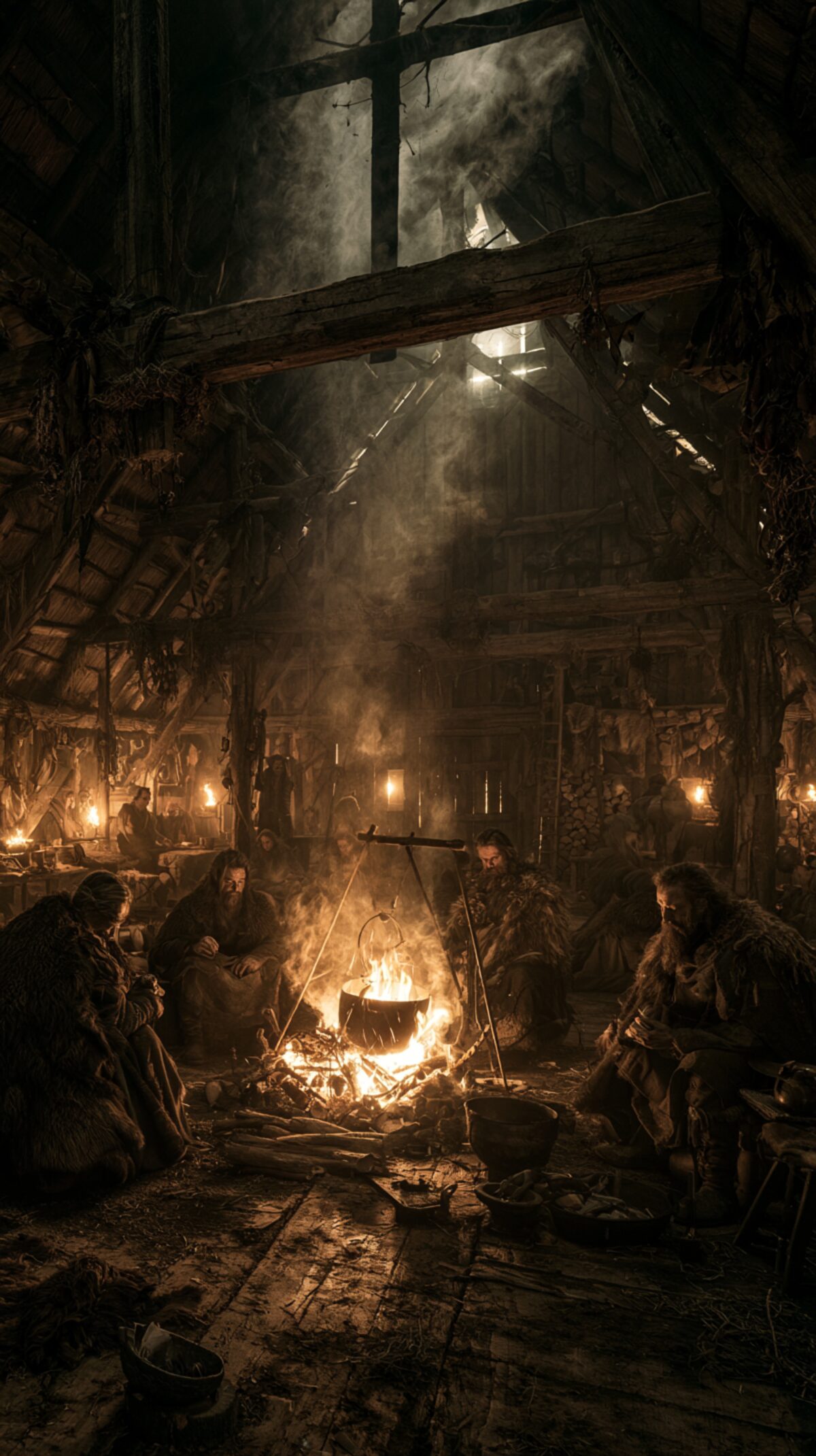
No one in the North stood alone. Who you were depended on whom you belonged to: to which kindred, which ancestors, which relatives on both parents' sides. The ætt – the kindred – was legal community, safety net and obligation all at once. It governed honour and revenge, inheritance and marriage, standing among the living and fame beyond death. Here is how family in the Viking Age was really organised – and where the television image of the "clan" leads us astray.
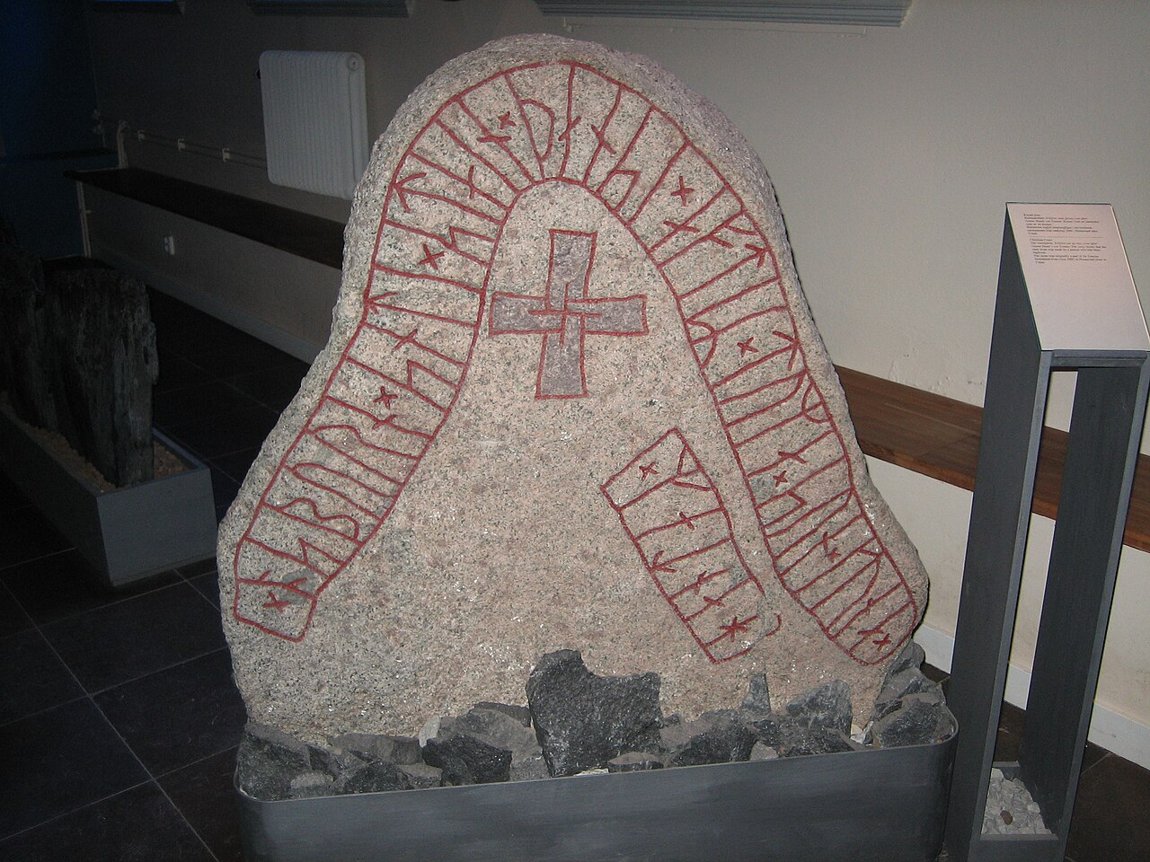
The Old Norse word ætt means lineage, kinship and family line all at once. It does not describe a fixed, closed group with clear borders, but the web of people to whom one was bound by blood and by law. In a world without a strong state, without police and without continuous central courts, this web was the most important security a person had. Someone with no kindred behind them was vulnerable – no one avenged their wrongs, no one stood surety for them, no one paid on their behalf and no one inherited from them.
The kindred was therefore far more than a feeling of belonging. It was a legal and economic unit. It secured land across generations, it shared responsibility for the deeds of its members, and it negotiated with the outside world as a group. The individual rarely acted alone: what he did reflected on his people, and what was done to him touched them just as much.
The most important and most misunderstood point: Norse kinship was bilateral. That means one counted relatives through the father AND through the mother – uncles and aunts on the mother's side were just as much "kin" as those on the father's. You did not belong exclusively to your father's line. Every person stood at the meeting point of two kinship networks that overlapped in them but already looked different for their siblings.
This structure had practical consequences. Because everyone belonged to several kindreds, conflicts could become complicated: a man might be related to both sides of a feud and find himself in an impossible bind of loyalty – a motif the Icelandic sagas return to again and again. The bond was strong, but not absolutely closed. Precisely for that reason, additional, artificially created bonds such as fosterage and sworn brotherhood mattered so much: they reinforced what bilateral kinship left open.
The North had no inherited family names in the modern sense. A person carried a given name and, with it, a patronym, more rarely a matronym: one was "son" or "daughter" of one's parent. Erik's son Leif was Leif Eriksson, his daughter Freydis was Freydis Eiríksdóttir. The endings -son and -dóttir therefore did not mark a family across many generations, but always just the immediate parent. The son of Leif Eriksson was not "Eriksson" again, but "Leifsson".
To this were added bynames (viðrnefni), which distinguished a person and often said more about them than the given name: Harald Fairhair, Ivar the Boneless, Auðr the Deep-Minded, Thorbjörn the Stout. Such bynames could reflect appearance, origin, character, place of residence or a famous deed. In Iceland this naming custom survives to this day. Anyone wanting to know more about Norse name-building will find details in our article on Viking names and their meaning.
The smallest unit of life was not the modern nuclear family, but the household on the farm (bú). It included the farmer and the mistress of the house, their children, often unmarried relatives, fostered children, free farmhands and maids, and the unfree. A larger farm could be a small community in which a dozen or more people lived, worked and ate together. The close kindred – parents, children, siblings – formed the core, but daily life played out in this wider household.
The farm was not only a dwelling but a family inheritance. On it hung the rank of the kindred, on it hung their standing. Landholding across generations – in Norwegian law the óðal – tied the family to a place and to their ancestors, who lay buried there. Whoever held the farm held the memory of the family.
Because the kindred thought across generations, inheritance law was a heart-piece of its order. Property and above all land were meant to stay in the family. The law collections set out precisely who inherited and in what order – first the closest relatives, then the more distant kin. Sons and daughters inherited, if not always in equal shares; women could inherit and own their own goods. Where there were no children, the line of collateral relatives stepped in, for an inheritance should never fall ownerless to strangers.
This thinking explains why marriage, fosterage and inheritance were so closely linked: each of these decisions shifted property and obligation within the web of the kindred. A child was not only a beloved person but also a bearer of inheritance, honour and name. Whoever knew the threads of this web understood the balance of power in a whole district.
Marriage in the North was less a romantic choice of two individuals than an alliance between two kindreds. It was negotiated, and value flowed in both directions. The groom, or rather his family, paid the mundr – a bride-price that legally belonged to the woman and formed her security. The bride's family gave the heimanfylgja, the dowry she brought into the marriage. Both properties remained in a sense tied to the woman and, on separation or death, reverted or fell to her by fixed rules.
This negotiation was serious and public. It sealed peace or friendship between families, it joined farms and fortunes. Precisely for that reason marriages were a highly political matter, in which the elders and heads of the kindreds had a weighty say – not seldom against the wishes of those involved, which triggers many a deadly conflict in the sagas.
Women held a remarkably strong legal position in the North – stronger than was usual in much of the wider medieval Europe. As mistress of the house (húsfreyja) she ran the farm, managed the stores and often carried the keys to chests and larders at her belt – a visible sign of her responsibility. She owned property, could inherit and dispose of her share. Also remarkable was the right of divorce: under certain conditions a woman could separate from her husband and reclaim the goods she had brought in.
During long absences of the husband – on trading voyage, war expedition or Viking raid – the entire responsibility for farm, economy and household fell to her. This strong role should, however, be placed soberly: it was not an expression of modern equality, but part of a clearly ordered division of tasks. More on the lived reality of women can be found in our article on women in the Viking Age.
A distinctive feature of the North was fosterage (fóstr). Children often did not grow up with their birth parents but were given to another household to be raised. This created close, lifelong bonds between the families involved – the foster-father (fóstri) and the foster-child often stood as close to one another as blood relatives.
This was no sign of coldness, but a deliberate means of binding families together. Whoever gave their child to a more powerful man to raise bound themselves to him – and an old saying held that the one who fostered another's child was the lesser man. Fosterage was thus also an instrument of rank and alliance, not only of upbringing.
Where nature had created no kinship, one could establish it artificially. Sworn brotherhood (fóstbrœðralag) was a solemn bond between men who pledged mutual loyalty, revenge and support – as if they were brothers. The surviving descriptions tell of a ritual in which the participants walked under a strip of turf lifted from the earth and mingled their blood while swearing solemn oaths.
Such bonds could be as binding as ties of blood – and they placed those involved in exactly the conflicts of loyalty that real kinship brought. In the sagas sworn brotherhood is one of the strongest and at the same time most tragic bonds, because in the crunch it could stand against other obligations of the kindred.
Beside the bonds of blood, marriage and fosterage stood another, often underrated circle: friendship. In the North friendship (vinátta) was no loose feeling but a serious relationship of mutual obligation, cultivated through gifts, hospitality and support. A good friend was a real security – sometimes more reliable than a distant relative who at the same time belonged to the opposing party. The lays of the Edda devote broad space to friendship and its care: one should be a friend to one's friend, visit him often, and meet him with gifts and open words.
So around every person spread a graded web: close kindred, in-laws, foster-kin, blood-brothers, friends and followers. These circles overlapped and supported one another. It is precisely this many-layeredness that marks the difference from the rigid television image – Norse society was a moving mesh of obligations, not a simple family tree with one leader at the top.
Honour in the North was no soft feeling but social capital. It had to be preserved and, if injured, restored – and that was the task of the kindred. If a member of the kindred was killed or gravely insulted, the obligation to respond lay with the relatives. Blood revenge was a recognised path of that restoration.
But – and this is decisive – revenge was legally hedged. Beside it stood the wergild (man-payment, Old Norse roughly bætr): a fixed payment by which a killing or injury could be atoned. A settlement (sætt), negotiated before the thing or through respected mediators, was usually the preferred route, because an endless feud could ruin whole kindreds. Law and revenge were two sides of the same order in the North, not a lawless void. How this legal order worked in detail we treat in our articles on the Germanic tribal laws and on the law of the Vikings.
Cattle die, and kinsmen die, / and so one dies one's self; / one thing now that never dies, / the fame of a dead man's deeds.Hávamál 77 (Poetic Edda), translation Henry Adams Bellows 1923 (public domain)
The dead too belonged to the family. The ancestors were not simply past but remained present – as part of the kindred, as a point of reference for honour and law, at times as recipients of gifts. Burial mounds often lay within sight of the farm, visibly tying the living family to their forebears and to the land they held. The fame of the dead was a real good that people strove for – exactly what the Hávamál verse above means.
Forms of ancestor veneration and the closeness of the dead to the farm, especially in the dark season, we treat more fully in our article on ancestor veneration at Yule. Anyone who wishes to set a lasting mark for their name, their forebears or their kindred will find in an engraved slate or wooden plaque a very old idea in new form: a monument to what lives on.
The Norse image of family is no mere historical curiosity. It tells of a world in which belonging counted, in which one bore responsibility for one's own, and in which one's name was woven together with that of the ancestors. The thought that fame of deeds lives on beyond death, that one leaves a lasting mark, is understandable to this day. In that sense an engraved plaque with a name, a date or a saying is not just decoration – it stands in a very old line: the wish to honour one's kindred and keep it in memory.
Viking names & their meaning · Viking women · Law & the Thing · Ancestor veneration at Yule.
All Everyday Life & Craft articles →
There are tools that become legend. Among the Vikings it was a sword – or rather: a whole group of swords, all bearing …
Read more →No longship would ever have sailed, no warrior survived the winter, without perhaps the most important and most …
Read more →The Viking ship was not merely a tool – it was a status symbol. And at its top there often gleamed a masterpiece of …
Read more →When we hear "Viking", we picture warriors on longships. Yet the vast majority of people in the North never went …
Read more →