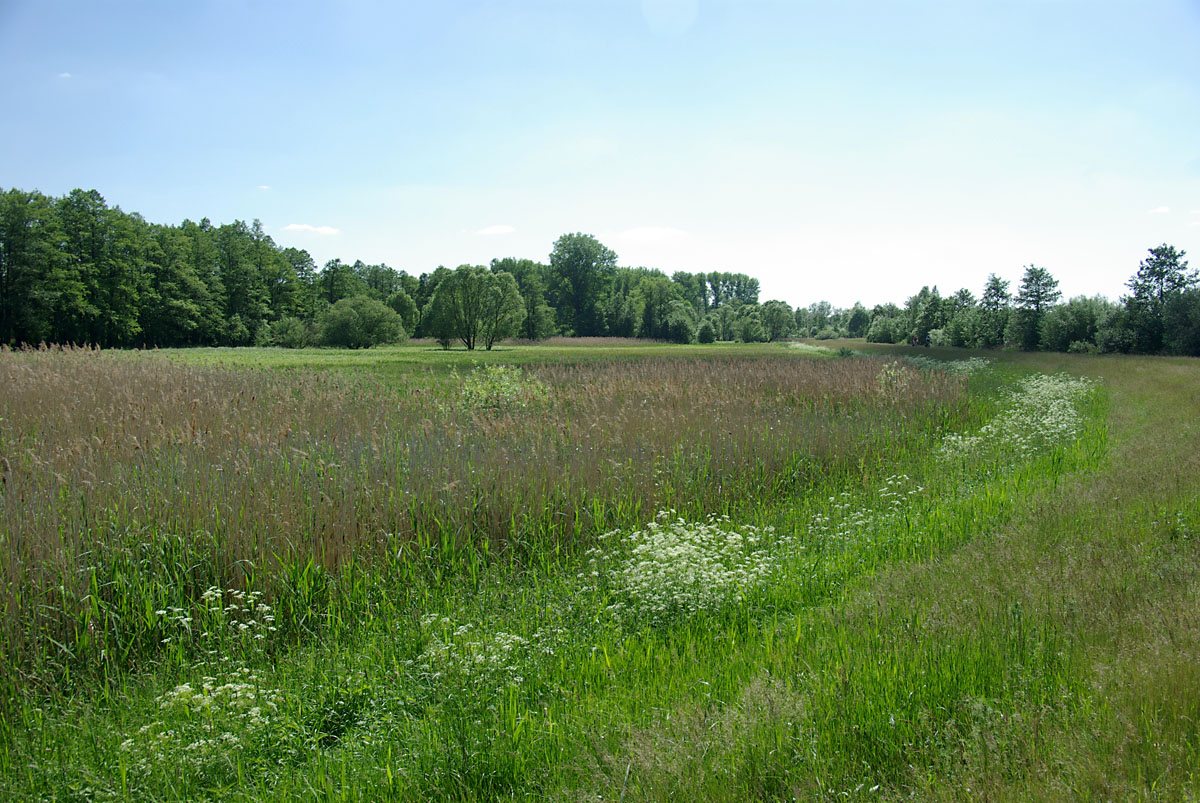
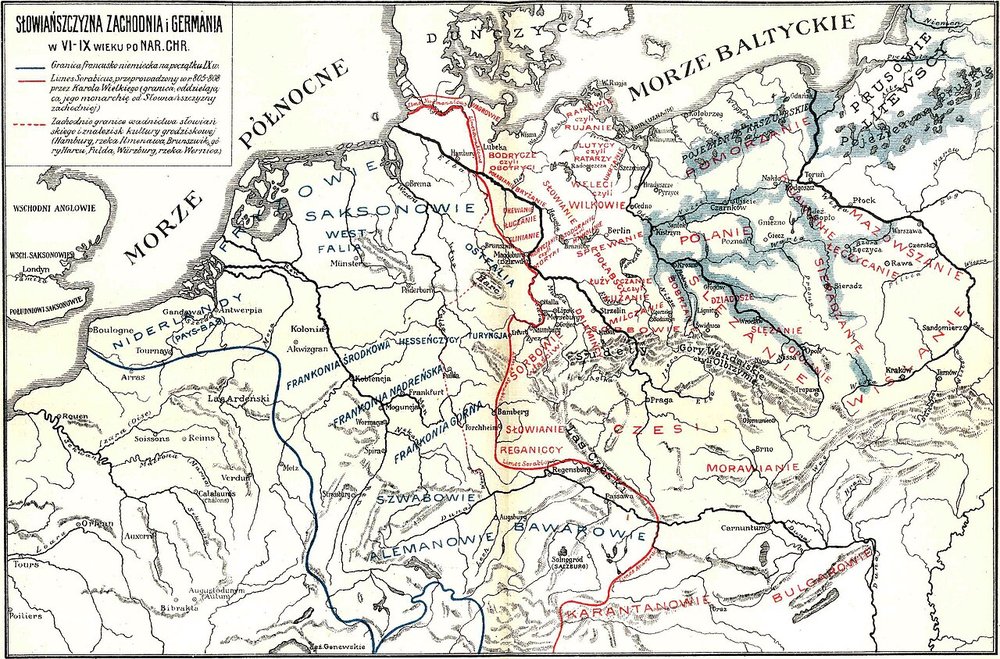
Berlin is no "German foundation" on empty ground – beneath the capital lies a Slavic land. In the area between the Spree and the Dahme sat the tribe of the Sprevane, named after the river Spree. Together with the neighbouring Hevelli they form the Slavic root of the Berlin-Brandenburg region.
The Sprevane lived in the water-rich landscape of the Spree, with forts, fishing villages and fields. Their most important seat was the fortress of Köpenick (Slavic Copnic, "place by the water") at the confluence of Spree and Dahme – today a district of Berlin. From here they ruled the area that later became the nucleus of the twin town of Berlin-Cölln. Both names are of Slavic origin: "Berlin" probably goes back to a Slavic word for a marsh or dry spot, not to the bear of the coat of arms.
The best-known figure of the Sprevane is Prince Jaxa of Köpenick (Jaksa), a Slavic ruler of the 12th century. When the Ascanian margrave Albert the Bear seized the Brandenburg in 1157, Jaxa appeared as a Slavic rival and tried to win the inheritance of the Hevelli for himself – he is said to have held the Brandenburg for a time before Albert finally conquered it. Jaxa minted his own coins (bracteates with his name), a sign of princely power. In him the last Slavic resistance in the Berlin-Brandenburg area is concentrated.
With the victory of the Ascanians, German eastward settlement began here too. Monasteries, towns and farmers from the west came into the land; the Spree became a road of trade and mills, on which Berlin and Cölln first appear in records around 1237. The Slavic population was not driven out but merged over the generations with the newcomers. Archaeological finds – the Slavic fort beneath Köpenick's old town, pottery, pit-houses – attest this Slavic early period beneath today's Berlin.
The Sprevane are little known – and yet their legacy is everywhere: in the name of the Spree, in Köpenick, in "Berlin" itself and in countless Brandenburg place names. They remind us that the German capital stands on Slavic ground and grew from the meeting of two cultures. Whoever wants really to understand the history of Berlin must begin with the Slavs on the Spree.
That Berlin stands on Slavic ground is no guess but proved by finds. Beneath the old town of Köpenick lie the remains of a Slavic fort with houses, workshops and pottery; elsewhere in the city area too, Slavic settlement traces, cemeteries and wells have come to light. The Sprevane were there long before the first documentary mention of Berlin – their villages and forts formed the network into which German eastward settlement later fitted.
Berlin-Brandenburg arose from the meeting of Slavs and Germans – not from the displacement of one by the other. Slavic farmers stayed, became Christian and German-speaking, but their names and fields remained. This double root is legible in the landscape to this day and makes the region's history so layered. For us as a workshop it is a fine thought: Norse, Germanic and Slavic strands meet here in a shared heritage.
Almost all written sources on Slavic history come from their neighbours and opponents – German, Danish, Byzantine and Arab authors. They wrote from afar or from a Christian or Islamic view, often with their own agenda. That is why archaeology matters so much: ringforts, coin hoards, graves and trade finds complement and correct the picture of the texts. Only both together give an honest picture – and that is exactly how we separate here what is documented from what remains interpretation.
The Sprevane were no isolated single tribe but part of a dense Slavic network in the area of today's March of Brandenburg. Besides Köpenick there were numerous other ringforts on the Spree, Dahme and Havel; the neighbouring Hevelli sat on the Havel, and beyond them the Liutizi. This network of forts, villages and waterways formed a coherent Slavic cultural landscape – the world that gave the land between Elbe and Oder its face for centuries before German eastward settlement reshaped it.
The Slavic early history of Berlin is no marginal topic but part of the city's identity. Names like Spree, Panke, Köpenick, Pankow or Buckow are of Slavic origin; they tell of the Sprevane and their neighbours. To remember this root honestly means seeing the capital for what it is: a place where cultures have met for a thousand years. For us the Slavic strand fits harmoniously with the Norse and Germanic heritage we cultivate in our engravings.
Hardly anyone knows that Berlin grew on Slavic soil – yet it is there in the name of the city, its rivers and its oldest districts. The Sprevane on the Spree were the first layer of this history, long before Ascanians, Hohenzollerns and Prussia. To know their heritage means to see the capital for what it always was: a meeting point of cultures on the border between the Slavic and German worlds. It is precisely this complexity that makes the history of Berlin-Brandenburg so rich – and reminds us that origins are rarely simple.
Jaxa of Köpenick even minted his own bracteates bearing his name – a clear sign of princely sovereignty. According to tradition he briefly held the Brandenburg in 1157 before Albert the Bear finally retook it on 11 June of the same year – a date often regarded as the birth of the March of Brandenburg. With Jaxa the last serious Slavic claim to rule in the area between Havel and Spree came to an end.
"But the Slavs who sat on the Spree and around Köpenick resisted the new lords for a long time."freely after medieval chronicles (public domain, own summary)

The Hevelli · The Abodrites · The Liutizi.
All History & Finds articles →
One late-summer day in 1066, a Norwegian army marched through northern England certain of victory – and a few hours …
Read more →Some lose a battle and thereby win everything. On 29 July 1030 the Norwegian king Olav Haraldsson fell at Stiklestad …
Read more →