When we picture drinking in the North, foaming mead horns and roaring halls spring to mind at once. Yet the drink that truly carried the Viking Age through the day was another: öl, beer. It stood on the farmer's table as it did in the jarl's hall; it flowed at harvest and at funeral feasts - and about its brewing we know at once surprisingly much and surprisingly little. Time for an honest look into the brewing kettle of the North.
The Old Norse word for beer is öl (with bjórr for stronger sorts), and it turns up again and again in sagas, laws and skaldic verse. Beer was no festival drink but a staple. In a world without reliably clean drinking water and without coffee or tea, a light beer brewed day in, day out provided calories, liquid and a measure of safety: the brewing process, with its heating, killed many germs, and the mild alcohol slowed spoilage.
It was drunk by young and old, by servants and maids as much as by the mistress of the farm. So-called table beer or small beer was weak and nourishing - more a drinkable soup than an intoxicant. For special occasions one brewed stronger batches. Anyone wishing to understand the drinking culture of the North must begin with beer, not with mead.
Mead, the honey wine, holds a special place in our image of the North - and rightly so, but for the wrong reason. Honey was costly and rare, laboriously won from wild or kept bee colonies. A jug of mead swallowed so much honey that it remained reserved for the elite and the great feasts. Mead was the drink of honour, of the banquet, of poetry.
Beer, by contrast, could be brewed from grain that grew on every farm anyway. It was cheap, plentiful and everyday. Whoever paints the Viking forever draining mead from a horn confuses exception with rule. True daily life tasted of barley, not of honey. For more on the noble honey wine and its place in the feast, see our article on mead.
The backbone of Northern beer was barley. It was by far the most important grain of the Viking Age - hardy, high-yielding and ideal for malting. Regionally oats or rye might be added, but barley malt remained the foundation. From sites such as Haithabu and from storage pits we know charred grain remains that show us what stood in the fields and ended up in the pots.
The second element was water, in great quantity and as pure as possible - spring or well water. And the third, invisible one, was yeast. Pure cultured yeasts, such as we buy today, did not exist. People worked with house and wild yeasts: with whatever lived in the air, in the wooden brewing vessels and in a carefully kept brewing stock. Some families guarded such a yeast ring or brewing wreath of wood for generations, on which their own yeast culture clung. In this way the beer of each farm gained its unmistakable character.
Here lies the greatest difference from today's beer. The hop, which gives modern beer its sharp bitterness and keeping quality, still played no leading part in the Viking Age. Instead one seasoned with a mixture of herbs, later gathered under the mainland term gruit. The most important herb was bog myrtle (also called sweet gale), an aromatic shrub of the moors and damp heaths.
Bog myrtle gave the beer a resinous, spicy note and helped preserve it. Depending on landscape and supply, further herbs joined it - yarrow, juniper, wild berries, bitter barks. Every region, every farm had its own signature. Northern beer was thus far more varied and wilder in taste than our hop-shaped palate expects.
Not a single Viking-Age brewing recipe has come down to us. What we say about the process is a reasoned reconstruction from later customs, from ingredient finds and from re-brewing by experimental archaeology. In broad strokes it likely went thus: first the malting. One soaked the barley, let it begin to sprout and halted germination by drying or light roasting - often over fire, which gave the malt, and thus the beer, a smoky note. During sprouting, enzymes form that later turn the starch into fermentable sugar.
Then the mashing: the crushed malt was mixed with hot water and kept warm for a time so the enzymes could work. Without a thermometer this was a matter of experience - some brewers heated stones in the fire and laid them in the mash to hold the warmth. The sweet liquid, the wort, was drawn off, boiled with bog myrtle and herbs, then cooled.
Finally the fermentation: filled into wooden vats and pitched with the household brewing stock or a remnant of the last batch, the wort began to ferment. After a few days a fresh, ready-to-drink beer had formed. It did not keep long - one brewed anew regularly, a constant part of farm life.
Brewing belonged, like baking and dairy work, chiefly to the tasks of the women of the farm. It was an art and a mark of standing: to provide a good beer at the right moment was among the duties and skills of the mistress of the house. For a great feast one had to brew in good time and in quantity - no small undertaking when dozens of guests were to be entertained for days or weeks.
This rooting in daily farm life also explains why beer appears so matter-of-factly in the sources: it was no luxury to be procured, but a product of one's own economy, as basic as bread and cheese.
Beer was the drink of community. No feast, no wedding, no funeral banquet without öl. Especially striking is the funeral ale, Old Norse erfiöl: the beer brewed and drunk at the memorial feast for a dead person. By old custom the heir might not take the high seat of the deceased for good until this funeral ale had been solemnly drunk. Drinking was thus not mere pleasure but a legally and socially significant act - the passing from one generation to the next, sealed with the cup.
In the drinking halls of the great the sumbel took place, the ritual drinking round in which the cup circled, toasts and vows were spoken, and gods and ancestors were honoured. Here everyday beer joined the sacred: the drink bound people to one another and to their dead.
The gods drank too. In the myths it is the sea giant Ægir who hosts a mighty feast for the Æsir and needs a vast brewing kettle for it - a whole tale turns on how Thor obtains this kettle. Ægir counts as the very brewmaster among the mythic beings. Read more about him and his consort Ran, mistress of the deep, in our article on Ægir and Ran.
The Poetic Edda too knows the double-edged power of drink. In the Sayings of the High One, the Hávamál, Odin himself warns against the excessive cup:
A better burden may no man bear on the way than his mother wit; and no worse provision can he carry with him than too deep a draught of ale.Hávamál, st. 11 (translation Henry Adams Bellows, 1923, public domain)
That is remarkably sober: drinking belonged to life, but keeping measure was held to be wisdom. The North celebrated the cup - and knew at the same time its danger.
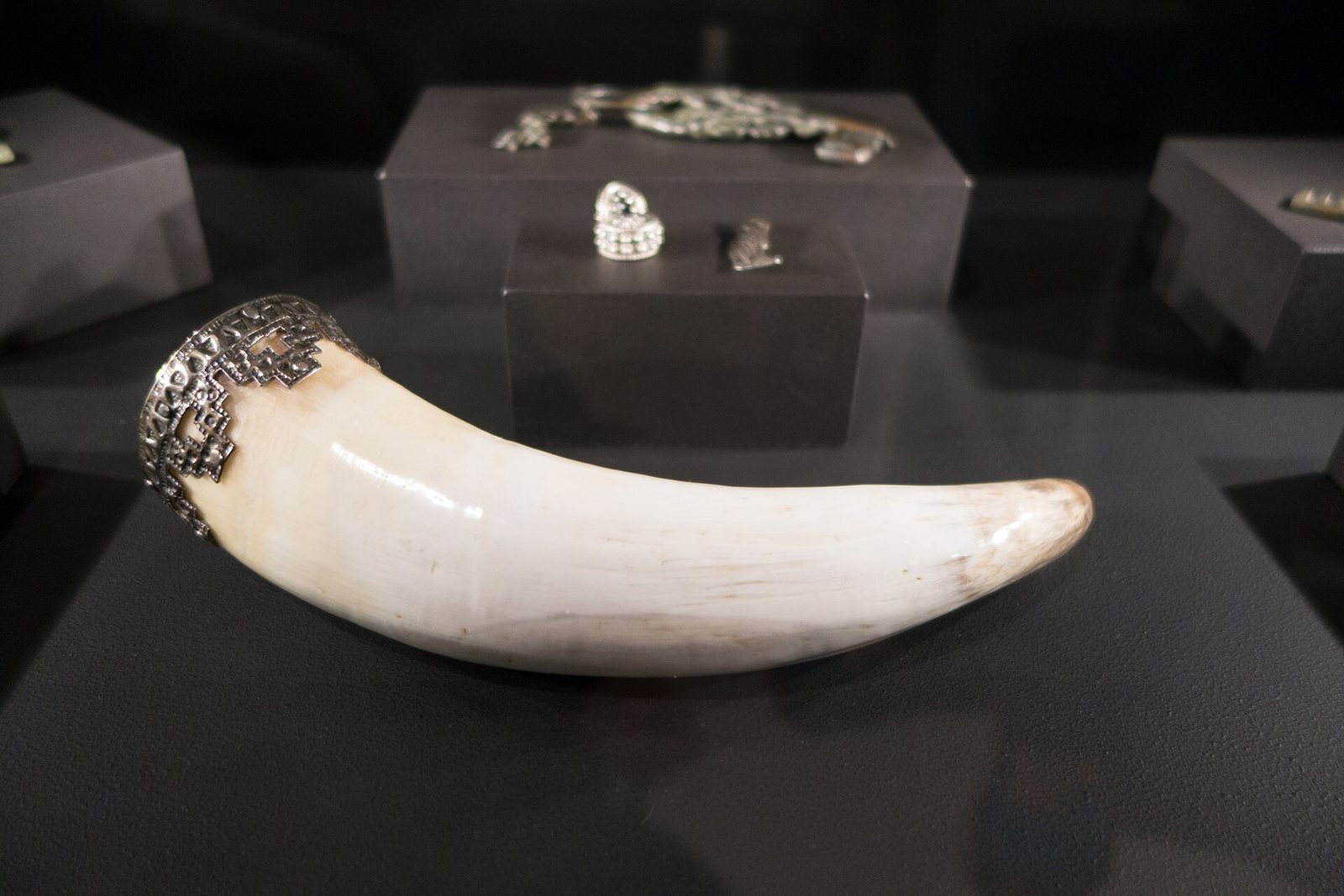
People drank from whatever the farm provided. The most splendid vessel was the drinking horn, usually from cattle, often adorned with metal mounts at the rim and tip. Because a horn does not stand on its own, it had to be emptied or passed on - ideal for sociable drinking in the round. Drinking horns, however, were feast and status vessels rather than everyday ware.
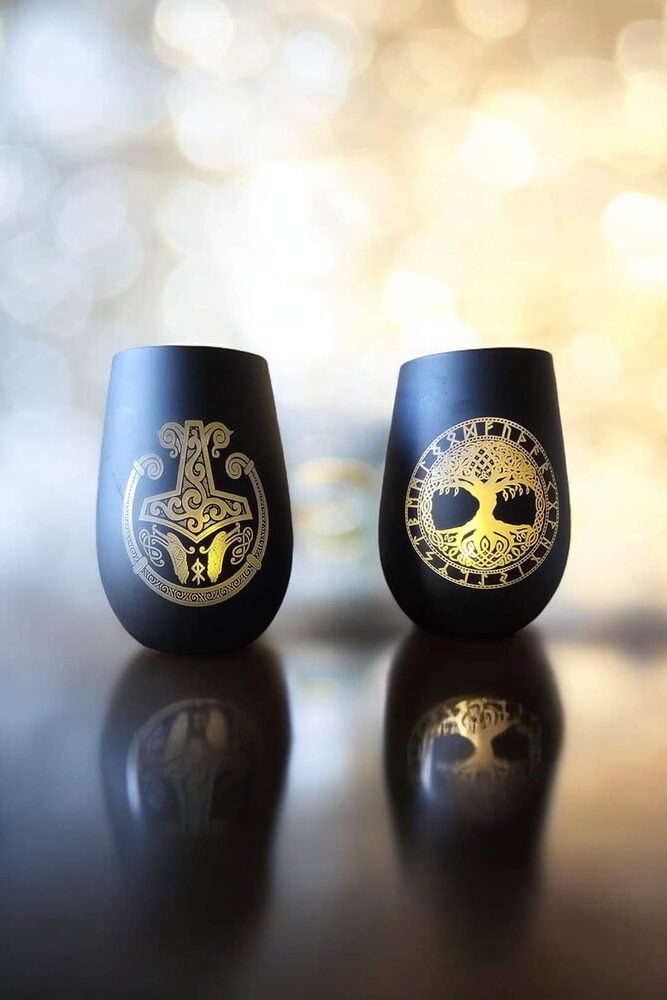
Daily life was dominated by simpler vessels: wooden cups and bowls, turned or carved, and drinking cups of fired clay. Such ceramic cups were sturdy, cheap and found in every household - the true everyday tableware of the North. Anyone wishing to drink in that spirit today gladly reaches for a hand-crafted clay cup - raise your cup and Skål!
Let us clear away three stubborn notions. First: the Viking constantly drank mead. Wrong. Mead was costly and reserved for feast and elite; the everyday drink was beer. Second: Viking beer tasted like modern beer. That too does not hold. Hops came into wide use only in the High Middle Ages. Viking-Age beer was as a rule seasoned with bog myrtle and other herbs (gruit) - sharper, more resinous, wilder and different from farm to farm.
Third: we know the real recipe. No. Not a single Viking-Age brewing recipe survives. Everything we say about concrete quantities and steps is reconstruction from ingredient finds, later customs and re-brewing attempts. Anyone selling a beer as exactly Viking-style promises more than the sources allow.
Beer was the liquid backbone of Northern daily life: brewed from barley, seasoned with bog myrtle, fermented with the household yeast, drunk by all and on every occasion. It nourished, it bound, it sealed inheritance and oath. Mead gleams in the myths - but reality tasted of malt and moor herb. Whoever would understand the North does best to raise a plain cup: raise your cup and Skål!
Mead – the drink of gods · Ægir & Rán – sea and mead · Viking food & drink · Dyeing – the colours of the Vikings.
All Everyday Life & Craft articles →
The grey Viking wrapped in sackcloth is a cinema invention. The real textile finds tell another story: bright red from …
Read more →Matted hair, unwashed for years, reeking across the meadhall – that is the Viking of cliché. The finds tell another …
Read more →When we picture Viking art, we see runestones, silver jewellery and golden brooches. Yet the true material of the North …
Read more →