Unwashed, lice-ridden barbarians with greasy beards? Or the cleanest people of their age? Both pictures cling stubbornly, and both are wrong. What graves, refuse pits and one resentful English monk really tell us about Norse grooming is more sober, and more interesting, than any cliche.
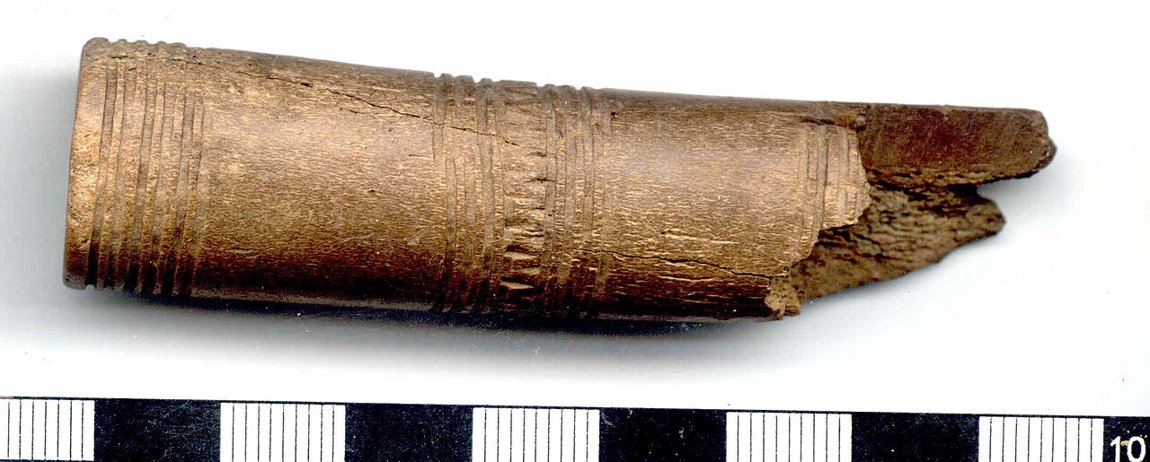
Anyone wondering how much the Vikings cared about their appearance need only count. The comb is among the most common personal objects of the entire Viking Age. At trading places such as Hedeby, Birka and Anglo-Saxon York they turn up by the thousand, and in many graves a comb lay right against the body, often as one of the very few grave goods at all. A person indifferent to well-kept hair would not have taken this tool into the next world.
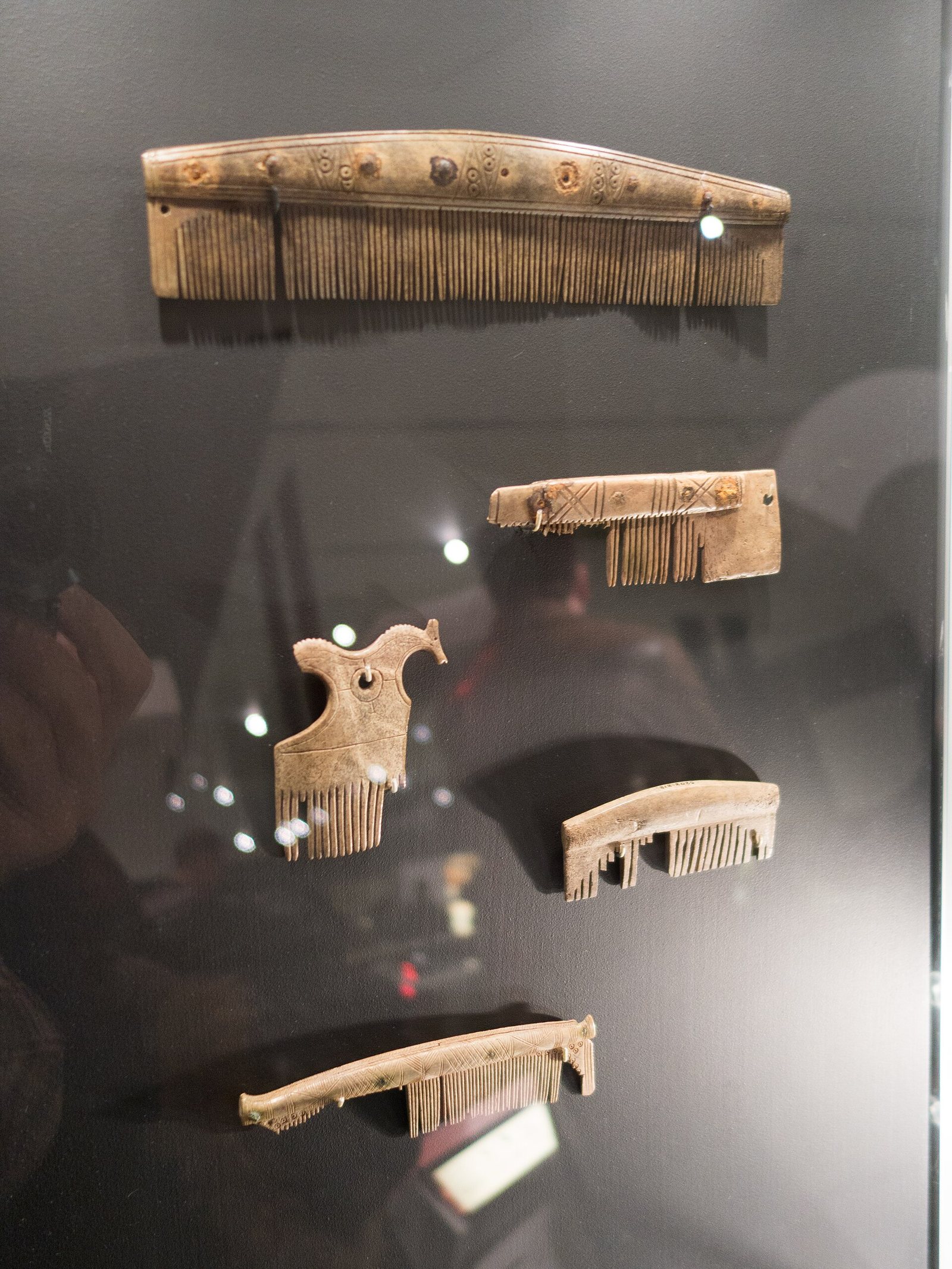
Most combs were made of antler, more rarely of bone. Antler is tough, elastic and does not splinter as easily as wood. These were elaborate composite combs, assembled from several thin tooth-plates and two connecting bars, held together with tiny bronze or iron rivets. A good comb was the work of a specialised craftsman, not a five-minute job. Many bore incised ornament, ring-and-dot patterns or interlace, and some even small runic inscriptions. The comb was tool and ornament in one.
The comb cases are especially telling. Many combs sat in purpose-made antler cases that protected them while travelling and could be carried on the belt. People took their grooming tool with them on the road. A fine comb, moreover, served not only the hairstyle but also the combing-out of lice and nits from hair and beard, a practical everyday use that survived into modern times.
The comb was also a trade good. At Hedeby and York specialised comb-makers worked in their own workshop quarters, and modern protein analysis of the antler shows that a large share of the raw material at Hedeby came not from the native red deer but from reindeer, imported from Scandinavia. A simple antler comb was thus the product of a far-reaching trade network: a good appearance cost money, and people were willing to spend it. Whoever could afford one owned more than a tool; he wore a visible sign of prosperity and self-respect on his belt.
The comb did not stand alone. In many graves, especially of the upper class, we find a whole body-care set, often gathered on a ring and worn at the belt. It included small bronze ear spoons for removing earwax, fine tweezers and slim, pointed implements interpreted as nail cleaners or toothpicks.
Such kits are not a Norse invention; they belong to a long European tradition reaching back to Roman times. But they show that the personal cleaning of ears, nails and teeth was a deliberate, everyday part of life and not left to chance. These little bronze tools were often finely made and gilded, another sign that grooming and status went hand in hand.
Perhaps the finest linguistic evidence for the cleanliness of the Norse lies in the calendar. The Old Norse word for Saturday was laugardagr, literally wash day or bath day, from laug, the warm bath or washing lye. That word lives on today: in Swedish loerdag, in Danish and Norwegian loerdag, in Icelandic laugardagur.
While most Germanic languages named their weekdays after gods, one day in the North carried a thoroughly practical name, that of the weekly wash. This suggests a fixed, recurring day for fuller body cleaning, at least once a week. One should not overstretch the point, a word-name proves no seamless practice, but it anchors bathing firmly in daily life and in the language itself.
Washing needed more than water. The Norse made a kind of soapy lye by boiling plant ash with fat or animal fats, a process that yields lye and soap in the modern sense. Such lye cleaned not only body and hair but also served for washing clothes.
One side effect is worth noting, passed down by later sources and folklore: strongly alkaline soap-lye can lighten fair hair and also worked against vermin. Whether the Vikings deliberately bleached their hair is not securely proven and remains conjecture. What is certain is that soap-making was part of the household, so cleaning went beyond a mere rinse.
The wash day covered not only the body but the clothes too. The Wallingford passage expressly names the frequent changing of garments, and textile remains from settlements and graves show that wool and linen were tended, fulled and cleaned with lye. Fine garments were too valuable to let go to ruin; they were washed, mended and handed on. Whoever could wear clean, changed clothing showed the same thing as with the comb: a degree of prosperity and the intention to look good.
The most famous statement about Norse grooming comes, of all places, from the other side. The English chronicler John of Wallingford, a 13th-century monk who gathered older traditions, complained about the Danes in the England of his imagination. His charge was not filth but the opposite:
After the custom of their country, they were wont to comb their hair every day, to bathe every Saturday, and often to change their garments; and by such means they laid siege to the virtue of married women and even seduced the daughters of nobles to yield to them.John of Wallingford, Chronica (13th c.); free translation: Glanz & Gravur
This passage is happily cited as proof of Viking cleanliness, and at its core it does support the picture: combing, weekly bathing, changing clothes. Yet it must be placed honestly. It is a hostile source. The chronicler holds the Danes' grooming against them as a means of seduction, so it is not praise in his mouth but part of a lament about foreign, dangerous intruders. He also wrote about two hundred years after the actual Viking Age, drawing on older reports. The passage is a valuable hint, but no eyewitness account and certainly no proof of widespread, model hygiene.
What is secure: Antler combs are among the most common finds of the Viking Age, often in cases and placed at the body in graves. Grooming kits with ear spoon, tweezers and nail cleaner are well attested archaeologically. The Old Norse laugardagr (wash day) and its living descendants loerdag / laugardagur anchor the weekly bath in language itself. In Iceland stone bathing pools at hot springs are attested, such as Snorralaug at Reykholt.
Iceland enjoyed a luxury the rest of the Norse world lacked: natural hot springs. At several sites stone bathing pools were built, fed by geothermal water. The best known is Snorralaug at Reykholt, linked to the name of the scholar and saga-writer Snorri Sturluson in the 13th century. Such pools were meeting place, relaxation and body care all at once.
On the mainland, where hot springs were absent, people helped themselves differently. There are indications of a badstofa, a kind of sweat- or bathhouse in which heated stones and poured water produced steam, similar to the later Finnish sauna. Bathing in river, lake or sea was of course part of it too. Cleaning was thus not a one-off ceremony but, in various forms, a part of life, adapted to what the landscape allowed.
Teeth were tended with toothpicks and probably by rubbing and rinsing. Studies of Viking-Age teeth show traces interpreted as tooth cleaning, such as the removal of deposits. Caries was rarer than today, simply because sugar in the modern sense was absent, yet wear from coarsely ground flour, often laced with grains of sand, was widespread.
Tooth loss later in life and painful abscesses are also visible on many skeletons. Dental care in the modern sense, with brush and paste, did not exist; people helped themselves with what was at hand and had to endure the rest. The picture fits the whole: deliberate care where it was possible, and the quiet acceptance of what could not be changed.
A special and still puzzling phenomenon is filed teeth. At several sites, above all in Sweden and on Gotland but also in England, skulls were found with horizontal grooves deliberately filed into the front teeth. Almost exclusively this concerns men. Why this painful and artful practice was carried out is unclear: as the mark of a group, a rank or a certain activity is suspected, but no one knows for sure. The important point is the framing: this was a special phenomenon of a few people, not a general custom and not ordinary dental care.
Hair and beard were a status marker in the North and were tended accordingly. Pictorial sources, small figures and descriptions point to trimmed beards, braided or tied-back hair and thoroughly fashionable styles, not wild, matted manes. The daily comb of the Wallingford passage fits exactly.
Hairstyles could also carry social meaning. Close-cropped hair was in part a sign of unfreedom or shame, while well-kept long hair signalled dignity and free standing. Whoever cared for hair and beard did so not only out of vanity but because appearance helped decide one's place in the community.
So much for the flattering picture. But archaeology also knows the reverse, and it matters just as much for the truth. From Viking-Age York comes one of the most famous pieces of evidence: a large, well-preserved piece of human excrement, the so-called coprolite from the Coppergate excavation. Its analysis showed that the person it came from carried a heavy load of intestinal parasites, above all whipworms and roundworms.
Similar finds of parasite eggs in refuse pits and floors confirm it: intestinal worms were widespread. Likewise lice and fleas turn up in settlement layers and on combs, whose close teeth served precisely to comb out these pests. Personal body care was real, but it took place in a world where clean drinking water, sewage disposal and rubbish removal by modern standards did not exist. Cramped houses, animals nearby, open pits, all of it made a truly hygienic environment impossible.
This apparent contradiction is in truth none at all. A person could comb daily, bathe on Saturday and still carry worms in the gut, because infection ran through water, food and the crowding of the settlement, not through a lack of body-washing. Exactly the same held for almost all pre-industrial societies. In this the Vikings were neither better nor worse than their neighbours; they simply lived in the same reality, where personal grooming and a germ-laden environment stood side by side. The well-kept head and the infested gut belonged together to one and the same everyday life.
Both extremes are false. The Viking as a filthy, lice-ridden barbarian is a distortion created by hostile chroniclers and later romanticism; the many combs, the grooming kit and the wash day laugardagr clearly refute it. But the opposite extreme, that the Vikings were the cleanest people in Europe, cannot be sustained. That formula rests essentially on the one late and hostile passage in John of Wallingford. The parasite finds from York and elsewhere show the limits: people cared for their bodies but lived in dirty, worm-infested settlements. The honest answer is therefore: well-groomed bodies in a dirty world.
So where does the picture of the stinking Viking come from at all? Partly from Arab travel reports in which an envoy described the shared washing water of the Rus as unappetising, partly from Christian enemy propaganda, partly from the film romanticism of the 20th century, which needed the shaggy barbarian. Conversely, the picture of the model of cleanliness arose in an age that wanted to heroise the Vikings. The sources themselves bear out neither of the two kitsch narratives.
For us at Glanz & Gravur it is precisely this sober picture that is the finest. It shows people who took their appearance seriously, who carried a finely made comb into the grave, who named a weekday after bathing and who made something valuable out of ornament and craft even in everyday things. The decorated antler comb in its case is an emblem of the whole culture: practical, durable, and adorned all the same.
Whoever engraves or wears Norse motifs honours not wild barbarians but people with a sense for craft and for well-kept, lasting things, as honestly as the finds allow. That is the spirit we work in too: we claim nothing the sources cannot bear, and we cut the details cleanly. The comb in the grave and a clean engraving have more in common than one might think.
Comb-makers & bone-carvers · Viking hairstyles & beards · Viking clothing & fashion · Everyday Viking life.
All Everyday Life & Craft articles →
Coarse brown sacking, a shaggy fur collar, and of course the obligatory horned helmet – that is the Viking of film and …
Read more →No animal stood closer to the people of the North than the horse. It carried them over fells and fords, pulled their …
Read more →