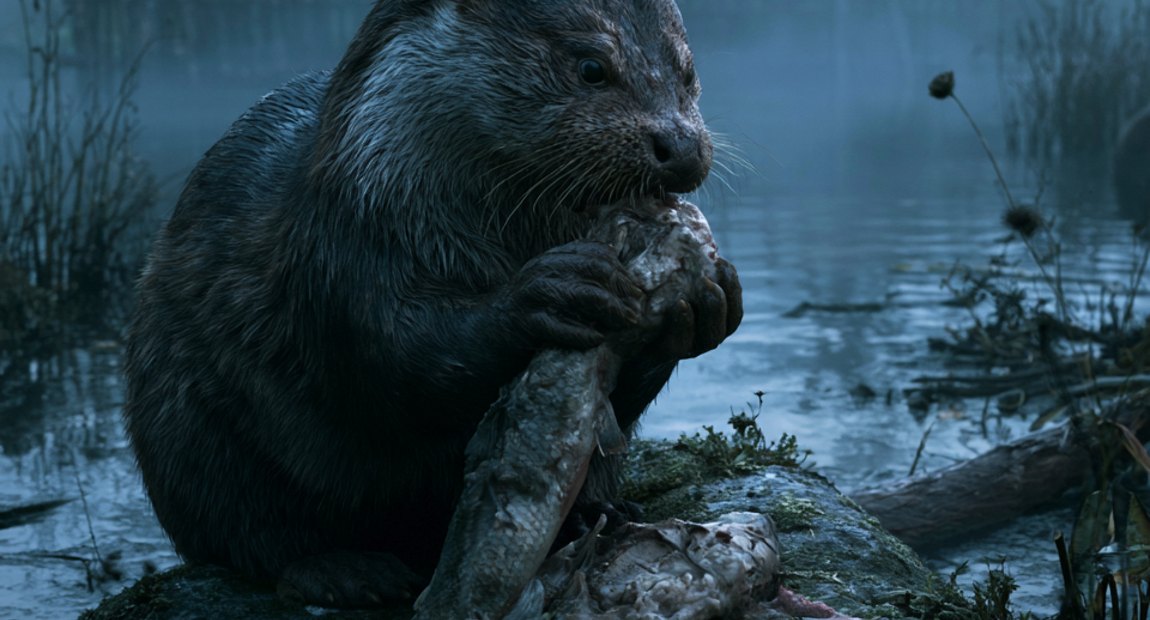
Few stories in Norse tradition trail so much ruin behind them as this one: a careless throw, a dead otter, an impossible ransom - and a curse laid by a dwarf upon a ring, which from then on plunges every owner into destruction. It begins with a mishap and ends with a dragon upon a hoard of gold.
The frame of the tale, preserved in the prose passage to the Reginsmal and by Snorri in the Skaldskaparmal, is at first harmless. Three gods travel together: Odin, his blood-brother Loki, and the silent Hönir. They come to a waterfall, and there lies an otter that has just caught a salmon and is devouring it with half-closed eyes in evident pleasure.
Loki, seldom short of high spirits, snatches up a stone and strikes the otter so that it lies dead. The three are pleased with themselves - otter and salmon at a single blow - and take the catch along. What they do not suspect: the otter was no ordinary animal.
In the evening the gods stop at the farm of Hreidmar to ask for a night's lodging. Proudly they show their catch. But Hreidmar turns pale: the slain otter was his son Otr, who had the habit of fishing at the water in otter form. At once Hreidmar and his two other sons - Fafnir and Reginn - call the gods to account and take them captive.
The ransom they demand sounds at first fulfillable and yet is a trap: the gods are to fill the flayed otter-skin with gold and then cover it from outside so completely with gold that not a hair remains visible. A whole hide - inside and out - filled with gold. That is an enormous sum. And so Odin sends the very one who caused the trouble to undo it: Loki is to fetch the gold.
Loki knows where so much gold is to be had. He seeks out the dwarf Andvari, who lives in the shape of a pike in a waterfall and there guards a mighty hoard of gold. With a net Loki catches the dwarf and forces him to hand over his entire treasure - every piece. Andvari yields, yet he tries to keep back one single ring in his hand: Andvaranaut, the ring that can breed still more gold of itself.
Nothing escapes Loki. He takes this last ring too. And in that moment the robbed dwarf does the only thing left to him - he speaks a curse over his gold and over the ring: whoever owns the hoard, it shall drag into ruin.
The gold that Gust once owned shall be the death of two brothers, and set eight princes at strife; no one shall have joy of my wealth.after the Reginsmal, public-domain translation tradition
Loki, ever the mocker, finds the curse almost amusing - after all, it strikes not him but those who receive the gold. Yet with that word the ruin is loosed upon the world.
It is telling that Andvari has no weapon and no power to defend himself - only the word. The curse is the revenge of the powerless, and for that very reason it works on so uncannily: it demands no army and no battle, it simply clings to the gold and travels with it from hand to hand. Whoever takes the hoard takes the curse along, whether he knows it or not. Thus a stolen dwarf's treasure becomes an heirloom of ruin.
Back at Hreidmar's the ransom is paid. The gods fill the otter-skin with gold and cover it from outside until all seems hidden. But then comes the moment that binds the whole tragedy into a single detail: Hreidmar checks closely and discovers one single whisker of the otter still showing. That too must be covered. And precisely for this the last piece is needed - the ring Andvaranaut, which Odin would gladly have kept. He lays it over the hair, and now the skin is fully covered.
In that instant Odin still warns the recipients that a curse clings to the gold. But it is said and done - the gods are free, and the cursed gold now lies with Hreidmar's kin. What the cunning of Loki has brought into the world, no warning can hold back.
And it works at once. Hardly are the gods gone when the sons demand their share - and Hreidmar refuses it. Fafnir slays his own father in his sleep, seizes the whole hoard, and will share nothing with his brother Reginn. Then he withdraws with the gold into the wilderness, lies down upon the treasure in the shape of a mighty dragon, and guards it thenceforth with teeth and venom.
With this the ground is prepared for the great heroic saga of the North: Reginn, cheated of his inheritance, will later raise the young Sigurd and drive him against the dragon Fafnir. The hero slays the worm, wins the hoard - and with it the curse. From then on the gold draws betrayal, jealousy, and death in its wake, down to the fall of whole lineages. Andvari's small, bitter wish at the waterfall reaches through the entire saga.
The tale of the otter's ransom, the catching of Andvari, the stolen hoard with the ring Andvaranaut, and the curse is preserved in the prose frame of the Reginsmal (Poetic Edda) and by Snorri in the Skaldskaparmal. The sequel too - Fafnir kills Hreidmar, becomes a dragon, and is later slain by Sigurd - is part of this connected Sigurd tradition. Ring and cursed gold are fixed elements of the material across several sources.
The resemblance to the Rhinegold and the Nibelung hoard - cursed gold that ruins its owners - is real, but should be placed carefully: it is shared Germanic saga material, preserved in Norse (Edda, Völsunga saga) and in continental form (Nibelungenlied), not a simple original-and-copy relationship. Richard Wagner's Ring of the Nibelung (nineteenth century) reworks both traditions freely and adds its own; it is an artistic reinvention, not a faithful source for the old motif.
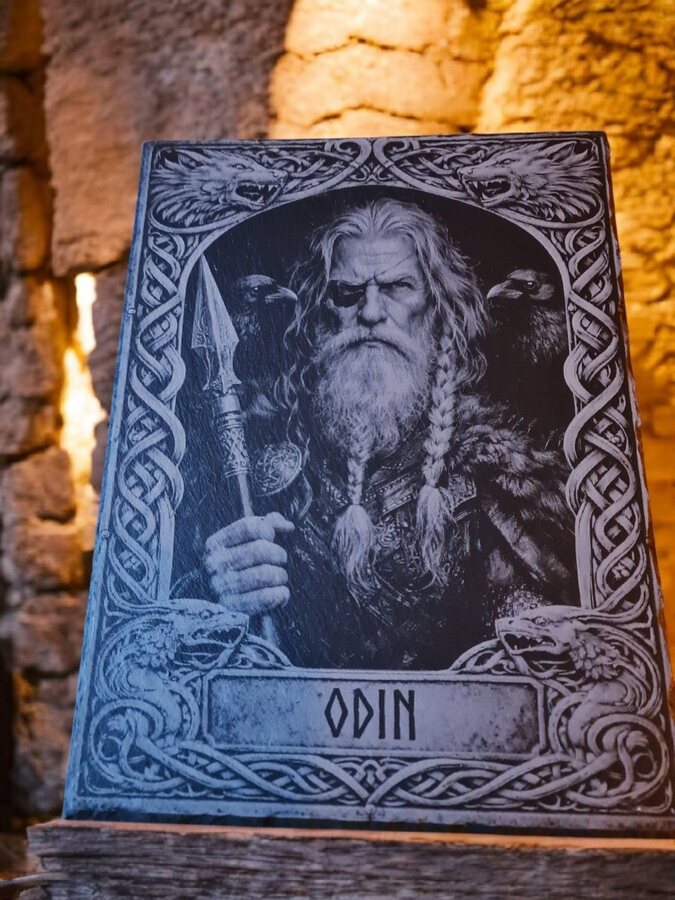
Sigurd the dragon-slayer · Loki · Odin · The Edda · The Norse pantheon.
It is the moment when laughter vanishes from Asgard. The death of the shining Balder is the most moving legend of the …
Read more →Warriors who fought in bear pelts and wolf-skins, bit their shields and feared neither fire nor iron. The berserker is …
Read more →Valhalla was only one of many realms of the dead. The ideas of the afterlife were as varied as the burial customs …
Read more →The most beautiful piece of jewellery in the world belongs to the most beautiful of the goddesses: Brísingamen, the …
Read more →