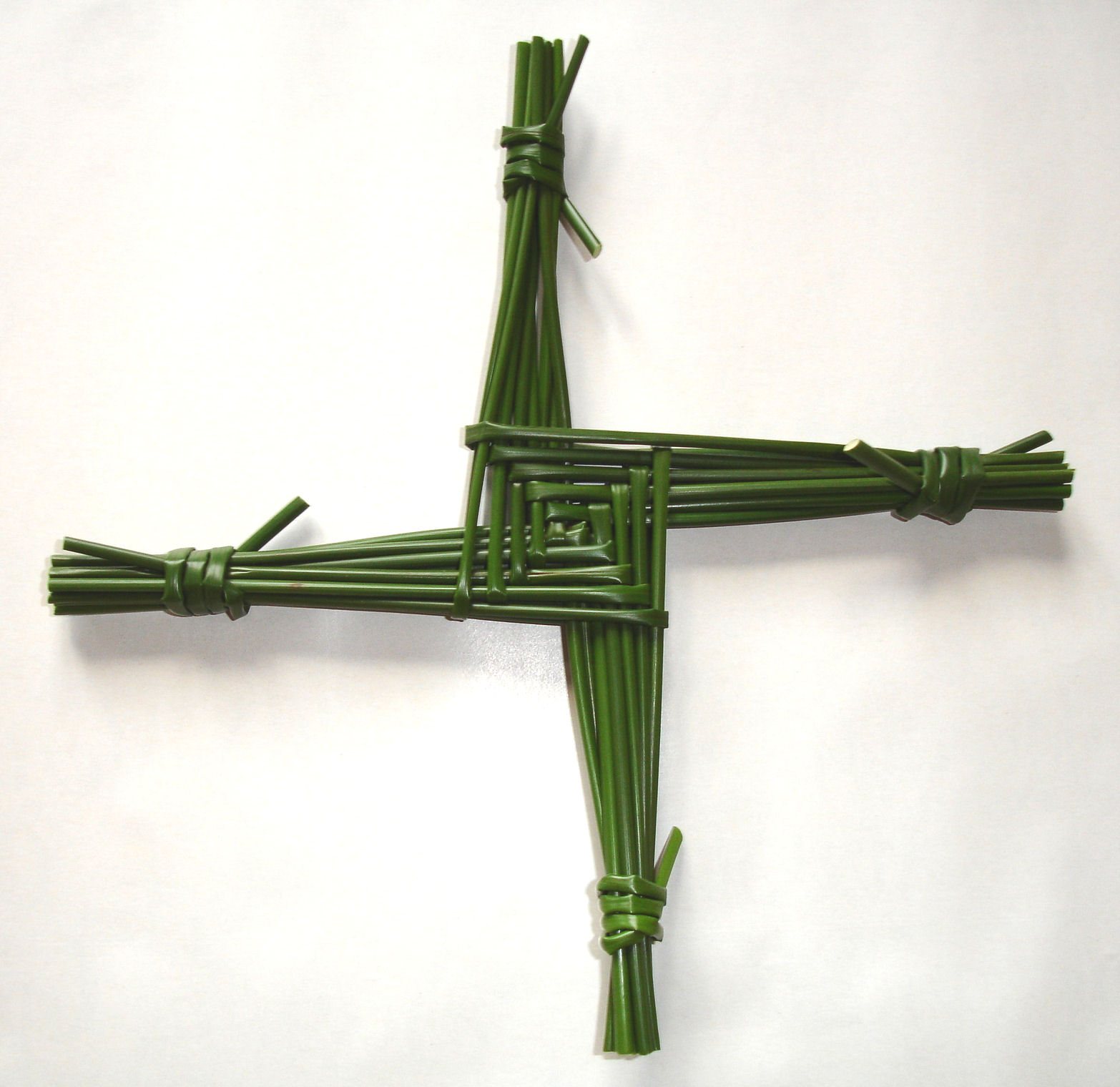
Brigid (Irish Brigit, British Brigantia) was one of the most significant goddesses of the Celtic world. Irish tradition describes her as a threefold goddess or three sisters of the same name, responsible for poetry, healing and smithcraft – all fields to do with fire and transformation. Her name is interpreted as "the exalted one".
"Wits must he have who wanders wide, but all is easy at home."Hávamál 5, after Henry A. Bellows 1923 (public domain)
Brigid was one of the most important goddesses of the Irish-Celtic world. She was the goddess of fire, healing, smithing and poetry – a radiant, versatile figure embodying craft and inspiration at once.
As daughter of the father-god Dagda, Brigid belonged to the Túatha Dé Danann, the race of gods of the Irish myths. Often she appears as a trinity – three sisters of the same name, responsible for poetry, healing and smithing.
Brigid is closely linked with the spring festival Imbolc (1 February), which celebrated the beginning of the brighter year – the time when the sheep began to lamb. Fire, light and renewal were central.
When Christianity came, the goddess Brigid merged with Saint Brigid of Kildare. In Kildare an eternal fire is said to have been tended – an echo of the old fire cult. Thus Brigid lives on in Ireland to this day.
Brigid is the fire at the threshold of spring – and the finest proof of how the old belief lived on in the new. More in the overview Celtic Religion.
Celtic Religion · Lugh · Taranis · Cernunnos · The Druids.
All Festivals & Belief articles →
They appear almost in passing in the old texts, yet they are everywhere: the disir, female spirits who watch over a …
Read more →Forget the translucent veil-ghost. The draugr of the Old Norse sagas comes back in the flesh – heavy as an ox, darkly …
Read more →