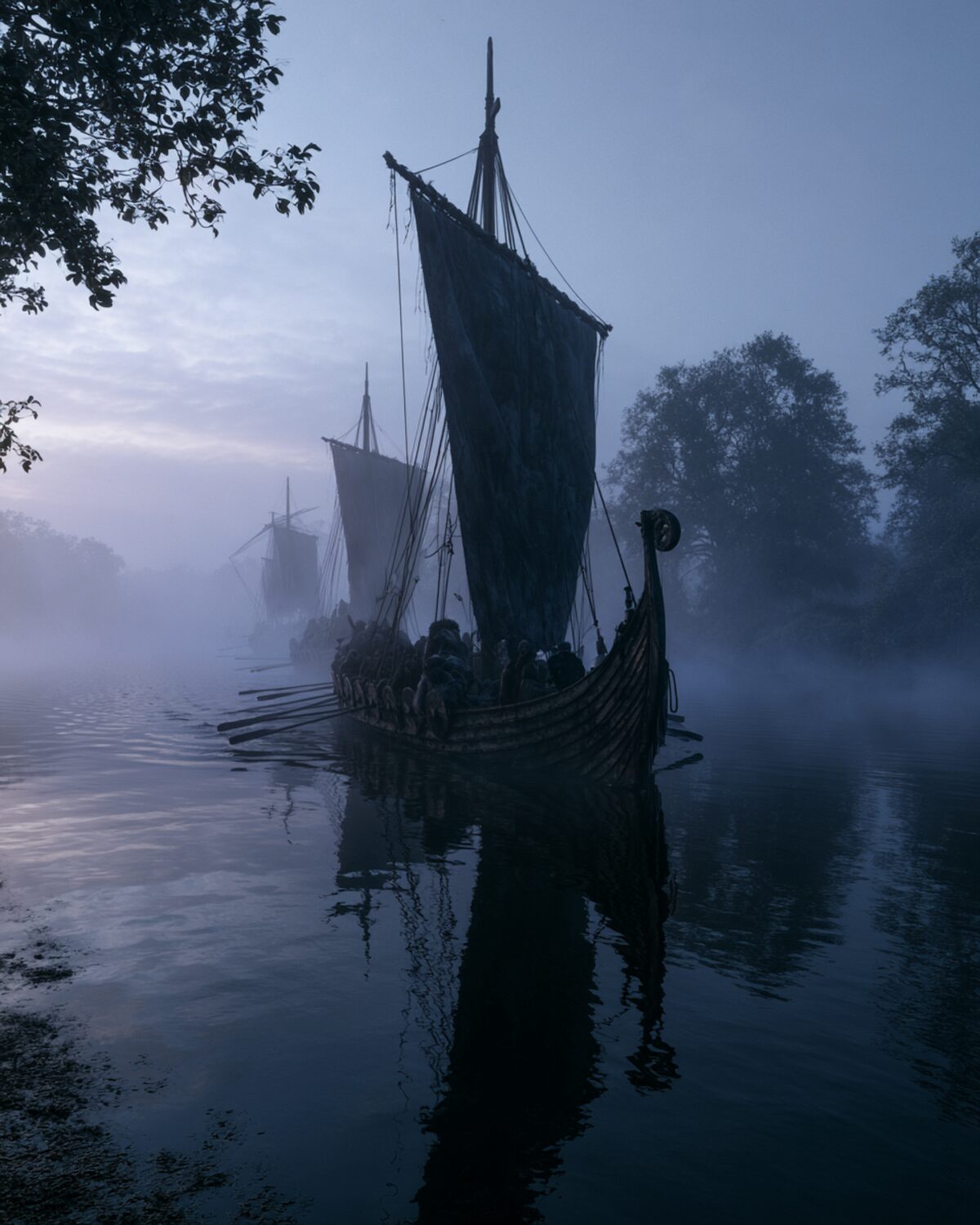
Few questions come up in the workshop more often than this one: „You make Norse engravings – but weren't the Vikings really Germanic? Or is that the same thing?" The short answer: related, yes; identical, no. The longer answer is far more interesting – and it clears up a few stubborn misunderstandings along the way.
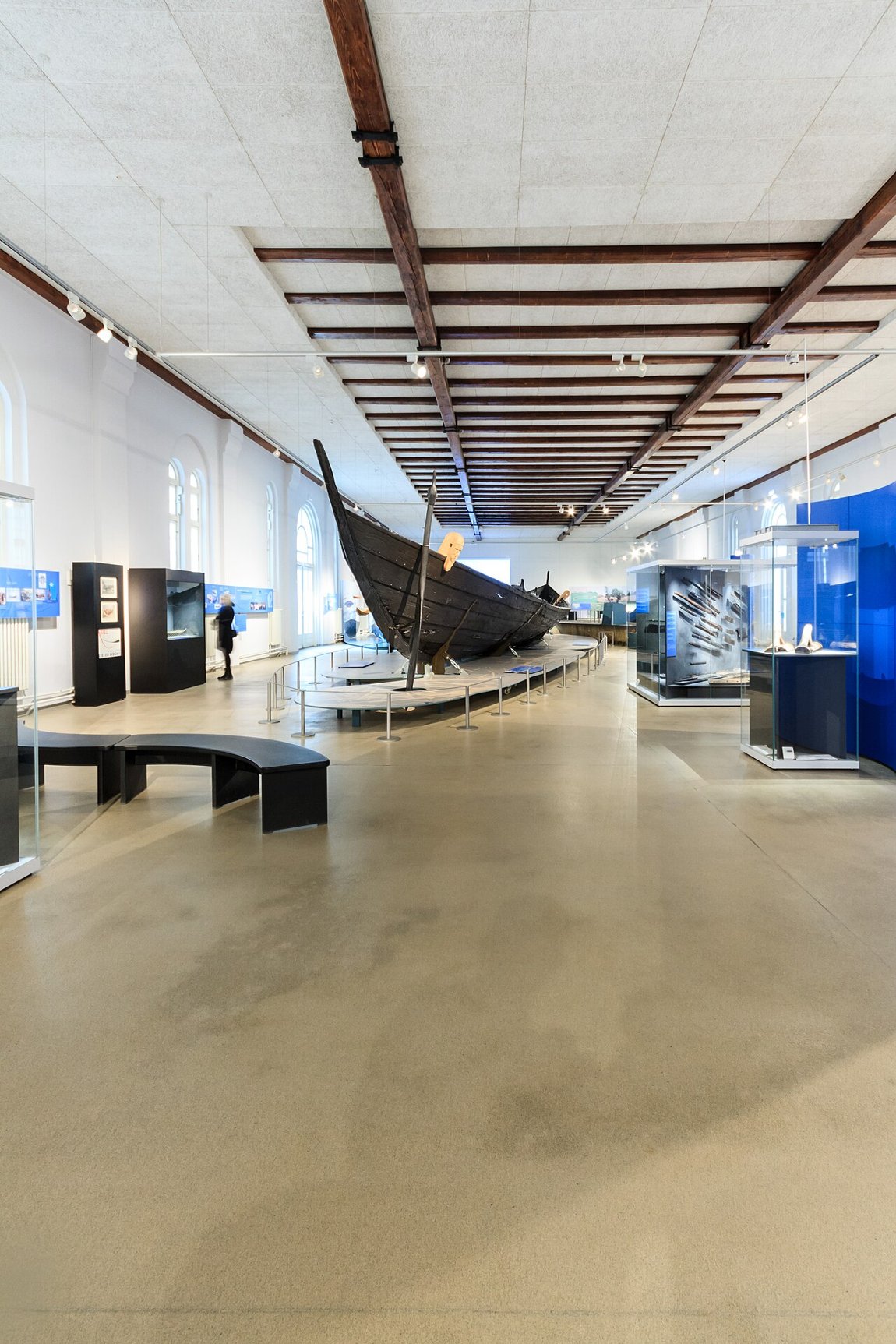
Anyone who lumps „Germanic peoples" and „Vikings" together is lumping together about a thousand years of history. Ancient writers like Caesar (mid-1st century BC) and above all Tacitus – whose work „Germania" was written around AD 98 – used the term „Germani" for the tribes east of the Rhine and north of the Danube. It described a colourful, constantly shifting patchwork of peoples that Roman observers gathered under a single collective name.
„Viking", by contrast, is a word for a much later period: the Viking Age, conventionally dated from the raid on the monastery of Lindisfarne in 793 to the Battle of Stamford Bridge in 1066. Between Tacitus and Lindisfarne lie almost seven hundred years – and in between them the vast Migration Period, during which the map of Europe was completely redrawn. Speaking of a „Germanic warrior" and a „Viking" in the same breath is a bit like confusing a High Medieval knight with a Renaissance mercenary: related, but by no means the same.
The term did not come from the people it described. No tribe called itself „the Germani"; that was a Roman outsider's label. In his Germania, Tacitus himself puzzles over the origins and names of these peoples, and for answers he turns to their own songs:
Celebrant carminibus antiquis, quod unum apud illos memoriae et annalium genus est, Tuistonem deum terra editum. Ei filium Mannum originem gentis conditoremque, Manno tris filios adsignant. – „In ancient songs, their only form of remembrance and record, they celebrate the earth-born god Tuisto. To him they ascribe a son, Mannus, the origin and founder of their people, and to Mannus three sons."Tacitus, Germania 2 (own translation)
From these three sons the great groupings were derived – in Tacitus the Ingaevones, Herminones and Istaevones. Note the crucial detail: songs were their only form of record – oral, in verse. There was no Germanic history book, no unified administration, no shared capital. „The Germanic peoples" were a language and culture family, not a state, and not a single people with a passport.
Linguists divide the Germanic languages roughly into three branches: East Germanic (such as Gothic, long extinct), West Germanic (which later produced German, Dutch, English and Frisian) and North Germanic – the languages of Scandinavia. The people we call „Vikings" spoke Old Norse, a North Germanic dialect. In that sense the Vikings really were Germanic: specifically, North Germanic. But only one single, late branch of a far broader family tree.
The decisive difference lies in the meaning of the words. „Germanic" is an umbrella term for an entire language family across many centuries. „Viking" is narrower – and strictly speaking it doesn't even denote a people, but an activity.
In Old Norse, víkingr meant a man who went on víking – that is, on a raiding and trading voyage overseas. You did not belong to the Vikings the way you belonged to the Danes or the Norwegians; you went on a viking voyage. The farmer who tilled his field in spring and fitted out a ship with his neighbour in summer was simply a farmer the rest of the year. Women, children, craftspeople, skalds and farmers of the Viking Age would hardly have thought of themselves as „Vikings".
Today we use the word as a convenient collective term for the Scandinavian society of that era – and that is fine, as long as one remembers that it names an entire culture after its most spectacular side occupation. Rather like calling 16th-century England „the privateers".
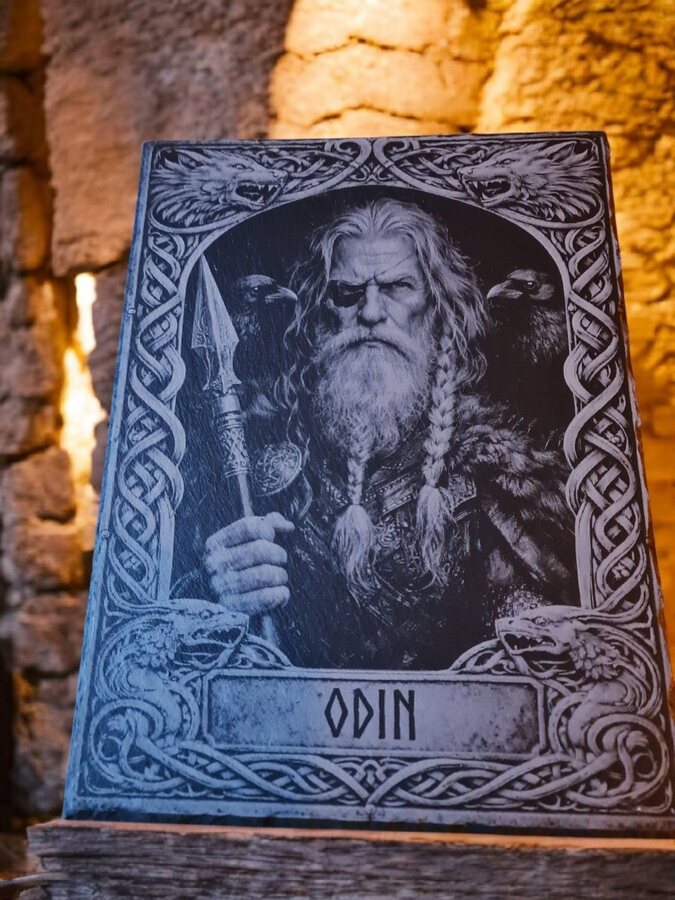
The kinship is clearest in religion. The god the Vikings called Óðinn was known to the continental Germanic peoples as Wodan or Wotan; the thunder god Þórr corresponds to the continental Þunraz, preserved in German ears as Donar. You don't have to guess to see it: the days of the week still give it away. Wednesday was once „Woden's day", Thursday is the thunder god's day (Thor's day), and Friday the day of a goddess (Frija, or Frigg).
These names show that Norse and continental Germanic mythology grew from a common root. But – and this is the honest part – we know that world of gods almost entirely in its Norse form. Nearly everything we think we know about Odin, Thor, Loki and Ragnarök comes from the Poetic Edda and Snorri Sturluson's Prose Edda. Both were written down only in the 13th century in Iceland – a good two hundred years after Christianisation, by a Christian scholar. Of the religion of the continental Germanic peoples in Tacitus's day, we know far less: a handful of god-names, votive stones, place names and the brief notes of Roman authors. Whoever reads the Edda is reading the late Norse form – not a handbook of the ancient Germanic tribes. More on this in our article Germanic Religion.
Behind both stands the same language family. German and Old Norse are like cousins descended from the same great-grandfather: Proto-Germanic. Words like „Vater/faðir" (father), „Bruder/bróðir" (brother) or „Haus/hús" (house) are no coincidence, but shared inheritance. That is exactly why so many Old Norse names and terms sound to German ears at once foreign and strangely familiar. Anyone curious about the kinship of the languages will find the connections in our article The Germanic Language.
For us in the workshop this is not distant history. For centuries the Rhineland was a borderland shaped by Germanic peoples. Between the Rhine and the Roman province sat tribes whose names still echo in the landscape today. Looking east from Alsdorf or Aachen means looking into a region where Germanic culture and the Roman world met.
And the Vikings? They too came closer than many imagine. In the winter of 881/882, Norse armies pushed up the Rhine and the Meuse and ravaged the Rhineland – Aachen, Cologne, Jülich and the monastery of Prüm in the Eifel were among the places affected. Charlemagne's Palatine Chapel is said to have served as a stable for horses; whether that is literally true or a later exaggeration is hard to prove. What is certain is this: the Viking Age was no distant event from the north here, but touched our own homeland directly. We tell the whole story in The Vikings in Aachen and the Rhineland. Anyone who has a Norse motif engraved today is also reclaiming a piece of forgotten homeland.
This is exactly where most of the errors arise. Let's clear up the three most common ones.
„Germanic = Viking." Wrong, because they are two different eras. A Cheruscan at the time of the Varus battle (AD 9) and a Danish seafarer of the 10th century are separated by almost a thousand years. The Vikings are descendants of Germanic-speaking people – but „Germanic" and „Viking" are not synonyms; they are umbrella term and sub-category, and from entirely different times.
„The Germanic peoples were one unified people." Another illusion. There was no „Germanic empire", no common language in the sense of a standard tongue, no shared identity. There were dozens of tribes that feuded, allied, migrated and dissolved again. Whether „Germani" is even a meaningful unified concept, or merely a Roman filing category, remains the subject of serious scholarly debate to this day. Anyone who wants to know more about the individual tribes will find the overview in The Germanic Tribes.
„Pure Germanic-ness" and the horned helmets. Here it gets serious. The image of the horn-crowned Viking comes from the opera and painting of the 19th century, not from a single grave find – no genuine Viking helmet had horns. More problematic still is the notion of a „pure", unbroken Germanic identity from Tacitus to the present. This idea was constructed in the 19th and above all the 20th century and abused by völkisch and National Socialist ideologues to justify an invented „national body". The historical Germanic peoples were the exact opposite: mobile, mixed, constantly on the move, culturally permeable. Anyone who is passionate about Norse history does so with curiosity and respect for the sources – not with a purity myth that never existed.
If the Vikings were North Germanic descendants – what actually made them „Vikings"? Not their faith and not their language, for they shared both with their ancestors. It was the ship. The Germanic tribes of antiquity were land peoples; they knew boats, but not ocean-going sailing ships. Only in the centuries before the Viking Age did Scandinavian clinker construction reach the perfection that produced the long, shallow, both sea-worthy and river-going longship. That ship was the real revolution: it turned farmers and traders into people who could stand on foreign shores within a few days – whether as merchants in Hedeby and Birka or as raiders off Lindisfarne.
The second difference is reach. The Germanic peoples of the Migration Period moved overland – Goths as far as Italy and Spain, Vandals as far as North Africa. The Vikings, by contrast, spun a web across the water: to Iceland, Greenland and briefly to Newfoundland in the west, along the Russian rivers to Byzantium and the Caliphate in the east. Not „more Germanic" than their ancestors, but travelling incomparably farther. It is precisely this mobility that also explains why the image of the sealed-off, „pure" Norseman cannot stand up to history.
So where does the widespread confusion come from? Largely from the 19th century. National Romanticism, Wagner's operas, history painting and the rising enthusiasm for antiquity created a wistful image of the „Nordic-Germanic" hero that simply fused antiquity and the Viking Age into a single golden past. The horned helmet is the best-known prop of this invention – to this day it stands for a fantasy that has nothing to do with the sources.
Modern pop culture reinforces it: series, games and films equate „Vikings" with a vague „Germanic primal essence" and cheerfully mix up the centuries. That is perfectly fine as entertainment – as long as one knows it is entertainment and not a history lesson. The distinction matters to us because it is what makes the real richness of the subject visible: keep the eras apart, and instead of a cliché you suddenly see a thousand years of living, contradictory, fascinating history.
So how are Germanic peoples and Vikings connected? Like this: the Vikings were North Germanic descendants – a late, Scandinavian branch of a large Germanic language and culture family. „Germanic" is the broad umbrella term covering many tribes and many centuries; „Viking" is the narrow term for the Scandinavian society of a particular era, named after an activity. The two are joined by language and religion with common roots – and separated by almost a thousand years of history.
For us at Glanz & Gravur, that is precisely the appeal. When we engrave a band of runes, a world tree or a Thor's hammer into slate or wood, we are not engraving a fantasy costume, but the honest heritage of a culture that also left its traces here on the Rhine. History rather than kitsch – that is what we prefer, and we like to think our ancestors would too.
Germanic Religion · The Germanic Languages · The Vikings before Aachen.
All History & Finds articles →
The Roman Tacitus praised Germanic women as chaste, honoured and even brave at the edge of battle. But above all he was …
Read more →Almost a thousand years separate the spear-fighting Germanic tribes that Tacitus described around 98 AD and the feared …
Read more →No prison, no police, no king who simply handed down verdicts: the legal order of the Germanic peoples and the Vikings …
Read more →