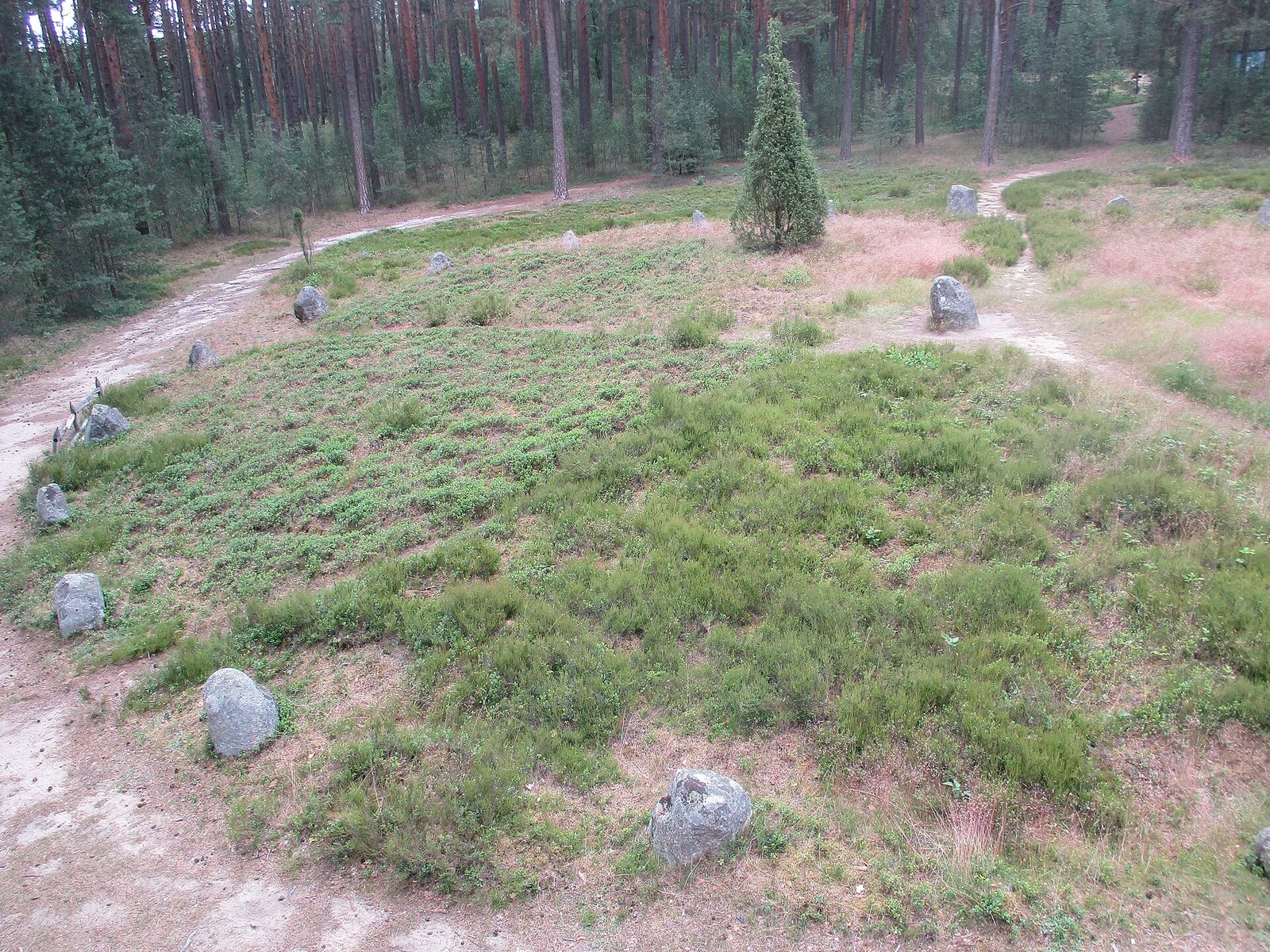
The Gutones are named by Tacitus and Ptolemy in the area of the lower Vistula. They are widely regarded as the early Goths, before these moved south.
Tacitus stresses that the Gutones were ruled more strictly by kings than other Germani – an early hint of the firm kingship that later shaped the Gothic realms.
In the 2nd/3rd century Gothic groups moved south-east from the Vistula. Archaeologically this path is linked with the Wielbark and Chernyakhov cultures. From the Gutones on the Baltic came the Goths of world history.
"The Gutones are ruled somewhat more strictly by kings than the other Germani."after Tacitus, Germania 44 (public domain, own translation)
The Gutones sat on the lower Vistula, on the southern Baltic coast. Tacitus singles them out in his "Germania" because – unlike many Germanic peoples – they were ruled by strong kings with greater power. Many regard them as an early branch of the later Goths.
Archaeologically the Gutones are usually linked with the Wielbark culture in today's Poland. Their cemeteries without weapon goods, their women's dress and jewellery draw an independent picture – a window into the world of the East Germanic peoples.
Over the centuries parts of these peoples moved down the rivers to the south-east, as far as the Black Sea. There arose the mighty kingdoms of the Goths – Visigoths and Ostrogoths – who later shook late antiquity.
The Gothic historian Jordanes tells in the 6th century that the Goths once migrated from the island of Scandza (Scandinavia) across the Vistula. This origin legend is famous – but scientifically disputed.
The Gutones stand at the beginning of one of the greatest peoples' histories of antiquity – that of the Goths. At GLANZ & GRAVUR we tell it from the sources, and keep the origin legend cleanly apart from the archaeological finding.
The Gutones stand at the beginning of Gothic history. Continue with the Goths and Bastarnae.

The Goths · The Gepids · The Rugii · The Vandals · The Bastarnae.
All History & Finds articles →
Here silver from Baghdad, furs from the North and glass from the Rhineland came together. Hedeby was the pulsing …
Read more →Long before the Vikings, a Roman writer describes a Germanic tribe that defeats its enemies not by number or strength …
Read more →