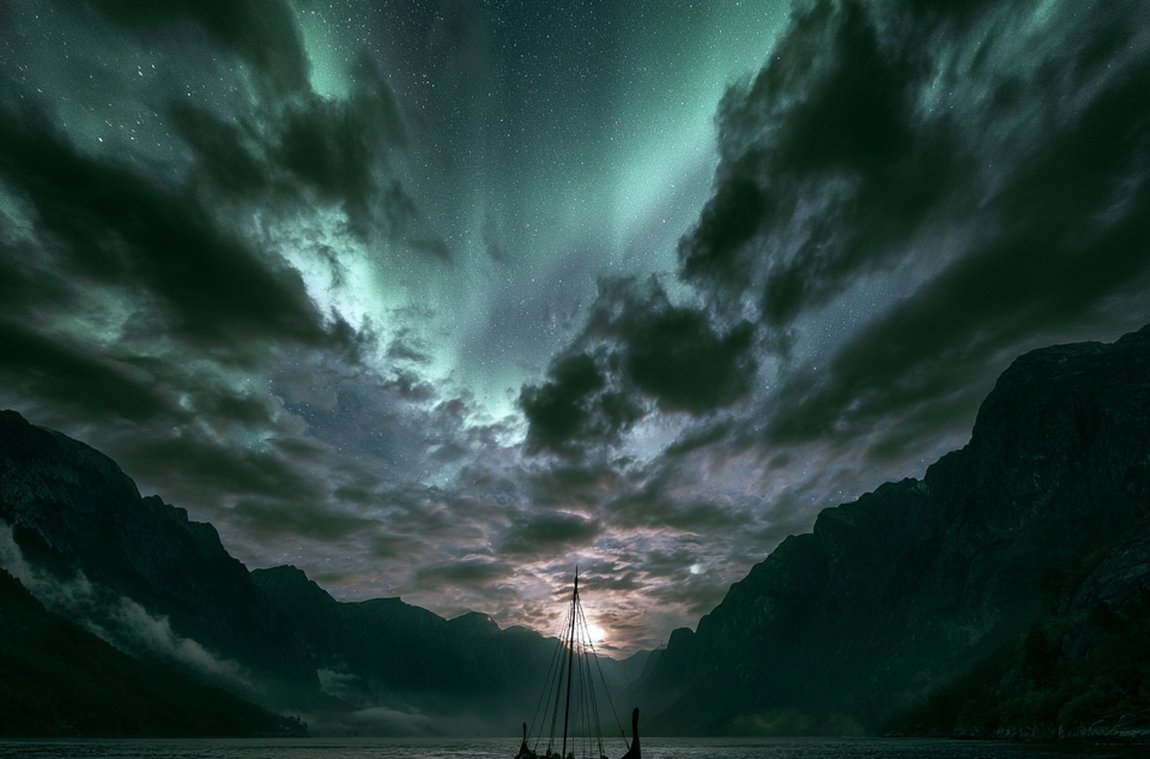
In the North, the moon is a man. Máni, brother of the sun, steers his heavenly body across the sky night after night, measuring time with it – and, like his sister, has a wolf at his heels. A boy and a girl travel with him: the first figures ever seen in the moon.
While the sun is female to the North, the moon is male – the exact reverse of the Roman world with its Luna and its Sol. This inversion is one of the loveliest features of the Germanic heavens.
As with the sun (Old Norse Sól, continental Sunna), the moon too has two names. In Old Norse he is Máni; on the continent, among the South and West Germanic peoples, he is Māno (Old High German) or Mōna (Old English). All derive from Proto-Germanic *mēnô – and the same root lives on today in German „Mond", English „moon" and in Monday / „Montag", the day of the moon. Moon and month are siblings of one word: the moon was humankind’s oldest calendar.
Máni is the son of Mundilfari and brother of Sól. Their father found his children so beautiful that he named them after sun and moon – an arrogance for which the gods set the pair in the sky, to steer the heavenly bodies ever after.
Like Sól in her sun-chariot, Máni too rides a wagon across the firmament – only by night. He „guides the course of the moon and governs its waxing and waning", says Snorri. Tellingly, while the sun’s horses bear names – Árvakr („early riser") and Alsviðr („all-swift") – the horses of the moon-wagon go unnamed. The moon travels more quietly, more hidden than his shining sister.
One of the most enchanting stories of the Edda: Máni once took two children up from the earth, the boy Hjúki and the girl Bil, just as they were drawing water from the well Byrgir – with the pole Simul on their shoulders and the pail Sæg between them. Ever since, they follow the moon and can, it is said, be seen from earth. Here is the Norse „man in the moon": the shadows on the lunar disc, read as two children with a water-pail. Some scholars see in it an ancient image for the waxing and waning of the moon – and indeed the English nursery rhyme of „Jack and Jill", who go up the hill to fetch water, sounds like a distant echo of this tale.
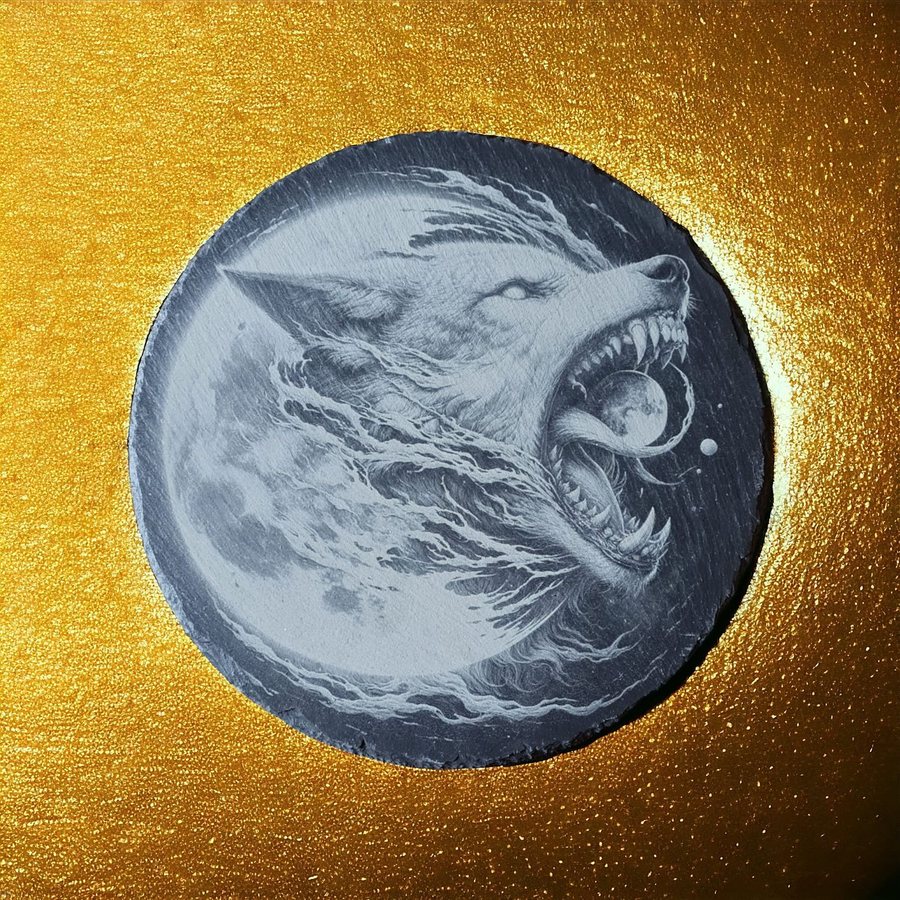
Máni too is fleeing. The wolf Hati – called by Snorri also Mánagarmr, „Moon-hound" – hunts him forever. During a lunar eclipse, it was believed, the wolf had come dangerously close. And in the end, at Ragnarök, he catches him and swallows the moon, while his brother Sköll eats the sun. We tell the whole story of this chase in the main article: Sköll & Hati – the Eternal Chase.
“Mundilfari is he who is father of the moon / and also of the sun; / across the sky they wander every day, / to count out time for men.”— after Vafþrúðnismál 23, Karl Simrock (public domain)
Sunna / Sól – the sun · Sköll & Hati – the eternal chase · Ragnarök · The Merseburg Charms · The pantheon of the gods.
Vafþrúðnismál, Grímnismál, Völuspá (Poetic Edda), public domain: Karl Simrock (1851); Snorri Sturluson, Gylfaginning, Skáldskaparmál. Rudolf Simek, Dictionary of Northern Mythology; Jacob Grimm, Teutonic Mythology (Bil & Hjúki).
All Gods & Goddesses articles →
Few figures in Norse myth are as puzzling and as important as Mimir. Sometimes he is a being at the well of wisdom …
Read more →Some figures of Norse mythology stand in the bright spotlight, others in the shadow of the great ones. Nanna belongs to …
Read more →Almost a thousand years before the Edda was written down, Germanic tribes drove a veiled goddess across the fields on …
Read more →Every god has a mother. Heimdall has nine – at once. Nine sisters, giant maidens, bore the watchman of the gods “at the …
Read more →