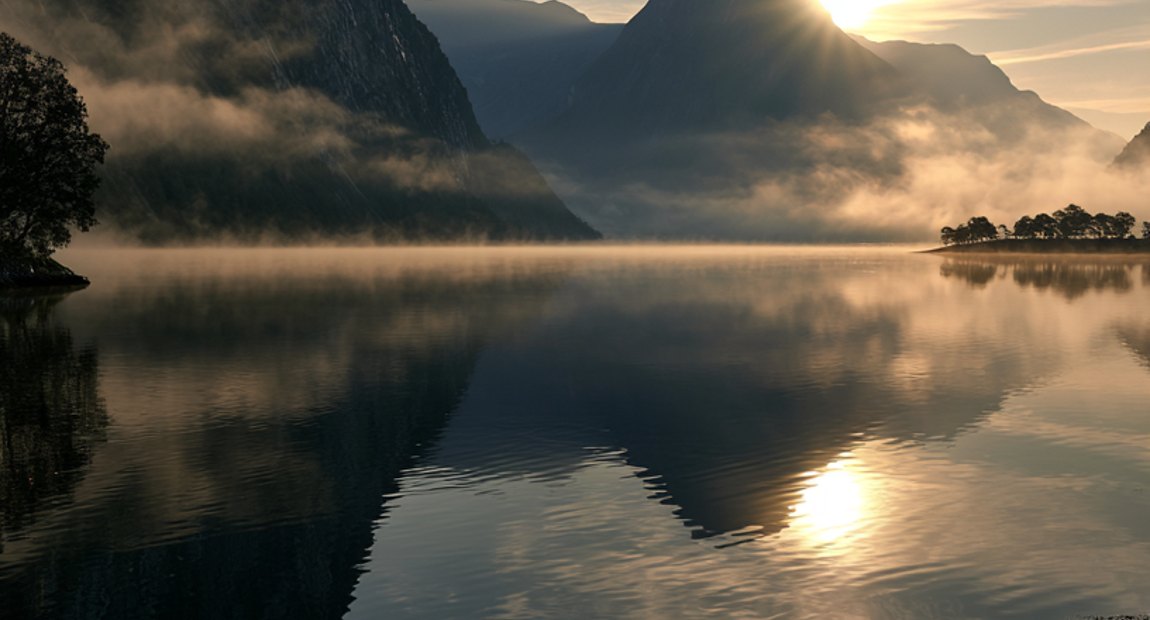
There is a love story in Norse mythology made almost entirely of longing. Its hero is a god of whom we know little more than his name: Odr, Freyja's husband, who one day set out and never returned. Left behind is a goddess who weeps for him – and whose tears turn to red gold.
Odr, Old Norse Óðr, is among the most fleeting figures of the Norse pantheon. He acts in no great tale, he fights in no battle, he speaks in no flyting. We know him almost solely through his relationship: he is the husband of Freyja, the most beautiful and passionate goddess of the Vanir. Snorri Sturluson mentions him in Gylfaginning and in Skáldskaparmál – and both times the focus is not on what Odr does, but on what his absence does to Freyja.
That is unusual. In most myths a figure is defined by deeds. Odr, however, exists above all as an empty space, as what a lover lacks. And that is precisely what makes him strangely haunting.
Snorri reports that Odr set out on far journeys and stayed away for a long time. Where to and why, no source says. He travels off into the distance – and Freyja stays behind. The images the tradition finds for this are plain, and all the stronger for it: a goddess who waits, seeks and weeps. There is no explanation given, no quarrel, no betrayal. Only the leaving and the being left.
One can read much into it: the sailor or trader who crosses the seas while someone waits at home; the experience of missing someone at all. The mythology imposes no fixed reading, and that is its charm. Anyone who wants to learn more about Freyja herself will find the wider picture in our piece on the goddess Freyja.
The most famous image of this story is Freyja's weeping. Out of longing for Odr she sheds tears – and those tears are of red gold. It is one of the loveliest motifs in all Edda poetry: a goddess's grief is so precious that it literally sets into gold. In the language of the skalds, gold is therefore paraphrased, among other ways, as Freyja's tears. A feeling becomes a poetic formula that outlasts the centuries.
She wept for Odr tears of red gold.after the Prose Edda, public-domain translation tradition
Let the image sit on the tongue for a moment. Not rage, not revenge, not sorcery – it is grief that here becomes the most valuable thing of all. Anyone who has ever missed a person understands this goddess at once.
But Freyja does not merely stay behind and weep. She sets out and seeks Odr among foreign peoples. On this search, the tradition says, she takes on many names – she travels through the lands and is called one thing here, another there. This also explains why Freyja appears in the sources under several by-names: the many names are, in a sense, the traces of her wandering.
That too is a powerful image: the lover is not content to wait, but goes out into the world herself. Here, missing someone is not only standstill but also departure. Freyja belongs to the Vanir, the divine family of growth and abundance; readers who wish to explore that background will find it in our piece on the Vanir.
From the union of Odr and Freyja come two daughters: Hnoss and Gersemi. Both names mean something like treasure or jewel. This is no accident but a statement: what arises between Freyja and Odr is so valuable that it lives on in the names of the children. Snorri reports that the daughters were so beautiful that everything precious was named after them. So a family story becomes, once again, a piece of language – the most precious things bear the name of Freyja's children.
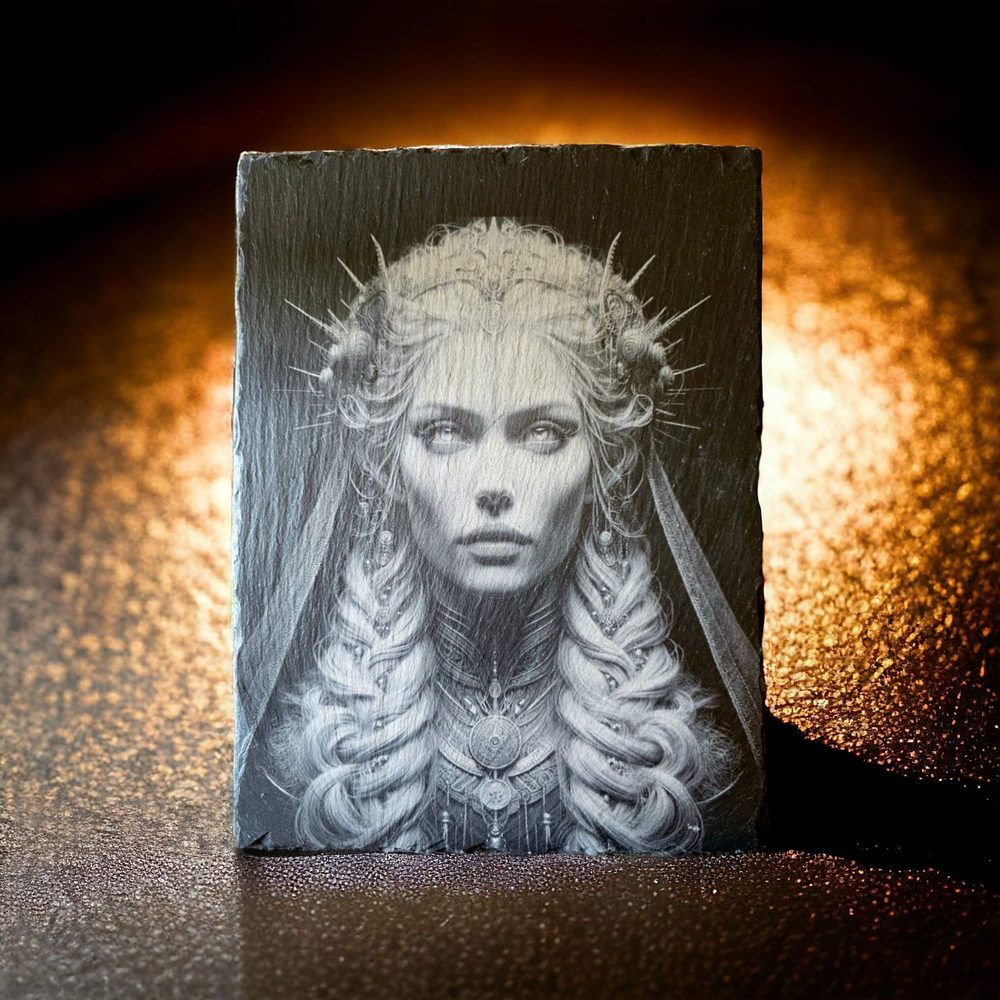
Odr is the god of missing someone, even if no one ever called him that. His story is not about heroic deeds but about absence and longing, about a love strong enough to turn tears to gold and to drive a goddess across the world. That is surprisingly modern. It is also a reason why this motif in particular lends itself so well to personal words: to an engraving that remembers a distant or lost person. Anyone looking for the right phrasing will find inspiration in our piece on Norse words of love.
What is certain is what Snorri Sturluson transmits in Gylfaginning and Skáldskaparmál: Odr is Freyja's husband, he departs on long journeys, Freyja weeps tears of red gold for him and seeks him among foreign peoples under many names. Their daughters are named Hnoss and Gersemi, and both names mean treasure. That gold is paraphrased in skaldic language as Freyja's tears is likewise attested.
What remains unresolved is who Odr actually was. His name Óðr sounds strikingly close to Óðinn – both go back to the Old Norse word óðr, which can mean frenzy, ecstasy, mind or poetry. Hence the theory that Odr is a variant or double of Odin, and that Freyja's searching longing mirrors Odin's wanderings. That is a hypothesis, no more. The sources are too thin to prove or disprove it. The linguistic echo should be taken seriously, then, but not mistaken for an attested identification.
Freyja · The Vanir · Norse words of love · Njörðr – god of the sea · The Norse pantheon.
All Gods & Goddesses articles →
Her hair was of pure gold – and this hair set off one of the most consequential stories in all of mythology. Sif, wife …
Read more →She does nothing grand – no heroic deed, no spell – and yet she is one of the most moving figures in all of mythology …
Read more →She came to Asgard to take revenge – and stayed as a goddess. Skadi is the mistress of the mountains, of winter, of the …
Read more →In the North, the sun is female. Sunna – Sól to the Norse – races across the sky day after day, pursued by a wolf who …
Read more →