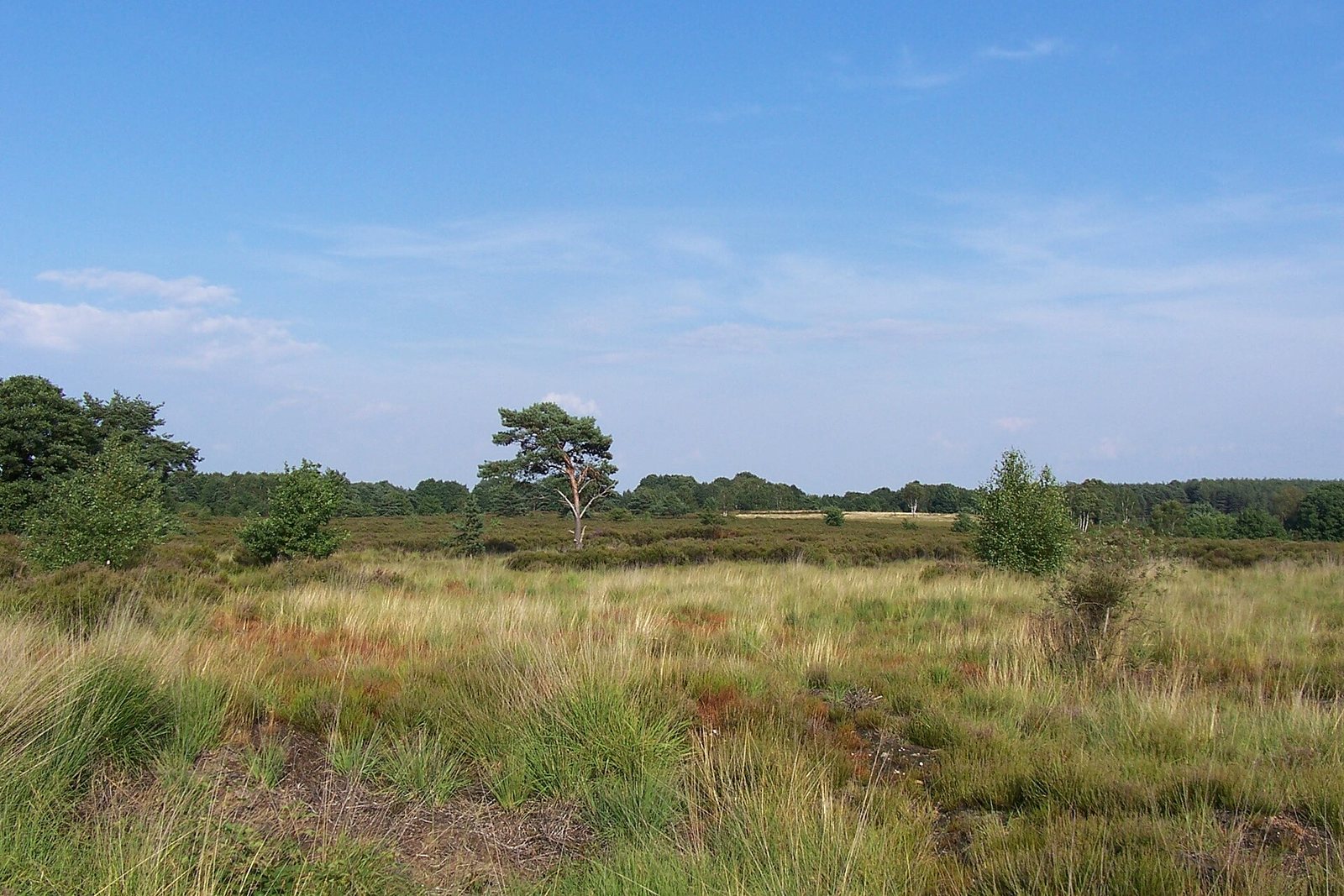
 In the heaths and moors between Meuse and Scheldt lay Toxandria. Here, in the land of the Texuandri, Rome settled the Salian Franks – and unknowingly laid the foundation of medieval Europe.
Some tribes are famous for their battles, others for their gods. The Texuandri (Latin) matter for something else: for the place they gave their name to. For Toxandria – the flat, sandy heathland of the Campine between the Meuse and the Scheldt, in the border region of today's northern Belgium and the southern Netherlands – became the cradle of one of the most consequential peoples in history: the Salian Franks, from whom the Merovingians and thus the medieval Frankish realm arose.
The Texuandri are named as early as Pliny the Elder in the 1st century and later by Tacitus among the peoples of the Rhine delta. Their land was no rich farmland but a bare world of heath, sand dunes, carr woodland and moor – a border seam between the Roman province and free Germania. Like their neighbours they lived from stock-raising, a little farming and what river and forest gave. Precisely because the land yielded so little, it stayed thinly settled for a long time – and later became a reception area for incoming groups.
In the 3rd century the whole Rhine frontier began to move. Smaller Germanic tribes merged into great confederations; on the Lower Rhine the Franks arose out of many old names. Again and again Frankish groups crossed the Rhine, plundered – or asked to be admitted into the empire. Toxandria lay right on their path. The tribe of the Texuandri disappears in this period as an independent actor from the sources; but their land becomes the stage of a decision that would shape Europe.
The decisive moment falls in the year 358 AD. The later emperor Julian, then Caesar in Gaul, marched against the Salian Franks (Salii), who had settled in Toxandria. The historian Ammianus Marcellinus, a contemporary, reports that Julian did not simply drive them out but chose another way: he received them as foederati into the empire – they were allowed to stay, but in return had to give Rome loyalty and soldiers. "He received the Salii, who had once dared to settle on Roman soil at Toxandria," writes Ammianus. Enemies became allies – and out of a tolerated fringe group grew, over the generations, a power.
The Salian Franks settled in Toxandria spread south in the following decades, deeper into Gaul. From their leaders finally came the dynasty of the Merovingians; Clovis I united the Frankish sub-kingdoms around 500, defeated the Alemanni at Zülpich and had himself baptised. The Frankish realm that grew from this became the core of medieval Europe – from it emerged France and the Holy Roman Empire. The famous law book of the Salian Franks, the Lex Salica, also bears the name of this tribe. So a straight line runs from the heath of Toxandria to Charlemagne in Aachen.
As with the Canninefates, the name of the Texuandri lives on in the map. The region of Toxandria (Dutch Toxandrië, also handed down as "Texandria") still denotes the historic area of the Campine between Eindhoven, Turnhout and the Meuse. Place names, local societies and museums of the region invoke the old name. So the small tribe, which itself left hardly any history of its own, has become immortal through the place where world history took its beginning.
The story of the Texuandri is a lesson in the Migration Period. It shows that out of the many small tribes of the early imperial era – still neatly listed by name in Tacitus – grew, over a few centuries, the great tribal leagues of the Middle Ages. It also shows that Rome's frontier was no rigid wall but a permeable zone, in which reception, settlement and fusion mattered as much as war. And it shows how closely Germanic prehistory is woven into our own region: the road from Toxandria via the Salian Franks to Aachen is short.
Of the Texuandri themselves we know little – a few mentions in Pliny and Tacitus, plus the decisive passage in Ammianus Marcellinus on Julian's campaign of 358. All these sources are Roman and see events from outside. The picture is filled out by the archaeology of the Campine (Frankish cemeteries, settlement traces) and by place-name research. What is secure – the settlement of the Salian Franks in Toxandria – we separate carefully from what remains interpretation, such as the exact borders of the tribal territory or how much "Texuandri" still remained in the later Franks.
What the written sources leave open, archaeology fills in: in the Campine and the wider Frankish area the typical row-grave cemeteries of the Merovingian period appear from the 4th and 5th centuries. Men were often buried with weapons – the spatha (long sword), the sax (single-edged fighting knife), lance and shield – women with brooches, beads and costume elements. These graves show a society with clear differences of rank and a warlike upper class. They also document the cultural upheaval: out of the loosely scattered farms of the early imperial era grew a more densely organised, Frankish-shaped world.
The most famous legacy of the Salian Franks is their law book, the Lex Salica, recorded in the time of Clovis around 500. It regulates above all the wergild – the "man-price" measured in money, payable for killing or injury and meant to curb the blood feud. One quite different clause became notorious: the provision that daughters could not inherit certain land. From this originally purely rural rule, late-medieval jurists built the "Salic Law" against female succession to the throne – a late reinterpretation that had nothing more to do with the Texuandri. The Lex Salica shows how a small border tribe became a people with its own written law.
That this bare heathland of all places became the springboard of the Franks has a simple reason: position. Toxandria lay in the thinly settled border seam, easily reached via Meuse and Scheldt, close enough to Roman order to profit from it and far enough away to go its own way. When Rome needed soldiers and settlers in the 4th century, a loyal Germanic group on half-cleared land was exactly the right thing. So a military stopgap became one of the most consequential settlements in history – and the land of the Texuandri the launch pad of the Franks.
"He received the Salii, who had once dared to settle on Roman soil at Toxandria."after Ammianus Marcellinus, Res gestae XVII (public domain, own translation)
The Canninefates · The Franks · Battle of Zülpich.
All History & Finds articles →
From above they look as if drawn with a compass: perfectly circular ramparts, divided into exact quarters, with four …
Read more →