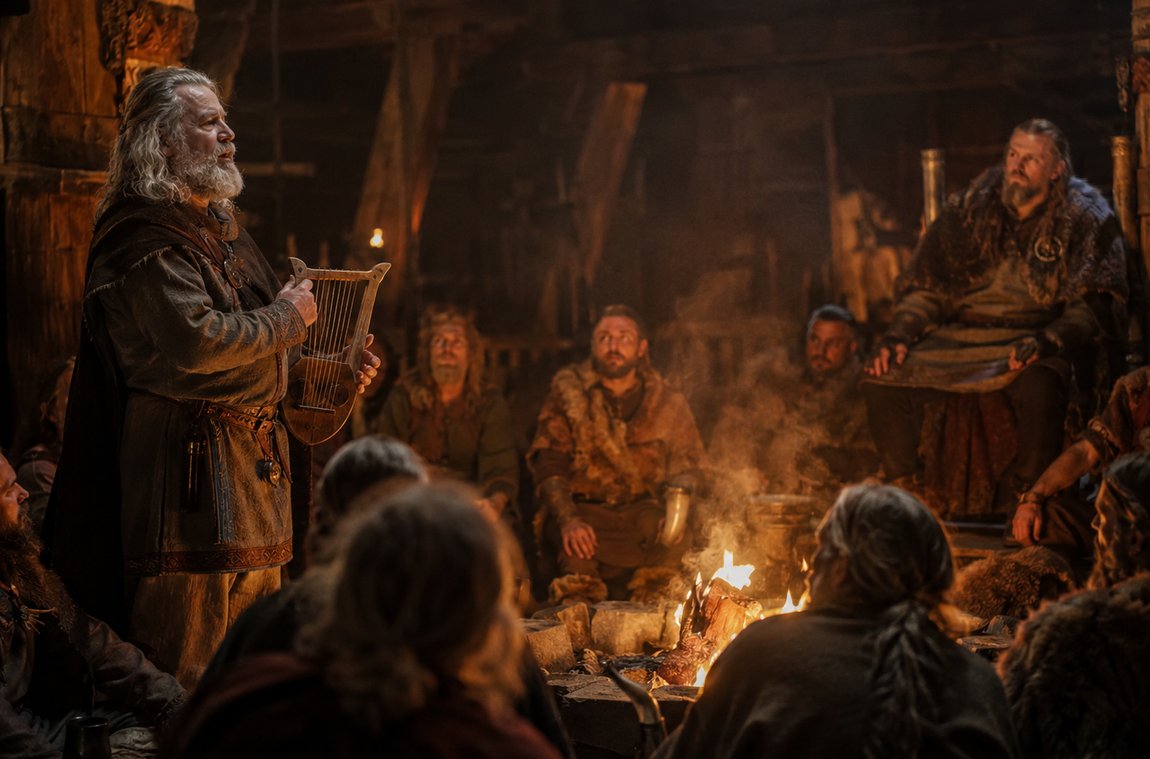
A poet who fears for his reward, and a lord who lets himself be celebrated: the Vellekla („gold-lack“) by the skald Einarr skálaglamm is one of the most brilliant praise-poems of the Viking Age.
To understand the Vellekla one must know what a skald meant in the old North. He was no simple singer but a highly specialised word-artist, often of noble birth, who lived at the court of a king or jarl. His craft – the intricately interlaced dróttkvætt metre with its strict alliteration and internal rhyme and its riddling paraphrases, the kennings – was among the hardest things the Norse tongue ever produced. A good praise-poem was more precious than silver – for it made the ruler immortal.
One of the greatest of these masters was Einarr Helgason, called skálaglamm – „scale-tinkle", after a ringing gift he once received. Around the year 985 he composed his chief work, the Vellekla, in honour of the mightiest man in Norway.
The one celebrated is Hákon jarl Sigurðarson, ruler of Lade and effective lord of Norway. The poem extols his campaigns in dense, image-rich stanzas: the fights in Denmark, the resistance to foreign claims, and above all the famous sea-battle in Hjörungavágr against the dreaded Jómsvikings. Again and again Einarr celebrates the jarl not only as a warrior but as protector of the old sanctuaries and the gods – at a time when Christianity was already knocking at the door of the North.
This stress on loyalty to the old gods is no accident. Hákon stood for the old order, and a skald who praised him made that order a programme at the same time. Skaldic poetry was never merely beautiful; it was always also politics.
The strange title winks at two things. First at Einarr’s own often empty purse: a skald lived on his lord’s generosity, and one who found no good patron suffered a literal „gold-lack". Second – and this is the fine point – at Hákon’s own munificence, which cured every such lack of his poet with rich gifts. The title is thus complaint and compliment at once, a small masterpiece of courtly irony.
In it lies the whole nature of skaldic art: art and calculation, beauty and livelihood, genuine admiration and hard self-interest, inseparably interwoven. The poet needed the prince, and the prince needed the poet – for only his verses carried the ruler’s name beyond death.
„Cattle die, kinsmen die, you yourself die as they do; one thing I know that never dies: the fame of the dead man’s deeds." — Hávamál 76/77, after Bellows
For historians, poems like the Vellekla are a stroke of luck. Their strict metre makes later corruption hard: change a stanza and you destroy the rhyme and rhythm – which is why skaldic verses count as especially reliable witnesses of events, often older and closer to what happened than the prose sagas that later framed them. From Einarr’s stanzas one can read Hákon’s reign almost like a contemporary chronicle.
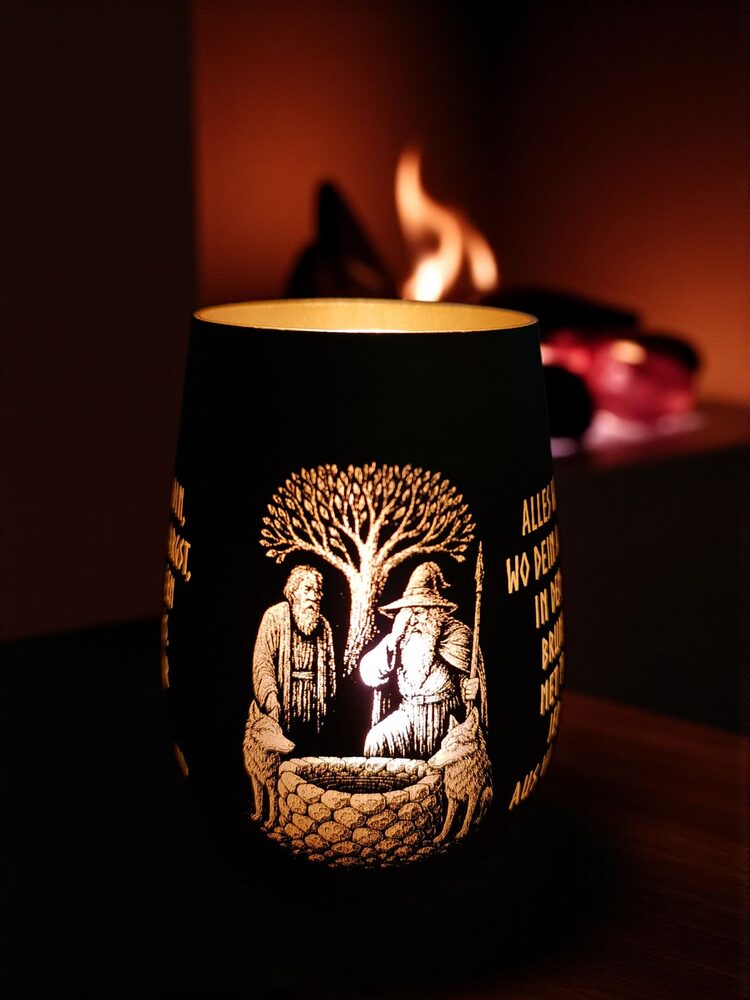
At the same time caution is due: it is commissioned poetry. Hákon’s vaunted „loyalty to the heathen gods" is also propaganda, and even the dating (975 or 985?) and the order of the surviving stanzas are debated to this day. What fascinates us about such poems is exactly this double nature – work of art and historical source in one. When we evoke the mead of poetry on a windlight, we think of exactly these men who forged, with words, a fame that has outlasted a thousand years.
Eyvindr skáldaspillir · Óttarr svarti · The Edda · Runes.
Einarr skálaglamm, Vellekla (Snorri, Heimskringla / Skáldskaparmál); Egils saga. Skaldic Poetry of the Scandinavian Middle Ages; Rudolf Simek, Dictionary of Northern Mythology.
Valhalla is no resting-place for weary souls. It is a barracks of the fallen: a vast hall where the bravest dead fight …
Read more →They are far more than the winged warrior-maidens of the opera: the valkyries decide who falls in battle – and who is …
Read more →Before the gods of the North were one family, they waged the first war of the world – against each other. The War of …
Read more →When in deepest winter the storm howls, so people believed, a spectral host rides through the night: the Wild Hunt. At …
Read more →