The westernmost of all Slavic tribes sat where one would hardly expect it: in eastern Holstein, between the Kiel Fjord, the Trave and the Baltic. The Wagri belonged to the federation of the Abodrites, yet formed a principality of their own – and their history is as well recorded as that of hardly any other Elbe Slav, because a chronicler lived among them.
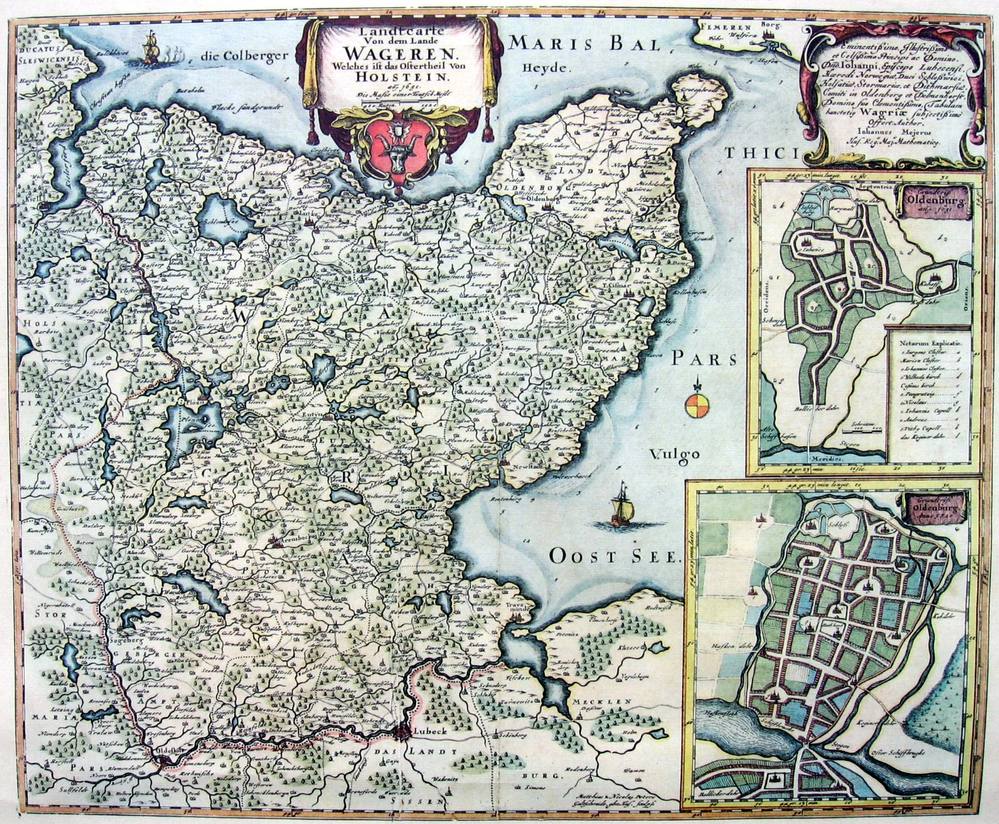
Wagria covered the east of today's Schleswig-Holstein. Its core fortress was Starigard ("old fort"), the German Oldenburg in Holstein – a mighty ringwork, princely seat and cult place in one. The Wagri lived from farming, fishing and Baltic trade; their position on the border with the Saxons and Danes made them a constant buffer and battleground between the powers.
In 968 a bishopric was founded at Starigard/Oldenburg – the westernmost outpost of the church in the Slavic land. But Christianisation did not run smoothly: the great Slavic revolt and later the rule of the pagan prince Kruto in the late 11th century set it back. Only in the 12th century did Christianity prevail for good, carried by missionaries like Vicelin. This chequered history shows how tenacious the old faith was even among the westernmost Slavs.
What we know about the Wagri – and about the Elbe Slavs at all – we owe largely to a single man: Helmold of Bosau, a priest in Wagrian Bosau on Lake Plön. His Chronica Slavorum is the most important source on the history and religion of the Elbe Slavs in the 12th century. Because Helmold himself lived among Slavs, his descriptions of the gods, groves and customs are unusually vivid – even if they remain the view of a Christian missionary.
In the 12th century the counts of Schauenburg and Holstein finally conquered the land. With German eastward settlement came Saxon, Dutch and Flemish farmers; they drained marshes and founded villages and towns. The Wagrian population merged over the generations into the new order, and the land became Holstein. Lübeck too arose in this border zone – from Slavic Old Lübeck (Liubice) came the German Hanseatic city.
The Wagri left their ringforts, their place names and – through Helmold – one of the most important historical works of the north. Whoever finds places ending in -ow, -in or -itz in eastern Holstein today hears a Slavic echo. The Wagri remind us that the border between "Germanic" and "Slavic" ran right through northern Germany – and that both worlds shaped this land together.
The Wagri stood at the centre of the great struggles of faith in the 11th century. When the Christian Abodrite prince Gottschalk fell in the pagan revolt of 1066, the Wagrian prince Kruto seized power and made the land pagan again for a generation. Only after his murder and the return of Christian princes did the church come back. These decades show that the Christianisation of the Elbe Slavs was no single act but a long back-and-forth of mission, revolt and reconquest.
Like their neighbours the Wagri lived in ringforts and villages, farmed and fished and traded across the Baltic. Starigard/Oldenburg was princely seat, market and sanctuary in one; nearby Old Lübeck (Liubice) was an important trading place before the Germans founded new Lübeck. Slavic pottery, hacksilver and the mighty ramparts still testify to this world today.
Almost all written sources on Slavic history come from their neighbours and opponents – German, Danish, Byzantine and Arab authors. They wrote from afar or from a Christian or Islamic view, often with their own agenda. That is why archaeology matters so much: ringforts, coin hoards, graves and trade finds complement and correct the picture of the texts. Only both together give an honest picture – and that is exactly how we separate here what is documented from what remains interpretation.
The Wagri lived in one of the most dangerous frontier positions of the north: to the west the Saxons and the empire, to the north the Danes, to the east their own Abodrite federation. This position made them warriors and mediators at once – now allied, now raided. Their harbours and forts were transfer points between the Slavic, Saxon and Scandinavian worlds; Slavic pottery turns up in Hedeby, Norse goods in the Wagrian forts. So the Wagri were a hinge of Baltic trade, not a remote corner.
Whoever travels through eastern Holstein today meets the Wagrian heritage everywhere: in place names, in the mighty ringforts and in the reconstructed Oldenburg rampart museum, which brings a Slavic fort back to life. The Wagri remind us that Schleswig-Holstein is shaped not only by Germanic and Danish but also by Slavic roots – an often forgotten chapter right on the Baltic.
The Wagri show like hardly any other tribe that the border between "Germanic" and "Slavic" ran right through northern Germany – and was permeable. Here Slavs, Saxons, Danes and Scandinavian traders lived side by side, in an alternation of war, trade and mission. That a Slavic principality existed for centuries of all places in eastern Holstein, almost on the Danish border, still surprises today. It is a chapter that only modern archaeology and Helmold's chronicle have made visible again – and that makes the north more layered than the old national histories wanted.
The mission here bore well-known names: Vicelin, working from Neumünster, is regarded as the apostle of the Wagri; the collegiate foundation he shaped became the base for the Christianisation of eastern Holstein. That the church had to begin anew several times – after revolts, after Kruto's pagan rule – shows how hard the cultural change was on this frontier. Only with the counts of Holstein and German eastward settlement did it become final.
"The Wagri are the bravest among the Slavic tribes, because they dwell nearest to the Saxons."after Helmold of Bosau, Chronica Slavorum (public domain, own translation)
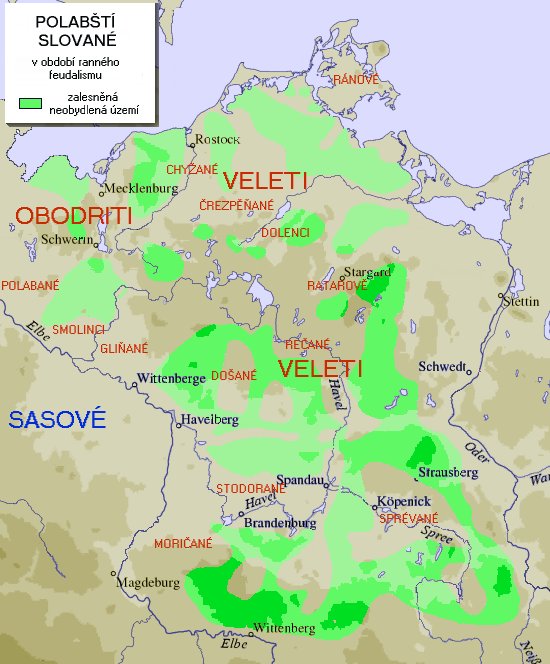
The Abodrites · Starigard / Oldenburg · The Liutizi.
All History & Finds articles →
Vikings and Aachen? Sounds like two worlds with nothing to do with one another. Yet in the winter of 881/882 the …
Read more →The Vikings came, raided – and stayed. Over the winter, at least. Instead of sailing home after every raid, they …
Read more →