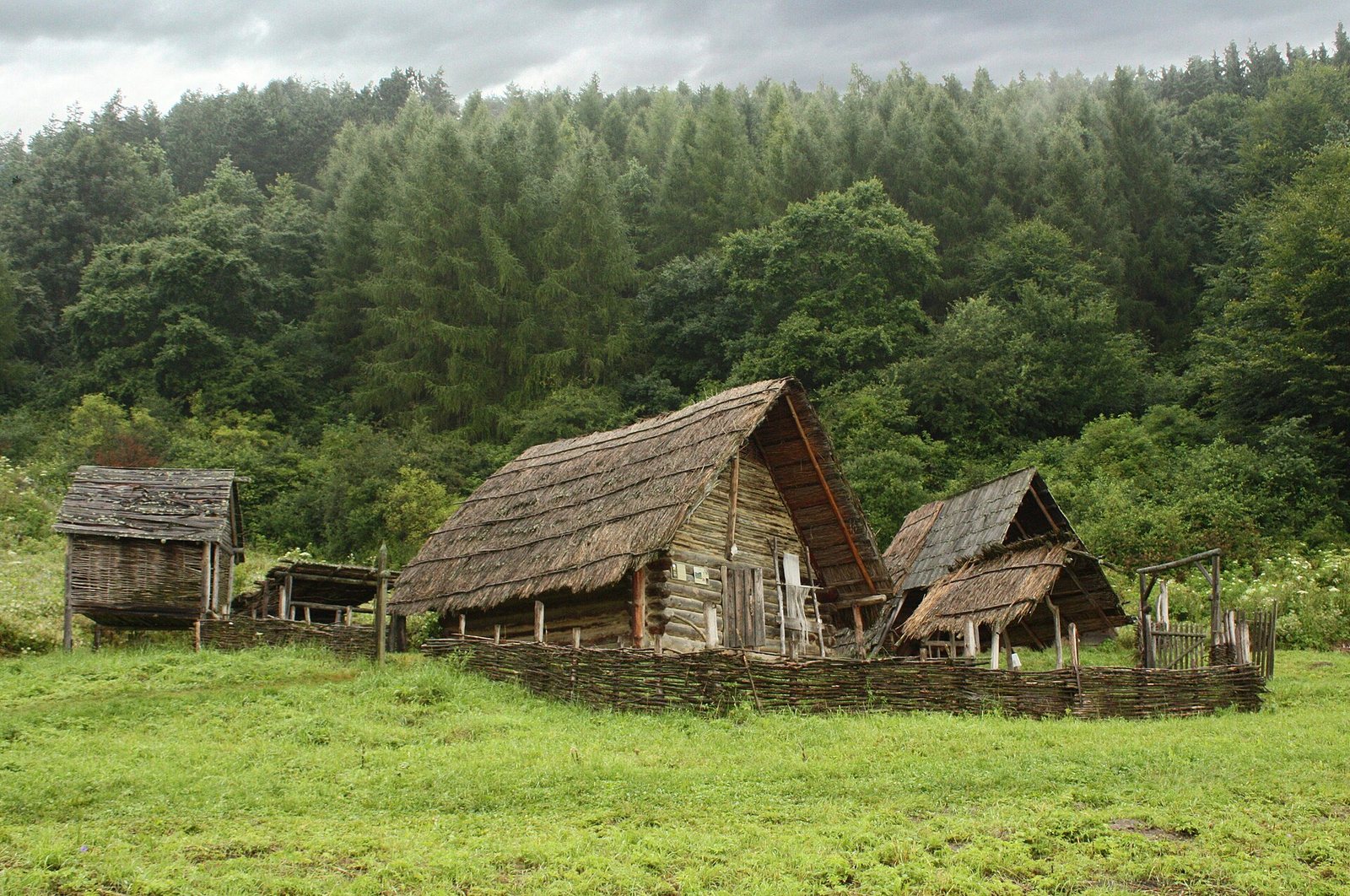
The Cotini and Osi were two peoples in the highlands on the edge of Germania, in the Carpathian region. Tacitus names them in one breath – and makes an astonishing remark.
The Cotini, says Tacitus, spoke Gaulish (Celtic), the Osi Pannonian – so precisely not Germanic. Even the Roman author knew: not every people in "Germania" was Germanic. The language map was more varied than the political one.
The Cotini dug iron and had to pay tribute – to Sarmatians and Quadi. Tacitus turns up his nose: a people that mines iron and yet does not use it for its own freedom. So the Cotini become an example of dependence.
"It shames the Cotini that they dig iron."after Tacitus, Germania 43 (public domain, own translation)
The Cotini were a peculiarity: they lived in the midst of the Germanic region, in the Carpathians, but spoke – as Tacitus expressly notes – a Gaulish (Celtic) language. Evidence that "Germania" was never a linguistically uniform block.
The Cotini were skilled miners who dug iron from the mountains. This craft made them valuable – but also dependent, for their neighbours coveted the metal.
Tacitus judges them harshly: it was a disgrace that the Cotini mined iron – the material of weapons – and yet paid tribute instead of freeing themselves with it. For the Roman author this was a sign of lacking defensive spirit.
Wedged between the Germanic Quadi and the Sarmatian horse peoples, the Cotini had to pay dues to both sides. Their fate shows how small, specialised peoples could be ground down between the powers.
The Cotini remind us that language, people and territory in antiquity were rarely congruent. At GLANZ & GRAVUR we tell such stories from the sources – precisely because they burst the simple pigeonholes.
The Cotini and Osi show the real diversity of central Europe. Continue with the Buri and Lugii.
The Buri · The Lugii · The Nahanarvali · The Quadi · The Marcomanni.
All History & Finds articles →
Sometimes a war is won not with the sword but with the purse. In 991 the English ealdorman Byrhtnoth faced a Viking …
Read more →In 723 an Anglo-Saxon missionary stood axe in hand before the holiest tree of the Hessians – the oak sacred to the …
Read more →Vikings were not only raiders. In the Rhine-Meuse delta they sat in the very middle of the greatest trading centre of …
Read more →