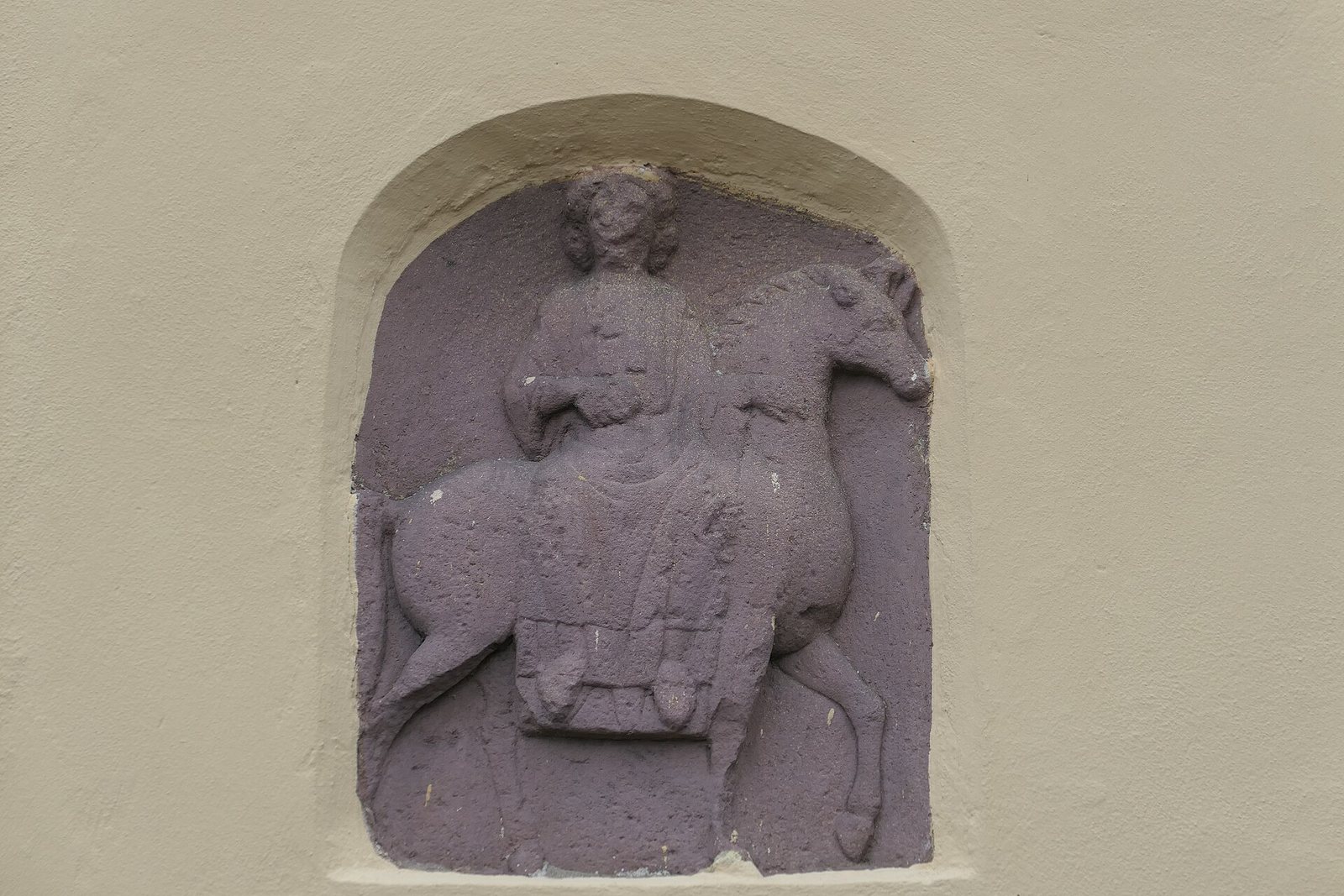
Epona was the Celtic goddess of horses, riders, donkeys and the stable – and at the same time a goddess of prosperity and fertility. Her name derives from the Celtic word for "horse" (epos). On countless images she appears gently enthroned among horses or riding side-saddle on a horse, often with a cornucopia or grain.
Epona was so popular that the Romans adopted her – a rare case. The cavalry in particular worshipped her: in stables and barracks her image was set up so she would protect the horses. She even received her own feast day in the Roman calendar (18 December). This makes Epona the most widespread Celtic deity in the Roman Empire.
Like many Celtic deities, Epona was more than "just" a horse goddess: she stood for fertility, care and – in some interpretations – for accompanying the soul on its last journey. The horse was a sacred animal in the Celtic as in the Germanic-Norse world (think of Sleipnir or the sacred horses of the Germanic peoples). Epona is their Celtic face.
"Wits must he have who wanders wide, but all is easy at home."Hávamál 5, after Henry A. Bellows 1923 (public domain)
Epona was the Celtic goddess of horses – her name contains the Gaulish word epos ("horse"). As protector of horses, riders and stables she was one of the most beloved deities of the Celtic world.
Epona was so beloved that the Romans took her into their own pantheon – a rare case for a Celtic deity. Especially the Roman cavalry worshipped her; she even received her own feast day in the Roman calendar (18 December).
On countless votive stones and reliefs Epona appears mostly on horseback or seated among horses, often with a cornucopia or fruit – signs of fertility and care. Her cult reached from Gaul to the borders of the empire.
As many images as there are – transmitted myths about Epona are almost entirely lacking. We know her form and her worship, but no tales. She is among the goddesses who speak to us above all from cult and art.
Epona is the gentle, far-travelled mistress of horses – a Celtic goddess who even conquered Rome. More in the overview Celtic Religion.
Celtic Religion · Cernunnos · Lugh · Sacred horses · Nehalennia.
All Festivals & Belief articles →
The old Norse people did not think of a person as a sealed self inside a skin. A life involved more powers than that: a …
Read more →A word that tastes of cold air and carved staffs: Gandreið. The “magic ride” carries us to the dark frontier of Norse …
Read more →For our ancestors death was no taboo but a passage accompanied with care. They closed the dead one's eyes, made him …
Read more →The Germanic year knew no spring – only summer and winter. And its feasts followed the rhythm of field and war. Snorri …
Read more →