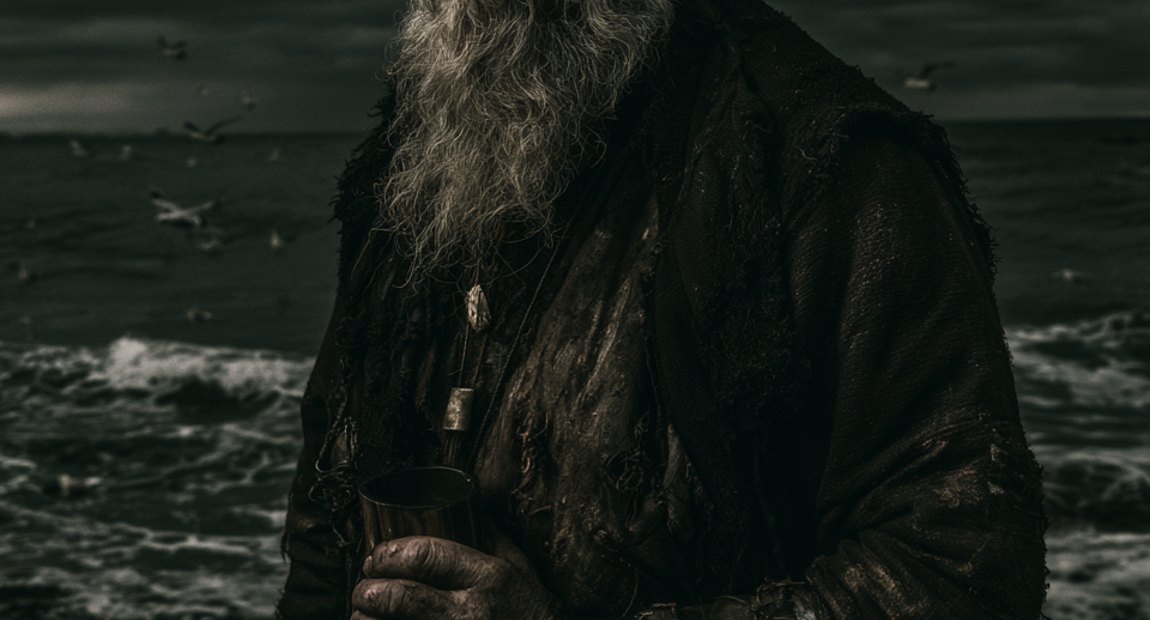
For our ancestors death was no taboo but a passage accompanied with care. They closed the dead one's eyes, made him ready for the last journey, drank in his honour and set him a mark in stone that reminded the living of him for generations. A look at the old customs around the farewell – and at what of it is attested and what is folk belief.
When a person died, their eyes and mouth were closed – by tradition from behind, so that the breathed-out soul would not return. Doors and windows were opened so the “soul-bird” could fly away. Finger- and toenails were carefully cut; in folk belief because from the nails of the dead the ship Naglfar is one day to be made, which at Ragnarök carries the giants – but quite practically also to ready the body reverently for the road.
Then the dead received the helskór, the hel-shoes, for the stony, thorny road to Hel. And the death was announced to the kindred or ancestor tree, to avert misfortune. They are small, careful gestures – each a sign that the farewell was taken seriously.
The deceased lay in state for several days and was walked around several times – just as one circled sanctuaries three times at weddings and consecrations. Only after days, for the important after the seventh or thirtieth, came the actual funeral feast: the wake or heir-feast with the erfiöl, the heir-ale. One drank to the minni, the memory of the dead. The heir made vows for his own life – and only then was allowed to take the high-seat of the deceased. The dead was thought present at the heir-ale, as if he took part in the handover himself.
To make remembrance visible, one set bautasteinar – memorial stones – on the grave mounds, often along the roads. So the living, passing by, met the ancestors and their own mortality at once.
“Seldom do memorial stones stand by the road unless a kinsman sets them for a kinsman.” Hávamál 72 (after Bellows 1923, public domain)
This thought – a lasting mark, set out of kinship – is alive to this day. If you wish to set such a mark for a person or an animal, we offer simple, weatherproof memorial plaques of natural slate or wood: the old idea of the memorial stone, in a quiet form.
How one buried changed over the millennia and from landscape to landscape. In the Megalithic age mighty passage graves dominated – Irish Newgrange is built so that only at the midwinter sun does a shaft of light reach the chamber. In the Bronze Age mounds prevailed, from around 1300 BC cremation took hold, in the Iron Age inhumation returned – often all side by side.
Most striking is boat burial. It came in three forms: the burning ship drifting out to sea with the dead (so Baldr is buried, and even the Byzantine Procopius knows the like); the ship burned on land, its ashes laid in a mound; and the body buried in a ship over which a grave mound was raised. To these came stone settings in the shape of ships. The ship was to carry the journey into the beyond – an image that echoes to this day.
The enormous variety of grave forms (cremation and inhumation, mounds, boat graves, stone ships) is archaeologically secured; famous ship graves are Sutton Hoo and Oseberg, and Ibn Fadlan describes the ship burial of the Rus. Memorial stones (bautasteinar) and the Hávamál formula (st. 72) about the stones by the road are attested, as is the heir-feast with heir-ale (erfiöl) and memory-draught. Newgrange's midwinter alignment is astronomically confirmed (though far pre-Germanic/Megalithic).
Be careful with the question of “the” Germanic funeral: there was none. Customs varied strongly by time and region. Many fine details – the nail-cutting against Naglfar, the hel-shoes – come from mostly late sources and from folk belief, partly first systematised by Snorri. What is attested is the core (memorial stone, heir-ale, boat burial, ancestor remembrance); the exact ritual of a single 9th-century burial we do not know.
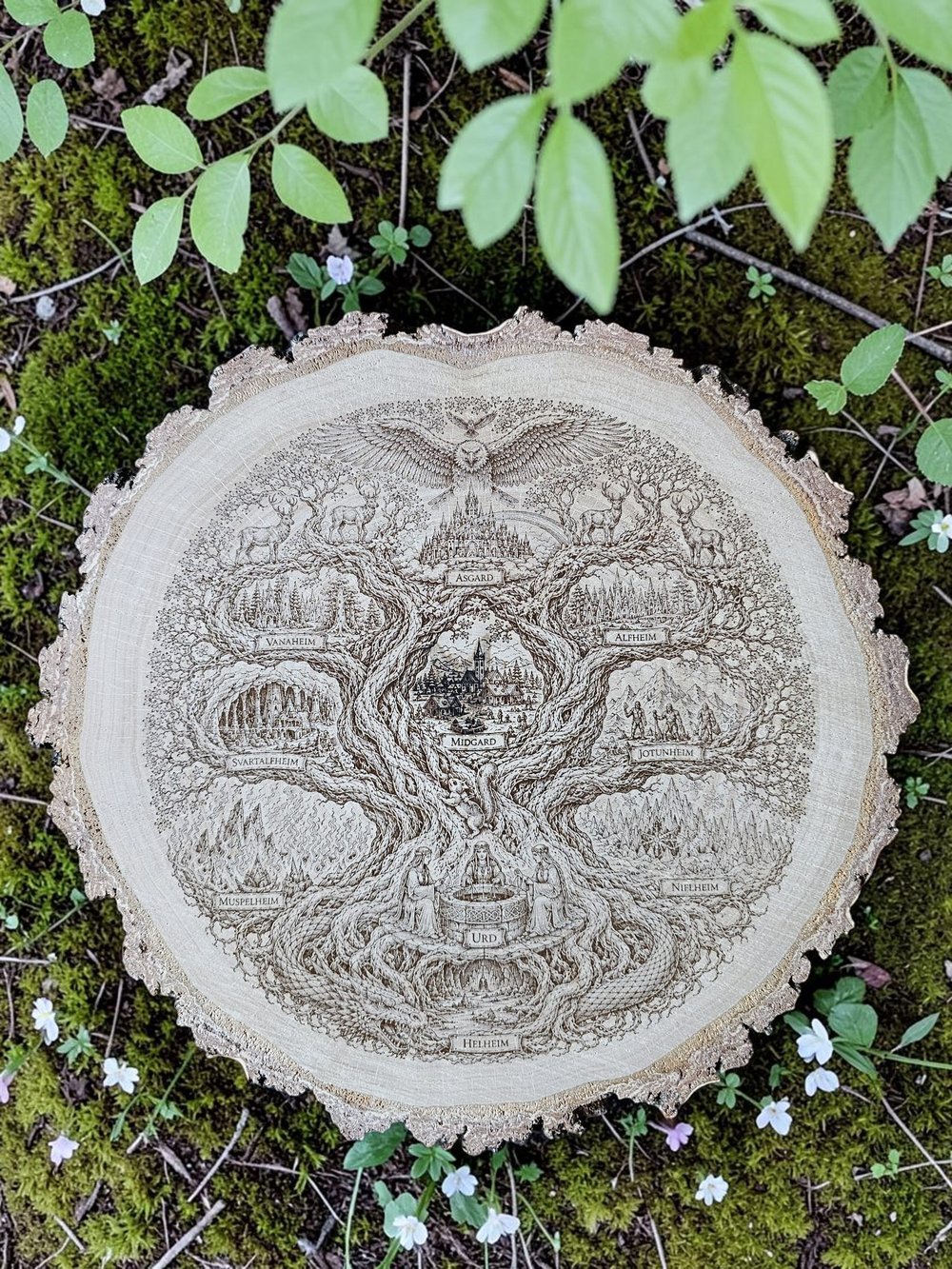
The tree as last companion · Hel – goddess and realm of the dead · Hringhorni – Baldr's funeral ship · What comes after Ragnarök · Seiðr – the magic.
All Festivals & Belief articles →
The Germanic year knew no spring – only summer and winter. And its feasts followed the rhythm of field and war. Snorri …
Read more →January, February, March – these names are Roman, and late arrivals at that. Only between the 16th and 18th centuries …
Read more →While elsewhere a round man with a reindeer sleigh rolls in, in Iceland thirteen troll boys come down from the …
Read more →A fire in the open, a drinking horn passed from hand to hand, a few words to gods and ancestors, and at the end a …
Read more →