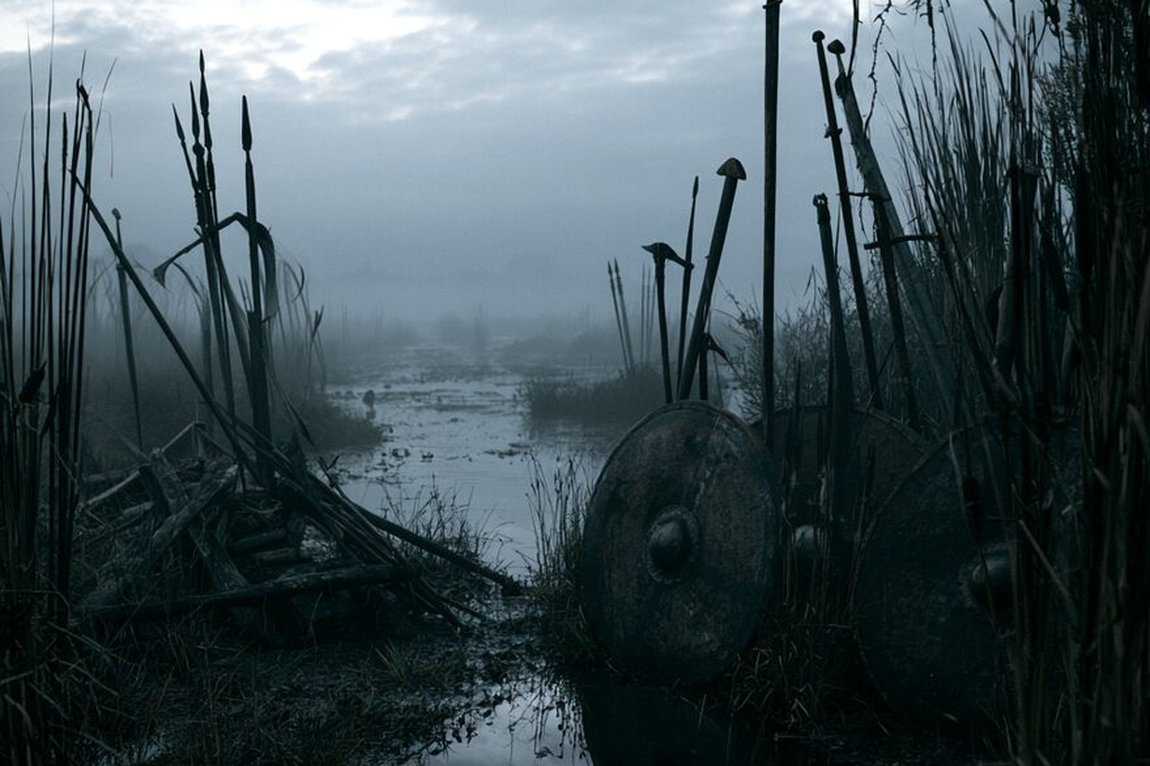
Between the Rhine, the Meuse and the Eifel hills, barely a stone's throw from our workshop in Alsdorf, peoples lived some two thousand years ago whose names are almost forgotten today: the Eburones, the Ubii, the Sugambri, the Batavi. The Romans called them "Germani" – yet behind that word lay a colourful mixture of Germanic, Celtic and blended groups. This article gathers what we know for certain about the tribes of our homeland, what remains interpretation, and where the 19th and 20th centuries invented legends.
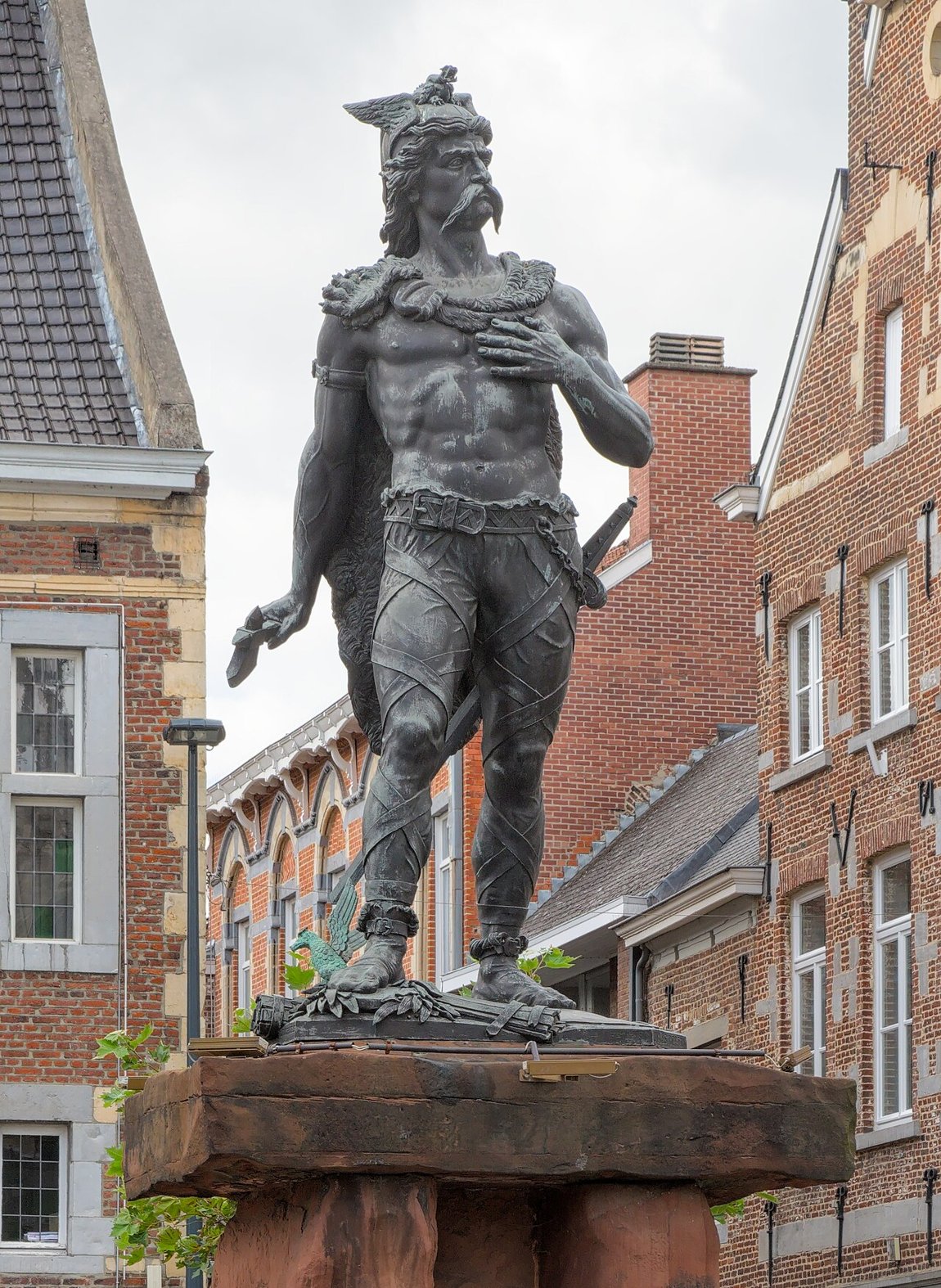
Glanz & Gravur is based in Alsdorf, in the Aachen city region. When we engrave runes and Norse motifs, customers sometimes ask: why Vikings, when you come from the Rhineland? The honest answer is that the North once stood at the gates of Aachen. The beliefs of the Germanic tribes who settled here between the Rhine and the Meuse were kin to those of the later Vikings – shared roots, shared names of gods, a shared linguistic heritage. Anyone walking through the Eifel or standing on the Lower Rhine stands on an ancient borderland. It is precisely this forgotten piece of homeland that we want to make visible.
In antiquity the Rhineland was a seam where worlds touched: Celtic-influenced Gallia to the west, the Germanic tribes to the east, and in between the Roman Empire, which made the Rhine its frontier. No place in Germany condenses this meeting so strongly as the region of Aachen–Cologne–Xanten. That is where this overview begins.
When Gaius Julius Caesar conquered Gaul in the 50s BC, he encountered between the Meuse and the Rhine a group of tribes he distinguished from the Celtic Gauls. He called them the Germani cisrhenani, the "Germanic peoples on this side of the Rhine". Among them he counted the Eburones, the Condrusi, the Caeroesi, the Paemani and the Segni. These peoples therefore sat west of the Rhine, right in what is now eastern Belgium, the Eifel and the Lower Rhine – not where Caesar actually located "the Germani".
Most of the Belgae, they said, were descended from the Germani; long ago they had crossed the Rhine and settled there because the land was fertile, and had driven out the Gauls who inhabited the region.Caesar, De bello Gallico II,4 (rendered from the Latin)
Caesar himself thus hints at what scholarship stresses today: the boundary between "Celts" and "Germani" was no sharp line. The name "Germani" may originally have been the name of a single people and was broadened by the Romans into a collective term for everything to the east – and partly to the west – of the Rhine. Whether the Germani cisrhenani were linguistically Germanic, Celtic or mixed cannot be settled to this day.
The best known of these tribes are the Eburones, whose heartland lay in the Eifel and between the Meuse and the Rhine – directly in our neighbourhood. In the winter of 54 BC their chieftain Ambiorix destroyed a legion and a half in an ambush at Atuatuca, present-day Tongeren. It was one of Caesar's heaviest defeats in the Gallic War. Caesar's revenge was terrible: he waged a war of annihilation against the Eburones that effectively wiped out the tribe. Ambiorix himself escaped across the Rhine and vanished from history. Read more about the Eburones and Ambiorix in our dedicated article.
Two Germanic tribes, the Tenctheri and the Usipetes, crossed the Rhine in 55 BC under pressure from the Suebi and pushed into the land of the Menapii. Caesar confronted them. During a truce a massacre took place in which, by his own account, Caesar killed tens of thousands – conduct that was already controversial in Rome; the orator Cato the Younger demanded that Caesar be handed over to the enemy for it. Caesar then had his famous Rhine bridge built in just ten days to demonstrate his power beyond the river. The full story of the Rhine crossing is here.
On the Lower Rhine lived the Sugambri, a warlike tribe that repeatedly challenged Rome. In 16 BC they inflicted on the Romans the infamous clades Lolliana, in which a legionary standard was lost. Later Tiberius resettled parts of the Sugambri onto the left bank of the Rhine, where they gave rise, among others, to the Cugerni. The name of the Sugambri echoed for a long time: when the Frankish king Clovis was baptised around 500, Bishop Remigius is said to have called out to him to bow his neck, "proud Sugambrian". The Franks thus saw themselves in a line with the old Rhine tribes. More on the Sugambri and their path to the Franks.
Not every tribe stood against Rome. The Ubii, originally on the right bank, actually asked to be resettled onto the left, Roman side. Agrippa brought them across around 19 BC; their main settlement became the Ara Ubiorum, the "Altar of the Ubii". From this settlement grew the Colonia Claudia Ara Agrippinensium – present-day Cologne, named after Agrippina the Younger, who was born here. The Ubii gradually merged with the Roman world; their descendants are among the ancestors of the Rhineland's population. The story of the Ubii and Cologne is here.
Further south, around Trier and along the Moselle, sat the Treveri. They were reckoned the best horsemen in Gaul and boasted of Germanic descent, even though their culture was strongly Celtic – a prime example of how blurred the categories "Celtic" and "Germanic" were in this borderland. Their main town, Augusta Treverorum, present-day Trier, became one of the most important cities of the Roman north. Their god Lenus Mars was worshipped in great sanctuaries. More about the Treveri and Trier.
In the Rhine delta, today's Gelderland and southern Holland, lived the Batavi. They were close allies of Rome and supplied feared cavalry units; it was said of them that they could swim across the Rhine in full armour. In AD 69/70 Julius Civilis led the Batavian revolt, which brought the Roman Rhineland to the brink of collapse. The revolt ultimately failed, yet it shows how close and how tense at the same time the relationship between Rome and the Rhine tribes was. The full story of the Batavian revolt.
Between the great names stood many smaller groups. The Cugerni on the Lower Rhine arose from resettled Sugambri and supplied the population for the Colonia Ulpia Traiana near Xanten. The Cananefates, neighbours and kin of the Batavi in the river-mouth region, joined the Batavian revolt. These shifts, resettlements and re-formations show that "tribes" were not fixed blocks but constantly reconstituted themselves – often at Rome's instigation.
Rome made the Rhine the frontier of its empire. The Lower Germanic Limes, a UNESCO World Heritage Site since 2021, was not a wall but a chain of legionary fortresses, forts and roads along the river. The two metropolises of this frontier region were the CCAA – Cologne – and the Colonia Ulpia Traiana near Xanten. From Cologne the Via Belgica ran straight across our homeland, over Jülich and Aachen to Tongeren and on toward the coast. Incidentally, the Romans usually called this frontier ripa, "riverbank", not limes – an important detail, for a continuous defensive wall of the kind seen in popular culture never existed here.
The religion of the Rhineland was as mixed as its population. Especially striking are the Matronae, triple mother goddesses to whom hundreds of votive stones were set up between Bonn, Cologne and the Eifel – for instance the Aufaniae in Bonn or the Vacallinehae at the sanctuary of Pesch. Their names are partly Germanic, partly Celtic. Along the North Sea coast and the trade routes Nehalennia was worshipped, a goddess of merchants and seafarers. And the Batavi worshipped Hercules Magusanus, in whom the Romans saw their Hercules while the Germani probably saw their own strong god. More on the Matronae, on Nehalennia and on Hercules Magusanus in our dedicated articles.
As the Roman Empire weakened in the west, the balance of power shifted once more. Out of an alliance of Rhenish and right-bank groups the Franks emerged in the 3rd and 4th centuries. They took over the old borderland, founded a great realm under the Merovingians, and finally made Aachen, under Charlemagne, the centre of Europe. The line thus runs directly from the old Rhine tribes through the Franks to the city in whose surroundings we work today.
Here sobriety is called for. First: "the Germani" on the Rhine did not exist as a single unified people. There were many different tribes, partly Germanic, partly Celtic, partly mixed – the Germani cisrhenani even sat west of the Rhine. Second: the Rhine as a "border between Germani and Celts" is at its core a Roman ordering construct. Caesar drew this line for political and propagandistic reasons; in lived reality there were fluid transitions, trade, mixed culture and migrating groups. Modern scholarship (Pohl, Goffart, Steuer among others) stresses that "Germanic" was not a nationality at the time but at best a linguistic-cultural umbrella term.
This honesty matters to us. We engrave runes and Germanic motifs because they are beautiful and part of our regional history – not as a commitment to any ideology. The tribes between the Rhine and the Meuse deserve to be remembered as what they were: real people in a fascinating, blended borderland whose traces we still carry beneath our feet today. A full overview of all Germanic tribes can be found on our large knowledge page.
The Eburones · The Ubii · The Treveri · The Sugambri · The Vikings before Aachen.
All History & Finds articles →
Few questions come up in the workshop more often than this one: „You make Norse engravings – but weren't the Vikings …
Read more →The Roman Tacitus praised Germanic women as chaste, honoured and even brave at the edge of battle. But above all he was …
Read more →Almost a thousand years separate the spear-fighting Germanic tribes that Tacitus described around 98 AD and the feared …
Read more →No prison, no police, no king who simply handed down verdicts: the legal order of the Germanic peoples and the Vikings …
Read more →