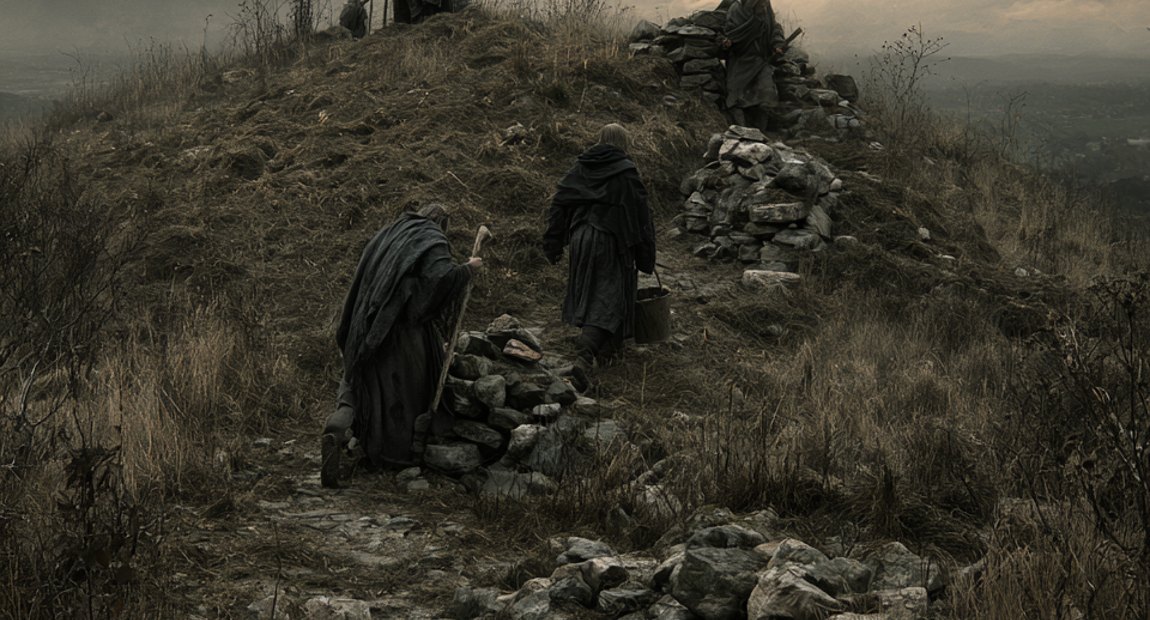
Scarcely an image is so bound up with the Vikings as the burning ship drifting out to sea with the dead. The ship was their most precious possession – and for some also the vessel that bore the last voyage, over into the other world. But what did boat burial really look like? A look at one of the most striking burial forms of the North – and at what is true in the Hollywood image.
Death was a journey, and whoever sets out on a journey needs a vessel. For a seafaring people it was natural that this vessel was a ship. In the grandest graves of the North the dead was laid in a real ship, equipped for the voyage: with weapons, tools, provisions, sometimes animals and gifts of great value. The ship bore them not over a sea of water but over the threshold between the worlds.
The tradition knows three ways. The first is the most famous: a ship sails out to sea, burning, with the dead. So in the mythology Baldr is buried, and the Byzantine historian Procopius in the 6th century already mentions something similar from the North Sea coasts.
“They bore Baldr's body out onto the ship Hringhorni, the greatest of all ships, and kindled the pyre.” after the Prose Edda, Gylfaginning (public-domain translation tradition)
The second way: the ship is burned with the dead on land and the ashes laid in a mound – so Saxo Grammaticus describes it. The third: the body is buried in a ship over which a grave mound is raised; for this there are many literary and archaeological witnesses. To these came stone settings in the shape of ships – ships of boulders that held the last voyage in symbol.
The most famous boat graves are no legend but find. The Anglo-Saxon ship grave of Sutton Hoo with its splendid helmet, the Norwegian Oseberg ship with two buried women and a wealth of carved art, the Gokstad ship with its chieftain – all were preserved in the ground, under a mound. And an Arab traveller, Ibn Fadlan, became an eyewitness around 922 on the Volga of a Rus ship-cremation and recorded it in harrowing detail. Of the stone settings, sites like Ales stenar in Sweden survive – a ship of stone on the horizon.
The ship joins two longings: setting out and homecoming. It bears the dead away and at the same time carries them where their own await them. No other image captures the Norse view of death so beautifully: not an end, but a crossing. Whoever wishes to go deeper into the ideas behind it will find them in our pieces on funeral customs and on tree burial.
Ship and boat graves are broadly attested archaeologically: Sutton Hoo (England, 7th c.), Oseberg and Gokstad (Norway, 9th c.), and many smaller. Ibn Fadlan describes around 922 as an eyewitness a Rus ship-cremation on the Volga. Baldr's burial on the burning ship Hringhorni stands in the Prose Edda; Procopius (6th c.) and Saxo Grammaticus name related customs. Stone ship-settings (e.g. Ales stenar) survive.
The most popular image – the burning ship drifting flaming out onto the open sea – is scarcely secured as real practice. Most boat burials were interments under a mound or cremations on land, not the film-worthy voyage into the waves. The flaming ship at sea belongs above all to the Baldr myth and to a few literary notes. Boat burial as such is thus genuine and striking – but the burning sea-voyage is more poetry than rule.
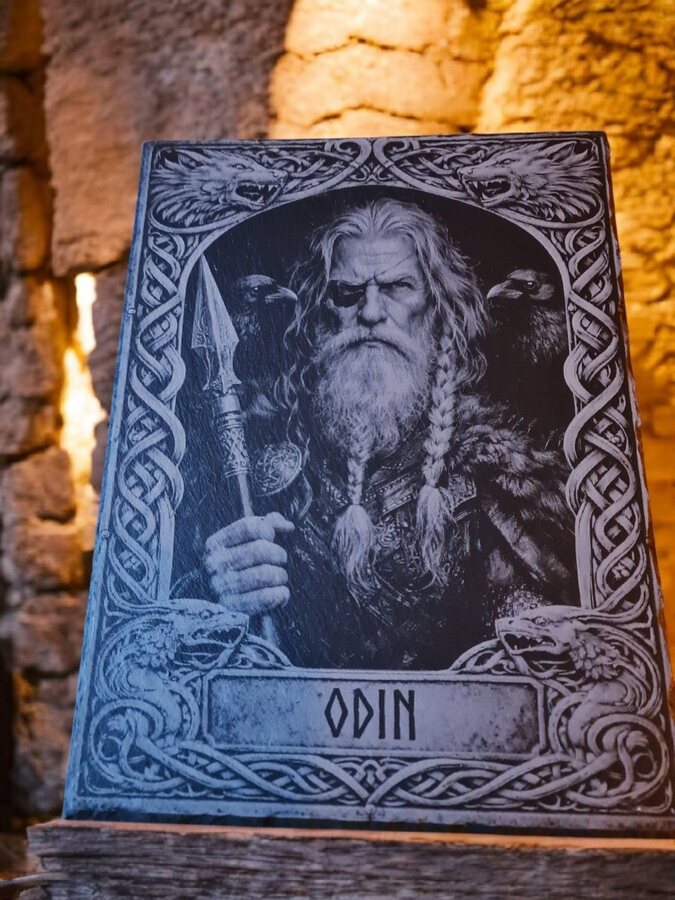
How the Germanic peoples honoured their dead · The tree as last companion · Hringhorni – Baldr's funeral ship · The longships · Hel – goddess and realm of the dead.
All Festivals & Belief articles →
They appear almost in passing in the old texts, yet they are everywhere: the disir, female spirits who watch over a …
Read more →Forget the translucent veil-ghost. The draugr of the Old Norse sagas comes back in the flesh – heavy as an ox, darkly …
Read more →In the sagas of the North, no one sleeps harmlessly. A dream there is rarely a mere echo of the day, but a messenger …
Read more →A ring is a closed circle – no beginning, no end. No wonder the people of the North laid their most binding promises …
Read more →