The Viking of film and television wears grey, brown and grime. The real Norseman wore red, blue and yellow – and was proud of it. Madder, woad and weld turned wool into glowing cloth, strong colours signalled rank, and the language itself is full of colour words that meant far more than a mere shade. Here is what people actually dyed with, what chemistry proves on genuine finds – and where symbolism ends and imagination begins.
When people picture the Viking Age, they usually see a muted image: earth-brown tunics, grey cloaks, unwashed warriors in the fog. That picture comes from the cinema and the television screen, not from the ground. Anyone who looks at the surviving textile fragments, the written sources and above all the chemical analyses of recent decades finds a very different North – a colourful one. Red, blue, yellow and glowing mixed tones were not the exception but were within reach of everyone who could afford them and wanted them.
Colour in the Viking Age was labour, knowledge and money all at once. It lay in the fields and the woods; it had to be harvested, processed and worked carefully into the wool. And it carried meaning: in language and in the sagas, colours convey messages that a listener understood instantly. This article follows both sides – the down-to-earth craft of dyeing and colour as a sign.
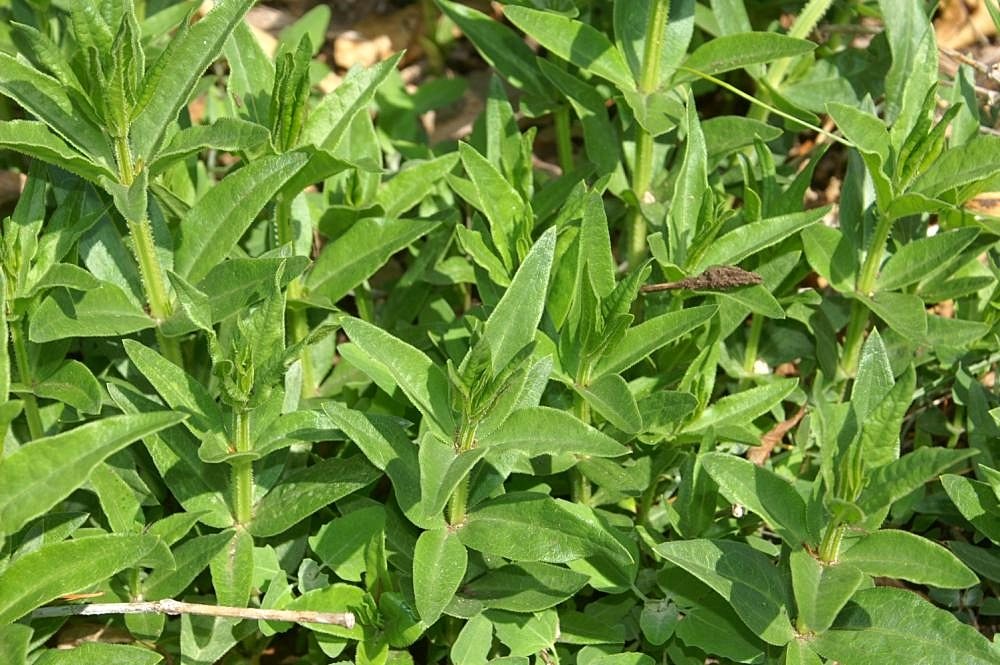
Nearly all the colours of the Viking Age came from plants, with a few from insects and minerals. The most important dye plants can be counted on one hand: madder (dyer's madder) for red, woad for blue, weld and birch for yellow, walnut for brown. From these base colours, overdyeing produced green, purple, orange and countless intermediate shades – green cloth, for instance, was made by dipping yellow-dyed wool a second time into the woad vat.
The raw materials were partly native, partly cultivated, partly traded. Madder and woad were grown as crops; wild sources such as birch leaves, certain lichens or walnut husks were gathered. Wool was by far the most commonly dyed fibre because it takes up plant dyes especially well. Linen was harder to dye – which is exactly why dyed linen pieces, of the kind actually known from Birka, stood out all the more.
The finest red of the Viking Age came from an unassuming root: dyer's madder (Rubia tinctorum). Its roots contain the dye compounds alizarin and purpurin, which – properly extracted and mordanted – yield a deep, warm red to red-orange. Madder needed good soil and several years to mature, after which the root was dried, ground and steeped in warm water. The bath had to be kept from getting too hot, or the red turned muddy brown – here the skill of the dyer showed itself.
Because madder demanded cultivation, time and know-how, a well-dyed red was always something special. Alongside true madder, the North also used related roots such as bedstraw, which gave similar but paler reds. Red was thus the colour in which effort and wealth could be read most clearly.
The great blue came from woad (Isatis tinctoria), a member of the cabbage family whose leaves contain the dye indigotin – chemically the same blue as tropical indigo, only in lower concentration. Woad-dyeing is a small miracle: at first the dye is invisible in the bath, the wool comes out of the vat yellowish-green and only turns blue in the air within seconds, as oxygen converts the indigotin. Repeating this again and again deepened the blue toward darkness.
Woad required a fermented, alkaline vat and experience – a demanding process that, together with madder, placed it at the top of the sought-after colours. Strong, deep blues were accordingly an expression of skill and means. It is precisely this blue that recurs again and again in the language, as we shall see below.
Yellow was the easiest and most common colour. Weld (Reseda luteola) with its dye luteolin gave a clear, lightfast yellow; birch leaves, certain lichens and other plants also yielded yellows. Because yellow was easy and widely available, it counted less as a status colour – but it was the basis for green: yellow overdyed with woad produces green, which could hardly be achieved directly otherwise.
Brown, finally, came without much trouble. Walnut husks contain tannins that dye wool durably in warm brown and red-brown tones even without a mordant – remains of walnut husks are attested from Hedeby and Oseberg, among other places. Added to this was the natural colour of the wool itself: Viking-Age sheep carried white, grey, brown and black fleece, so that many garments did not need dyeing at all in order to be coloured.
Evidence: Modern analyses using high-performance liquid chromatography (HPLC-DAD) have directly identified madder (alizarin/purpurin), woad/indigo (indigotin), weld (luteolin), walnut brown and even imported scale-insect reds (kermes) on genuine textile fragments. Pieces examined include finds from Birka (Sweden) and Hedeby (northern Germany), as well as the Danish elite graves of Bjerringhøj and Hvilehøj; the Danish study was the first systematic dye analysis of its kind in about thirty years and revealed a wider colour range than previously known. The colour, then, is not inferred but chemically measurable in the thread itself.
The reason we can speak so precisely about colours today is analytical science. Dyes do decay visibly in the soil – a once-red cloth often appears merely brownish after a thousand years – but the dye molecules survive in traces. High-performance liquid chromatography can separate tiny fragments and identify the individual dyestuffs. So we know not only that a piece was dyed, but what with.
The results are clear: blue from woad and red from madder are among the most frequent identifications, joined by yellows from weld and other plants. In the richer graves, rare imported dyes appear as well – reds from scale insects (kermes and related cochineal species) that came from southern Europe or further afield still. The Gokstad ship burial and the textiles from the Oseberg find also belong to the studied assemblages. The picture that chemistry paints is colourful and nuanced – from plain brown everyday wool to a brilliantly blue-and-red garment of state.
So that colour does not simply wash out again at the first laundering, most plant dyes need a mordant, a fixative that binds the dye to the fibre. The most important mordant was alum, an aluminium-bearing mineral that had, however, to be imported into the North. Alternatively, iron-rich water or plant liquors were used, which made the colour both darker and duller. Even native club moss contains aluminium and may have served as a mordant source.
Madder and weld absolutely require a mordant to dye brightly and durably – which is why a good, wash-fast red was doubly laborious: first mordant, then dye. Woad and walnut, by contrast, manage without alum, the one because of its special vat chemistry, the other because of its tannins. Whoever mastered the mordant could coax very different results from the same plants – another reason why dyeing was genuine expertise.
Not every colour was worth the same. Yellow and brown were easy to make and therefore everyday. Red and deep blue, on the other hand, demanded cultivation, imported mordant, fuel and much experience – and were expensive as a result. A brilliantly red or deep-blue garment was thus not merely beautiful but a visible signal: this person has access to resources, to trade, to skill. Colour was status worn on the body.
Then there were the patterns. Surviving bands and braids show that the Norse did not simply wear plain single-coloured cloth but loved tablet-woven patterns, colour contrasts and fine ornament. In the richest graves, even sewn-on metal threads appear. Anyone who imagines the Viking as a drab grey block misjudges how much this culture valued visibility, contrast and adornment.
At the very top of the colour hierarchy stood things that could not be made in the North at all. Silk is one: remains of silk cloth, often in bright colours, are known from Birka and from the Oseberg grave – long-distance trade goods that came along the eastern route from Byzantium and the Orient. Such pieces were sometimes cut into narrow strips and set as braids onto native wool, so that the precious fabric went as far as possible.
The term "purple" appears too, but caution is needed here: in the Norse sources, a word for reddish-purple luxury cloth usually denotes imported, costly textiles in general and not necessarily the true, sea-snail-derived purple of antiquity. The message, however, is clear: whoever wore such colours and fabrics displayed reach into the great empires of the South.
As practical as dyeing was, colours were just as meaningful in language. The Old Norse colour system does not map one-to-one onto ours. The word rauðr stands for red, often for strong, saturated red. Hvítr (white) and gold stand for brightness, purity and preciousness. Most intriguing is blár: it by no means means only our "blue" but a spectrum from dark blue through blue-black to black – the colour of the raven, of iron, of the deep sea.
That clothing mattered so much at all is shown by the old gnomic poetry. In the Hávamál, the collection of sayings in the Poetic Edda, we read of two carved wooden figures that the speaker dresses:
My garments once / in a field I gave / to a pair of carven men; / heroes they seemed / when clothes they had; / 'tis the naked who suffer shame.Hávamál 49, transl. Henry Adams Bellows 1923
Clothing here literally makes the man – a wooden stake looks like a warrior in a garment. Colour and cloth were not trimmings but part of one's standing in society. Whoever was well and colourfully dressed was seen differently.
It becomes most interesting with blár. In the Icelandic sagas this dark blue-black colour often carries a grim meaning: again and again a character puts on a blue or blue-black cloak precisely when they are about to kill someone. For the saga's listeners this was a signal – the colour announced that blood was about to flow. The dark garment belonged, as it were, to the staging of the killing.
This association is well attested and runs through several sagas. It shows that in the storytelling art of the North, colours functioned as signs – much as we today associate black with mourning. But the right framing matters: this is a literary motif, a narrative device of trained saga authors of the High Middle Ages, not necessarily an everyday dress code. Not everyone who wore dark blue cloth was planning a murder. The colour symbolism of the sagas is a window into a world of thought – but it should not be mistaken for a rule of daily life.
Let us come to the most stubborn image of all: the grey, grimy Viking so beloved of film and series. It is simply wrong. The Norse loved strong colours, patterns and contrasts; they dyed elaborately, traded in expensive dyestuffs as far as Byzantium, and wore their wealth visibly on their bodies. The muted brown-grey of the screen is a modern aesthetic choice, not a historical one.
Myth check: "Vikings wore only grey and brown rags." – False. Textile finds and dye analyses attest red, blue, yellow, green and purple tones, plus imported silk and colourful braids. – On language: the Old Norse blámaðr ("blue/black man") is a contemporary, partly derogatory outsider term for dark-skinned people and is named here soberly as a piece of linguistic history, not as a category for today. – And a word on symbolism: the link of blár with death and killing is a literary motif of the sagas. One should not inflate individual shades into everyday laws – much of what coloured clothing "meant" is storytelling, not rule.
The Viking Age was a colourful age. From roots, leaves and husks, skilled hands drew red, blue and yellow; costly colours showed rank, imported silk showed reach, and the language carried colours onward as signs, right down to the dark cloak of the slayer. Anyone who wants to take the Norse seriously imagines them not as grey but as glowing – and cleanly separates what the thread reveals chemically from what the saga wanted to tell. It is precisely this honest distinction between attested craft and later interpretation that matters to us.
Dyeing – the colours of the Vikings · Viking clothing & fashion · Viking jewellery · Viking leatherwork · Everyday Viking life.
All Everyday Life & Craft articles →
They ran the farm, could inherit and divorce – and yet the truth about the Viking woman is more nuanced than modern …
Read more →A stone that burns like coal, charges electrically when rubbed like amber, and polishes to a deep black shine: jet is …
Read more →How do you pay when there is no money of your own? The Vikings had a simple answer: with silver, weighed on the scales …
Read more →