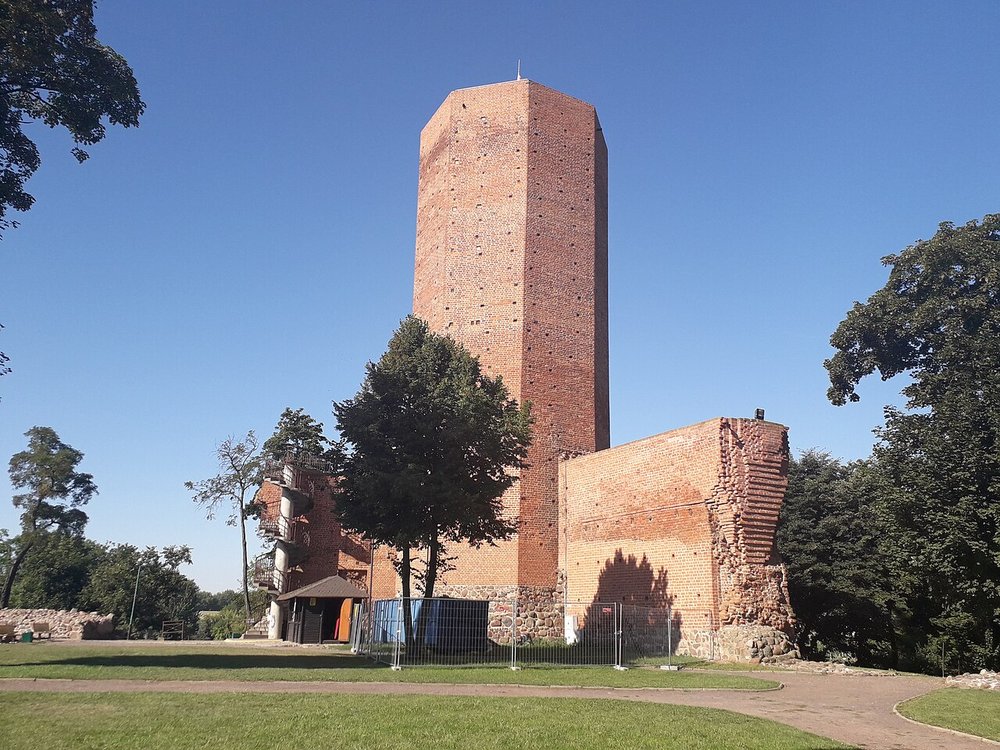
Anyone who says "the Kuyavians" usually means a people that sat between Lake Gopło and the Vistula since time immemorial. The sources say something else: the name Kuyavia appears in writing only in the year 1136, and as the designation of a piece of land, not of a tribe. This article separates what charters, chronicles and excavations yield from what later ages have read into them.
Kuyavia (Polish Kujawy, Latin Cuiavia) is a historical landscape in the north of central Poland. It lies east of Greater Poland, roughly between the Noteć with Lake Gopło in the west and the Vistula in the east, with the towns of Kruszwica, Inowrocław and Włocławek. The people who lived and live there are called Kuyavians (Polish Kujawianie, in ethnography also Kujawiacy). This sentence already contains a trap, for it presumes that the landscape came first and its inhabitants merely bore its name. That is exactly how the case stands.
For early history two questions must therefore be kept apart. The first: how old is the land name and what did it originally designate? The second: was there in the early Middle Ages a group that called itself, or was called by others, Kuyavians, comparable to the Polans or the Vistulans? To the first question there is an answer with a firm date. To the second there is, as things stand, no source that answers yes.
The people around Lake Gopło already have an article of their own, which we do not repeat here: the Goplans and their 400 civitates in the Bavarian Geographer. It also explains why the name Goplans is a modern scholarly form. Here we deal with what comes after: the name Kuyavia, the land under the Piasts, and the question of when a landscape designation became a people's name.
The oldest secure mention of the land name stands in the papal bull Ex commisso nobis a Deo, issued on 7 July 1136 at Pisa by Pope Innocent II. It is known as the Bull of Gniezno: it confirmed the archbishopric of Gniezno as an independent church province of Poland and thereby ended the claims of the archbishopric of Magdeburg. At the same time it lists a large number of places and dioceses and is therefore also an important source for the history of the Polish language. The overview articles on Kuyavia, among them Britannica and the East-Central European encyclopedia of Klagenfurt University (EEO), agree on 1136 as the first attestation of the name.
What matters is how narrowly the name was meant then. The overviews say that Cuiavia at first designated only the surroundings of Kruszwica and Włocławek on the Vistula, a narrow strip, and not the whole landscape we mean today. Only in the 13th and 14th centuries was the name extended to the entire Piast province. Whoever uses "Kuyavia" for the 9th or 10th century therefore uses a designation that did not exist then.
The pope confirms to the archbishop of Gniezno the Polish church province and lists dioceses and places, among them the bishopric of Włocławek in Kuyavia.Bull Ex commisso nobis a Deo, 7 July 1136; paraphrase in own words, not a verbatim quotation; wording to be checked against the charter text before publication
Wincenty Kadłubek, the Kraków bishop and chronicler around 1200, also knows Kuyavia; the overview accounts report this. Which passages are meant and in what form the name stands there we could not check against the text. Gallus Anonymus, who wrote around 1112 to 1118, knows the stronghold of Kruszwica; the literature gives forms such as Cruszwic or Crusvicz for him. Whether he uses the land name Kuyavia is not known to us, and we do not claim it.
Where the name comes from, nobody knows for certain. The proposals of linguistics are interpretations. An older line, traced back to the ethnographer Oskar Kolberg, connects it with wind-swept sand dunes; Stanisław Rospond thought of Old Polish word roots for storm or strong wind. The East-Central European encyclopedia gives a related explanation: "sandy, open land." Theories deriving the name from the blacksmith's craft are considered less plausible. These are statements from overview accounts; we have not checked the original specialist papers.
What can be stated: the name is a landscape name in the widest sense. It describes something one sees and not a community of descent. That speaks for "Kuyavians" originally meaning simply "the people from Kuyavia." That is an inference from the type of name, not evidence.
One reads again and again that the Kuyavians already appear in the oldest list of West Slavic groups, the Bavarian Geographer. That is not true. The text is a terse Latin register from manuscript Clm 560 of the Bavarian State Library in Munich. It names groups north of the Danube and counts, for many, their civitates, that is, fortified places or settlement districts. Kuyavians do not occur in it, nor does the word Kuyavia; simply because the land name did not yet exist. The dating of the list is disputed and ranges from the 830s to the 870s; we set this out in the article on the Goplans.
What stands there is Glopeani. Whoever links this with the area of later Kuyavia does so by way of Lake Gopło. The assignment is plausible but not certain, and scholars dispute whether the Glopeani were a tribe of their own, part of the Polans, or something else. Even reference works circulate conflicting classifications: the East-Central European encyclopedia speaks of a Masovian tribe, other overviews equate the Goplans with the Kuyavians or connect them with the Mazovians ("Kłobianie"). Such equations are hypotheses. Which name in the list really stands for later Kuyavia cannot be decided. Whoever ascribes one of the listed names to the Kuyavians is interpreting, and should say so openly.
What distinguishes Kuyavia can be seen in the terrain. The land is flat, crossed by channel lakes such as the Gopło and by fertile soils. The overview articles stress the salt springs of the region, which later shaped the town of Inowrocław, and the favourable position on waterways between the Noteć and the Vistula. A landscape with salt and arable land attracts settlers; that is a general consideration which fits the finds but would have to be demonstrated for individual phases.
Archaeologically the area was settled early. According to Polish literature Kruszwica, at the north end of the Gopło, shows traces of settlement back to the 6th century; on the lakeshore lies the stronghold rampart of Mietlica, dated to the 9th and 10th centuries. Both, including the doubts about the number of strongholds and about whether Mietlica was a tribal centre, we have treated in the Goplan article. Only the core here: fortified sites and settlements are attested. That their inhabitants bore a common name one could call "Kuyavian" is not.
By a widespread view the area around the Gopło came under the rule of the Piasts, the ruling dynasty from Greater Poland whose core lay among the Polans, in the 10th century. The overview accounts speak of a conquest by the Polans; when exactly and how, no contemporary source says. With the incorporation the eastern frontier of the Gniezno realm shifted from the lake line of the Gopło to the Vistula. That Kruszwica was a strategically important place under Bolesław the Brave and is said to have been linked to the Vistula by waterways stands in blog posts and overviews which we pass on only as hypothesis.
Better attested is that Kruszwica and Włocławek appear as centres in the 12th century: in church organisation and in the castle system. The area was thus tied into the Piast state long before anyone spoke of "the Kuyavians" as a group. The pattern is known from the Mazovians too: a land name arises in the setting of rule and church and only then becomes the designation of the people.
To the north and east the land bordered on groups who appear in the sources as opponents: the Pomeranians in the north, later the Prussians. Overall Kuyavia was a frontier and transit land touched several times by campaigns in the 11th and 12th centuries. We name no individual events here as long as we have not checked them against the source text.
The church history of Kuyavia is an example of how later chroniclers filled gaps. According to the overviews the episcopal see was at first probably Kruszwica and later Włocławek on the Vistula. The bull of 1136 confirms Włocławek as a bishopric within the province of Gniezno. The series of bishops itself was written down by Jan Długosz in the 15th century; the first names in it, said to reach back into the late 10th century, are regarded by scholars as legendary, not as historically attested persons. When exactly the bishopric was established and whether Kruszwica really had a bishop of its own before the seat moved to Włocławek is disputed; statements vary between the early 10th and the second quarter of the 12th century. Before citing anything here one should consult specialist literature and diocesan history.
For the question "land or people" the bishopric is nevertheless instructive: it bore the land name, Bishopric of Kuyavia, and thereby shaped the idea of a coherent region. The diocese existed under that name until 1818 and was later called Kuyavia-Kalisz.
After the death of Bolesław III Wrymouth in 1138 Poland was divided among his sons. According to the overviews Kuyavia fell to Masovia. For the late 12th century the sources report attempts by Mieszko III to control the land; the East-Central European encyclopedia gives 1186 or 1194 and a principality for Bolesław Mieszkowic that reverted to Masovia after his death in 1195. The uncertain year shows how thin the tradition is.
The decisive step came in 1233: Konrad I of Masovia set up a Kuyavian principality of its own for his son Casimir I, with Inowrocław as capital. The founding of the town itself and its charter under Magdeburg law are placed in the 1230s in overviews; statements on the exact years contradict each other. After Casimir's death in 1267 the principality was divided into Inowrocław and Brześć Kujawski (Brest in Kuyavia). Among the rulers of the partial principality of Brześć was Władysław the Elbow-high (Łokietek), who was crowned King of Poland in 1320. The Kuyavian line of the Piasts died out in 1388 with the death of Władysław the White.
Only in this period can one speak of a Kuyavian territorial lord. Only now does the landscape have a political shape of its own, and only now is it worth speaking of "Kuyavian" politics. That the region lived on later in two voivodeships, Inowrocław and Brześć Kujawski, shows how strongly the division had effects.
In the conflicts of the early 14th century the Teutonic Order reached for the land. The overviews give the years 1332 to 1343, during which Kuyavia temporarily stood under the Order; the Peace of Kalisz of 1343 followed and returned the land to Casimir the Great. This is the time in which Kuyavia first becomes visible in the sources as an object of dispute between Poland and the Teutonic Order, after hardly anyone had described it before. Details on places and treaties we leave open here; they belong in a presentation of their own.
What remains for our subject: when the land became politically important, it had long borne its name. The people in it were subjects of princes and bishops, and they received their designation from the land in which they lived.
The designation Kuyavians in the sense of an ethnic group with its own dialect, costume and dance consolidated in the modern period. The ethnography of the 19th century, for example the collections of Oskar Kolberg, described Kuyavia as a cultural landscape of its own; the dance kujawiak is a well-known example. That is ethnography, not early history, and it says nothing about whether there were Kuyavians in the 9th century. Whoever reads today's self-description as evidence of ancient tribal identity reasons backwards.
What is secure is a land name that stands in a papal charter in 1136 and at first means only an area on the Vistula around Kruszwica and Włocławek. It is equally secure that settlements and fortifications existed in the area before, and that a name like Glopeani occurs in an earlier text which is connected with Lake Gopło. Whether there is a link between that name and later Kuyavia we do not know. An early tribe of Kuyavians is attested in no source. More probable, but not proven, is a different course: a landscape designation arose, was taken up by rule and church, expanded, and the inhabitants were named after it.

The Goplans · The Polans · The Masovians · The Pomeranians · The Vistulans.
All History & Finds articles →
The Curonians were not Vikings. They spoke a Baltic language, related to Latvian and Lithuanian, and they lived on the …
Read more →They carry their boats overland from lake to lake and raid the Norwegians across the mountains. That is all we learn …
Read more →Norway's history is usually told as the history of its kings. Harald Fairhair, Olaf Tryggvason, Saint Olaf. But around …
Read more →