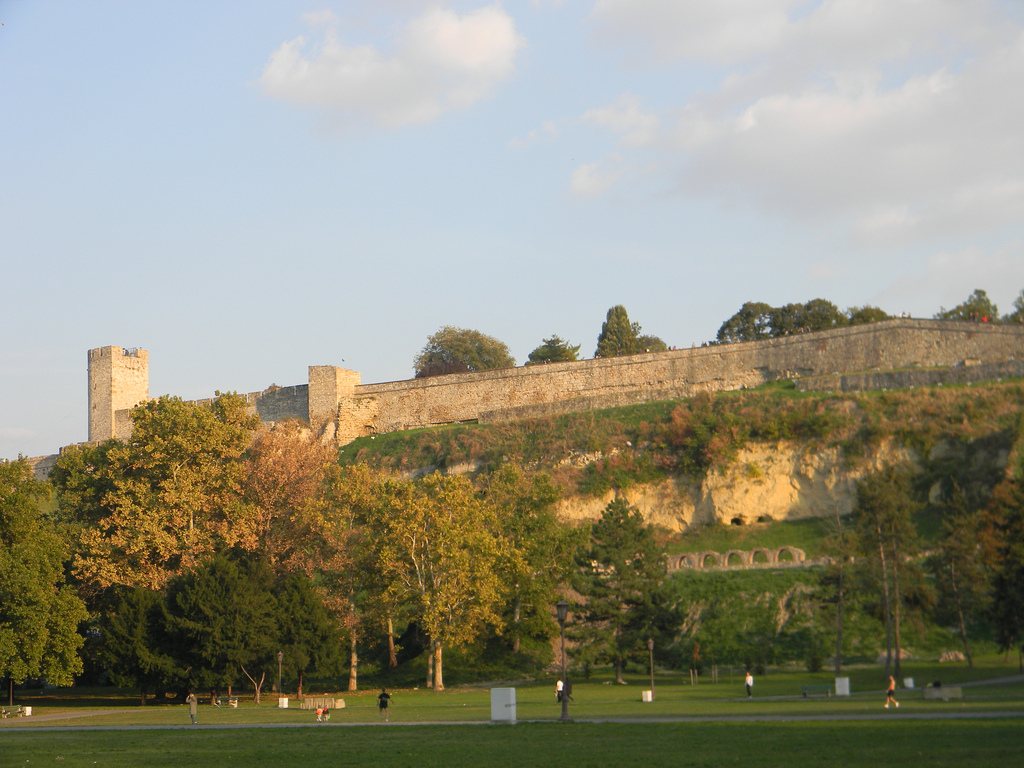
The Scordisci were a Celtic people at the confluence of the Sava and Danube, in the area of today's Belgrade (ancient Singidunum).
They emerged from the great Celtic Balkan migration of the 3rd century BC – the movement that also brought the Galatians to Asia Minor. At the Danube bend the Scordisci built a mighty position.
For over two centuries the Scordisci warred against their neighbours and against Rome, with changing fortune. In the end they wore themselves out between Dacians and Romans; their territory became Roman. They show how far the Celtic world reached to the south-east.
"The Scordisci were long held the mightiest and fiercest on the lower Danube."freely after ancient tradition (public domain, own translation)
The Scordisci were a Celtic confederation at the confluence of Sava and Danube, in the area of today's Belgrade. They arose in the 3rd century BC, when Celtic warriors settled in this region after the great Balkan expedition – an outpost of the Celtic world far in the south-east.
Their origins are connected with the famous Celtic march against the Greek sanctuary of Delphi in 279 BC. After the failure of this venture parts of the warriors gathered on the Danube and formed the confederation of the Scordisci.
For over two centuries the Scordisci were a feared power in the Balkans. They undertook far-reaching raids and controlled the trade routes on the Danube. Their chief town Singidunum is the Celtic origin of today's Belgrade.
In the 1st century BC the Scordisci came into heavy fighting with the advancing Romans. After several defeats their power was broken, and the region finally merged into the Roman Danube provinces.
The Scordisci show how far the Celtic world reached – to the gates of the Balkans and into the origin of Belgrade. At GLANZ & GRAVUR we tell such stories from the sources, because they reveal the surprising breadth of Celtic Europe.
The Scordisci lead to the Celtic Balkans. Continue with the Galatians and Boii.

The Galatians · The Boii · The Taurisci · The Celtiberians · The Celtic Warriors.
All History & Finds articles →
Long before the Viking Age and before the Icelandic Edda there was Germanic cult – and one of the most striking stood …
Read more →Silver was the lifeblood of Viking trade – weighed, chopped up, buried. Three of the greatest hoards show how far the …
Read more →