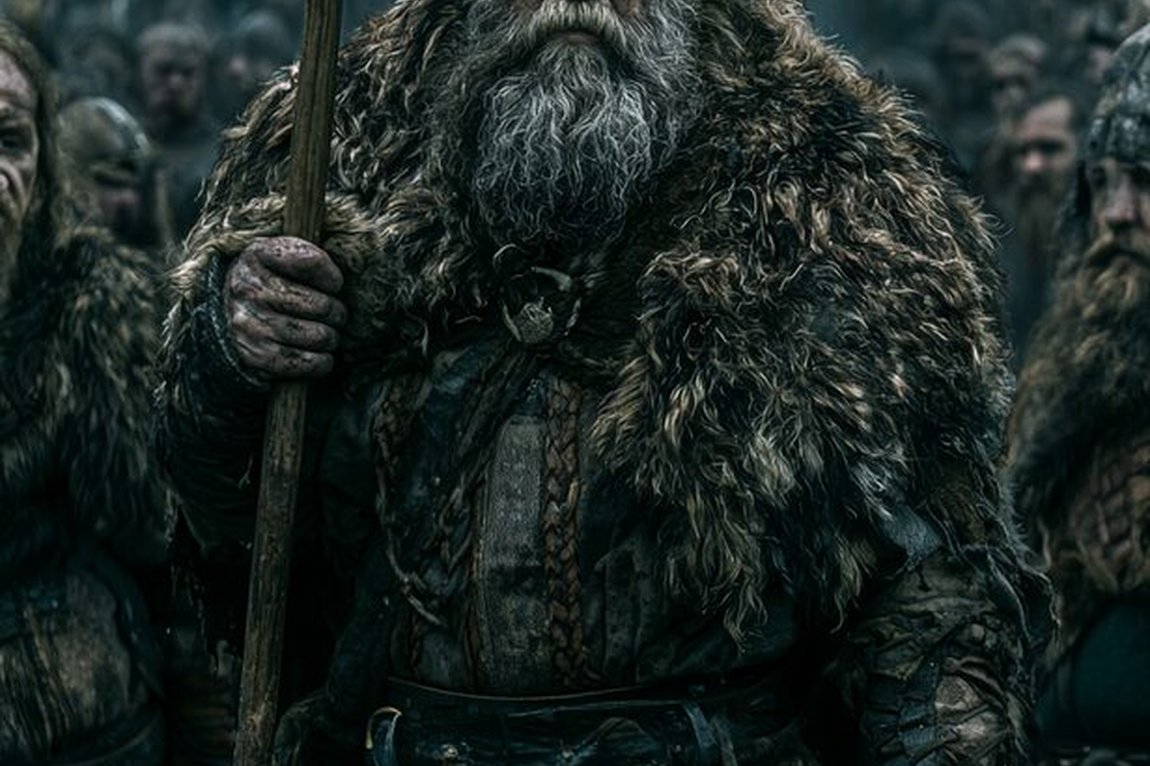
He was warrior and poet, killer and grave-robber, farmer and man skilled in magic – and probably the greatest skald of the North: Egill Skallagrímsson. His verse lays the whole Viking soul bare: the cold joy of killing and the naked grief of a father who loses his sons. Two poems make him immortal – one saves his head, the other his life.
Egill grew up in tenth-century Iceland, in a family that is difficult even by the saga’s own standards: strong, dark, hot-tempered, with a streak of the troll about them. Egils saga tells that he composed verse as a small child and killed his first man at the age of seven, after losing at a ball game. It is no badge of honour, and the saga does not gloss over it – it draws a man who is at once repellent and magnificent.
It is precisely this contradiction that makes Egill feel so modern. He is ugly where heroes are meant to be handsome; he is grasping and vengeful where generosity was the highest virtue. And yet he carries within him the North’s most precious gift: the art of poetry, held to be a gift of Odin himself. In Egill the monster and the artist live in one body – and he knows it.
The most famous scene takes place in England. Egill is shipwrecked on the coast of Northumbria and ends up, of all places, in York – Old Norse Jórvík, then capital of the Scandinavian-ruled Danelaw. There rules his mortal enemy: King Eiríkr Blóðøx, “Bloodaxe”. Between the two lie old scores, dead men and an outright curse Egill had once raised against the royal couple. Egill knows this morning could be his last.
His loyal friend Arinbjörn, who stands at Eiríkr’s court, wins a single reprieve – one night. He advises Egill to use it and compose a praise-poem for his foe: praise from the mouth of the wronged man weighs more than any other. In that one night Egill composes and memorises a complete poem in Eiríkr’s honour – a full twenty stanzas. In the morning he stands before the king and delivers it. And Eiríkr, though he has every reason to have Egill’s head roll, grants him his life. The poem has been called “Höfuðlausn” ever since – “head-ransom”.
What is remarkable is not only the boldness of the deed but the form. Norse poetry worked with alliteration, not end-rhyme. Höfuðlausn, by contrast, is end-rhymed throughout – something that hardly appears this early in the North, and that gives the impression Egill brought the technique back from the Anglo-Saxons or from Britain. A poet who, in mortal danger, also experiments with a new art form: that is the legend the saga sells us.
“I bore to the prince the flood of praise, / and steered my mouth’s ship into the harbour of the ear.” — Höfuðlausn, after W. C. Green (1893)
Who was the man Egill sang to? Eiríkr Blóðøx was a son of Harald Fairhair and earned his grim by-name by disposing of several half-brothers in the fight for the throne. He held Norway only briefly, then was driven out by his brother Hákon the Good. His second career he made in England: twice he was king of Jórvík, backed by the powerful Archbishop Wulfstan, who saw in him a shield against the expansion of the West Saxons. His York coins show a drawn sword and the legend “ERIC REX” – a statement of power in silver.
In 954 it all ended: driven from York, Eiríkr was ambushed and killed on the lonely pass of Stainmore in the Pennines. To many historians his death marks the end of the Viking kingdom of Jórvík. And yet he received the finest afterlife: the poem Eiríksmál, commissioned by his widow, the magic-wise “king-mother” Gunnhild, has Odin himself make ready the benches of Valhalla for the fallen king. Egill cursed him and then praised him; posterity killed him and then deified him. There is a very Norse irony in the fact that enemy and skald became immortal together.
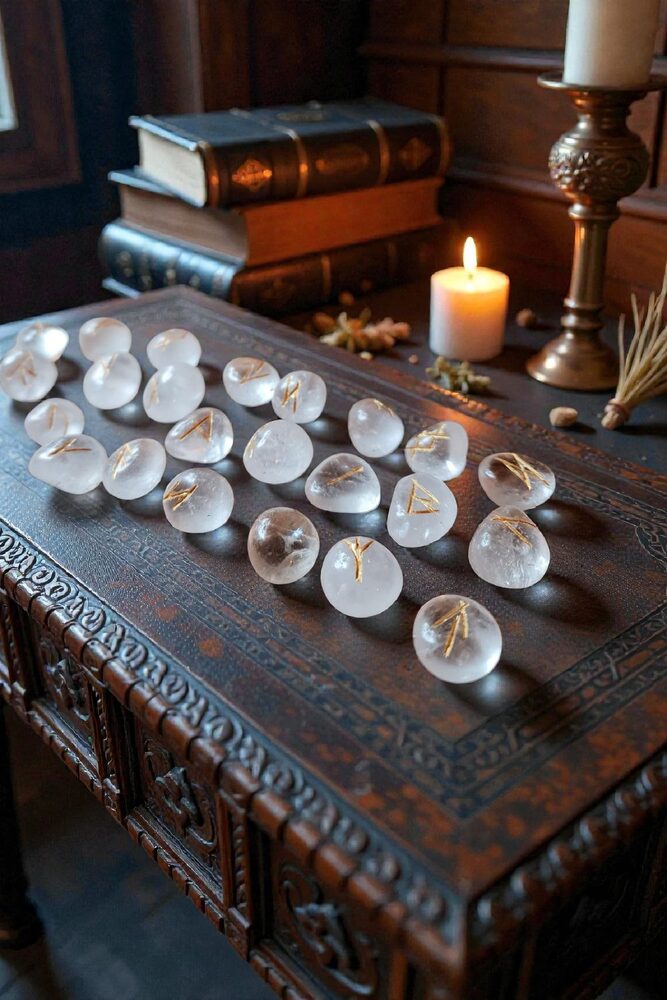
As loud as Höfuðlausn is, Egill’s other great poem is quiet and shattering. In old age he loses his favourite son Böðvarr, drowned in a storm on a crossing. Egill lays the body in the family grave, rides home, lies down on his bed and shuts the door: he means to starve himself to death. For a man who has sought out every fight his whole life, this is the one defeat against which no sword avails.
It is his wise daughter Þorgerðr who saves him – not with comfort, but with cunning. She lies down beside him as if she too means to die, and then gets him to compose a memorial poem for his dead sons, so that their name will not perish. And as Egill begins to compose, he returns to life. The poem is called “Sonatorrek” – “the loss of the sons”. It is one of the first great laments in European literature in which a person sings not of a hero but of himself and his pain.
The most moving thing about it is its honesty toward the gods. Egill quarrels openly with Ægir, the sea that took his son, and with Odin, whom he long served faithfully. He would have been ready to take up the sword against the sea itself, he admits – and yet knows he cannot. In the end he wrests from himself a bitter peace: Odin took his sons, but he also gave him poetry, the gift of putting pain into words. This very poem is the proof.
“Much has the friend of the gods taken from me – yet in return he gave the craft of song.” — Sonatorrek, after W. C. Green (1893)
Egill’s two masterpieces show what poetry meant in the North – and it was far more than entertainment. A skald was court poet, chronicler and weapon in one. A praise-poem could buy back a head; a poem of mockery (níð) could destroy a man socially. The art form was highly complex: the main metre, dróttkvætt, demanded alliteration, internal rhyme and syllable-counting all at once, and its images ran on kennings – riddling circumlocutions such as “wave-horse” for a ship or “dwarves’ mead” for poetry itself.
These verses were not printed but carried by heart, from skald to skald, across generations. That we can still read Egill’s words today we owe to Iceland’s storytelling tradition and the saga-writers of the thirteenth century. In our workshop we like to think, at lines like these, of what we do ourselves: giving a fleeting moment a lasting form. What the skald kept in memory, we hold fast in slate.
Óttarr svarti – Head-Ransom · Skarpåker – a Father’s Grief · Silver Hoards & York · Odin.
Egils saga; W. C. Green, The Story of Egil Skallagrimsson (1893); skaldic.org. Rudolf Simek, Dictionary of Northern Mythology.
They are the chosen of the fallen: warriors who died in battle and were carried by the Valkyries to Valhalla. The …
Read more →His byname sounds like a reproach: Eyvindr skáldaspillir, „the plagiarist“ (or „spoiler of poets"). It probably means …
Read more →No being do the gods of the North fear like Fenrir, the wolf. They rear him themselves, they bind him by cunning – and …
Read more →What does the strongest god do when he has been stripped of his hammer, his belt of strength and his iron gloves? He …
Read more →