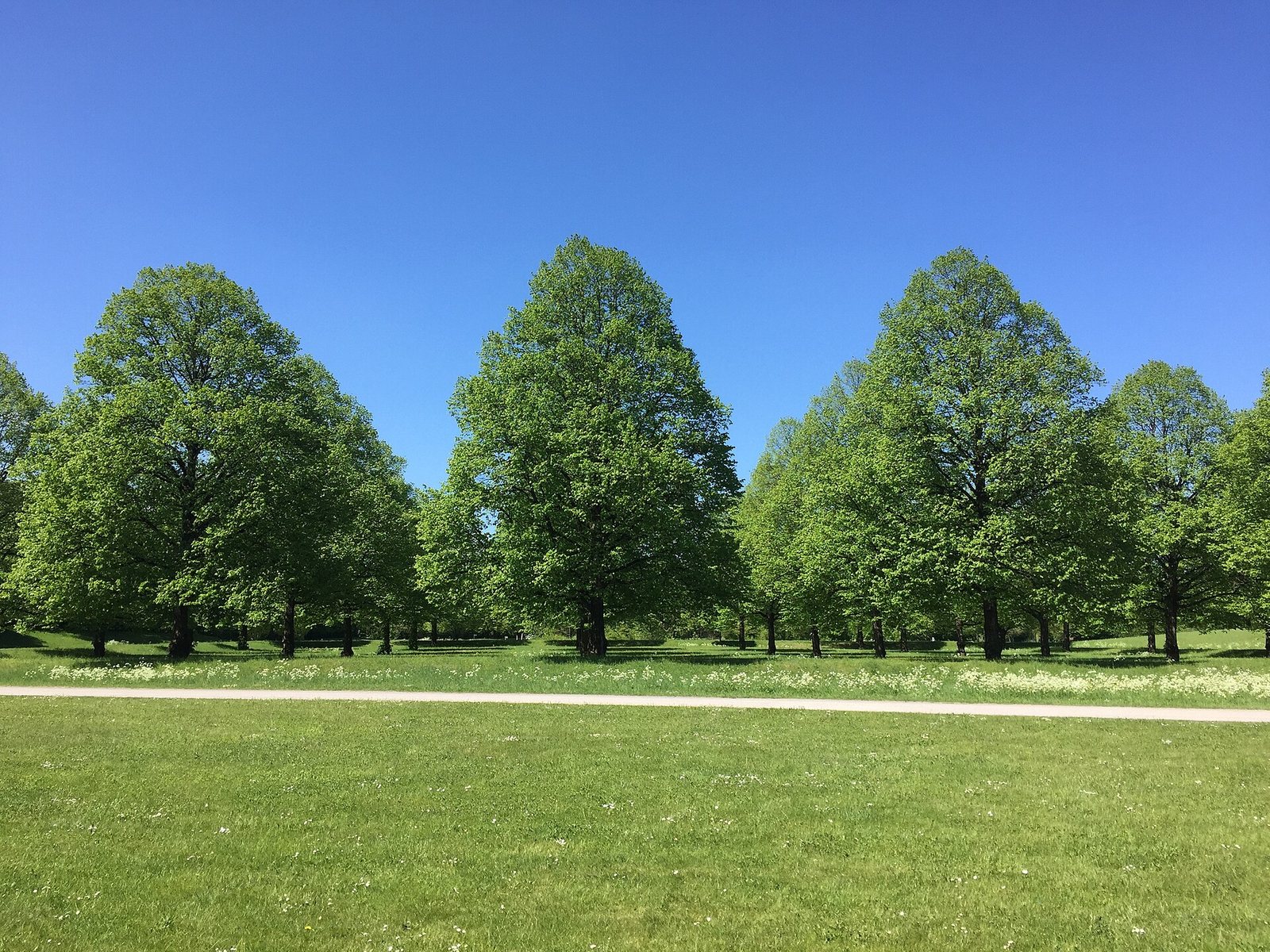
Nemeton is the Celtic word for a sacred grove or consecrated cult place – usually a bounded spot in the forest or at a clearing. Like many ancient peoples, the Celts worshipped their gods not (only) in temples but in nature: at trees, springs and in groves.
Ancient authors describe Celtic groves as awe-inspiring, partly uncanny places. The Roman poet Lucan depicts a gloomy grove near Massilia (Marseille) that no one dared to enter. Such depictions are literarily overdrawn – but the core is true: the grove was a place of special holiness where sacrifice was made and one was close to the gods.
The word nemeton was so widespread that it left its mark in many place names: Nemetacum (Arras), Vernemeton ("great grove") in Britain, Nemetobriga in Spain, the Drunemeton of the Asia Minor Galatians. Where a "nemet-" appears in a name, a Celtic sanctuary often lay.
"Wits must he have who wanders wide, but all is easy at home."Hávamál 5, after Henry A. Bellows 1923 (public domain)
The parallel to Germanic belief is striking: the Germanic peoples too worshipped their gods in sacred groves instead of temples – think of the grove of the Semnones, which no one might enter unbound. Celts and Germanic peoples shared the same basic idea: the sacred dwells in the tree and the forest, not behind walls.
The nemeton was the sacred place of Celtic religion – usually a grove, a clearing or a delimited spot in nature. Here, under the open sky, the Celts worshipped their gods, made offerings and held court.
The term nemeton is contained in many place names right across Celtic Europe: from Drunemeton (the sacred grove of the Galatians in Asia Minor) through Nemetacum (Arras) to Vernemeton in Britain. They draw a map of Celtic sanctuaries.
Like the Germani, the Celts too at first knew no great temples: the sacred space was nature itself. Only under Roman influence did built sanctuaries arise. The nemeton embodies the original, nature-bound piety.
The Celtic nemeton has a close parallel in the Germanic sacred grove. Both cultures worshipped their gods at special places in forest and nature – a deep common trait of old Europe.
The nemeton is the Celtic proof: the first temple was the forest. More on Celtic belief in the overview Celtic Religion.
Celtic Religion · The Druids · Germanic Religion · The grove of the Semnones · Cernunnos.
All Festivals & Belief articles →
Between the years lies a time that ticks differently: the Rauhnächte, the Twelve Nights around the winter solstice. The …
Read more →Emperor Barbarossa sits in the Kyffhäuser, his head propped on the table, his beard grown through the stone slab …
Read more →The summer solstice is the longest day of the year – and was one of the great feasts of pagan Europe. Germanic peoples …
Read more →