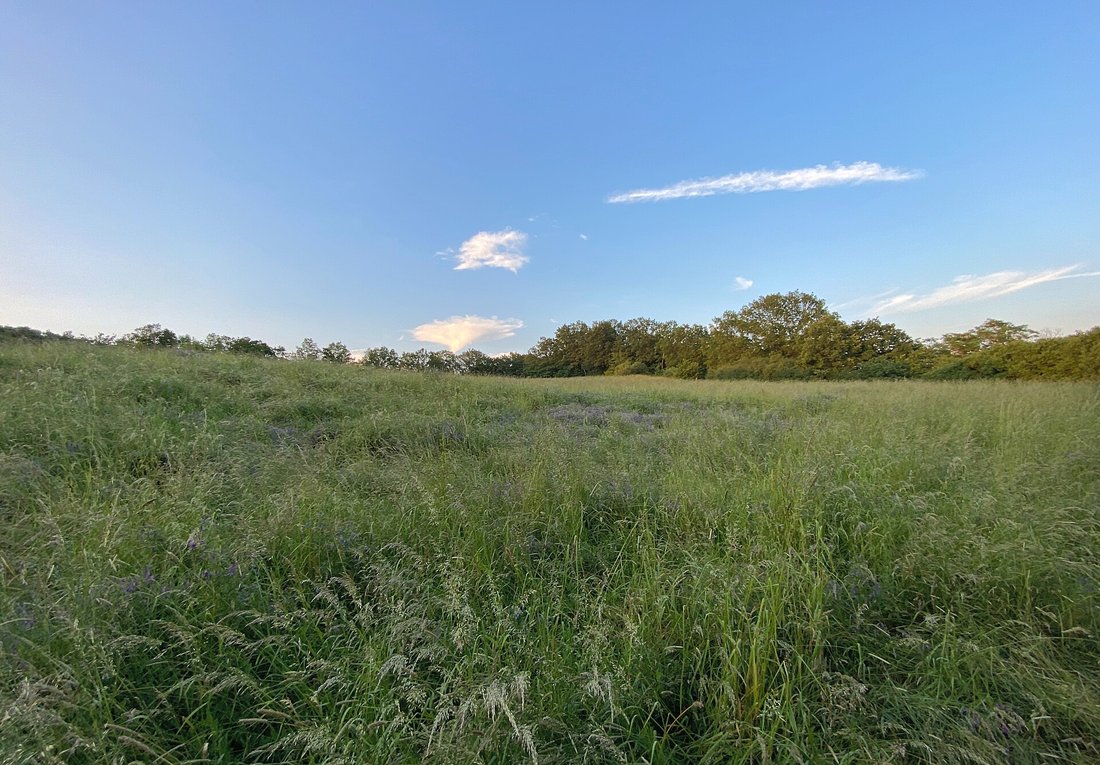
Where Dresden stands today, Slavic farmers once settled a broad river basin – the Nisans. They left no chronicle of their own, and even their name rests on surprisingly thin ice in the sources. Following their trail teaches one thing above all: how much history can hang on a single charter, half a sentence in Thietmar, and the study of place names.
At Pirna the Elbe leaves the narrow sandstone gorge and flows into a wide, flat basin, the Elbe valley basin, which stretches as far as Meissen. In the early Middle Ages this landscape bore the name Nisan. Modern scholarship calls its inhabitants Nisans; the Latin sources speak of the pagus Niseni, the regio Nisan, or later of a provincia and a territorium – terms that roughly mean district, region and territory. A Gau, the German word, is not a state but a stretch of land defined by rivers and favourable settlement conditions. The historian Wolfgang Hessler described it as a lowland landscape shaped by river courses and suited to settlement.
The name itself is usually interpreted as "people of the lowland," derived from the Old Slavic root for "low." That fits the geography remarkably well, but it remains a linguistic interpretation and not a word from the sources: no medieval author explains what Nisan means. The Nisans belong to the Sorbs in the broader sense, that is, to the West Slavic groups that settled between the Saale, the Elbe and the Neisse. No distinct language or culture that set them clearly apart from their neighbours can be read from the sources. If one existed, it left no written evidence.
Dresden plays no role in this early period. The city's name derives from the Old Sorbian drežďany, roughly "dwellers of the marsh or riverside forest," and it first appears in a charter of 31 March 1206. The settlement on the Elbe is thus older than its name in writing; the Nisans, by contrast, are a name for a landscape, not for a town.
Anyone researching Slavic tribes of the early Middle Ages sooner or later meets the Bavarian Geographer, a short tribal list in manuscript Clm 560 of the Bavarian State Library in Munich. For numerous groups east of the Elbe it counts their civitates – fortified places or settlement districts – for instance 30 for the Milzane and 30 for the Lunsizi. Its date is disputed: some parts are placed around the middle of the 9th century, other scholars think of the late 9th or early 10th century. A group called Nisani or Nizici, however, does not appear in the list.
This matters because the name Nisans is sometimes presented as if it stood in the oldest tribal register of the region. It does not. The Daleminzi, their western neighbours, appear there as Talaminzi; the Nisans are absent. The same goes for the Hersfeld tithe register of the late 9th century, which lists tithe districts in Sorb territory, including Talaminzi and Milzane, but likewise no Gau Nisan. From this scholars have drawn the suggestion that Nisan was then still part of Daleminzia and had no named centre of its own. It is an inference from silence in the sources, and so no more than a hypothesis.
The first author to name the territory explicitly is Bishop Thietmar of Merseburg, who wrote his chronicle between 1012 and 1018. In his fourth book he tells of Easter 984, when the deposed Bavarian duke Henry, known as "the Quarrelsome," made a bid for the kingship at Quedlinburg. On his way back, Duke Boleslaus II of Bohemia had him escorted through Nisan and Daleminzia – at least that is how the English translation of the text summarises it. The land of the Nisans was thus a transit region between Bohemia and the Saxon heartland, and in 984 Bohemia evidently controlled these routes.
The duke received him honourably and had his army escort him from the borders of his territory through the lands of Nisan and Daleminzia.Thietmar of Merseburg, Chronicle IV, 5; own paraphrase after an English translation, not a verbatim quotation
The same chapter holds a crime story that shows how unsettled conditions were. A follower of Boleslaus named Wagio stayed in Meissen, had Margrave Rikdag invited to a talk and lured him into an ambush in which Rikdag was killed at the Triebisch stream. Meissen, the episode shows, was fiercely contested between Saxony and Bohemia, and the Nisans lived in the grey zone between them.
Thietmar is not a neutral source. He writes as a Saxon bishop with his own church's interests in mind, and he knows the land east of the Saale partly by hearsay. His statements about the area are therefore spotlights rather than descriptions. In the case of the Nisans there is a further complication: a second Thietmar passage was long wrongly applied to them. Under the year 1004 he reports that King Henry II had ships gathered on the Elbe to feign a campaign against Poland while actually marching on Bohemia. The Latin text names the places Boruz and Nisani. Older scholars looked for this passage in the Dresden area. André Thieme showed in 2005, however, that it is very probably Neußen on the Elbe south-east of Torgau, where the river was crossed on the "High Road" toward Silesia and Poland. The name forms from 1251 ("Nisene") through the 16th century ("Neissen") support this identification. The Nisans of the Elbe basin therefore have nothing to do with the ship manoeuvre of 1004.
The oldest secure evidence for the territory itself comes not from a chronicle but from a royal charter. On 19 July 1013, King Henry II granted six villages to the impoverished bishopric of Meissen. One of them, a place called Brochotina cethla, present-day Brockwitz near Coswig, lies according to the text in pago Niseni, in the Gau Nisan. The place name means roughly "settlement of a man named Brochota" and points to a Slavic founder. The charter is printed in the Codex diplomaticus Saxoniae regiae, part II, volume 1, as number 19. Scholars note that the place names in the document appear to have been entered later into spaces left blank – a reminder to be careful with the details of this text.
Caution is warranted with the Meissen charters in general. The bishopric of Meissen, founded in 968 by Emperor Otto I, had a strong interest in securing its holdings in the Elbe valley in law, and several charters of the 10th and 11th centuries that benefit it are regarded as forged or at least suspect. Regional historians therefore distinguish carefully between genuine royal charters like that of 1013 and later forgeries produced in the 1130s and 1140s, when the bishops of Meissen wanted to underpin their claims to western places in the Nisan territory.
How was the land administered? From the 10th century, the East Frankish and Saxon kings relied on burgwards in Sorb territory. A burgward is a district with a fortification at its centre, which gave the surrounding villages protection and at the same time secured dues and rights of lordship. The word comes from Old Saxon and denotes both the fortress and its district. Meissen itself, Thietmar reports, was founded by King Henry I on a then densely wooded hill above the Elbe; scholarship generally dates the foundation to 929.
Several burgwards are recorded for the Gau Nisan, though only some can be located with certainty. Briesnitz (Sorbian Breźnica, "birch place") in the west of present-day Dresden guarded a ford of the Elbe; it appears in a document dated to about 1071 which, however, was written down only in the 1140s with a backdated date. Further burgwards are Wosice (Woz), probably on the castle hill near Niederwartha, and Bvistrizi, whose location is disputed; Pesterwitz, Coschütz and the Plauen area have been proposed. Dohna on the southern rim of the basin appears in a German charter in 1040 and is sometimes interpreted as another burgward centre.
One archaeological example is the Heidenschanze in Dresden-Coschütz, high above the Weißeritz valley. The spur was fortified as early as the Bronze Age, followed by a long gap in settlement until it was occupied again in the Elbe Slavic phase between about 900 and 1100. According to a widespread account, Margrave Henry I of Meissen took the site around 1100. Whether the complex was a burgward centre or rather a refuge remains a matter of interpretation.
The Nisans did not live alone. To the west lay Daleminzia, the land around Lommatzsch; in the first book of his chronicle Thietmar explains that the Germans call that province Daleminzia, but the Slavs call it Lommatzsch. The Daleminzi are a name in their own right beside the Nisans, but the fate of the two landscapes was closely linked: in the sources the Nisan territory counts either as part of Daleminzia or as its eastern neighbour.
To the east, beyond the heath, began the land of the Milceni around Bautzen. Thietmar knows that Henry I subjugated them and forced them to pay tribute, and that their land came under the rule of the Polish duke Bolesław the Brave in 1002; it was reincorporated into the March of Meissen only in 1031. Politically and religiously the Nisans thus lay between several blocs of power: to the south the Bohemian realm of the Přemyslids, to the west Meissen and the Saxon church, to the east the contested land of the Milceni, later the Polish Piasts. Relations with the Czechs were particularly close, since in some scholars' view the settlement came from Bohemia and stayed permanently linked to the south by the Kulm Path, a trade route from Prague across the Ore Mountains to Halle.
Remarkably, the Nisans never seem to appear in the reports of uprisings that shook Sorb territory in the 10th century. Whether that means they kept quiet or only that the chroniclers paid them no attention cannot be decided. A tribe in the sense of a political unit with its own prince is nowhere attested for Nisan. To the north lay the territory of the Lusizi, who share the thin source record with the Nisans.
The traces the Nisans leave in the 12th century are also their last. According to regional history, the Elbe valley long remained under Bohemian influence. When Duke Vladislav II of Bohemia had to cede the Gau Nisan, among other lands, to King Conrad III in 1142 after a military defeat against rebellious Moravians, the king incorporated the territory into the March of Meissen in 1143. That ends the history of Nisan as a distinct landscape; settlement by German farmers now increased markedly, and the March of Meissen became the core of later Saxony.
The name Nisan lived on for a while as a regional designation; in the 13th century it appears in the sources as territorium Niseni. Then it dropped out of use. What remained are place names: in the higher peripheral areas with poorer soils, according to the name scholar Walter Wenzel, names formed from ordinary words are more frequent, while the better soils of the lowland show a different name pattern. Such patterns allow settlement history to be read from the map even when no document tells it.
Nothing in this picture is spectacular, and that is the point. The Nisans were not a people with a king or a saga; they were farmers in a river basin through which armies, merchants and missionaries passed, and who appear in writing only when someone else wants something from their land.
The Nisans are a lesson in dealing with thin evidence. What is secure is a landscape called Nisan in the Elbe basin between Pirna and Meissen, which becomes tangible in two testimonies of the early 11th century: in Thietmar and in the charter of 1013. It is also secure that this landscape lay on the border between Bohemia and the March of Meissen, and that it passed to King Conrad III in 1142. Much else – the affiliation with Daleminzia, the origin of the settlers, their numbers, their religion before Christianisation – remains conjecture. Anyone who uses the word "tribe" for them should know that it is a modern ordering term, which probably fits conditions in the Elbe valley better than medieval self-understanding did.

The Sorbs · The Daleminzi · The Milceni · The Czechs & Bohemians · The Lusici.
All History & Finds articles →
An Old Norse name is not a word but a kit of parts. Two elements from a fixed stock, often handed down from a dead …
Read more →When we speak of "Viking kings" today, we quickly picture a single mighty ruler on a throne of dragon-carved wood …
Read more →