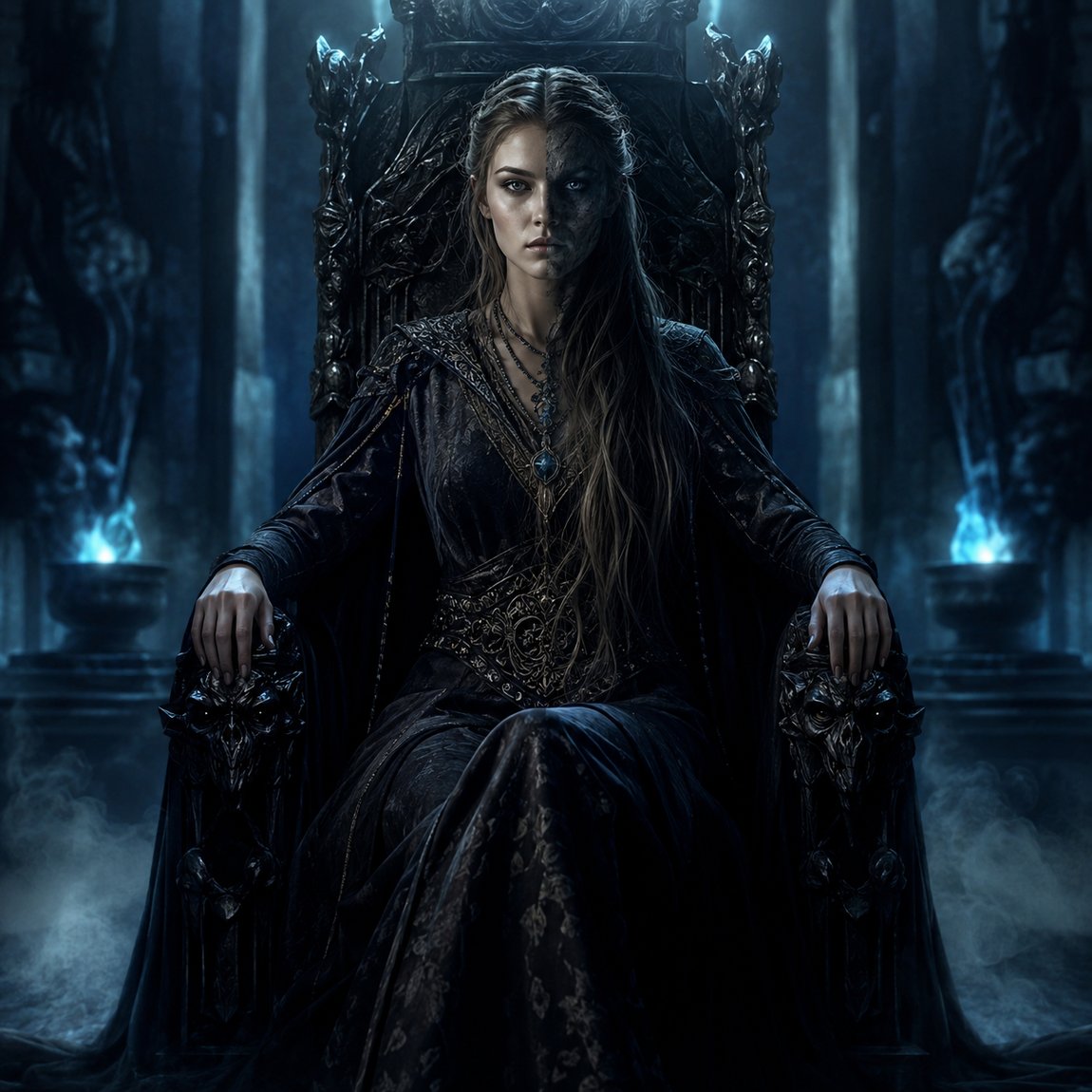
Where did the dead of the North go? Anyone who reads the old sources finds no simple answer, and certainly no single afterlife. There were many realms of the dead side by side - and the picture we know today is tidier than the Vikings ever imagined it. A dignified, honest look at death as the people of the Viking Age understood it.
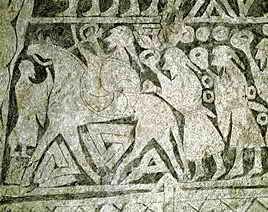
When people today speak of the Viking dead, one word comes almost at once: Valhalla. The golden hall where fallen warriors feast and fight until the end of the world. The image is powerful, it is beautiful - and it is incomplete. For the people of the Viking Age knew no single afterlife, no one place where all the dead arrived. They knew many realms of the dead that existed alongside one another, that sometimes overlapped, and that cannot always be neatly told apart.
This is not a weakness of the tradition but its very nature. The Norse world of belief was never a fixed body of doctrine with a holy book and a binding answer to the question of what comes after. It was a web of regional customs, oral tales and ancient images. Different people believed different things, and the same story could sound different in Norway than on Iceland or in Sweden. To understand the Viking dead, you must be able to bear this variety - and must not force it too quickly into a tidy system.
Valhalla (Old Norse Valhǫll, the hall of the slain) is Odin's warrior hall in Asgard. Its roof is thatched with shields, and through its many doors the fallen heroes, the Einherjar, march out to battle. Each day they fight, each evening the slain rise again and sit down to feast together: meat from the boar Sæhrimnir and mead given by the goat Heiðrún. In this way they prepare for Ragnarök, the final battle, in which they will fight at Odin's side.
Yet according to the sources, Valhalla was no destination for everyone. It was the hall of the chosen. Odin's valkyries selected on the battlefield who fell and who was taken to Valhalla. Entry was bound to a particular kind of death and to a particular choice - not to bravery alone. Anyone who wishes to learn more about this hall will find the details in our article on Valhalla and Helheim.
Here it becomes interesting - and here most people are mistaken. For Odin was not the only deity who took the fallen to himself. Freyja, goddess of love, of fertility and also of magic, possessed her own realm of the dead: Fólkvangr, the field of the people, and within it her hall Sessrúmnir. And according to the tradition, she chose first. In the Poetic Edda, the Grímnismál says:
Fólkvangr is the ninth, and there rules Freyja / over the seats in the hall; / half the slain she chooses each day, / and half belong to Odin. Grímnismál, stanza 14 (after Karl Simrock, 1851, public domain; English rendering)
Half of those who fell on the field, then, went to Freyja, not to Odin. This is one of the clearest and at the same time most overlooked statements in the Edda. Fólkvangr barely appears in popular accounts, and yet it stood equal in rank beside Valhalla. Why it fell into such neglect has less to do with the old sources than with the later reception, which pushed the warlike Odin into the foreground.
And the many who did not fall in battle? The farmwife who grew old; the child who died of illness; the fisherman who drowned; the craftsman who fell peacefully asleep? As a rule they went to Hel. Hel is at once the name of the ruler and of her realm, lying deep down in Niflheim, beyond icy rivers and a guarded bridge. It was the realm of the dead of the great majority - not a place for the chosen, but the ordinary road of death.
It is precisely here that the greatest misunderstanding arises, one we address in detail below. For Hel is not the Christian hell, and the road there was no sentence of punishment. You can read more about the ruler and her realm in our articles on Hel and on Helheim.
A people of seafarers needed an idea of where the drowned went too. That role fell to Rán, the giantess of the sea, wife of the sea god Ægir. With her net she drew the drowned down to herself, into her hall on the sea floor. Whoever met death at sea - and that was no small number - came neither to Valhalla nor to Hel, but to Rán.
There are hints that people sought to give the drowned gold, so as to be well received by Rán. This too shows: the realm of the dead did not depend on virtue or rank, but simply on how and where a person died. The place of death often determined the place of the afterlife.
Alongside the great realms of the gods lived a far more down-to-earth, domestic idea: the dead went into the mountain. In several sagas it is said that the departed of a family entered a nearby hill or holy mountain and lived on there - together, within sight of the farm they had worked. The most famous is Helgafell, the holy mountain on Iceland, into which the family of Þórólfr entered.
This idea was perhaps the most intimate of all. The dead did not truly leave the world; they became part of the land and stayed close to the family. People heard the dead feasting inside the mountain, and they honoured the place. Here death does not become a distant hall, but a neighbour. Anyone who wishes to follow this belief will find more in our article on the holy mountains of the North.
The variety of ideas about the afterlife was matched by a variety of burial forms. There were cremation graves, in which the body was burned on a pyre and the ashes - often in an urn - laid to rest. And there were inhumation graves, in which the dead went unburned into the earth. Both forms existed side by side, sometimes at the same site, and shifted over time and from region to region.
The most striking is the ship burial: the dead were laid in or beneath a boat that was to serve as their vehicle into the afterlife. Some ships were burned, others preserved beneath grave mounds - the famous finds of Oseberg and Gokstad among them. Grave goods - weapons, jewellery, tools, food, sometimes animals - were meant to equip the dead or to display their rank. Anyone who wishes to learn the forms in detail is recommended our article on the ship burial as well as on the honouring of the dead.
Not every dead person stayed where they belonged. The North knew the draugr, the walking dead - a corpse that went on existing bodily in its grave mound, superhumanly strong, often dark and heavy, and that haunted the living. It was no bodiless ghost, but a tangible, dangerous figure that, if need be, had to be fought and forced back to rest.
The belief in the walking dead reveals a serious concern: death did not always cleanly separate the dead from the living. A badly buried, discontented or especially wilful person could return. That is why there were customs to show the dead the way and to keep them in the grave. You can read more about this idea in our article on the draugr.
Over all these realms and forms lay an attitude that has become foreign to us today: the dead still belonged to the community. People honoured their ancestors, brought them gifts, remembered them at feasts, and sought their counsel and protection. The dead in the mound, the family in the mountain, the ancestress who warned in a dream - none of them were simply gone. They were silent members of the farm and the family.
This closeness between the living and the dead shaped how people dealt with dying. A good death, a worthy grave and an honouring memory were not side matters, but at the very heart of the order of things. The name lived on when the descendants honoured it - and that was a form of continued life that needed no afterworld hall.
What we can attest: The variety of the realms of the dead is well documented. The Grímnismál expressly names Fólkvangr beside Valhalla and divides the fallen between Freyja and Odin. In the Prose Edda, Snorri Sturluson describes Valhalla, the Einherjar, and Hel and her realm. Rán as receiver of the drowned is attested in skaldic poetry and the sagas. The belief in entering the mountain or mound is preserved in several Sagas of Icelanders (such as Eyrbyggja saga on Helgafell). Archaeology confirms the enormous range of burial: cremation and inhumation graves, ship burials like Oseberg and Gokstad, rich and poor grave goods - a body of evidence that contradicts any attempt to reduce the Viking dead to a single pattern.
No - and this is perhaps the most important correction of the entire subject. The notion that every brave Viking went to Valhalla is a modern simplification. Valhalla was reserved for chosen slain. Fólkvangr, Freyja's realm of equal rank, is almost always forgotten in popular accounts. And the overwhelming majority of people - all who did not fall in battle - went to Hel. This was no flaw, no punishment and no sign of cowardice, but simply the ordinary road of death.
Equally stubborn is the equation of Hel with the Christian hell. It is wrong. Hel was a realm of the dead, not a place of torment, no fire, no damnation. The similarity is purely linguistic: the English word hell and the Norse Hel go back to the same Germanic root for what is hidden - but the concept behind them is an entirely different one. It was only Christianity that turned the neutral realm of the dead into a place of punishment.
A caution about the system: The tidy scheme - warriors to Valhalla, half to Odin and half to Freyja, everyone else to Hel, the drowned to Rán - owes its orderly form largely to Snorri Sturluson, who wrote the Prose Edda only in the 13th century, some two hundred years after the official Christianisation of Iceland. Snorri was a Christian and arranged the heathen heritage like a scholar in search of a system. The actual ideas of the Viking Age were more varied, more contradictory and more regionally diverse. Much that sounds today like settled knowledge is Snorri's ordering hand - and carries a Christian colouring that must be read along with it. What we describe here is the state of the tradition, not an article of faith.
If there was no single afterlife, and if the road after death often depended simply on how and where one died - what then remained as comfort? The Viking Age answer was surprisingly sober and at the same time deeply human: lasting fame. What a person was and did outlived them in the memory of others. The Hávamál, the Sayings of the High One, puts the thought precisely: possessions pass away, kinsmen die, one dies oneself - yet the good name a person has earned never dies.
Perhaps here lies the core of the Norse idea of death. Not the fear of punishment, not the hope of reward stood at the centre, but the question of how one is remembered. A worthy life, an upright death, an honouring memory - that was the continued life that mattered. To this day we honour our dead by keeping their names. A good memorial piece, a name in stone or wood, keeps this ancient thought alive.
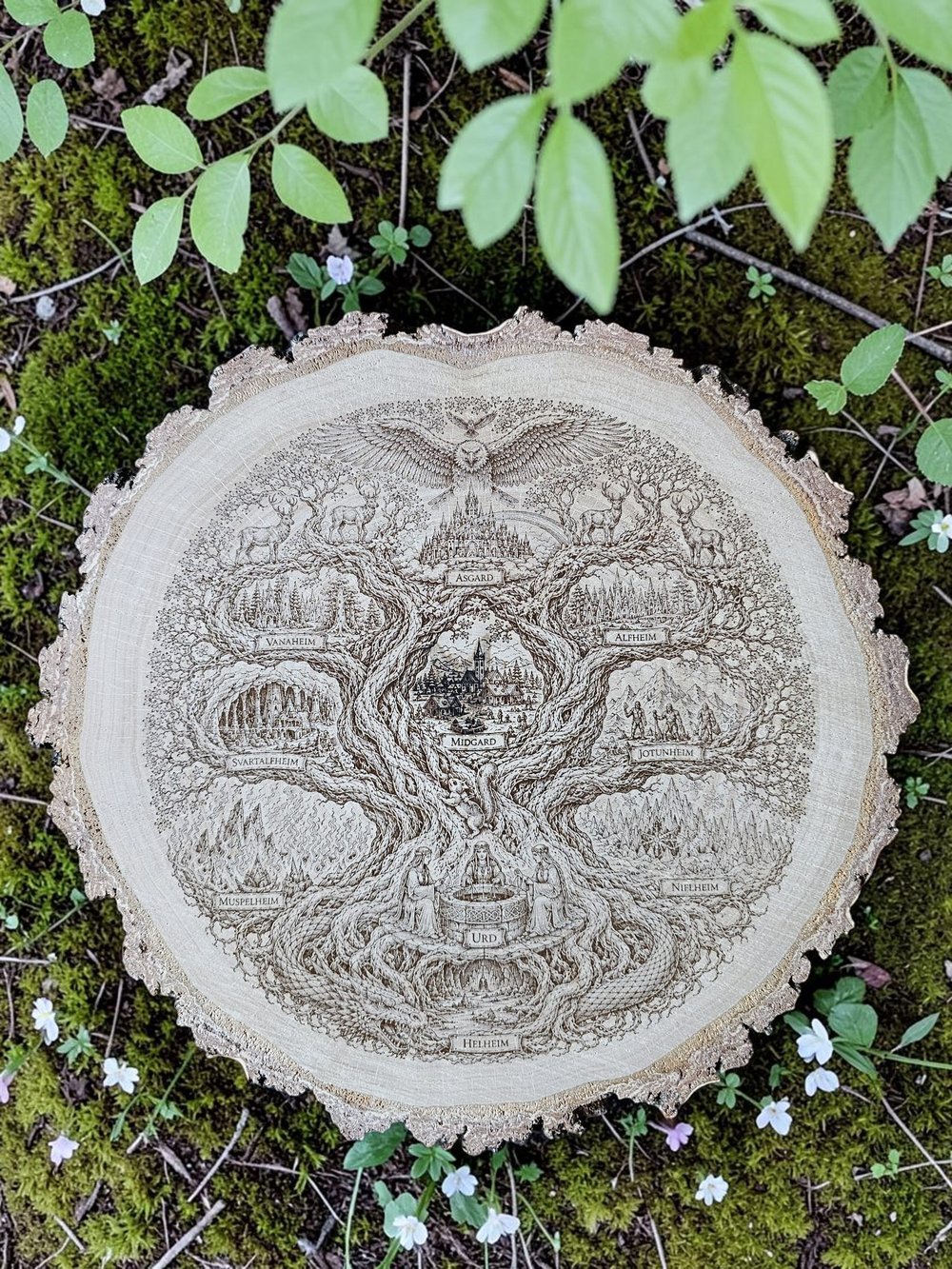
Valhalla · Hel – goddess and realm of the dead · Boat burial – the burning ship · The Draugr – the walking dead · Sacred Mountains & Rocks.
All Festivals & Belief articles →
When the nights are longest and the fire in the house is warmest, the departed draw nearer. Yule, the midwinter feast …
Read more →For our ancestors the year was no sheet on the wall but hard, beautiful work: to sow, to tend, to harvest, to store …
Read more →The old faith of our ancestors has not died out – it is being lived again. “Ásatrú”, literally “true to the Æsir”, is …
Read more →“Under all roots is rest.” More and more people wish, at the end, not for a cool stone but for a tree – a living place …
Read more →