 Of all the Slavic peoples who once lived between the Elbe and the Vistula, only one on the Baltic coast still speaks a language of its own: the Kashubians. Their story runs from tenth-century Pomeranian strongholds through a duchy of their own, the Teutonic Order and two world wars into present-day Polish classrooms — and it is a lesson in how stubborn language and belonging can be.
Open the map of the West Slavic peoples and you mostly read losses. The Obodrites were absorbed into the Mecklenburg nobility, the Rani of Rügen lost their sanctuary in 1168 and their language soon after, the Polabians of the Wendland fell silent around the middle of the eighteenth century. Only two groups still speak: the Sorbs in Lusatia — and the Kashubians on the Baltic.
Kashubians, Kaszëbi in their own language, live in northern Poland, chiefly between Gdańsk, Wejherowo, Kartuzy and the lakes of what is called Kashubian Switzerland. Scholarship regards them as the direct descendants of the Slavic Pomeranians, the tribes settled between the Oder and the Vistula who were linguistically absorbed in western Pomerania during the Middle Ages. In the east, in Pomerelia, a remnant held on — and from that remnant grew a people with a name of its own. That it still exists is no matter of course but the product of chance, confession, remoteness and a handful of very stubborn people in the nineteenth century.
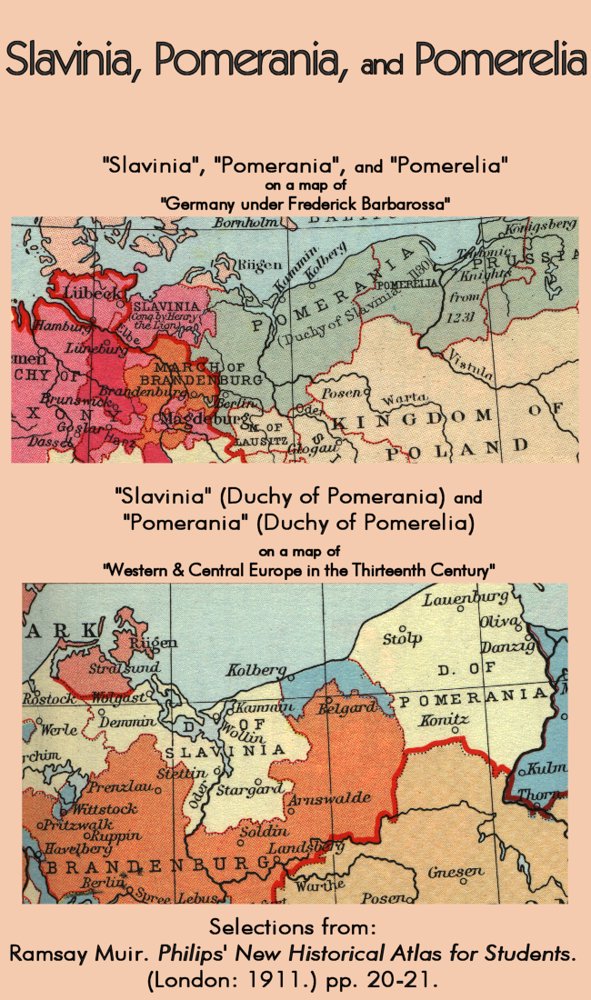
Slavic settlement of the coastal lands begins archaeologically in the sixth and seventh centuries. What emerged was not a state but a web of strongholds, harbours and small lordships: Wolin at the mouth of the Oder, Kołobrzeg, Szczecin, Gdańsk on the Vistula. Trade in silver, salt, furs and amber tied these places to Scandinavia, to the river routes of the Rus and to the Empire.
Gdańsk is among the best-researched of them. Beneath the New Town Hall archaeologists found remains of Slavic houses and pottery from the early tenth century; the stronghold itself is usually connected with Piast expansion under Mieszko I in the 970s or 980s. The place first appears in writing in 997, in the life of Saint Adalbert composed shortly afterwards, as “urbs Gyddanyzc” — the town that separated the duke's great realm from the sea. Ecclesiastical and political attachment to the Piasts, that is to the realm of the Polans, was therefore established early, but it remained contested and was repeatedly interrupted for centuries.
Out of this borderland grew the high medieval Duchy of Pomerelia, also called Gdańsk Pomerania. After Poland fragmented in 1138, governors from a local family, the Samborides, administered the country — at first as Piast appointees, then increasingly on their own account. Two of them are known by name in the twelfth century: Sobiesław I and his son Sambor I.
The spiritual centre became the Cistercian abbey of Oliva near Gdańsk; ecclesiastically the region belonged to the bishopric of Włocławek. Politically the situation was precarious. In 1210 King Valdemar II of Denmark invaded and Mestwin I briefly became his vassal before the land returned to the Polish orbit. Whoever ruled here balanced permanently between Poland, Denmark, Brandenburg and — from 1230 — the Teutonic Order as a new eastern neighbour. This is the real key to Kashubian history: a narrow strip of coast that at least three larger powers were always quarrelling over.
The best-known Samboride is Swietopelk II, who died in 1266. From 1227 he styled himself dux, duke, and made himself effectively independent. He chartered Gdańsk with Lübeck law, brought in the Dominicans, and at the same time fought a long conflict with his brothers Sambor II and Ratibor, who allied themselves with the Teutonic Order. Swietopelk in turn allied with the pagan Prussians; only the Treaty of Christburg in 1249 produced a settlement.
After his death the structure collapsed quickly. In 1282 Mestwin II concluded the Treaty of Kępno, transferring overlordship to Przemysł II of Greater Poland. When Brandenburg pressed its claim in 1308, Władysław the Elbow-high called in the Teutonic Knights. They drove the Brandenburgers out — and kept the land. The seizure of Gdańsk in November 1308 was accompanied by a massacre of the inhabitants; in 1309 Pomerelia was incorporated into the Order's state, and in the same year Margrave Waldemar sold his claim in the Treaty of Soldin for 10,000 marks. With that, the independent political history of the eastern Pomeranians ended. The quarrel over Pomerelia did not: it produced wars between Poland and the Order throughout the fourteenth and fifteenth centuries.
The name Kashubia appears surprisingly late. The accepted first attestation is a bull of Pope Gregory IX dated 19 March 1238, confirming the possessions of the Hospitallers at Stargard. In it Bogusław — meaning Bogusław I, duke of Pomerania, who died in 1187 — is referred to retrospectively as duke of Kashubia:
… the house at Stargard together with its appurtenances, given to you by Bogusław of famous memory, duke of Kashubia [duce Cassubie], and by Bogusław his son, and by their successors, shall continue to belong to you.Bull of Pope Gregory IX, 19 March 1238; rendered in sense from the version published by the Muzeum Pomorza Środkowego, Słupsk
The geography is worth noting. Stargard lies far to the west, in Western Pomerania. The name Kashubia at first denoted a western portion of the Griffin duchy — not the present settlement area around Gdańsk. Only over the centuries did it travel eastwards, to where the Slavic language survived. Since 2004 Kashubians have observed 19 March as the Day of Kashubian Unity, Dzéń Jednotë Kaszëbów.
The label became a ruler's title. Barnim I, born around 1210 and dead in 1278, styled himself “dux Slavorum et Cassubie”, duke of the Slavs and of Kashubia; Barnim III, roughly 1300 to 1368, used “dux Cassuborum”, duke of the Kashubians. Until the Griffin dynasty died out in 1637 with Bogislaw XIV, the Kashubian title was a fixed element of Pomeranian styling.
Then the heirs took it over. Through the Treaty of Grimnitz of 1529 the Hohenzollerns had secured a right of succession in Pomerania; after the Peace of Westphalia part of the country fell to Brandenburg. Prussian royal titulature thereafter included, among a great deal else, “Duke of Stettin, of Pomerania, of the Kashubians and Wends”. The corresponding duchies of Kashubia and Wendland were purely administrative and titular constructions that survived on paper until 1918. For people who actually spoke Kashubian this meant nothing at all — they were Prussian subjects like any others, and the title merely commemorated a vanished lordship.
Kashubian belongs to the West Slavic branch and within it to the Lechitic group, that is to the close family of Polish, Silesian and the extinct Polabian. Within that group it is assigned to the Pomeranian sub-branch — which makes it the only surviving remnant of the Pomeranian language landscape. Its nearest relative, Slovincian, is extinct.
Whether Kashubian is a language of its own or a Polish dialect was a scholarly and simultaneously political quarrel for more than a century. The usual summary runs: diachronically, in terms of language history, it is an independent Lechitic language; synchronically, in present-day comparison, it stands so close to Polish that classification as a dialect seemed defensible. In practice the matter is settled. A single Kashubian standard never fully established itself, and the dialects still differ considerably — but in law Kashubian has been, since the Act of 6 January 2005 on national and ethnic minorities and on the regional language, the only recognised regional language in Poland. It is written in Latin letters with a set of additional characters, among them the characteristic ë.
North-west of the Kashubian core, between Lake Łebsko and Lake Gardno, lived a closely related group: the Slovincians. They had become Protestant while the Kashubians further east remained Catholic — a confessional boundary that also worked as a language boundary, because in the west the church preached in German while Catholicism in the east favoured Slavic preaching.
Slovincian, linguistically an archaic variety of Pomeranian and therefore especially valuable to researchers, died out in the early twentieth century. Individual words and phrases lasted longer; a few elderly people are reported to have retained fragments into the 1950s. After 1945 the remnants of this population fell between all stools: too German for one side, too Slavic for the other. Today the open-air museum at Kluki, a branch of the Museum of Central Pomerania in Słupsk, preserves the memory of their villages.
Without one man, things would look different today. Florian Ceynowa, born on 4 May 1817 in Sławoszyno and dead on 26 March 1881, was a farmer's son who attended the gymnasium at Konitz and studied medicine at Breslau and Königsberg. In 1846 he intended to attack the Prussian garrison at Preußisch Stargard with some hundred scythemen; the plan was betrayed, Ceynowa was arrested, tried at Moabit and sentenced to death by beheading. The sentence was commuted to life imprisonment, and the revolution of March 1848 set him free.
In prison he wrote the first literary work in Kashubian, a conversation between a Pole and a Kashubian. After that he worked systematically: in 1850 a little book for the Kashubians appeared in Danzig; in 1856 he travelled the region with the Russian Slavist Alexander Hilferding; in 1879 he published in Posen an outline grammar of the Kashubian-Slovincian language. He designed an alphabet, an orthography and a grammar — and in doing so set himself against several parties at once: against Prussian Germanisation, but also against Polish nobility and clergy, who saw in his separate path nothing but fragmentation. His pan-Slavism was of its time and needs explaining today; his linguistic work has lasted.
Hieronim Derdowski, 1852 to 1902, supplied the popular tone. He wrote humorous verse tales in Kashubian, fell foul of the Prussian authorities and emigrated to the United States in 1885, where he edited Polish-language newspapers. He is credited with the most quoted Kashubian sentence of all: “Nie ma Kaszëb bez Polonii a bez Kaszëb Polśczi” — no Kashubia without Poland, and no Poland without Kashubia. The attribution is not entirely clean; the thought is sometimes traced back to Ceynowa, but it was Derdowski who put it into circulation.
The third figure is Aleksander Majkowski, 1876 to 1938, a physician in Kościerzyna and the head of the Young Kashubian movement, Młodokaszëbi. In 1908 he founded the periodical “Gryf”, meaning Griffin. His life's work, though, is the novel “Żëce i przigodë Remusa”, subtitled the Kashubian Mirror, which occupied him for decades and appeared in full only shortly after his death in 1938. Remus, a stammering orphan who wheels a barrow of Kashubian books from fair to fair and struggles against a devil's emissary named Smętek, is an entire people's literary self-portrait. Translations followed into Polish in 1964, French in 1984, German in 1988 and English in 2008.
Kashubian everyday culture has remained remarkably visible. Snuff, tabaka, is taken from a horn, pinched between thumb and forefinger and inhaled — a habit that vanished elsewhere and survived here, not least because it was more practical than a pipe in wind and rain. Antoni Abraham, the king of the Kashubians who travelled to Paris in 1919 to argue at the peace conference for Polish access to the Baltic, presented General Haller with such a snuff container at the symbolic Wedding of Poland to the Sea at Puck on 10 February 1920.
Kashubian embroidery has several schools. The oldest goes back to the Norbertine nuns of Żukowo and works mainly in blue and yellow; at Wdzydze, Teodora and Izydor Gulgowski developed a more colourful variant in the early twentieth century, and further schools arose at Wejherowo and elsewhere. The classic motifs are cornflower, tulip and bellflower, and the reading of the colours — blue for lake and sky, yellow for sun and ripening grain, green for forest, red for poppies, black for the soil — is standard in the way the craft is taught. As their emblem the Kashubians use a black, usually crowned griffin on a golden field; the flag is black over yellow. The anthem “Zemia Rodnô” was written by Jan Trepczyk in 1954 and printed only some years later, in a songbook of the student circle Ormuzd.
Being caught between two nation states became an existential danger. After 1920 a large part of Kashubia went to Poland while Gdańsk became a Free City; anyone who spoke Kashubian was routinely regarded by both sides as not quite one of their own. With the German invasion of 1939 this turned deadly.
In the woods of Piaśnica near Wejherowo, German units murdered people in large numbers between the autumn of 1939 and the spring of 1940; scholarly estimates run to between 12,000 and 14,000 victims. Those killed were above all members of the educated Polish class of Gdańsk Pomerania, many of them Kashubians, together with Jews, Czechs and patients of German and Polish asylums. It was one of the first large-scale German mass shootings in occupied Poland.
At the same time the occupiers assigned most Kashubians to category three of the German People's List, judging them capable of Germanisation — with conscription into the Wehrmacht as a consequence. Those regarded as Polish in outlook, especially the educated, were persecuted. This double experience of being drafted and treated as an enemy at once shaped the postwar decades, in which Kashubian families sometimes had to explain why their fathers had worn German uniforms. In 1956 the Kashubian Association was founded in Gdynia and Gdańsk, out of which the Kashubian-Pomeranian Association grew.
The figures deserve an honest reading. In the Polish census of 2011 around 233,000 people declared a Kashubian identity, some 16,000 of them exclusively Kashubian, and more than 108,000 said they used Kashubian at home. In 2021 the figures were 179,685 people with a Kashubian identity, of whom roughly 12,000 gave no additional Polish identity, and about 87,600 who use the language at home — only 1,700 exclusively. Specialists caution that changed survey methods and the political climate limit comparability. A decline it remains nonetheless.
Against this stands an institutional footing that did not exist fifty years ago. Kashubian is an auxiliary official language in several communes of the Pomeranian Voivodeship, it is taught in schools, and since 2005 pupils have been able to sit their school-leaving examination in it. Whether that is enough will be decided at kitchen tables, not in statute books.
What interests us in this story is that it needs no embellishment. A people whose name we owe to a papal charter, whose dukes manoeuvred between Poland, Denmark and the Order, and whose language was rescued from memory by a country doctor, requires no invented runes and no fantasy ornament. When we laser-engrave motifs from the Slavic north in our Alsdorf workshop — a griffin, an embroidery pattern, a date — we prefer to work with what is actually attested, and to say plainly where interpretation begins.
The Pomeranians · Wolin & Jomsborg · The Polabians · The Rani (Rügen).
All History & Finds articles →
Long before the Vikings they settled between the Eifel and the Danube, leaving behind gold hoards and princely graves …
Read more →