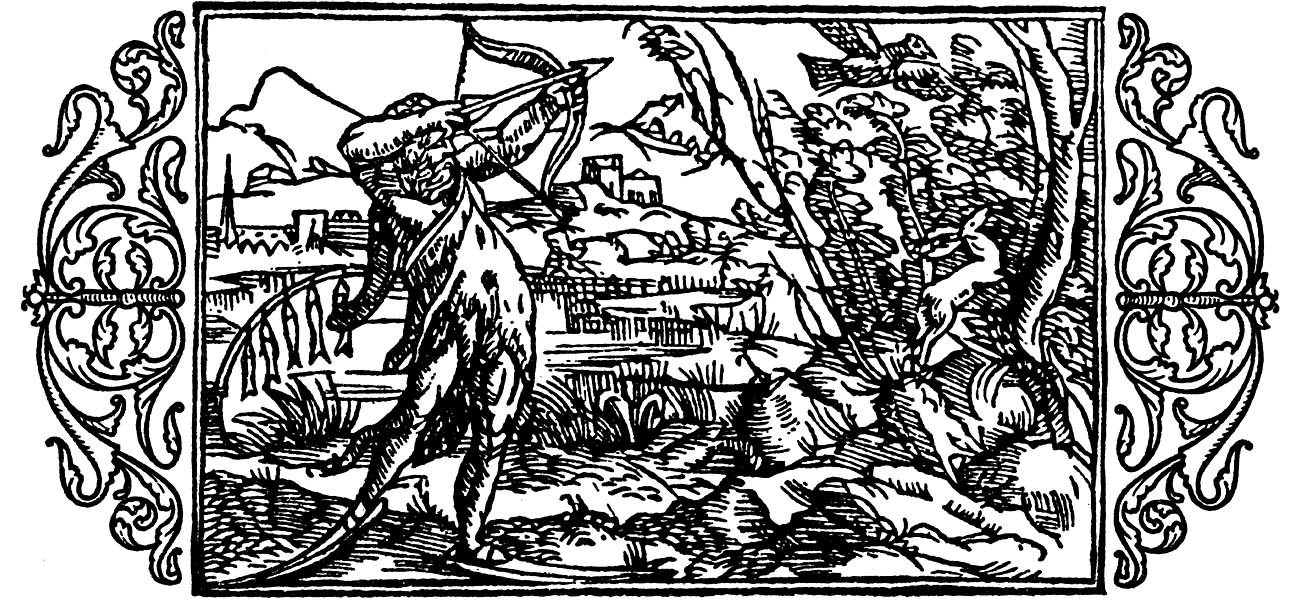
In almost every book about the Vikings they turn up at some point, usually in a subordinate clause: the "Finns" of the north who supply furs, work magic and have beautiful daughters. That says more about the storytellers than about the people in the stories. The Sámi lived in the north of Scandinavia long before the Viking Age, they spoke an entirely different language, and they still live there today. In the Norse sources they are neighbours, trading partners, tribute payers, wives and sorcerers. We sort out what is report, what is saga and what is prejudice.
The Sámi are the indigenous people of northern Norway, Sweden and Finland and of Russia's Kola Peninsula. They call their homeland Sápmi. Their languages belong to the Uralic family and are related to Finnish and Estonian, not to Norwegian or Swedish. Depending on how they are counted, there are nine to eleven Sámi languages. How many people identify as Sámi today is hard to say; estimates mostly range from 80,000 to over 100,000. In Norway, Sweden and Finland they have their own elected parliaments.
Anyone writing about the Sámi in the Viking Age has a source problem. The Sámi themselves wrote nothing down in that period. Everything we read comes from Romans, Byzantines, Englishmen, Norwegians and Icelanders. That does not make it wrong. It means that we see the Sámi only in the mirror of their neighbours, and the mirror is not always clean.
In Old Norse texts the Sámi are called Finnar, singular Finnr; in Old English Finnas. This is the first trap for modern readers: as a rule the word means not the inhabitants of present-day Finland but the Sámi. The region of Finnmörk, today's Finnmark, is accordingly the "borderland or forest of the Sámi". Usage is not entirely consistent, and in some texts it remains unclear who exactly is meant. Where the word Finnr comes from has not been settled.
The word "Lapp" is younger. It appears around 1200 in Saxo Grammaticus as part of a place name and in modern times became the usual term, in scholarship too. Many Sámi today find it derogatory, and we use it only to explain exactly that. Their own name is Sámi. The regional name Lapland, on the other hand, is still in common use.
The oldest report connected with the Sámi is in Tacitus. At the end of his Germania, around AD 98, he describes the Fenni:
Fennis mira feritas, foeda paupertas: non arma, non equi, non penates; victui herba, vestitui pelles, cubile humus.
"Among the Fenni there is astonishing wildness and wretched poverty: no weapons, no horses, no homes; herbs for food, skins for clothing, the ground for a bed."Tacitus, Germania 46; our translation
Tacitus was never in the north. He passes on what traders told him, and he writes to a pattern in which peoples become "wilder" the further they live from the Empire. Whether his Fenni were ancestors of the Sámi or hunting peoples somewhere east of the Baltic in general is disputed. He adds, by the way, that they thought themselves happier than farmers toiling in the fields. That, too, is a moral for Roman readers rather than ethnography.
The Byzantine historian Procopius is more concrete, in the mid-sixth century. On the great island of "Thule", by which he means Scandinavia, lived the Skrithiphinoi. They wore no woven clothes and no shoes, drank no wine, grew nothing and lived by hunting. The name is usually read as "ski Finns", from Old Norse skríða, to glide. Jordanes gives the same people in garbled form as Screrefennae, and in the eighth century Paul the Deacon tells of the Scritobini, who chase game on bent wood. As far as we can see, that is an early description of skiing.
The first source in which a Northman himself speaks about the Sámi is the account of Ohthere of Hålogaland at King Alfred's court around 890. For him the Finnas are neighbours. They live in the uplands east of the coast, hunt in winter and fish in summer, and on his voyage to the White Sea they are almost the only people he meets.
Above all, they are the basis of his wealth. Ohthere says the Sámi pay the northern Norwegians a tribute graded by rank: marten skins, reindeer skins, bearskins, feathers, whalebone and ship's ropes of whale and seal hide. His decoy reindeer were very valuable "among the Finnas". Whether the payment was compulsion, protection money or part of an exchange the text does not say. What is clear is that the economy of the north rested on cooperation, however unequal it may have been.
The Icelandic sagas of the thirteenth century know this system under names of their own. Finnskattr is the Sámi tax, finnkaup the trade with the Sámi. Egil's saga, probably written between 1220 and 1240, tells of it at greatest length. A man from Hålogaland receives from the king finnferð, konungssýslu á fjalli ok finnkaup – "the Sámi journey, the king's office in the mountains and the Sámi trade". Later Thorolf Kveldulfsson goes up into the mountains with trade goods, collects the tax and deals in furs. The quarrel over how much of it reaches the king is eventually his undoing.
How much of this is ninth-century history and how much reflects thirteenth-century conditions cannot be disentangled. But that the right to tax and trade with the Sámi was a profitable royal prerogative fits well with Ohthere's account. Furs from the north were among the most valuable goods in Viking-Age trade.
The most famous Sámi woman in Norse literature is Snæfríðr. Her story is told in Ágrip, among others, and most fully in Snorri's Heimskringla. Harald Fairhair visits a Sámi named Svási in winter, whose daughter hands him a cup. The king falls so violently in love that he marries her and neglects his duties. They have four sons. When Snæfríðr dies her body does not decay for three years, and Harald keeps watch over it until she is moved and vermin crawl out of the corpse. Only then does he realise he was bewitched.
That is saga, and a saga that wants to explain a great deal: why part of the royal house had a dubious origin and why a great king strayed so long from the right path. Still, it contains something that shows up elsewhere too. Marriages between Norse and Sámi occur in the literature, and almost only in one direction: Norse men, Sámi women. According to Snorri, even Queen Gunnhild learned her magic from two Sámi in Finnmark. That such unions really existed is very likely. What they were like, the sagas do not say.
No motif clings to the Sámi of the sagas as firmly as sorcery. Sámi foretell the future, raise storms, send their souls travelling in animal shape. Historia Norwegie, from the late twelfth or early thirteenth century, has a scene scholars often quote: a Sámi sorcerer tries to bring back the soul of a woman who has suddenly died, using an object described like a drum and painted with whales, reindeer, skis and a boat. It is the oldest description of a Sámi drum.
Two things have to be kept apart here. The Sámi had a religion of their own, with drums, sacred places and specialists for contact with the other world. That is well attested, though mostly in much later sources. The sagas, however, turn it into a literary label: whoever is a "Finnr" can work magic, and whoever works magic is dangerous. The laws of eastern Norway, preserved in fourteenth-century manuscripts, forbid going to Finnmark to have one's fortune told, or believing in the Sámi. That shows two things: that Norse people did exactly that, and that the Church saw a danger in it. Norse magic, seiðr, was also readily linked to the Sámi in the sagas.
Archaeology gives a picture that complements the texts. In northern Sweden and Norway there are Sámi offering sites, often at striking rocks or lakes, where antlers and bones were deposited over long periods. At a dozen such sites, among them Rautasjaure and Unna Saiva in Lapland, there were also metal finds: arrowheads, jewellery, coins, including Norwegian coins of the eleventh century. In 2015 Julie Lund argued that these sites were already in use in the Viking Age and that Sámi and Norse offering customs were more alike than long assumed.
The boundary itself was porous too. In the cemetery of Vivallen in Härjedalen, of the eleventh and twelfth centuries, Inger Zachrisson found burials in the Sámi manner with clothing and jewellery of the kind also worn in the Norse south. Such finds are hard to interpret, because objects have no nationality. But they show that the people of the north did not live in two neatly separated worlds.
Contemporary written evidence is Tacitus, Procopius and Jordanes from afar, and above all Ohthere's account of around 890 from close by. They describe hunters, fishers and reindeer keepers who paid tribute to the northern Norwegians.
Archaeological evidence is Sámi offering sites with metal finds, graves in the Sámi tradition and trade goods that travelled in both directions.
Later tradition is the sagas and chronicles of the twelfth and thirteenth centuries: finnskattr and finnkaup, Snæfríðr and Harald, Gunnhild's apprenticeship, the sorcerers. The sorcerer motif is literature with a true core and a great deal of prejudice.
Modern interpretation covers the identification of the Fenni with the Sámi, the nature of the tribute and the ethnic attribution of individual finds.
What remains is a people the Norse needed, admired and feared – and one with a history of its own, long before them and long after. For courage. For memory. For legends that live on.
Ohthere of Hålogaland · Danes, Swedes, Norwegians · The Icelanders · The Greenlanders · The Geats.

.jpg)