 Of most Gaulish peoples, a town name is all that survives. Of the Veliocasses two things survive: a city now called Rouen, and an entire landscape still named after them. The Vexin carries the name of a people whose pre-Roman capital nobody can identify with certainty, and whose very classification scholars still argue about.
Gaul has peoples who became famous because they produced a war leader, and peoples who became famous because they lost a war. The Veliocasses belong to a third and rarer group: they are still present chiefly because their name outlived antiquity. North of the lower Seine, between Paris and Rouen, lies a region still called the Vexin. The word is nothing other than a worn-down form of Veliocassinus.
This is not romantic etymology but documented record. In 617 a Frankish charter names the pagus Veliocassinus; in 1092 it appears as Vilcassinum, in 1118 as Vulesin, and from that comes the modern name. Between the Gaulish people and the French district lie roughly a thousand years of unbroken onomastic history. Few Celtic tribal names have so well documented an afterlife.
What Veliocasses originally meant is far less settled. The first element is certainly Gaulish uelio-, but the reading forks immediately: it may go back to Proto-Celtic *wēliyā- 'modesty, decency' or to *wēlyo- 'better' (compare Welsh gwell). Since the vowel length is not secured, no decision is possible; Xavier Delamarre considers the second option semantically more plausible for a tribal name without declaring it settled.
The second element -casses is even more interesting. It recurs across a whole family of Gaulish tribal names: Bodiocasses, Durocasses, Sucasses, Tricasses, Viducasses. Traditionally it has been glossed as 'hair, hairstyle, curl' (Old Irish chass 'curl'), which would make the Veliocasses something like 'those with the splendidly curled hair', an allusion to a warrior coiffure. Patrizia de Bernardo Stempel instead reads the -casses names as helmet names and translates 'those with the good, that is harder, helmets'. Mélanie Mairecolas and Jean-Marie Pailler connect the element with the word for tin (Greek kassíteros, compare the British ruler's name Cassivellaunus) and arrive at 'those with the better metal'.
Three readings, three pictures: hairstyle, armour, metal trade. The popular rendering 'the best in battle', found in guidebooks, is a hybrid of two of them and is not supported in that form by any specialist publication. For a craft that works with signs, that is a useful reminder: a name is a find, not a slogan.
Caesar assigns the Veliocasses without hesitation to the Belgic coalition of 57 BC. Pliny the Elder, writing a good century later, lists them instead among the peoples of Gallia Lugdunensis, together with the Lexovii, Caletes, Veneti, Abrincatui and Osismii. For Pliny the Seine is the boundary between Belgica and Celtica - and the Veliocasses sat on both banks.
The contradiction is not an error but a reflection of the geography. The core of the territory lay on the right bank, on the plateau of the modern Vexin, with neighbours to the north and east who were unambiguously Belgic: the powerful Bellovaci around Beauvais, and beyond them the Atrebates and Nervii. To the south-east lay the Parisii. At the same time the territory reached across the river onto the plateau of Madrie and into the Roumois, and there the neighbours were the Aulerci Eburovices and the Lexovii - peoples of the Celtica. Edith Wightman deliberately left the question open for the Veliocasses as for their western neighbours the Caletes. Anyone who gives a clean answer is going beyond the sources.
The first secure mention stands in the second book of the Gallic War. Caesar has the Remi, who had gone over to the Roman side early, itemise the strength of the Belgic coalition for him. The list is one of the most famous sets of figures in ancient ethnography: Bellovaci 100,000, of whom 60,000 selected; Suessiones 50,000; Nervii the same; Atrebates 15,000; Ambiani 10,000; Morini 25,000; Menapii 7,000; Caletes 10,000 - and then, curtly, Veliocasses et Viromanduos totidem, 'the Veliocasses and Viromandui the same number'.
That single word totidem carries weight. It refers back to the 10,000 of the Caletes just named. The usual construction, and the one adopted by the standard editions, is 10,000 men for each of the two peoples. Grammatically, however, the sentence could also be read as a joint figure. The 10,000 should therefore not be treated as a measurement but as what it is: a second-hand figure supplied to Caesar by allies, which at the same time made his own achievement look larger. Ancient army numbers are rhetorical quantities.
Five years later the people appear in another list, one that sounds distinctly more sober. Before Alesia, while Vercingetorix sits in the besieged town, the Gaulish council of chiefs decides expressly not to call up every man able to bear arms but to impose a fixed contingent on each people - a vast undisciplined multitude, they feared, could neither be commanded nor fed. In this levy the Veliocasses appear in notable company:
Atrebatibus IIII milibus; Veliocassis, Lexoviis et Aulercis Eburovicibus terna; Rauracis et Boiis bina.
'Four thousand from the Atrebates; from the Veliocasses, the Lexovii and the Aulerci Eburovices three thousand each; from the Rauraci and the Boii two thousand each.'Caesar, De bello Gallico VII.75.3; translation: Glanz & Gravur
Two things are striking here. First the figure: 10,000 has become 3,000. Whether that reflects a real loss of substance after five years of war, or simply a different accounting logic - the Belgic catalogue records promises, the Alesia list an assessment - cannot be decided. Second the company: the Veliocasses stand in one line with the Lexovii and the Aulerci Eburovices, precisely the two peoples across the Seine with whom they also form a unit numismatically. Caesar's staff list confirms what the coins suggest: on the lower Seine these three belonged together.
A year after Alesia the war in the north flares up once more. The Bellovaci rise under Correus, and at their side stands Commius the Atrebate, once Caesar's trusted man in Britain and now his most stubborn opponent. Hirtius, who added the eighth book of the Gallic War after Caesar's death, reports what Roman cavalry extracted from prisoners: every Bellovacan capable of bearing arms had gathered in a single place, itemque Ambianos, Aulercos, Caletos, Veliocasses, Atrebates - 'and likewise the Ambiani, Aulerci, Caletes, Veliocasses and Atrebates'. The camp lay on high ground in a wood ringed by marsh, with the baggage removed to more distant forests.
The campaign ends with an ambush that goes wrong: Correus falls, Commius flees to the Germani, the rest surrender and lay the blame on the dead man. For the Veliocasses this is the last appearance as an independent belligerent. From here on they figure only as an administrative unit.
There is an older mention, though it must be handled with care. The Periochae, late antique summaries of Livy's lost history, note of the Cimbric migration that the Cimbri, after the Celtiberians had driven them out of Spain, returned to Gaul and joined the Teutones in Vellocassis - that is, in the country of the Veliocasses, around 103 BC.
It is a strong sentence and is often quoted. It needs placing correctly, however: the Periochae are not a text of Livy but a much later abridgement, and they name no date and no place, only the tribal name used as a geographical marker. What the sentence documents is not a meeting on the Seine but the fact that the name of the Veliocasses functioned in Roman times as a label for a region. As evidence for the events themselves it is a very thin thread.
Here matters become awkwardly honest: Caesar names not a single place for the Veliocasses. No oppidum, no besieged town, nothing. For the Bellovaci he knows Bratuspantium, for the Suessiones Noviodunum - for the Veliocasses he is silent. Anyone speaking of the 'capital of the Veliocasses' before Roman times is speaking about a reconstruction.
Archaeology offers several candidates. The largest is the spur above the Seine at Vernon, or rather Vernonnet, known locally as the 'Camp de César' or 'Camp de Mortagne': some 78 hectares, a chalk promontory with a hundred metres of steep fall, and a cross-rampart about a kilometre long. Excavations between 1993 and 1997 identified three building phases - first a murus gallicus with internal timber lacing, then two successive strengthenings of the so-called Fécamp type, regarded as a 'Belgic' rampart. The north gate was monumental: a roadway 7.5 metres wide, a corridor 24 metres long between timber-laced walls four metres high, and above it a gate structure some 8.5 metres tall. The gate area yielded abundant metalwork including sword fragments, arrowheads, spear butts, shield fittings, helmet pieces and mail. Those mail fragments are among the earliest known in a Celtic context.
Even so, Vernon was probably not a town but - like many large northern Gaulish enclosures - a refuge, a military place and a production centre, notably for weapons. Smaller sites lie at Port-Villez and Saint-Pierre-d'Autils. Alongside them the literature names the Camp de Calidou near Caudebec-en-Caux as a possible pre-Roman centre. No decision has been reached. What we know about Celtic warrior equipment from this region we owe above all to the gate deposit at Vernon, not to a known capital.
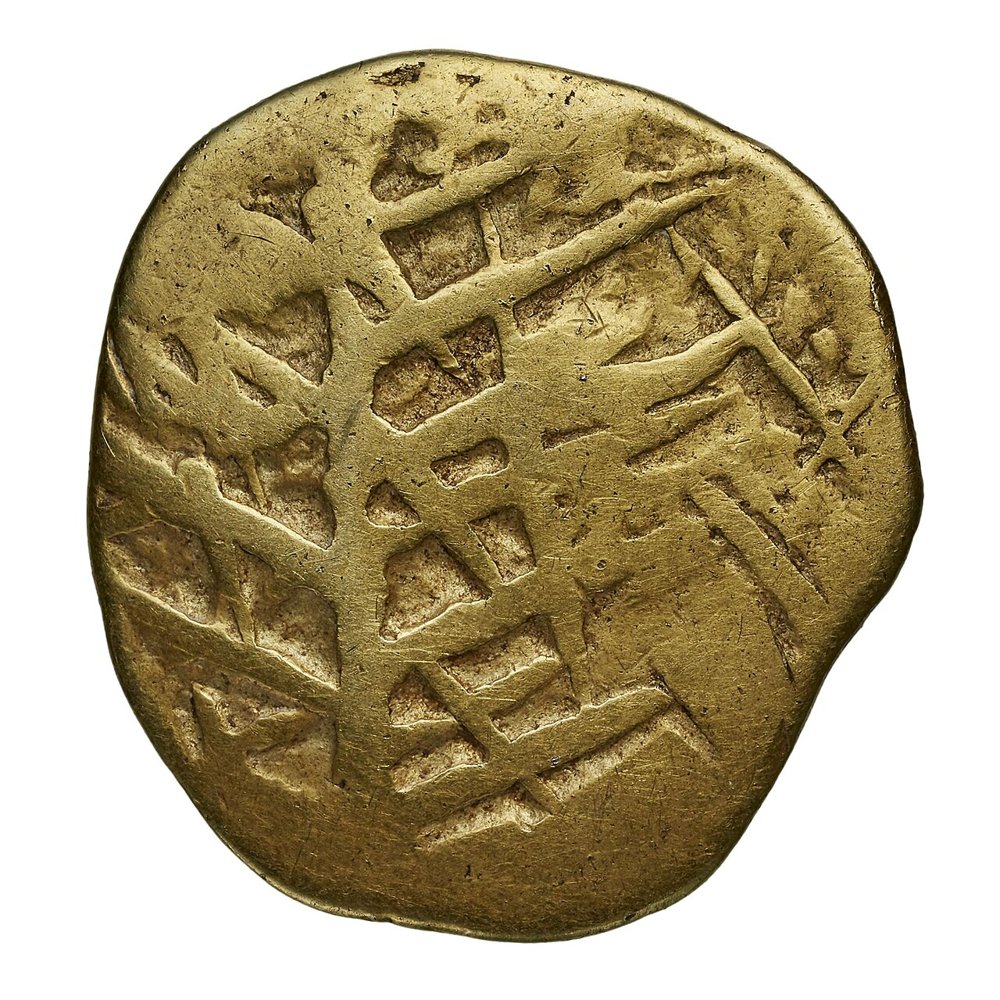
The name of Rouen turns up on money earlier than in any text. A large body of coinage is attributed to the Veliocasses, including bronzes with the legend RATVMACOS or RATVMACIA and an extensive series in the name SVTICOS or SVTICCOS, often with a lion, a rider or a two-horse chariot. Ratumacos is the Gaulish form of what Latin renders as Rotomagus - Rouen. The timing is the remarkable part: these coins belong to the period of the Gallic War or shortly before it, that is, before the place existed as a Roman town.
There is also a special case pointed out by Louis-Pol Delestrée: the appearance of the tribal name itself on the coinage, in the form VELIOCAOI. In Gallia Belgica that is exceptional; in the north-west of the Celtica it is common, precisely in the Eburovices-Lexovii sphere. Brigitte Fischer, in the corpus of Gaulish coin legends, noted how striking it is that three adjacent peoples - Veliocasses, Aulerci Eburovices and Lexovii - all put their name on their money. That fits Caesar's Alesia line exactly and argues for a closer interlocking along the Seine, discussed in scholarship as a kind of monetary alliance.
Caution is required with the attributions themselves. Assigning Gaulish coinage to individual peoples rests on find distribution, stylistic comparison and the reading of legends, and it keeps moving: series that the nineteenth century gave without hesitation to the Caletes or the Ambiani now stand under the Veliocasses, and the reverse has happened too. A coin is a secure find but rarely a secure identity document.
Under Augustus the people become a civitas Veliocassium, with Rotomagus as its centre. The site sits conveniently at the last easily passable Seine crossing before the estuary, and it becomes a port: in the second century it is an important transhipment point for traffic to Britain. A Roman trunk road runs across the Vexin towards Lutetia, and its line can still be traced in the field as a dead-straight alignment of lanes.
With the imperial reforms of the late third century Rotomagus rises further. When Gallia Lugdunensis is divided, it becomes the chief town of the province of Lugdunensis Secunda; the late antique city list of the Notitia Galliarum records it as metropolis civitas Rotomagensium. With that the name of the citizen body changes too: the civitas Veliocassium becomes the civitas Rotomagensium - the people disappear behind their city. The provincial capital becomes a bishop's seat and later an archbishopric whose ecclesiastical province carries the old provincial boundary forward. An ancient administrative division thus survives inside medieval church law.
How far the people of this civitas travelled is shown by nothing so well as a handful of inscriptions. On the shore of the Oosterschelde, at Colijnsplaat in Zeeland, a man dedicated an altar to the sea goddess Nehalennia: Placidus Viduci filius, civis Veliocassinus, negotiator Britannicianus - Placidus, son of Viducus, citizen of the Veliocasses, trader with Britain. He was discharging a vow, as merchants did before the crossing.
The same man, or an immediate relative, appears a second time far to the north. At York in 1976 excavators found a dedication by Lucius Viducius Placidus, Viduci filius, domo civitate Veliocassium, likewise a negotiator, who paid for an arch and a gateway. The consular dating by Gratus and Seleucus places it in AD 221. A single trader from the Vexin can thus be followed from the Seine by way of the Scheldt estuary to Britain. Further Veliocasses are attested at Lyon, among them Illiomarus Aper, a linen dealer from the civitas Veliocassium who rose among the utricularii of Lugdunum and lived to eighty-five, and the young Danfiola, civis Veliocassinia. At Rome itself the civitas Veliocassium honoured a patron with an inscription. The Vexin was not a backwater.
Caesar, De bello Gallico II.4.9 names the Veliocasses in the Belgic catalogue of 57 BC (Veliocasses et Viromanduos totidem, following the 10,000 of the Caletes); VII.75.3 records them at 3,000 men each alongside the Lexovii and Aulerci Eburovices in the relief army before Alesia; Hirtius, VIII.7, lists them in 51 BC in the muster of Correus and Commius. Pliny, Naturalis historia 4.107, places them among the peoples of Lugdunensis; Ptolemy, Geography 2.8, calls them Οὐέλιοκάσιοι with the place Ratomagos; Orosius 6.7.14 writes Velocasses. Livy's Periochae 67 place the junction of Cimbri and Teutones in Vellocassis. Epigraphically secure are the civitas Veliocassium and the civitas Rotomagensium, the Nehalennia altar of Placidus from Colijnsplaat, and the dedication of Lucius Viducius Placidus at York (RIB 3195, dated AD 221). Archaeologically secure is the spur site of Vernon/Vernonnet with its murus gallicus, two Fécamp-type rampart phases, monumental north gate and weapon finds including early mail fragments (excavations 1993-1997). Documented in charter form is the pagus Veliocassinus for the year 617.
Between the end of antiquity and the high Middle Ages something happens that can rarely be observed so clearly: a tribal name turns into a place name. The late antique civitas breaks up in Frankish times into pagi, and one of them keeps the old name. In 617 it is the pagus Veliocassinus. The ethnonym has become an address - people are no longer called Veliocasses, they live in the Veliocassinus.
The boundaries of that district follow the old lines with remarkable persistence. In the west and north the watersheds and wooded heights that had already marked the frontier with the Bellovaci remain effective. The ecclesiastical province of Rouen carries the outline of the Roman province forward, and the county of the Vexin sits inside it as in an old frame.
Then the Vexin acquires a seam straight through the middle - and here the Celtic prehistory meets our own subject. In 911 the West Frankish king Charles the Simple came to terms with the Northman leader Rollo. The core of what would later be Normandy grew out of that arrangement. Ever since, the Vexin normand west of the river Epte has been distinguished from the Vexin français east of it: one landscape, one name, two lordships.
But - and this is the necessary brake - the text of the agreement does not exist. There is no diploma, no contemporary charter, no boundary description from 911. Everything we believe we know about the meeting at Saint-Clair-sur-Epte and about the Epte as a frontier comes from Dudo of Saint-Quentin, writing roughly a century later, whose work is a panegyric of Norman rulers, not an extract from an archive. That some arrangement was reached around 911 is not in doubt; the elegant formula of the land between the Epte and the sea is Dudo's construction. The division of the Vexin is historically real - but it grew over decades and was not drawn in a single day on a bridge. Anyone telling the Vikings here as heirs of the Veliocasses is drawing a pretty line, and should supply the gap in the middle as well: almost nine hundred years.
The many 'Camp de César' sites in northern France are modern popular names for pre-Roman earthworks - the spur at Vernon is a Celtic oppidum, not a camp of Caesar's. The 'Chaussée Jules César' across the Vexin likewise bears its name only by tradition: it is a Roman trunk road laid out decades after Caesar's death and archaeologically in use from the early first to the third century AD. The megalithic tombs of the Vexin, the famous allées couvertes, are Neolithic and thus some three millennia older than the Veliocasses; they have nothing to do with Celts. Caesar names neither a pagus Veliocassi nor any settlement of this people, so the widespread claim that he coined the name Vexin is false - the pagus Veliocassinus first appears in 617. The pre-Roman centre is unresolved: Vernon/Vernonnet and the Camp de Calidou near Caudebec are candidates, not conclusions. Coin attributions shifted repeatedly between Caletes, Veliocasses and Ambiani during the nineteenth and twentieth centuries and are still moving. And the Epte boundary of 911 rests solely on Dudo of Saint-Quentin, writing about a hundred years after the event.
A people with no known capital, without a single named chief, without a battle of their own - and nevertheless one of the most tangible examples of how antiquity survives. Their name stands on coins, in Roman provincial lists, in a Frankish charter of 617, on modern road signs. Their land was frontier country twice over: first between Belgica and Celtica, then between a Frankish king and a Norman duke.
Their religion we know only in fragments; what can be said about Celtic belief in this region comes almost entirely from Roman-period dedications such as that of Placidus to Nehalennia - from a time, that is, when native and Roman had long since interpenetrated. Unlike the Arverni, there is no grand narrative here, only many small and very concrete traces: a gate, a rampart, a fragment of mail, an altar in Zeeland, an inscription in York.
Perhaps that is the more interesting story. In our small family workshop in Alsdorf we engrave signs that are meant to look old and sometimes genuinely are - and we think it only decent to say which part is documented and which part is interpretation. The Veliocasses are good practice for that. The name is secure, its meaning is not. The city is secure, its predecessor is not. The landscape still carries the people, and the rest is work on the sources. Laser-engraved signs last a long time; honesty about where they come from lasts longer.
The Eburovices · The Bellovaci · The Parisii · The Atrebates · Rollo of Normandy.
All History & Finds articles →
In December 2020 a metal detector beeped in a field near Vindelev, only a few kilometres from Jelling. What came to …
Read more →