Some ancient peoples left cities behind, others graves, others at least a name cut into a tombstone. The Marsigni left half a sentence. They appear in Tacitus' “Germania” inside a list of four neighbouring peoples, receive a brief verdict on their speech and way of life – and then vanish from the record for good. No second ancient author names them. No inscription, no coin, no excavated site carries their name. That is precisely why they are worth an article: rarely is it so easy to show how much a single passage can yield, and where honest knowledge ends and map-making fantasy begins.

Tacitus wrote his short book on the Germanic peoples around AD 98. In chapter 42 he has just described the Marcomanni and Quadi, the strong Danube peoples of what is now Bohemia and Moravia. Then he turns his gaze backwards, away from the Roman river frontier, into the mountains behind it. Four peoples sit there: the Marsigni, the Cotini, the Osi and the Buri.
Three of those four names surface again later – in inscriptions, in Cassius Dio, in the Historia Augusta, in modern scholarship. One does not. The Marsigni are mentioned in this single sentence and never again, by anyone. The entire stock of our knowledge about them fits on one line.
It is worth reading the sentence as it stands, because almost every modern statement about the Marsigni is an interpretation of exactly these words – and because reading it makes plain how little is actually there.
Retro Marsigni, Cotini, Osi, Buri terga Marcomanorum Quadorumque claudunt. E quibus Marsigni et Buri sermone cultuque Suebos referunt: Cotinos Gallica, Osos Pannonica lingua coarguit non esse Germanos, et quod tributa patiuntur.
“Behind them the Marsigni, Cotini, Osi and Buri close the rear of the Marcomanni and Quadi. Of these, the Marsigni and Buri recall the Suebi in speech and in manner of life; the Cotini are convicted by their Gallic tongue, the Osi by their Pannonian one, of not being Germani – and so is the fact that they submit to tribute.”Tacitus, Germania 43; translation: Glanz & Gravur
That is all of it. Everything said about the Marsigni beyond these lines comes either from the surrounding context or from the combinatory enthusiasm of later readers.
Tacitus does not describe Germania neutrally from above, but from the Roman Danube frontier. What lies on the river is “in front”; what lies beyond is “behind”. The Marsigni therefore appear not because anyone visited them, but because they lay at the back of two peoples Rome genuinely cared about.
This is not a detail but the key to the whole source situation. Those within reach of Roman legions, traders and envoys left traces: treaties, hostages, coins, auxiliary units, mentions in several authors. Those living two ranges further back left, at best, a name in a list. The Marsigni are the textbook case of the second category.
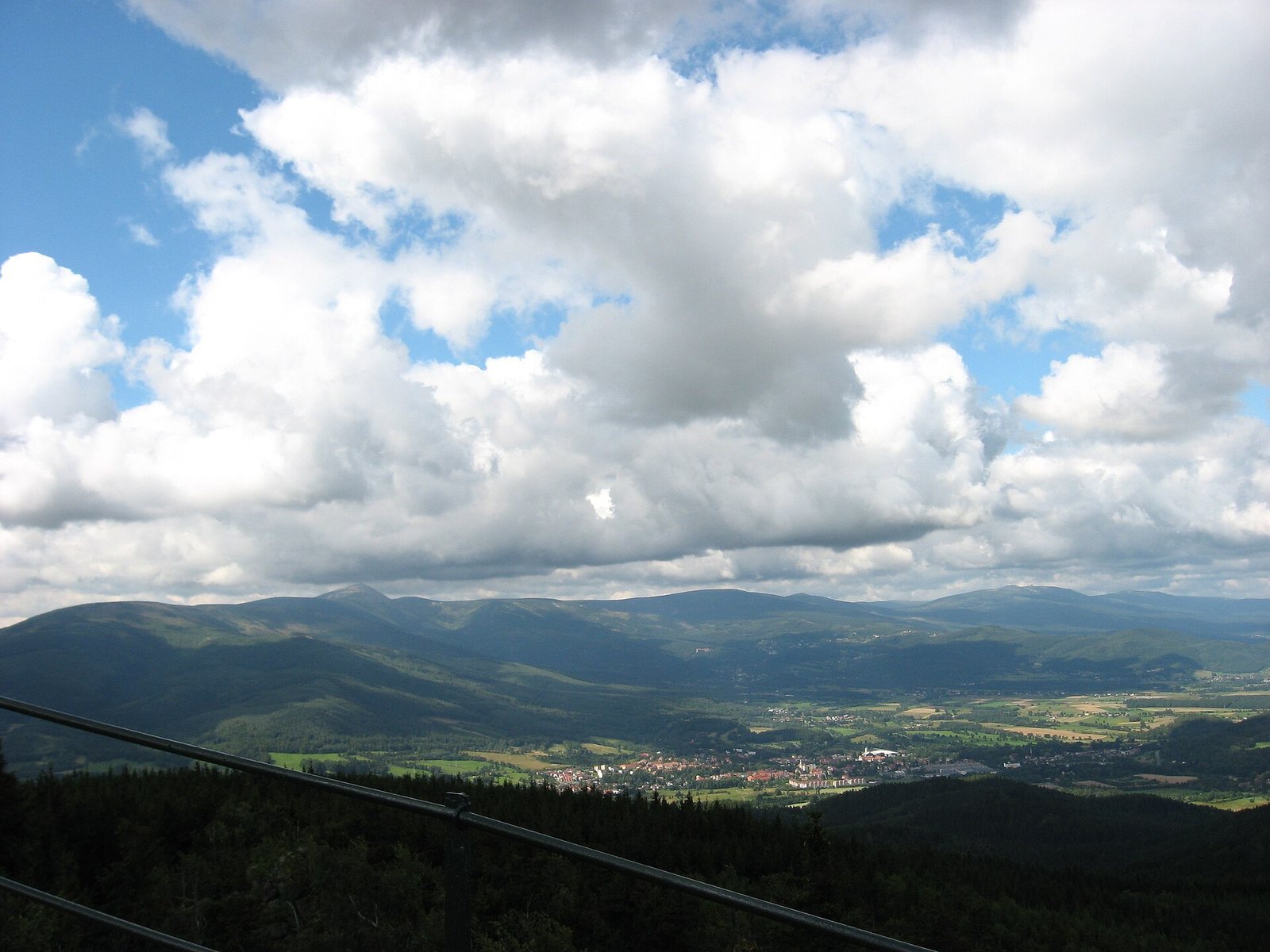
A few lines later Tacitus becomes slightly more geographical: all these peoples, he says, hold little level ground and live mainly in wooded valleys, on ridges and mountain tops. And further: a continuous mountain chain divides and cuts through Suebia, beyond which very many peoples live, among whom the name of the Lugii extends most widely.
This “continuous ridge” is usually identified with the arc of the Sudetes and Carpathians. That is plausible and rarely disputed – but it is an interpretation, not a location. Tacitus names no mountain, no river, no settlement. For the Marsigni this means: we know that in his mental map they sat north or north-east of the Marcomanni and Quadi in mountain country. We do not know which mountain country.
The genuinely interesting part of the passage is not the geography but the procedure. Tacitus sorts four peoples here by a criterion rarely stated so plainly in ancient ethnography: by the language they speak.
The Marsigni and Buri, he writes, recall the Suebi in speech and way of life. The Cotini, by contrast, speak Gallic and the Osi Pannonian – and this coarguit, “convicts” them of not being Germani. The verb is borrowed from the language of the courtroom. Speech appears here as a witness for the prosecution.
That is striking, because Tacitus usually argues from physique, custom and origin legends. Here the sound of a people's speech decides who belongs. Unintentionally, he anticipated a question that would occupy linguists and ethnographers for another eighteen centuries.
Clean as the method sounds, it does not survive scrutiny – and the scrutiny comes from Tacitus' own text. In chapter 28 of the same work he discusses whether the Eravisci migrated from the Osi into Pannonia or the other way round. There he explicitly calls the Osi Germanorum natio, a people of the Germani. Fifteen chapters later, the Pannonian speech of the very same Osi proves to him that they are not Germani at all.
Both statements stand in one short book. András Mócsy concluded that the lingua Pannonica is not a real linguistic observation but a stopgap: Tacitus treated the Rhine and Danube as language boundaries, found in his source only that Osi and Eravisci spoke the same tongue, and invented a separate “Pannonian” language to save his scheme. Péter Kovács likewise warns against drawing ethnic conclusions from the phrase. Alexander Falileyev disagrees and takes the notice at face value.
The debate is open. For our subject one thing matters: the sentence that makes the Marsigni Germanic stands immediately beside a sentence that much of the scholarship regards as an authorial error.
Tacitus does not stop at language. He adds a second argument: et quod tributa patiuntur – “and that they submit to tribute”. Cotini and Osi paid partly to the Sarmatians, partly to the Quadi, who imposed it on them as foreigners. And it is to the Cotini's added shame, he says, that they even dig iron.
With that the criterion is suddenly not linguistic at all but political and moral. Being Germanic, for Tacitus, also means being free, owing tribute to nobody, not standing in a mine shaft. That tells us more about the Roman author and his educated audience than about the people in the Carpathian valleys. Anyone listing the Marsigni today as a “Germanic tribe” quietly adopts that value system – usually without noticing.
How extraordinarily thin the record for the Marsigni is becomes visible only beside the other three peoples of the same sentence.
The Cotini are named by Tacitus, Ptolemy and Cassius Dio, and appear in Latin inscriptions. During the Marcomannic Wars they submitted to Rome, mistreated the officer Tarrutenius Paternus, were beaten for it and resettled in Pannonia. As late as AD 223, and again under Decius, praetorians in Rome describe themselves on stone as cives Cotini.
The Osi at least triggered an entire linguistic debate and probably appear on the honorific inscription from Tusculum commemorating a Danubian campaign under Augustus.
The Buri appear in Ptolemy as “Lugi Buri”, fight in the Marcomannic Wars, make a separate peace, and after Marcus Aurelius' death petition Commodus for help, impoverished by the war – and even after their disappearance a region of northern Portugal, Terras de Bouro, has been connected with their name.
And the Marsigni? Nothing. No second author, no inscription, no resettlement, no afterlife.
What is documented
This much is documented: in Germania 43 Tacitus names a people called Marsigni, places them behind the Marcomanni and Quadi in mountain country, and judges that they recall the Suebi in speech and way of life. It is also documented that this is the only mention – Ptolemy does not list them, and the standard reference work of William Smith already noted in 1854 that they are “mentioned only by Tacitus”. Everything else – territory, extent, numbers, history, end – is not transmitted.
The commonest answer is: northern Bohemia, on the upper Elbe. It goes back to the nineteenth century and has been passed along ever since, often without attribution. Others place the Marsigni in the Sudetes, in Moravia or in Silesia; popular accounts have even proposed the region around Warsaw.
That range runs from the Elbe to the Vistula – several hundred kilometres. It is not a sign of poor scholarship but the honest consequence of Tacitus supplying not a single geographical fixed point. Any map that gives the Marsigni a neatly outlined territory does more than the source permits. Anyone using such a map should know that the coloured patch is a guess, not a distribution of finds.
Two archaeological phenomena can be grasped in that region during the Roman Iron Age: the Przeworsk culture north of the mountains and the Púchov culture in the highlands of present-day Slovakia, a late La Tène complex reaching into Roman times. The two touch: Przeworsk influence on Púchov pottery and metalwork is clearest in the second century, precisely around the Marcomannic Wars.
But no find and no site can be assigned to the Marsigni. The Púchov culture is traditionally linked with the Cotini – and even there its excavator Karol Pieta warned in 1982 against equating a people with a material culture: it cannot be shown that the Cotini were the only bearers of it, much of the area remains unexcavated, and the equation “culture equals people” is unsafe in principle. If that caution applies to an epigraphically attested people, it applies twice over to one that survives as a bare name.
There is no generally accepted etymology of Marsigni. With a name attested only once, whose entire manuscript security therefore rests on a single passage, that is hardly surprising.
An elaborate explanation nevertheless circulates online: the name is said to combine a Celtic maro- (“great”) with Germanic suffixes, the original form being marosingon, behind which stand Celts Germanised by a chieftain with a Celtic name. It is a pretty story, but that is exactly what it is: a chain of conjectures whose own author opens with the words “a best guess”. Anyone quoting it should quote that too.
The single greatest source of error here is the similarity of names. Three other peoples are regularly thrown in with the Marsigni.
First, the Marsi, a small people between the Rhine, the Ruhr and the Lippe. They held the sanctuary of Tamfana, which Germanicus attacked in AD 14; Tacitus describes the massacre in the Annals. Their leader Mallovendus is known by name. They share nothing with the Marsigni but the first syllable – and about a thousand kilometres of distance.
Second, the Marsacii, whom Pliny lists in the catalogue of Rhine-delta islands in his fourth book, alongside the Sturii among others. Again: North Sea delta, not Carpathians.
Third, the Italic Marsi, a people of early Roman central Italy who have nothing whatever to do with Germania.
Even Ptolemy invites caution: he names similar-sounding Marouingoi between the Abnoba and the Danube – but those are a different people in a different place, not the Marsigni.
Myth check
“The Marsigni were Germani.” Tacitus does not even say it that plainly. He writes that they recall the Suebi – a judgement of resemblance at second hand, not a proof of descent, and made by an author who never set foot in Germania and who in the same work classes one and the same people (the Osi) as Germanic in one chapter and non-Germanic in another.
“The Marsigni are an eastern branch of the Marsi.” No ancient source says so. It is a conjecture resting solely on a shared first syllable – the same logic would force us to include the Marsacii of the Rhine delta and the Italic Marsi. Similarity of names is not proof of kinship.
The maps. Wherever an atlas colours in a Marsigni territory, the shape is guesswork. Proposals range from the upper Elbe to the region of Warsaw. Even the popular “northern Bohemia” is not an excavation result but a nineteenth-century reference-work guess.
The etymology. There is no secure reading of the name. Reconstructed forms such as marosingon are hypotheses, and their authors label them as such.
Two generations after Tacitus the quiet on the Danube breaks. From AD 166 to 180 Marcus Aurelius fights his great war against Marcomanni, Quadi and Sarmatians, drawing in a dozen further peoples. The ancient accounts name plenty of small players: Lacringi, Victuali, Buri, Cotini.
The Marsigni are absent. Whether they no longer existed by then, whether they fought under another name, whether they were simply too minor to record – none of that can be decided. It is a silence in the sources, not a finding. But it is conspicuous: when the greatest upheaval of the century happens on their doorstep, their name appears nowhere.
Nothing that is transmitted. There is no report of a migration, no resettlement, no battle, no treaty, no absorption into a larger confederation. The Marsigni did not perish – they simply stop being mentioned.
That is by far the likeliest scenario: small groups in mountain country dissolved, attached themselves to neighbours, changed their self-designation, or were quietly filed by Roman authors under a collective label – “Suebi”, for instance, a term Tacitus himself uses with great generosity. Anyone reading today that the Marsigni “merged into the Suebi” is reading not a source but a reasonable assumption.
One could call the Marsigni a disappointing subject: no finds, no legend, no hero, no ending. But that is exactly their value. They show where the border runs between knowing and story-telling.
The ancient record of Germania is not a map but a net full of holes, woven from Roman points of view. Whoever lived near the frontier is well lit. Whoever lived two ridges further back exists for us only if some author happened to include him while counting. The Marsigni had that luck exactly once. Their neighbours had it more often, which is why we know more about them – and that says nothing at all about the size, importance or lifespan of any of these peoples.
One more thing to take away: Tacitus, looking for a sound criterion of belonging, reaches for language – and trips over it in the same book. Anyone writing about Germanic peoples today would do well to recall that before every confident sentence. For the wider picture see our large overview of the Germanic tribes; the immediate neighbours of the Marsigni are treated in our articles on the Naristi, the Hermunduri and the Naharvali.
For us in Alsdorf near Aachen the subject has a small, crooked point. The three peoples most often confused with the Marsigni sit almost entirely in the west: the Marsi between Rhine, Ruhr and Lippe, the Marsacii in the Rhine delta. And in the very chapter where Tacitus lists the old tribal names and mentions the Marsi among them stands his famous remark that the first people to be called Germani are now called Tungri – the people whose chief town, Tongeren, lies barely forty kilometres from here.
Our region turns up in the Germania several times over. The Marsigni do not. They stayed where Tacitus put them: behind the mountains, behind their neighbours, in a subordinate clause.
The Marcomanni · The Quadi · The Cotini & Osi · The Buri · The Suebi · The Lugii · The Marsi.
Tacitus, Germania 2, 28, 38, 41–43 (Latin text after The Latin Library and Winterbottom/Ogilvie, Cornelii Taciti Opera Minora, Oxford 1975); Tacitus, Annals I,51 (Marsi and Tamfana); Pliny, Naturalis historia IV (catalogue of the Rhine-delta islands with Sturii and Marsacii); Ptolemy, Geography II,10–11 (Marvingi, Lugi Buri, Corconti – no Marsigni); Cassius Dio 71(72),12 (Cotini in the Marcomannic Wars); Historia Augusta, Marcus Antoninus (Buri). – Literature: W. Smith, Dictionary of Greek and Roman Geography, London 1854, s.v. Marsigni; A. Mócsy, Pannonia and Upper Moesia, London 1974; K. Pieta, Die Púchov-Kultur, Nitra 1982; A. Falileyev, In Search of the Eastern Celts, Budapest 2014; P. Kovács, A History of Pannonia during the Principate, Bonn 2014; B. Günnewig / G. Neumann, Marsen, in: Reallexikon der Germanischen Altertumskunde, vol. 19, Berlin 2001, pp. 361 ff.
All History & Finds articles →
To a farmer from Uppland, „the great city" was as unimaginable as another planet. Constantinople had walls that fire …
Read more →