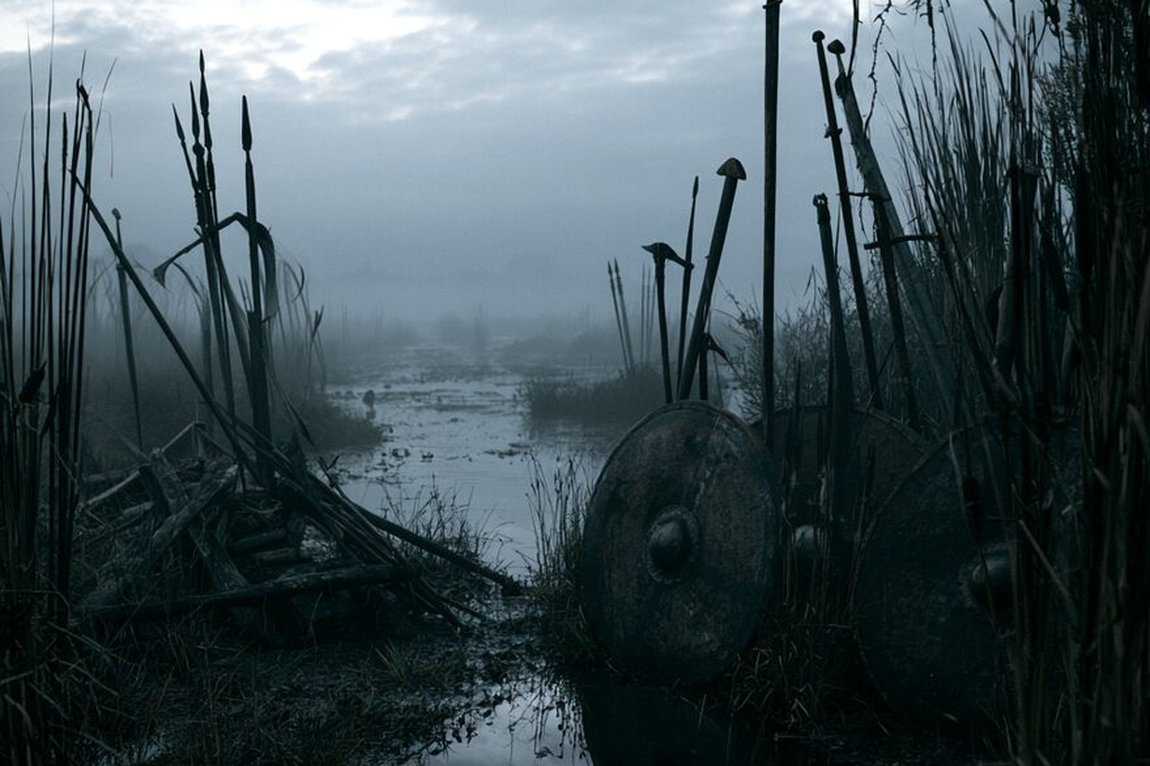
 Less than forty kilometres from Aachen lies Tongeren. It was the home of a people whose name turns up in almost every debate about the Germani and whom hardly anyone knows: the Tungri. Tacitus claims they were the first to be called Germani, and that everyone else acquired the name later. It is a sentence that has been generating argument for two thousand years. Time to look at it properly.
Some peoples become famous through battles. Others become famous through a single subordinate clause in a Roman historian. The Tungri belong to the second sort. We know nothing about their kings, almost nothing about their wars, and scholars still argue about their language. Yet the name that central Europe has carried around for two millennia hangs, according to Tacitus, on them.
Their territory was the civitas Tungrorum, an administrative district of roughly 20,000 square kilometres between the Meuse and the Ardennes. Their capital was Atuatuca Tungrorum, today Tongeren. From our workshop in Alsdorf it is barely an hour's drive. Proximity beats distance: these people belong to our own history, not to somebody else's.
In the second chapter of his Germania, Tacitus explains where the name Germania comes from at all. He does so with audible distance: he reports what people say, and makes clear the term is recent.
Ceterum Germaniae vocabulum recens et nuper additum, quoniam qui primi Rhenum transgressi Gallos expulerint, ac nunc Tungri, tunc Germani vocati sint: ita nationis nomen, non gentis, evaluisse paulatim, ut omnes primum a victore ob metum, mox etiam a se ipsis invento nomine Germani vocarentur.
„The word Germania, they say, is recent and only lately added, because those who first crossed the Rhine and drove out the Gauls, though now called Tungri, were then called Germani. Thus the name of a single group, not of a whole people, gradually prevailed, until all appeared under the newly invented name Germani - first called so by the victor to inspire fear, but soon by themselves as well."Tacitus, Germania 2; translation: Glanz & Gravur
Two things are worth remembering. First, Tacitus explicitly says that Germani was the name of a natio, a single grouping, and precisely not of a gens, a large descent community. Second, the short phrase ob metum is grammatically open: to inspire fear, or out of fear. Anyone who reads the sentence as proof of some Germanic nationality is reading in something that is not there.
About 150 years before Tacitus, Caesar was campaigning in the same region, and he does not know the Tungri. Instead he names several small peoples between Meuse and Rhine who were collectively called Germani: Condrusi, Eburones, Caeroesi, Paemani and the Segni. Scholars call this group the Germani cisrhenani, the Germani on this side of the Rhine. By far the most important among them were the Eburones.
Next door sat the Aduatuci, whom Caesar traces back to the Cimbri and Teutones, and further west the Nervii. The region was crowded, confusing and politically unstable. Edith Wightman put it drily: no area within later Belgica had a less stable political situation.
What happened next is one of the most brutal chapters of the Gallic War. After Ambiorix destroyed one and a half Roman legions in 54 BC, Caesar set out to wipe out the name and the people of the Eburones. He invited neighbouring tribes to plunder them and had the land systematically laid waste. Whether he succeeded we do not know - Caesar is his own witness here, and he had every reason to sound thorough.
What is certain: after 51 BC the Eburones disappear from the sources. And in the same landscape a name appears that nobody had written before: Tungri. The first author to use it is Pliny the Elder, a good hundred years later.
Here interpretation begins, and it should be labelled as such. The most widespread explanation runs: the Tungri are what was left after Caesar's campaign, topped up with groups from east of the Rhine, under a new collective name and in a Roman administrative form. The Batavians emerged the same way from immigrant Chatti, and the Cugerni from resettled Sugambri.
That is plausible, but no ancient source states it. No text says the Tungri are the Eburones under a new name. Anyone claiming so is reporting scholarly opinion, not tradition. The earliest archaeologically attested settlement at Tongeren begins around 30 BC - after the war, not before it.
Anyone expecting a people who supposedly supplied the original Germani to have spoken Germanic will be disappointed by the names. A large share of the personal, place and tribal names of the region is linguistically Celtic - Eburones, for instance, goes back to the Celtic word for yew, and Aduatuca or Atuatuca probably to a word for fortress. The name Tungri, by contrast, is widely taken to be Germanic.
There is a third possibility. Hans Kuhn proposed a language layer for the area between Meuse and Weser that was neither Celtic nor Germanic, the so-called Nordwestblock. The hypothesis is contested and unproven. The only honest answer is the unsatisfying one: we do not know what language the Tungri spoke. The idea of a neatly Germanic or neatly Celtic people is a modern tidying-up, not an ancient observation.
The town grew where a major long-distance road crossed the river Jeker. Early on it acquired a street grid, paved roads and town houses, first of timber, later of stone. In the second century it calls itself a municipium - a title older scholarship liked to treat as a promotion, but which probably reflects a period fashion for venerable-sounding terms.
Excavation has produced a forum, baths, temple precincts, painted wall plaster and a Jupiter column on which the supreme god rides down a giant. A mounted Jupiter is unknown in Italy; such columns are a north-western provincial speciality. The Gallo-Romeins Museum in Tongeren displays the material today in one of the finest permanent exhibitions in the region.
Under Trajan and Hadrian, Atuatuca received a town wall roughly four to four and a half kilometres long, about six metres high and two metres thick. It was larger than the wall of the provincial capital Cologne - and this in a period generally regarded as peaceful.
One detail argues against reading it primarily as a military work: the large granary stood outside. Nobody securing a town against siege puts the food supply beyond the gates. Display is the likelier motive. A wall was expensive, visible, and told every traveller on the trunk road who mattered here.
The district reached from the Campine in the north across the fertile loess of the Hesbaye to the Ardennes. To the south it bordered the Treveri around Trier, to the west the Nervii and the Menapii, to the east the territory of the Ubii with the metropolis of Cologne.
And here it gets interesting for us. The Aachen area itself most probably did not belong to the Tungri in Roman times but to the Cologne district - between Meuse and Rur sat the Sunuci, further north the Baetasii. Only the medieval diocese of Liège, the ecclesiastical successor of the civitas Tungrorum, then included Aachen. So anyone who says Aachen was Tungrian is confusing a medieval diocesan boundary with an imperial provincial one.
The whole was tied together by the great east-west axis Cologne - Jülich - Heerlen - Tongeren - Bavay - Boulogne, today called the Via Belgica. The same landscape, the same fords, the same ridges over which, many centuries later, the Northmen moved into the Rhineland when they burned Aachen in 881.
In the Batavian revolt the Tungri were caught between the lines. Tacitus relates in the Histories how Iulius Civilis rides up to the Tungrian battle line and offers them the choice of joining him - as their leader or as an ordinary fighter. Two Tungrian nobles, Campanus and Iuvenalis, thereupon hand over the surrender of their people.
It is one of the most honest scenes in ancient military history: no heroic last stand, no loyalty to the final man, but a sober reading of the situation. People who live on a frontier change sides when the frontier does. The same Tungri had shortly before been serving as cohorts in the Roman civil war in Italy.
For generations soldiers were levied from the civitas - at least three cavalry units and four cohorts carried the Tungrian name. The most famous is the cohors I Tungrorum, and it has left us perhaps the finest administrative document of the Roman provincial army.
A wooden tablet from Vindolanda, written on 18 May in a year around AD 92 to 97, carries the unit's complete strength report. Nominal strength 752 men, including 6 centurions. Absent: 456. Of these, 46 as guards of the governor, 337 at Coria (Corbridge), one centurion on his own in London. Present, then: 296. And of those, unfit: 15 sick, 6 wounded, 10 with inflamed eyes. Leaving 265 fit for duty.
Two thirds of the unit were away from base, and more than one in ten of those present was unfit. This is not an exception but, on current scholarly understanding, closer to the norm on that frontier. The picture of a cohort sitting neatly together in its own fort is a textbook image, not a finding.
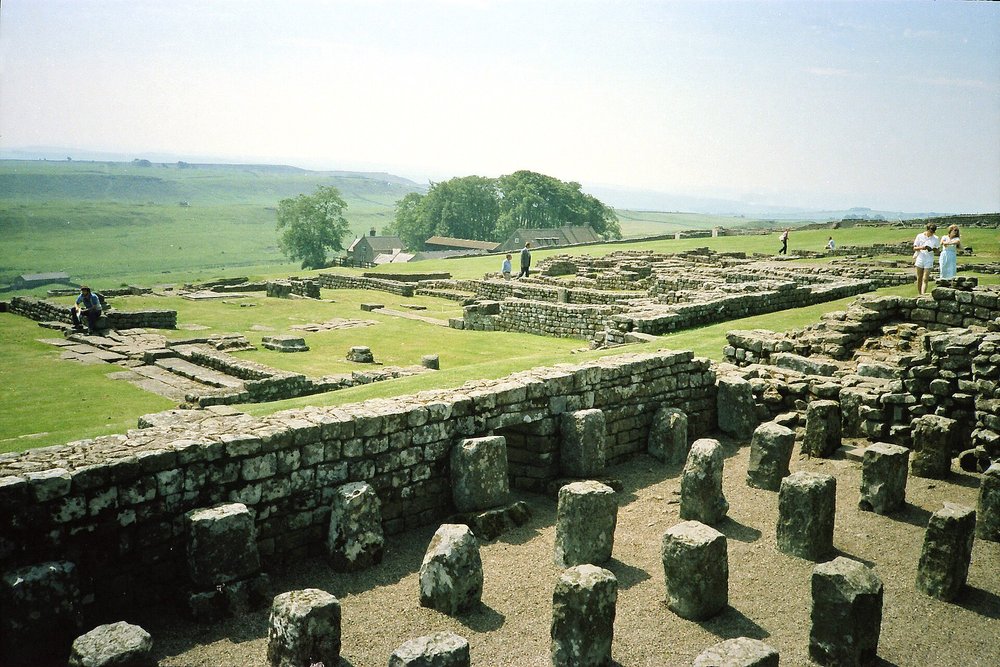
Later the cohort lay at Vercovicium, modern Housesteads on Hadrian's Wall, one of the best preserved forts in Britain. Tile stamps and inscriptions name it there, and at the end of the fourth century the Notitia dignitatum still lists a tribune of the First Cohort of Tungrians at the site. Alongside stood two units with explicitly Germanic names: the numerus Hnaudifridi and the cuneus Frisiorum.
A sister unit, the cohors II Tungrorum, was stationed in the second century at Birrens in southern Scotland. Its soldiers there dedicated an altar to a goddess Ricagambeda and called themselves men of the pagus Vellaus - an indication that the civitas was internally divided into smaller, named districts.
We know little about Tungrian belief, but one find is too good to skip. At Sint-Huibrechts-Hern north of Tongeren a small bronze plaque came to light on which a centurion of the legio III Cyrenaica named Quintus Catius Libo Nepos dedicates his shield and lance to a goddess Vihansa. The name is generally taken to be linguistically Germanic; it has been read as holy deity or as battle deity - both remain proposals.
Add to that what is found across the region: the Jupiter column from Tongeren, dedications to Roman gods in local guise, and further afield the Matronae, the Rhineland mother goddesses. Not one of these attests a pre-Roman Tungrian religion. They show what was worshipped in Roman times - which is a different thing.
Pliny names the Tungri in a chapter on healing waters: their community has a remarkable spring rising in countless bubbles, tasting of iron - a taste noticed only at the end of the draught - which purges the body, drives off tertian fever and helps against the stone; bring fire near it and it turns cloudy and finally red. Whether he means the springs at Spa or iron-bearing water in Tongeren itself has never been settled. The description fits both.
The wealth of the civitas, however, rested not on healing water but on loess. The Hesbaye carried a dense network of villa estates, together with the striking Roman burial mounds that still stand in the landscape. Anyone growing grain there supplied a market that had to feed tens of thousands of soldiers on the Rhine, only a few days' travel away.
Around 275/276 Atuatuca was taken and plundered by Germanic forces. The great Trajanic wall was now too wide; in the fourth century a smaller, heavier circuit was built with the characteristic round towers. The forum stayed in use - it is still the town's central square. Regional leadership gradually shifted to Maastricht.
In this late phase Servatius appears, attested as bishop of the Tungri at Serdica in 343 and at Rimini in 359, and remembered as the builder of a large church in Tongeren whose remains have been excavated beneath the basilica of Our Lady. The fine story of how he withdrew to Maastricht at the command of Saint Peter, ahead of the Huns, appears only in Gregory of Tours two centuries later, and there the bishop is called Aravatius. It explains a move it does not itself attest.
What remained is the name. Tongeren, Tongerlo, Tongelre - three places in three countries still carry it. And in the middle of the old forum stands a monument to Ambiorix, the Eburonian prince. A people who lost their name honouring a prince whose people also lost theirs. It would be hard to sum up this landscape more neatly.
The Tungri are attested in Pliny (Naturalis historia 4 and 31), in Tacitus (Germania 2; Histories II,14 and II,28 on Tungrian cohorts in the civil war of 69, IV,66 on the surrender to Civilis by Campanus and Iuvenalis) and in Ptolemy. Atuatuca Tungrorum is archaeologically traceable from about 30 BC, with a street grid, forum, baths, temple precincts, a Jupiter column and a Trajanic-Hadrianic town wall of some four to four and a half kilometres. An inscription names the municipium Tungrorum. Militarily at least three alae and four cohorts bore the Tungrian name; the cohors I Tungrorum is documented among other things by the strength report Tab.Vindol. 154 (nominal strength 752 including 6 centurions; 456 absent, 296 present, 31 unfit, 265 fit for duty), by tile stamps and inscriptions from Housesteads and by the Notitia dignitatum; the cohors II Tungrorum among other things from Birrens. From the surrounding area comes the bronze plaque with the dedication to Vihansa by a centurion of legio III Cyrenaica. A destruction of the town is traceable for 275/276, and for the fourth century a smaller circuit with round towers and a large church beneath today's basilica of Our Lady.
Tungri equals Eburones. A well argued scholarly opinion, but not a statement in any source. No ancient text equates the two; the name Tungri appears only after Caesar's campaign.
Tacitus documents a Germanic nation. He does not. He says himself that Germani was the name of a natio, not a gens, and that the term was recent. No modern concept of nationhood can be derived from it, and the phrase ob metum is ambiguous in any case.
Mars Thingsus belongs to the Tungri. A common confusion. The dedications from Housesteads (RIB 1593 and 1594) were set up by the cives Tuihanti, Frisian horsemen from Twente - not by the Tungrian cohort stationed there at the same period.
Servatius moved the see to Maastricht ahead of the Huns. That narrative appears only in Gregory of Tours some two hundred years later, and it calls the bishop Aravatius; the Hunnic invasion belongs to 451, Servatius to the fourth century. The move itself is likely, the motive is legend.
Aachen was Tungrian. In Roman times the Aachen area probably belonged to the Cologne district; only the medieval diocese of Liège, successor to the civitas, included Aachen. And the Via Belgica ran via Jülich and Heerlen to Tongeren - Aachen did not lie on that road but on a separate connection.

The Eburones · The Sunuci · The Baetasii · The Batavi · The Treveri.
