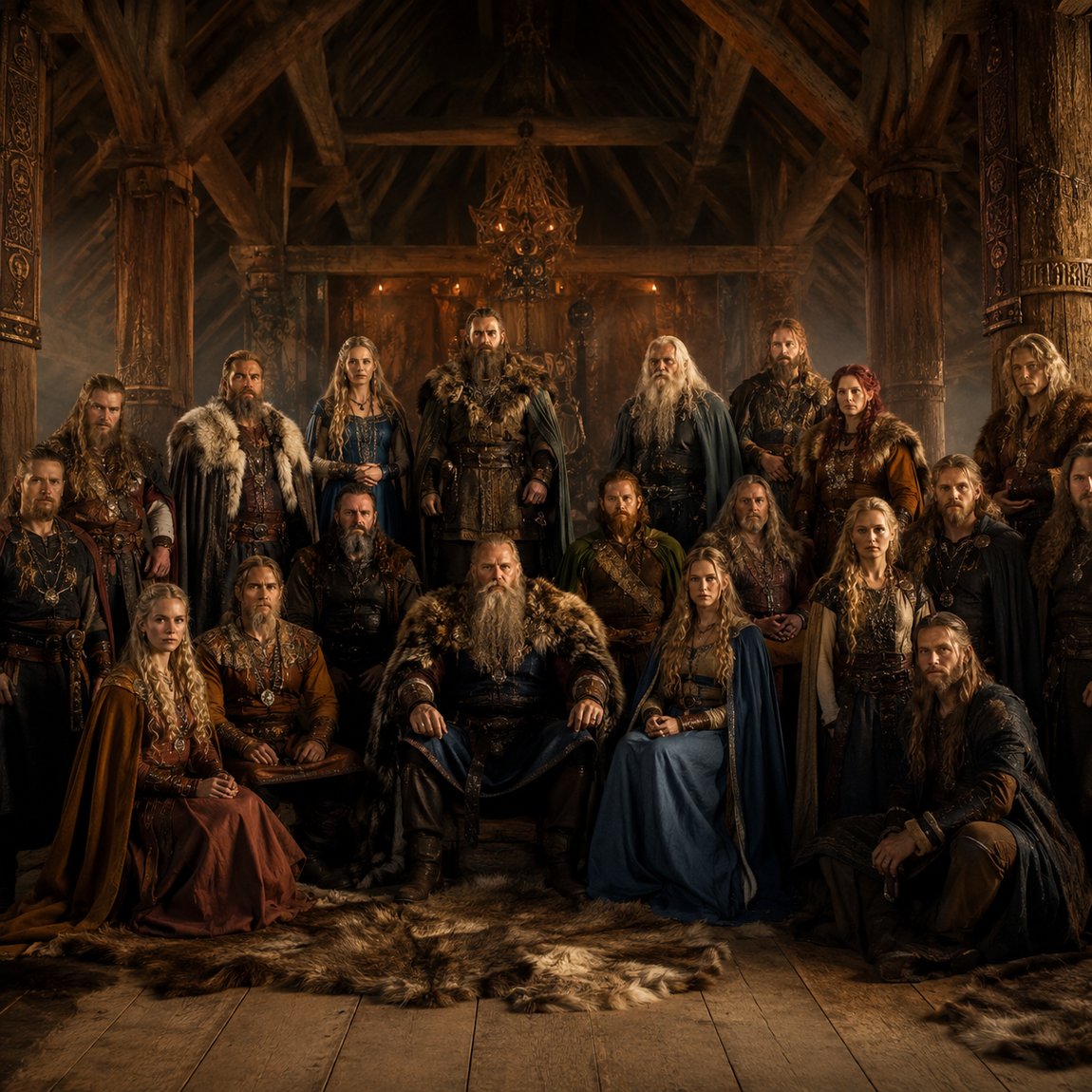
Odin, Thor, Yggdrasil, Ragnarök: few ancient worldviews fascinate as many people today as that of the Norse. Yet newcomers quickly lose the thread – who is related to whom, which world lies where, and how do we even know any of this? This guide sorts the key figures, places and stories while being honest about how much is secure and how much is later interpretation. From here you can branch into our deep-dives on every individual topic.
By "Norse mythology" we mean the ideas about gods, creation and the end of the world held by the Germanic-speaking peoples of Scandinavia and Iceland, roughly from the Viking Age (about 750 to 1050) down to the earliest written records of the 13th century. It was not a unified religion with a priesthood, holy scripture and fixed dogma, but a loose, highly variable web of stories, cult practices and local traditions that shifted from region to region and century to century. Anyone expecting to find a single closed "book of the Norse gods" is looking for something that never existed.
This is not a footnote but the key to understanding it honestly. Much of what now passes for "the" Norse worldview is a later ordering. The Norse themselves left almost no connected texts about their beliefs. What we have are poems passed down orally and only written later, along with runestones, archaeological finds and reports from outsiders. From these fragments scholars assemble a picture – and every fragment has its own history.
That is exactly why it pays to begin with a clear head. You can love this world without crediting it with a coherence it never had. Once you understand how the tradition came down to us, it becomes obvious why sources sometimes contradict one another, why the same figure appears in different guises, and why many questions simply have no secure answer. That openness is not a flaw; it is part of the appeal.
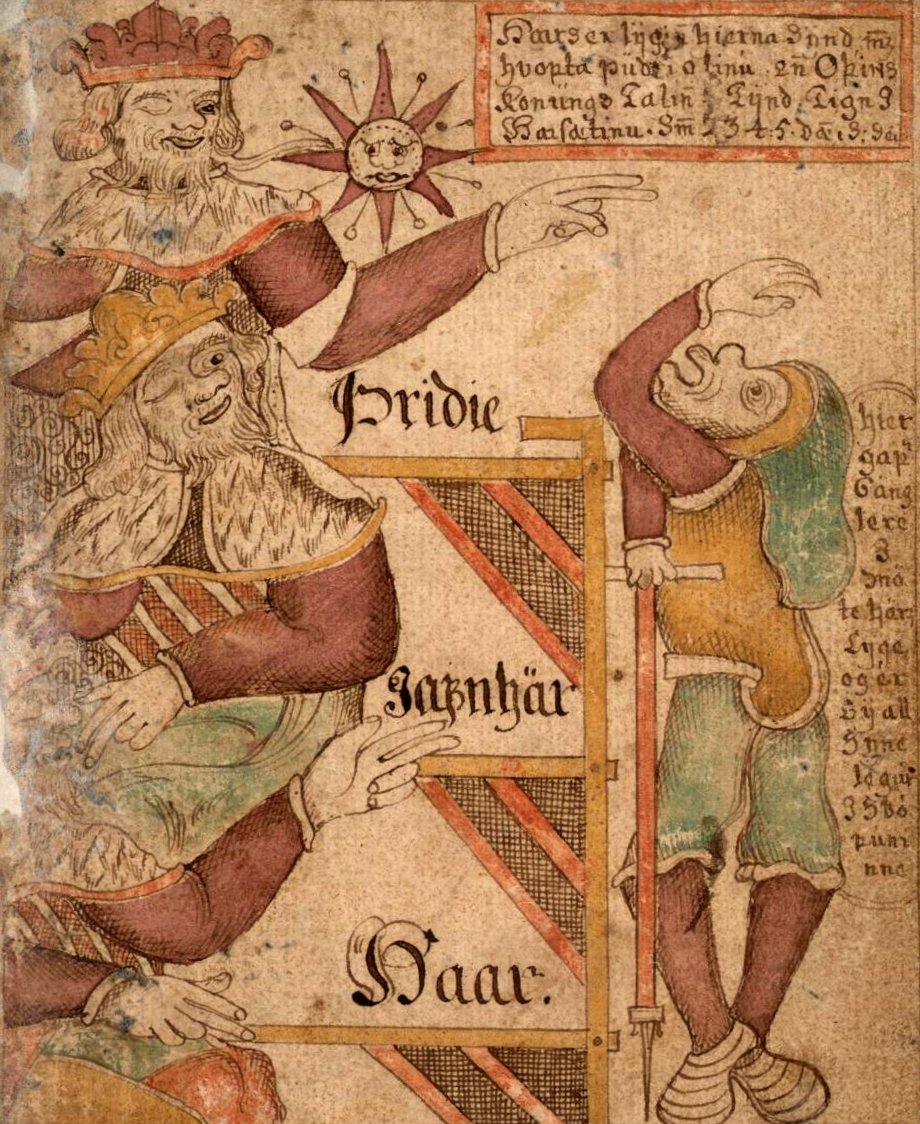
The two most important textual sources both carry the name "Edda". The Poetic Edda (also called the Elder Edda) is a collection of anonymous poems, preserved above all in an Icelandic manuscript, the Codex Regius, from the late 13th century. Some of these poems very likely reach back orally into the heathen period; others are younger, and the age of individual verses is often disputed. The Prose Edda was written by the Icelandic scholar and politician Snorri Sturluson around 1220. It is a handbook for poets and explains the old myths systematically – but from the pen of an educated Christian, roughly two hundred years after Iceland's official conversion.
To these we add skaldic poetry (elaborate court verse whose imagery often assumes knowledge of the gods), runic inscriptions, picture stones, grave finds and accounts by foreign observers such as Adam of Bremen or Arab travellers. Each type tells a different kind of truth: a grave shows practice, a poem tells a story, a Christian chronicler offers an outside view with its own agenda. Read more in our overview of the Edda and of legend studies.
Of old was the age when Ymir lived: / sea nor cool waves nor sand there were; / earth had not been, nor heaven above, / but a yawning gap, and grass nowhere.Völuspá 3, Poetic Edda; trans. Henry Adams Bellows (1923), public domain
The gods fall broadly into two kindreds. The Aesir are the principal gods around Odin: deities of war, sovereignty and sky. The Vanir are seen as older gods of fertility and prosperity – Njörðr, Freyr and Freyja. Tradition holds that the two groups once fought a war, ended by an exchange of hostages; since then the Vanir live among the Aesir. Whether this preserves a memory of two cults merging is a common but unproven interpretation.
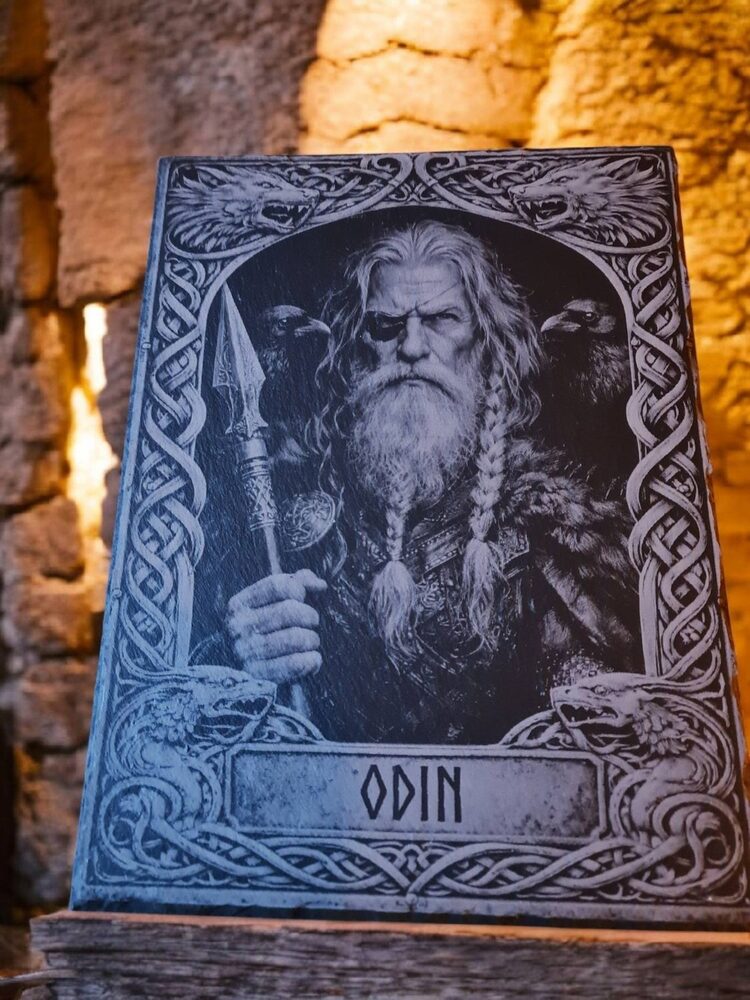
Odin is the most layered: god of wisdom, poetry, ecstasy and death, a wanderer who sacrifices an eye for knowledge and hangs nine nights on the world tree. Thor, the thunder god with the hammer Mjölnir, was probably the most popular in everyday worship – protector of farms and farmers. Freyja is the goddess of love, fertility and the magic art of seiðr, and is also linked to war and the slain. Loki is the boundary-crosser: sometimes helper, sometimes troublemaker, no "devil" but an ambivalent figure whose children play a great role at the end of the world. Alongside them stand Týr (law and war), Frigg (Odin's wife, wisdom and foresight), Baldr (the shining, dying god) and Heimdall (the watchful guardian). Our pantheon gives the full survey.
At the centre of the cosmos stands the world ash Yggdrasil, a vast tree connecting heaven, earth and the underworld. At its roots lie wells of wisdom and fate; in its branches and roots live an eagle, deer, the dragon Níðhöggr and the squirrel Ratatoskr. The tree is both axis and habitat – and it suffers, gnawed and eaten, an image of an order under constant threat.
Around it lie the nine worlds: among them Asgard (realm of the Aesir), Midgard (the human world), Jötunheim (land of the giants), Vanaheim (of the Vanir), Álfheim (of the light elves), Svartálfaheim/Niðavellir (dwarves), Niflheim (mist and cold), Muspelheim (fire) and Hel (the realm of the dead). Important: no single old source lists these nine worlds so neatly together – the familiar list is a modern synthesis drawn from scattered mentions. The number nine is sacred in the tradition, but the detailed assignment is reconstruction.
In the beginning, says the creation account, there was only the yawning void Ginnungagap between icy Niflheim and fiery Muspelheim. Where frost and heat met, the primordial giant Ymir and the primeval cow Auðumbla arose. From Ymir the first gods – Odin and his brothers – shaped the world: earth from his flesh, sea from his blood, mountains from his bones, sky from his skull. The first humans, Ask and Embla, the gods made from two trees on the shore, giving them breath, spirit and life.
The account feels complete – yet we know it above all from Snorri's ordering summary, supported by hints in the Poetic Edda. How much of it is ancient and how much Snorri rounded off and filled in cannot always be separated.
No motif is as famous as the world's end, Ragnarök: the last battle in which gods and giants kill one another. The wolf Fenrir swallows Odin, Thor falls against the Midgard serpent, the fire giant Surtr burns the world, the stars fall, the earth sinks into the sea. But the story does not end in nothing: the earth rises again, new and green, some gods survive or return, and a human pair who hid themselves repopulate the new world. Ragnarök is end and renewal at once – a cycle, not merely a lament.
The gods are only the tip. The giants (jötnar) are no mere monsters but an ancient power of their own – often the gods' opponents, yet often their kin and lovers too; the boundaries are permeable. The world itself is made from the giant Ymir; Odin's mother is a giantess. To be a giant, in the sources, means less "evil" than "older, wilder, outside the order". The dwarves are the master smiths who forge the gods' most precious things from dark halls: Mjölnir, Odin's spear Gungnir, the folding ship Skíðblaðnir, Freyr's golden boar. Without their craft the gods would have no emblems of power – a fitting thought for a workshop that itself turns raw material into meaning. The Norns weave and set fate at the well of Urðr – to them even Odin is subject; above the will of the gods stands fate. The valkyries choose the slain on the battlefield and lead them to Valhalla. Add to these the elves, the dead and the guardian powers. All these groups show that the Norse imagination is densely populated, not limited to a dozen gods.
Myth and cult are not the same thing. The stories are one matter; how people actually honoured their gods is another. Central was the blót, the sacrificial feast: people shared a meal with the gods, offered animals, drank toasts to Odin, Njörðr and Freyr for "peace and good harvest", and swore oaths over the drinking horn. Such feasts followed the turning year – winter nights in autumn, the great Yule feast around midwinter, a spring sacrifice for fertility and victory. Cult often took place outdoors, at sacred groves, springs, stones and farmsteads; the large stone temples described by later chroniclers are archaeologically rare and disputed.
Alongside the great gods stood the near powers of daily life: guardian spirits of the land (landvættir), house spirits, the ancestors and the dísir. For many people these were probably closer and more important than the distant lords of Asgard. It is a reminder that "Norse belief" was lived practice – a plea for harvest, protection and luck – not first and foremost the telling of remote tales about the gods.
A widespread error is that "the Vikings" all believed the same thing. In fact the Norse cultural sphere stretched from Iceland across Norway, Sweden and Denmark to Norse-shaped regions in the British Isles, Normandy and the east. Across centuries and such distances, names, emphases and customs shifted. In some places Thor stood at the fore, in others Freyr or Odin. Nor was the move to Christianity a sharp break, but generations of coexistence – some wore cross and Thor's hammer at once. To read the myths is therefore to read one snapshot among many possible ones, not the single binding faith.
Runes are first of all simply a script – the fuþark, named after its opening letters. They served inscriptions on stone, wood and metal, from names and marks of ownership to memorial formulas. That individual runes are also named in cultic or magical contexts is attested; the modern "rune oracle" with a fixed meaning per sign, however, is a 20th-century invention. Many popular "Viking symbols" such as the Vegvísir or the Aegishjálmur first appear in early-modern Icelandic magic books, not in the Viking Age. Even the much-shown world-tree pendant, the triquetra or the valknut are old in outline, yet their widely repeated "fixed meanings" are often a modern attribution. Honest symbol lore keeps this distinction clean – more in our glossary.
This guide is deliberately a signpost. To go deeper, follow the threads: to the pantheon for the family of gods as a whole; to Odin, Thor, Freyja and Loki for the great individual figures; to Yggdrasil and the nine worlds for the structure of the cosmos; to Ginnungagap for the beginning and to Ragnarök for the end and the new start. The Norns show the Norse thinking about fate, the Edda and legend studies the sources behind it all, and the glossary helps with names and terms. Step by step, a bewildering storm of names becomes a coherent picture – honest, curious and free of kitsch.
And that is exactly the appeal: Norse mythology is not a perfect system but a living, contradictory inheritance. Its gaps and open questions belong to it. Accept that, and you read the old stories with more wonder – and with the good feeling of being able to tell the genuine from the later invention.
The Norse pantheon · Yggdrasil – the world tree · The nine worlds · Ragnarök · The Edda · Legends & Heroes.
Above the gods stands fate – and it has many shapes. This large overview reaches far beyond the three famous Norns: to …
Read more →It is perhaps the most famous bargain in all of mythology: the highest of the gods gives up an eye – willingly – for a …
Read more →Can a poem save a life? In the North, yes. The skald Óttarr svarti („the Black") had drawn the wrath of King Óláfr the …
Read more →Norse religion has no distant, all-powerful deity on a throne. It has a family – quarrelsome, cunning, loving, mortal …
Read more →