The Vikings had no bible and no creed – but a way of seeing the world that still astonishes. Not an afterlife to wait for, but an ensouled world, a fate you help to weave, and a self that is porous. A big look behind the stories.
You can read the Norse myths as mere adventure tales – Thor smashing giants, Loki causing trouble, all ending in Ragnarök. But underneath lies something larger: a coherent way of seeing the world. The Germanic peoples didn’t frame this worldview in doctrines but in images, sayings and stories. When we “translate” it, a picture emerges that differs strikingly from the modern one – and that explains why these old tales still grip us. This is an attempt to lay it all out at once: not god by god, but thought by thought.
For us the world is built of dead matter dumbly following its laws. For the old Norse it was the opposite: ensouled. Not only humans and animals had a will, but also mountains, rivers, trees, springs and farmsteads – and the gods were not locked away in a distant heaven but right in the middle of it. Scholars call this animistic and pantheistic: spirit is everywhere, and the divine pervades the world instead of ruling from outside it.
From this follows a wholly different keynote. You did not need to be saved from the world. It was no vale of tears to leave behind, but the very place where the sacred shows itself – in the beautiful and the terrible alike. You shared the farm with unseen neighbours: the land-spirits (landvættir), who had to be respected; the house-spirit at the hearth; the álfar (elves) in mound and field, to whom one sacrificed at the Álfablót. A sailor nearing a new coast even removed the dragon-head from the prow so as not to frighten the spirits of the land – an Icelandic law demanded it. Little wonder a people with this gaze preferred to carry a piece of nature – an amulet of antler, stone or wood – rather than an abstract sign.
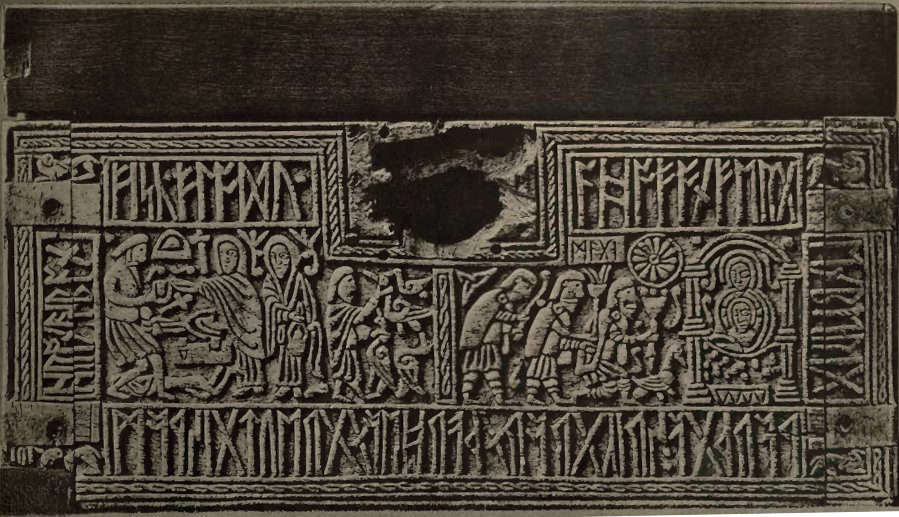
The blueprint of this cosmos is no palace and no throne-hall, but a tree: Yggdrasil, the evergreen world-ash that bears and binds it all. In its branches and around its three mighty roots lie the nine worlds – from Ásgard, the gods’ enclosure, through human Midgard down to Hel. The tree is the axis that spans above and below, gods, humans, giants and dead into a single fabric.
And this tree lives – it suffers and is tended. An eagle sits in its crown, the dragon Níðhöggr gnaws its root, the squirrel Ratatöskr carries insults up and down, four stags browse its buds. The Norns water it daily with the sacred water of the Well of Urd so it will not wither. To think this way is to see the cosmos not as a machine but as an organism: vulnerable, tended, in the making. The world’s ending is thus no verdict from outside, but more like the winter of a tree – a part of its life.
Perhaps the most important axis of the whole outlook is a boundary: innangard (“inside the fence”) versus utangard (“beyond the fence”). Innangard is the farm, the law, the kin, the ordered, ensouled, familiar. Utangard is the wild: the sea, the high mountains, the waste – the realm of chaos, of giants, of outlaws. The same line runs through the cosmos: Midgard (the fenced human world) against Utgard, the giant-land outside; and it runs through the person too, between the governed and the wild.
This line ordered everything – space, law, even one’s own thoughts. An outlaw was literally made “forest-going” (skóggangr): cast out of the innangard into the wild, beyond all protection. And the giants (jötnar) are not mere monsters but the embodiment of the utangard – the untamed forces of nature that both threaten and feed the order. Thor, the eternal giant-slayer, is thus less a brawler than the guardian of the fence: each hammer-blow holds the chaos back for another season.
Hospitality belongs here too. Whoever crossed the fence and asked for shelter turned from enemy to guest – protected by an almost sacred bond. The Hávamál speak at length of how to receive guests and how to behave as one, for outside the world was cold and warmth at a stranger’s hearth could decide life and death.
At the Well of Urd, beneath a root of the world-tree, sit the three Norns: Urd, Verdandi and Skuld. In the Völuspá (st. 20) they do something very concrete – they carve signs into wood, set laws, and lay down people's örlög, their “lot”. The familiar image of a spun or woven thread of fate belongs, in Old Norse, to other figures: at Helgi's birth, Norns twist the “threads of fate” (örlögþættir) and stretch them across the land (Helgakviða Hundingsbana I, 2–3); the valkyries of the Darraðarljóð weave the outcome of battle. And reading the three names strictly as Past, Present and Future is a later, tidying interpretation – the sources do not label them so. The core, though, stands firm: even the gods are bound to örlög – Odin too knows his end and cannot turn it. And yet this fate – Old Norse urðr, Old English wyrd – is no rigid script.
It is at once neither absolute free will nor unalterable fate nor mechanical cause and effect. Picture it as a vast web: every deed is a new thread knotted into the whole, colouring everything that follows. The past is woven and fixed – but the present keeps weaving on, and every choice strings new threads for all that comes. That is why the heroes of the sagas are no puppets: they often know their end and ride to meet it upright anyway. What counts is not whether you die, but how. Fatalism and drive are not a contradiction here but two sides of the same thread.
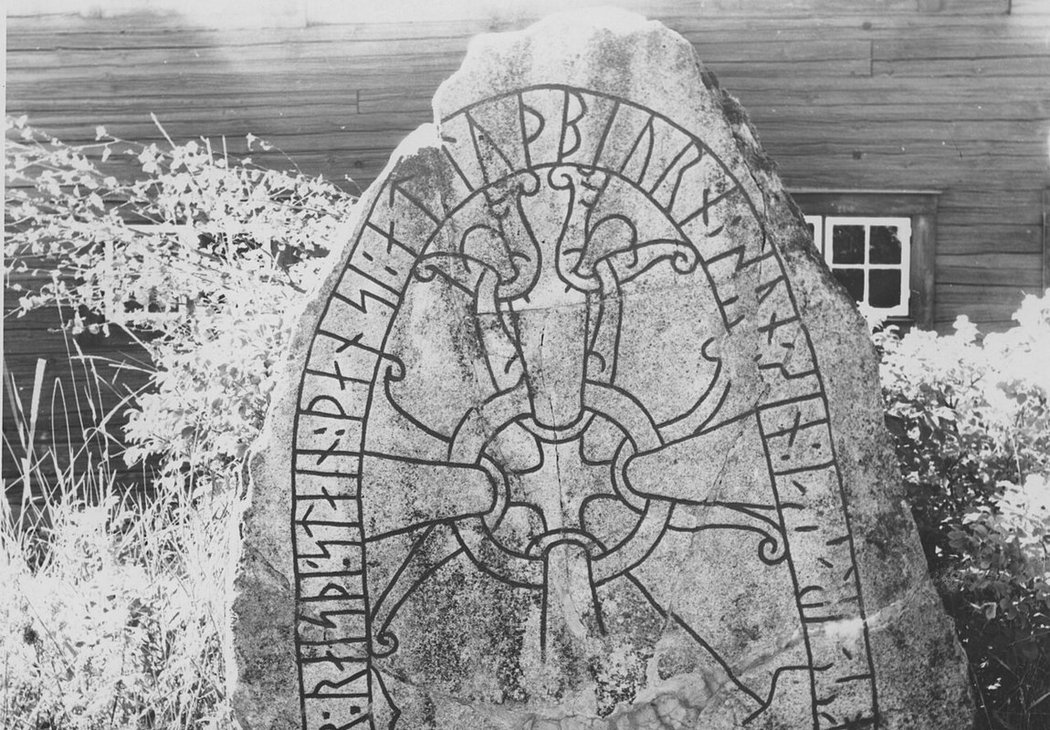
If you find that idea beautiful, you also see why a wheel of the year or a drawn rune was, for the old people, not superstition but a glimpse of your own thread in the great weave.
Our sense of time is an arrow: from creation straight on to the Last Judgment, a beginning, an end, done. Norse thinking ticks more cyclically. The world arises out of the void (Ginnungagap) and the body of the primal giant Ymir; it grows, it ages, it perishes in Ragnarök when the wolves swallow sun and moon and the world-fire devours all – and then a new, green earth rises from the sea, a young human pair survives inside the wood of the tree, and the sons of the dead gods find the old golden gaming-pieces again in the grass.
The end, then, is no full stop but a turning – like the deepest winter, after which the year wheels round anew. This stance explains much: why the North saw dying not as catastrophe but as part of a cycle; why one celebrated the wheel of the year instead of living toward a single ending. Even when Christianity came, the stone-carvers still thought in these images.
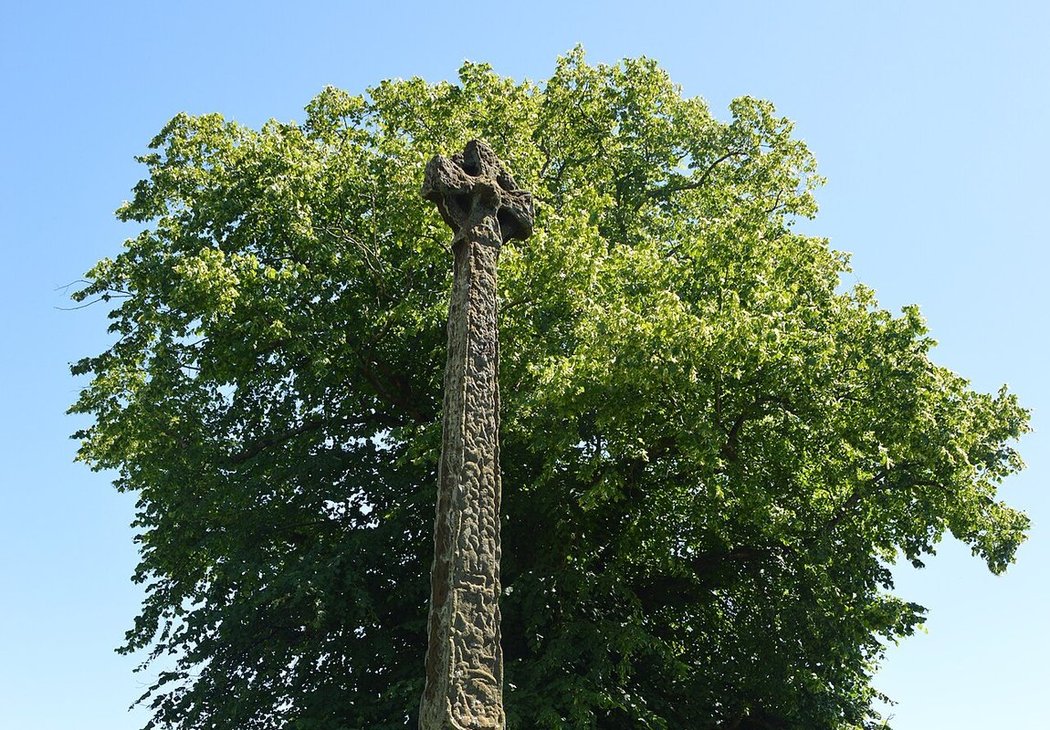
We think of ourselves as one soul in one body – a fixed “I”. The Germanic peoples saw a person as more porous, made of several parts. Less a sealed island than a knot of forces that could also reach outward. Four terms recur again and again:
| Part | roughly | role |
|---|---|---|
| hamr | “skin, shape” | the malleable appearance – the basis of shape-shifting (werewolf, bear-skin, “Evening-Wolf” Kveldulf). One who was hamrammr could change the shape. |
| hugr | “mind, will” | thought and will; it can leave the body and affect others. Odin’s raven Huginn carries this very word. |
| fylgja | “follower” | a personal guardian spirit, often an animal or a woman; you usually see your own fylgja only shortly before death. It can pass to the kin. |
| hamingja | “luck, force” | your life-luck – inheritable, shareable, bound to the kin. A man “with much hamingja” had success and presence; a king could lend his luck to his followers. |
If the self is this open, it becomes clear why one believed in dreams, omens and shape-shifting: the hugr of an angry man could appear to you as a night-mare in sleep; the fylgja of a dying man ran ahead to his kin. The “I” had porous walls.
This society held together not by money and contracts but by gifts. A gift was never “free”: it tied a bond that called for a return. The lord who gave rings bought loyalty with them; the guest who accepted a gift became a friend and a debtor at once. Wealth served less for hoarding than for sharing – the great man was the “ring-giver”, not the miser. That is exactly why a gifted, named piece was, in the North, never just a thing but a sign of the bond.
“To his friend a man a friend shall prove, / and gifts with gifts requite.”Hávamál 42 · after Henry Adams Bellows 1923 (public domain)
The same principle governed even the dealings with the gods. A blót was not begging for grace but an exchange: gift for gift, “I give that you may give”. One shared the feast with the gods, and they gave back fertility, victory and peace (ár ok friðr). The whole world was a cycle of giving and requiting – up to fate itself, which answers every deed with a consequence.
In a world without authorities and police, the spoken word carried a weight we can barely feel now. An oath was no form but a real power: whoever swore bound his fate; whoever broke it was a níðingr – dishonoured, fallen out of the community. The law was not read but recited from memory by the law-speaker at the Thing. Names, curses, blessings, praise-poems – all counted as effective, because the word touched reality.
Deepest of all, this idea sits in the word örlög – literally “the primal-laid”, that which was set down at the beginning. The Norns speak fate; they lay it down like a law:
“Laws they made there, and life allotted / to the sons of men, and set their fates.”Völuspá 20 · after Henry Adams Bellows 1923 (public domain)
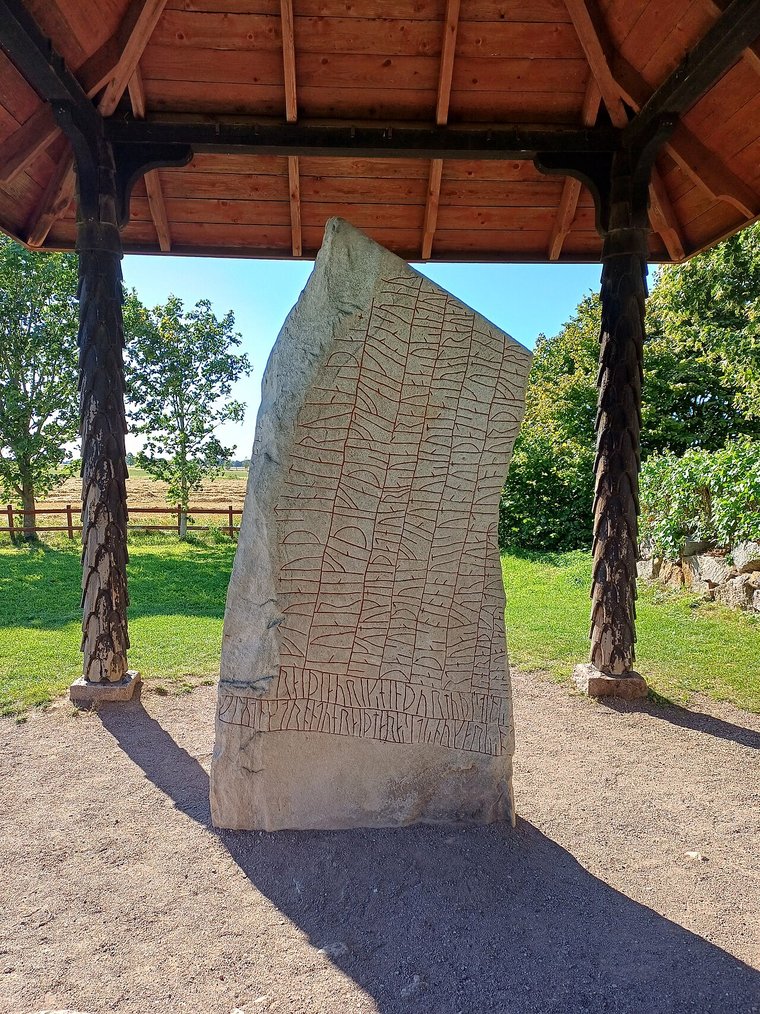
If there is no paradise as a reward, another question becomes decisive: what remains of me? The Norse answer was renown – what people tell of you after your death. Honour (drengskapr) was no vanity but the hardest currency of all: it decided rank, alliances, marriageability, even life and death in the blood-feud. Its opposite, shame, could strike a whole kin and had to be wiped out. No accident that the most famous verses of the Hávamál speak of exactly this:
“Cattle die, / kinsmen die, / you yourself die likewise; / but one thing I know that never dies: / the fair fame of the dead.”Hávamál 76/77 · after Henry Adams Bellows 1923 (public domain)
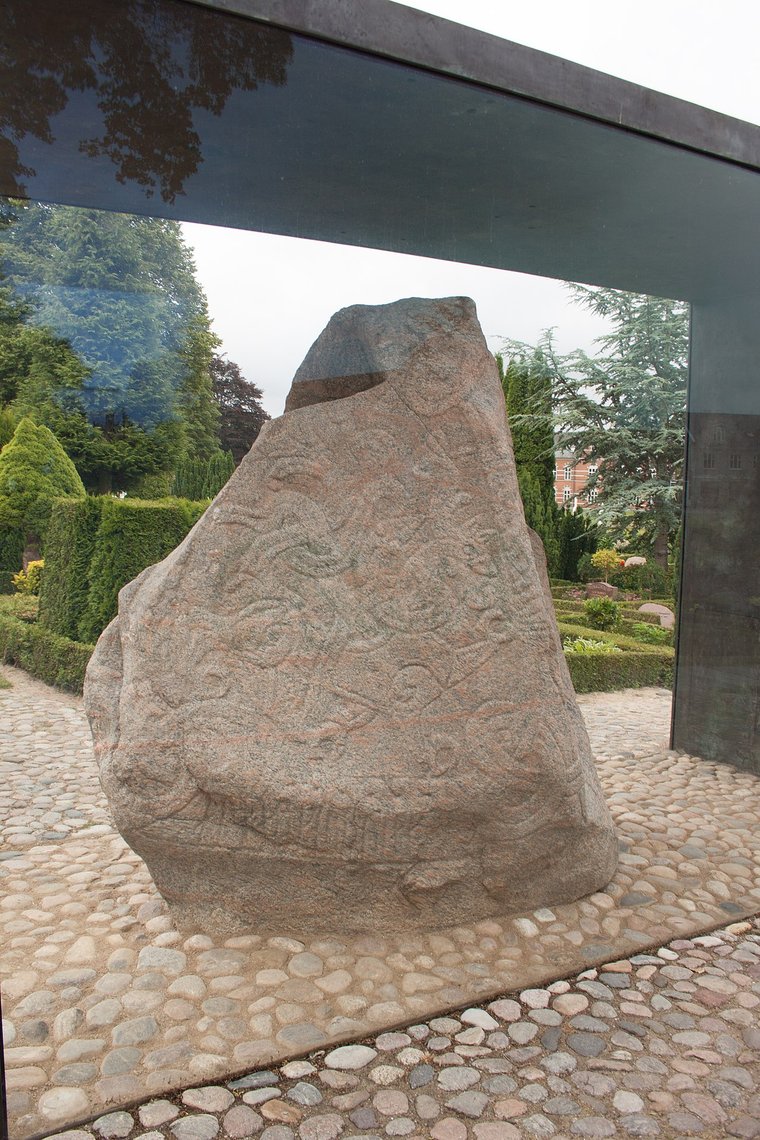
A grave-mound, a runestone, a name passed on – that was the Norse road to immortality. One built no monuments for the eternity of an afterlife, but for the memory of the living. A kernel of our work lives in that too: to set a name, a date, a memory lastingly into stone, wood or antler – a memorial stone in the oldest sense.
Out of fate and renown together comes perhaps the best-known Norse stance: courage in the face of the certain end. If it is fixed that you fall, then all that counts is how you fall. Cowardice saves no life – it only forfeits the fame. So the heroes ride upright to meet their foretold death; so a man laughs in the snake-pit. It is no death-wish but a way of taking the fear out of the inevitable:
“The sluggard believes he shall live forever, / if the fight he faces not; / but age shall not grant him the gift of peace, / though spears may spare his life.”Hávamál 16 · after Henry Adams Bellows 1923 (public domain)
Norse death is no leap into a distant heaven or a fiery hell, but rather a passage and a transformation. There was not one afterlife: whoever fell in battle might come to Valhalla or to Freyja’s Fólkvangr; most, though, went to Hel, the quiet realm of the dead – not a place of punishment but simply “the below”. The drowned were gathered by the sea-giantess Rán in her net. And an old folk-belief let the dead go “into the mountain”, back into the grave-mound, close to the kin – one brought them gifts there.
Behind this stands a sober, beautiful thought: the dead becomes part of the cycle again – food for new life, an ancestor who keeps working. Some sources even hint at rebirth within the kin, when a child was given a dead person’s name. At Yule one therefore set out a drink and food for the ancestors, and the grave was no place of horror but a neighbour’s house. Nothing is lost; it only changes form.
In an ensouled world where the self is porous and fate a weave, magic is no breaking of natural law but an intervention in the web. Its most organised form was seiðr – a trance practice of prophecy and fate-steering, practised above all by women (the völva) and which even Odin learned from the Vanir. The seeress sat raised on a platform, a chant called the spirits, and she saw into the threads of the future. Beside it stood the galdr (sung spells), rune-magic, consecration rites and the everyday magic of amulets.
It is no accident that in this worldview it is so often women who sit at the threads. The Norns weave fate; the valkyries “choose the slain” and weave, in a grisly image, the fortune of war from entrails and heads (Darraðarljóð); the völva sees the future; Frigg knows all fates and keeps silent. Weaving and spinning – women’s work – become the very emblem of fate. In everyday life too the mistress of the house held the keys and with them power over the stores and the farm. This world was strictly ordered by role and by no means “equal” in the modern sense – yet it strikingly often imagined the forming, knowing power as female.
Put it all together and a strikingly coherent picture emerges: a world that is ensouled rather than dead; a time that turns rather than ends; a self that is open rather than walled in; a fate you help to weave rather than merely suffer; and a life that aims not at an afterlife but at what remains of your own deeds and your own name. You need not “believe” any of it to feel why this worldview draws you in: it takes the world seriously instead of skipping over it. It makes you responsible for your thread in the weave. And it tells you that what remains are your deeds and your name.
It is exactly in this spirit that we engrave – a piece of forgotten homeland you can hold in your hand and pass on: a name, a date, a sign. A small memorial stone against forgetting.
Primary: Poetic Edda (Völuspá, Hávamál, Grímnismál, Vafþrúðnismál, Darraðarljóð) & Prose Edda (Gylfaginning); skaldic verse; runic inscriptions (Rök, Jelling, Skarpåker, Glavendrup); place-names; Icelandic law (Grágás). Public-domain translations: Bellows 1923, Simrock 1851. Scholarship, among others: Simek (Dictionary of Northern Mythology), de Vries, Ellis Davidson, Neil Price (The Viking Way), Sundqvist, Winterbourne (When the Norns Have Spoken). All interpretations are marked as such above; nothing here is a “holy dogma” but reconstructed.
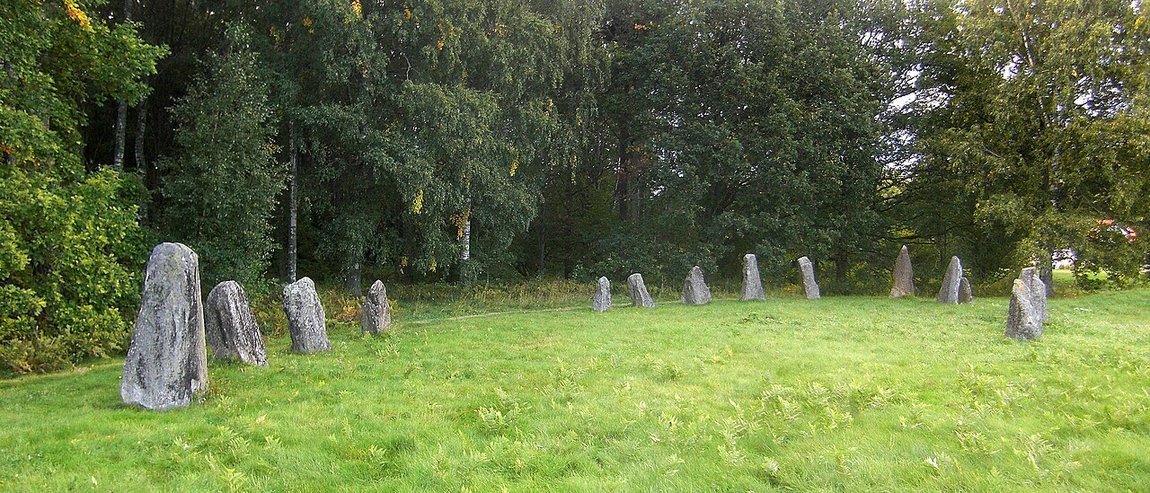
Picture credits: Franks Casket – photo W. Viëtor (pre-1900), public domain. Skarpåker stone (Sö 154) – historical photo, public domain. Gosforth Cross – photo Dougsim, CC BY-SA 4.0. Rök stone – photo “L'imaginaire”, CC0. Jelling stone – photo Szilas, CC0. Anundshög (ship setting) – photo “Achird”, CC BY-SA 3.0. All via Wikimedia Commons.
Related deep-dives with us: Yggdrasil & the nine worlds · The Norns · The Three Wells · What comes after Ragnarök? · Seiðr · Honouring the dead & memorial stones · Gods overview.
