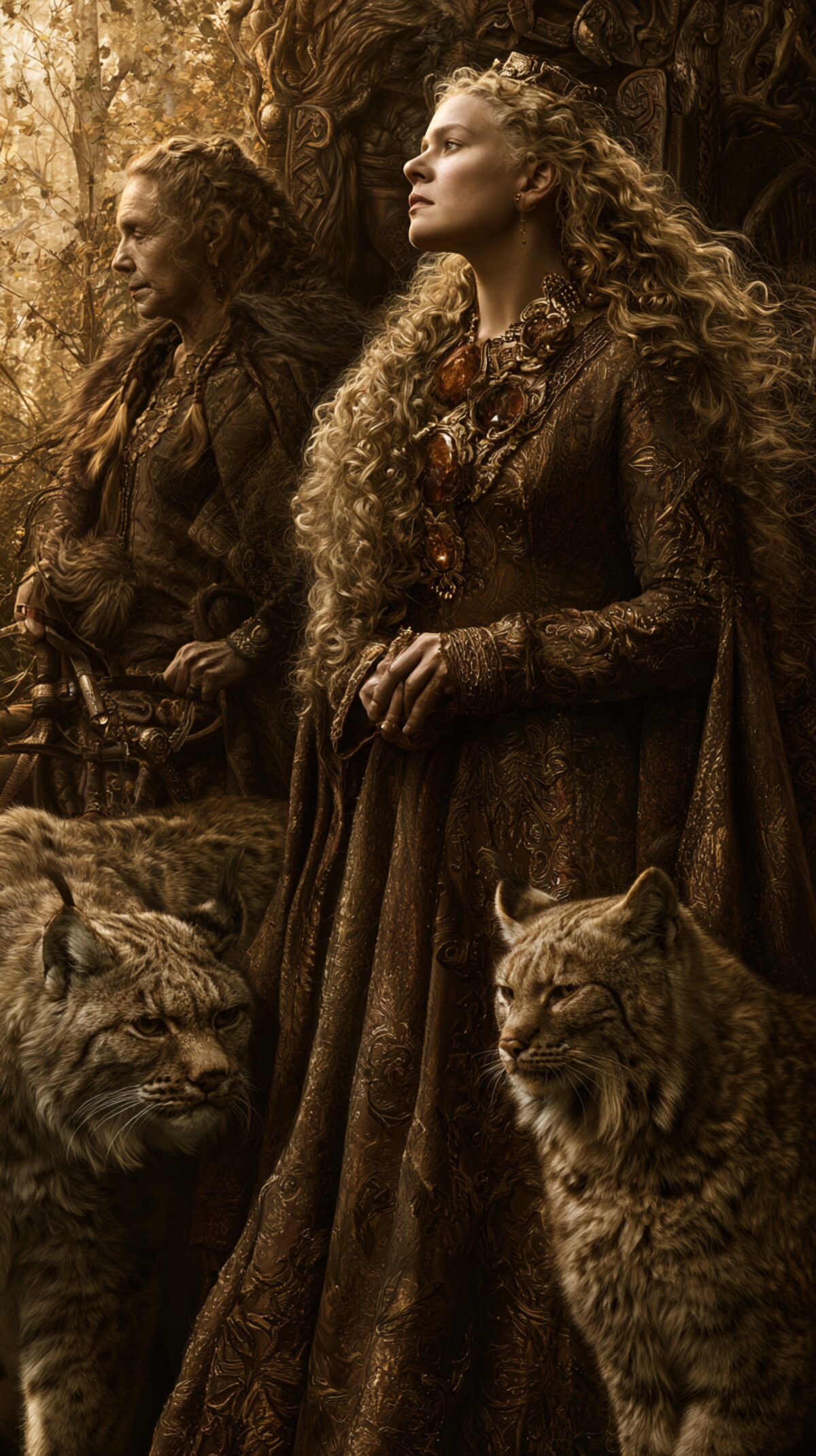
When people speak of the Norse pantheon, the male names come first: Odin, Thor, Loki. Yet the tradition knows a whole host of female powers – the Ásynjur, along with Norns, Valkyries and Dísir. Some stand in the bright light of the poems, others survive in a single sentence. This overview introduces them, links to the full portraits, and honestly distinguishes what the old sources actually say from what is later systematising.
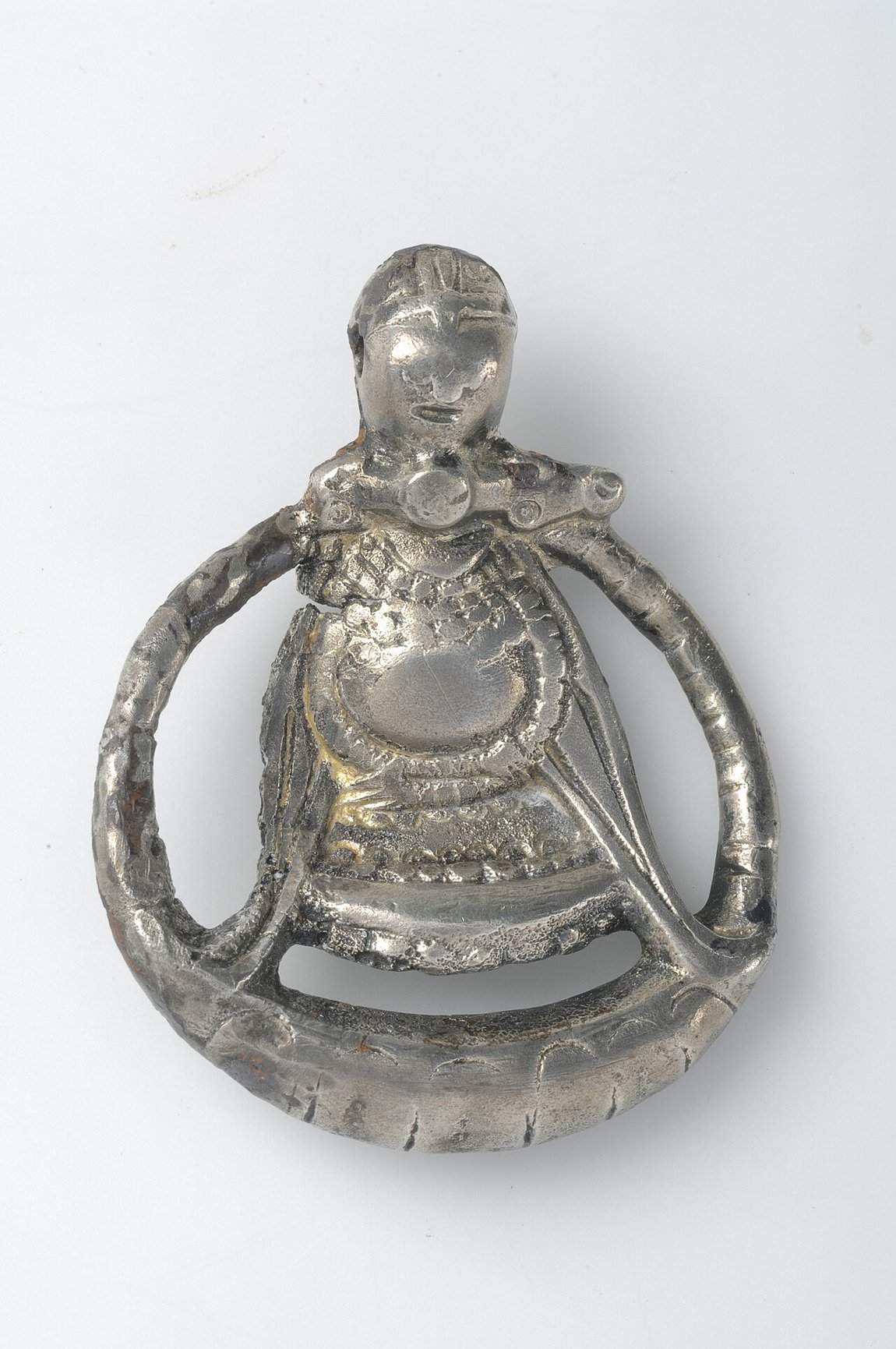
The female deities of the Aesir are called Ásynjur in Old Norse (singular Ásynja). In his Prose Edda, in the section Gylfaginning, Snorri Sturluson lists a whole series of them and assigns each a role. Alongside them stand the Vanir goddesses such as Freyja, the giantesses who marry into the divine world, and powers that are not goddesses in the narrow sense: the fate-weaving Norns, the slain-choosing Valkyries and the protective Dísir. Together they paint a far richer picture than the male-dominated body of tales first suggests. One point matters from the outset: almost all our knowledge comes from texts of the 13th century, that is from Christian times, a good two centuries after the official conversion of Iceland. Much that is today treated as a fixed office is in fact Snorri's systematising view of older, often only fragmentarily preserved tradition.
At the head of the Ásynjur stands Frigg, Odin's wife and queen among the goddesses. She is counted the foremost, the mother of Baldr, and lady of the hall Fensalir. She is credited with a special gift: she knows the fates of all, yet speaks of them to no one. This silent foreknowledge makes her one of the most striking figures – most clearly in the Baldr myth, where she takes an oath from all things not to harm her son, and overlooks only the mistletoe. Frigg is thus no distant background figure but an acting power, whose care and grief shape the greatest loss in the world of the gods. We present her at length in her own portrait.
Freyja is perhaps the most many-sided figure of the entire pantheon. She belongs to the race of the Vanir, came to the Aesir as a hostage after the Vanir War, and unites traits that seem contradictory to us today: she is goddess of love and fertility, yet at the same time a mistress of war. Snorri reports that she receives half of the fallen in her hall Fólkvangr, the other half going to Valhalla and Odin. Freyja rides in a chariot drawn by cats, owns the precious necklace Brísingamen, and commands seiðr, that prophetic magic she is said to have brought to the Aesir. In her, beauty, desire, death and magic converge – small wonder she is the most frequently named goddess in the sources.
Iðunn guards the apples the gods eat to stay young. Her importance becomes suddenly clear when the giant Þjazi abducts her through Loki's fault: the Aesir instantly age, their hair greys, their strength fades. Only when Loki retrieves her in the shape of a falcon does youth return. Iðunn is the wife of the skaldic god Bragi and thus stands at the crossing of two central themes: the eternal life of the gods and the art of poetry. The name is often read as "the rejuvenating one", yet the etymology is not entirely secure – a good example of how caution is warranted even with well-known figures.
Skaði is a giant's daughter who rises into the world of the gods. After the Aesir have killed her father Þjazi, she comes armed to Asgard to demand compensation. As atonement she may choose a husband – but only by his feet. She chooses in the hope of getting Baldr and ends up with the sea god Njörðr. The marriage fails over where to live: she can bear neither the gulls' cry of the coast, nor he the wolf-howls of her mountains. Skaði is regarded as goddess of winter, of the hunt and of skiing, roaming the heights with her bow, embodying the harsh, unapproachable side of nature. She also shows how permeable the boundary between giants and gods was in Norse thought.
Sif is the wife of the thunder god Thor and famed above all for her golden hair. The best-known myth begins with an outrage: Loki cuts off her hair in her sleep. To escape Thor's wrath, he must get the dwarves to forge new hair of real gold – and in the course of this several of the gods' greatest treasures come into being, among them Thor's hammer Mjölnir. Sif's golden hair is often read as an image of the ripe field of grain, placing her close to a fertility goddess. This reading is appealing but goes back above all to the comparative mythology of the 19th century; the old texts themselves say nothing of it.
Nanna is the wife of the shining god Baldr. When he dies, her heart breaks from grief and she is burned with him on the same pyre. Together they journey to the underworld, to Hel. From there Nanna sends gifts back to Frigg and other goddesses – a moving gesture across the border of death. Nanna is one of those figures we meet almost solely within a single myth: without the Baldr story we would know next to nothing about her. Precisely here lies the challenge in dealing with many goddesses of the North.
Gefjon is a goddess around whom an especially vivid tale is spun. From the Swedish king she received as much land as she could plough in a single night. So she turned her four sons, whom she had fathered with a giant, into oxen and ploughed a mighty piece of earth out of Sweden, which slid into the sea and became the Danish island of Zealand. Snorri calls her a maiden served by women who die unwed. Gefjon thus links a landscape legend with the notion of an independent, powerful female figure – a fine example of how myth and geographical explanation interlock.
There were Gná and Lofn, Þrúðr and Hlín, the exalted women, Sjöfn and Sól.after the Ásynjur lists of the Prose Edda (Gylfaginning), rendered from Karl Simrock's translation, 1851 (public domain)
Hel holds a special place. She is a daughter of Loki and the giantess Angrboða, half living and half death-pale in form, and rules over the realm of the same name in Niflheim. To her come those who die not in battle but of sickness and age. An honest classification matters: Hel is no wicked "goddess of hell" in the Christian sense. Her realm is a place, not a place of punishment – equating it with the Christian hell is a later overlay, already suggested by the shared word-stem but missing the Old Norse evidence. In her portrait we pursue this double nature in detail.
In the North the sun is conceived as a female figure: Sól (continental Germanic Sunna). Daily she drives her chariot across the sky, forever pursued by the wolf Sköll, who at the world's end finally devours her. Sól is at once a mythic narrative figure and the personification of a natural process – the daily course of the sky is given a face. Notably, Sunna appears even in the oldest continental testimony: in the Second Merseburg Charm. This shows that behind the Icelandic tradition stands a far older, common-Germanic religious background.
Not every female power is a goddess in the narrow sense. The Norns – Urðr, Verðandi and Skuld – determine the fate of humans and gods; they lay and cut the threads of life at the well beneath the world tree. The Valkyries choose the fallen on the battlefield and escort them to Valhalla. The Dísir, finally, are protective female spirits, often bound to the family, honoured in autumn with the Dísablót. These powers stand partly above the gods, partly serve them – and they show how deeply the female sphere in the Norse worldview was interwoven with fate, death and protection.
Leafing through modern overviews, one easily forms the impression of a tidy "portfolio system": one goddess for love, one for marriage, one for fidelity, one for healing. This clarity is deceptive. Many of the smaller Ásynjur – Sjöfn, Lofn, Vár, Vör, Syn, Hlín, Snotra, Gná – are known solely from a single sentence in Snorri, each briefly assigning them a task. Whether these assignments reflect old, lived cultic reality, or whether Snorri in the 13th century created a scholarly order by shaping mere names or bynames into separate goddesses, is disputed in scholarship. Several of these "goddesses" may originally have been only bynames of Frigg. The modern notion of a ranked file of patron goddesses with clearly bounded offices is therefore a simplification to be enjoyed with caution.
The female powers of the North are more than decorative trimming. They carry the knowledge of fate (Frigg, the Norns), they keep life going (Iðunn, Sól), they rule over love and death alike (Freyja, Hel), and they embody raw nature (Skaði). Precisely because many of them survive only in shadowy outline, they invite close looking – and honest distinction between what the old sources really say and what later centuries read into them. Anyone wishing to dive deeper will find the whole family of Norse gods in our individual portraits and in the great pantheon overview.
Frigg · Freyja · Idun & the apples of youth · Skaði – goddess of the mountains · Sif · Hel – goddess and realm of the dead · The Norns.
All History & Finds articles →
When we speak of "Viking kings" today, we quickly picture a single mighty ruler on a throne of dragon-carved wood …
Read more →While Uppsala is famous above all from a text, Thuringia holds the best-excavated Germanic sanctuary in the ground: the …
Read more →