Adam of Bremen called them the mightiest people between the Elbe and the Oder. The Redarii led the Lutician confederation, its central sanctuary stood in their land, and from there came the signal for the rising of 983 that halted Ottonian eastern policy for decades. Yet not a single sentence of their own survives: no law, no charter, not even the name of a prince. Everything we know was written by chroniclers on the other side. This article therefore asks something other than the usual question about the famous temple: how could a people without a ruler become a leading power, why did that leadership break apart inside its own confederation in 1057, and why did the mightiest remain the least known?
The Redarii were a West Slavic people in the south-east of what is now Mecklenburg-Vorpommern. They did not write, or at least not on anything that outlasted the centuries. What survives of them is four narrative witnesses and a handful of charter lines – and all of them come from men who stood on the other side: Widukind of Corvey, a Saxon monk writing around 967; Thietmar of Merseburg, a bishop whose chronicle was composed between late 1012 and 1018; Adam of Bremen, a canon, around 1070 to 1076; and Helmold of Bosau, a parish priest, around 1167.
That is not a footnote but the decisive methodological condition for everything that follows. These men were not reporters. Thietmar wrote while his emperor was allied with the Lutici – an alliance he opposed; his report is in part a warning. Adam called Rethra a metropolis, a word he otherwise reserved for archiepiscopal seats, and he did not mean it as a compliment. Neither Thietmar nor Adam was ever there. Anyone who speaks about the Redarii therefore speaks first of all about the image their enemies formed of them.
Certainty ends with the name itself. It first appears in a charter of Otto I dated 14 October 936 in the form Riadri. Widukind writes Redarii and Redares, Thietmar Redarii, Rederii and Riedirii, Adam Retharii, Retheri and Rederi, and Helmold finally Ridari, Rederi and Riaduri. In the nineteenth century the spelling Rhedarier was common; today Redarii has prevailed.
There is still no generally accepted derivation, and the proposals lie far apart. Ernst Eichler thought of a Germanic word for reed and marsh and arrived at reed-dwellers. Theodolius Witkowski took the name to be Slavic and rendered it roughly as counsellors or people of the oracle – which fits the sanctuary temptingly well and for exactly that reason calls for caution. Heinrich Kunstmann in turn assumed a Greek origin, derived from the place name Rethra. Three languages, three results: the name should not be used as an argument.
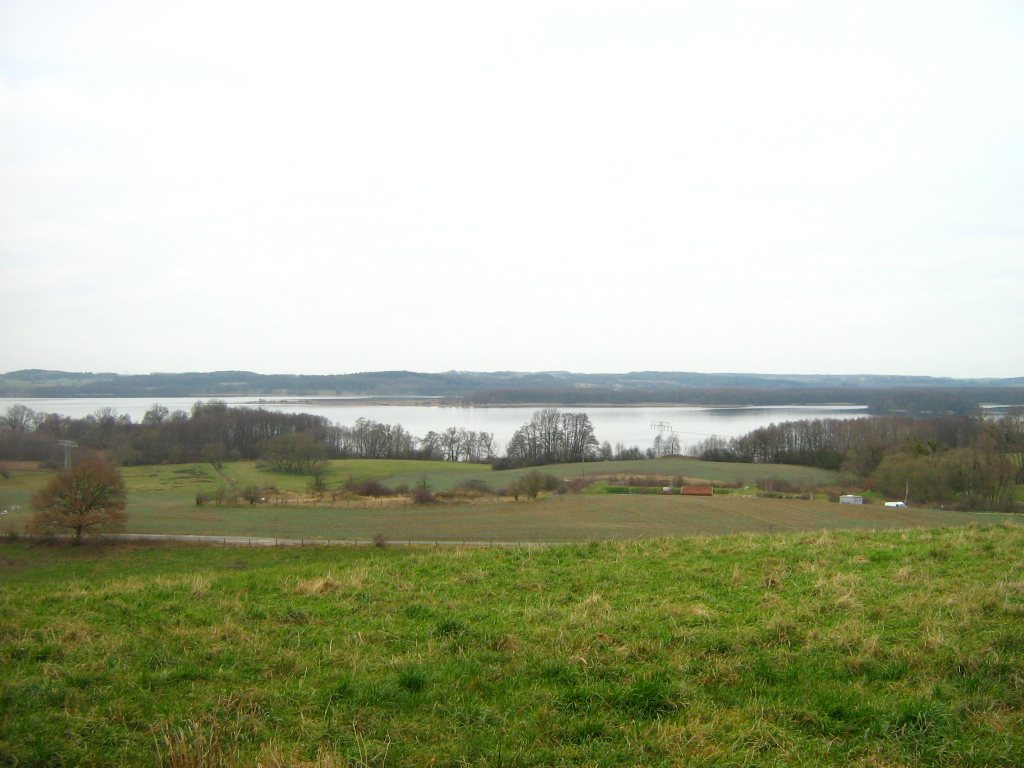
The settlement area appears in no source either. It is reconstructed by elimination, and the prevailing view places the Redarii between Neubrandenburg in the north and Neustrelitz in the south, that is, in the region of the later territories of Stargard and Wustrow in south-eastern Mecklenburg. Lake Tollense lies within it. To the north-west were the Tollensians, to the south-east the Ukrani. Further west, beyond the river Peene, sat the Circipani and the Kessini, who had previously belonged to the sphere of the Obodrites.
This is a country of water, forest and narrow land bridges. Anyone who knows it understands the military history of the Redarii better: an army entering here moves along few paths between lakes, and whoever holds the crossings holds the land.
Widukind lets the Redarii enter history in the year 929 – and does so as though they had long been familiar. He mentions a province of the Redarii under a Saxon count named Bernhard; a defensive command therefore already existed. At the outset there was peace, and the Redarii paid tribute to Henry I.
Then politics intervened. Thankmar, Henry's eldest son, saw himself passed over in favour of his half-brother Otto and sent an embassy to the Redarii to incite them. What the message contained nobody knows; the Redarii cut the envoys down. They then crossed the Elbe, took the stronghold of Walsleben in the Altmark and killed or carried off its inhabitants. The Saxon answer came at once: on 4 September 929 the Redarii were defeated in the battle of Lenzen. The transmitted figures – 120,000 Slavs fallen according to the Corvey annals, up to 200,000 in Widukind, plus 800 prisoners said to have been beheaded at court – are the language of chronicles, not statistics. The scale of the horror is credible; the number is not.
What is remarkable is what did not happen next. Lenzen was not a submission. Immediately after his elevation in 936 Otto I sent an army against the Redarii again. In 955, after the battle at the Raxa, the Tollensians and Circipani paid tribute – of the Redarii nothing of the kind is reported. In 957 Otto marched against them once more. Only for 965 does an imperial charter record an obligation to pay tribute, and by 967 fighting had resumed. From Italy the emperor wrote to the Saxon magnates assembled at the palace of Werla, imploring them to conclude no peace with the faithless Redarii during his absence. They did so anyway: with a campaign against the Danes ahead, quiet on the eastern border seemed more important to them than an imperial principle.
In forty years, then: several defeats, a few years of tribute, no lasting rule. For a people without a king that is a striking record.
Here lies the peculiarity. The Obodrites had princes, the Rani had a prince alongside their priests, the Pomeranians acquired dukes. The Lutici had nobody. Thietmar describes this with a precision one may trust, precisely because he does not like it.
His autem omnibus, qui communiter Liutici vocantur, dominus specialiter non presidet ullus. Unanimi consilio ad placitum suimet necessaria discutientes, in rebus efficiendis omnes concordant.
"Over all of them, who are commonly called Lutici, no single lord presides. When they debate what is needful in unanimous counsel at their assembly, then all must agree in carrying it out."Thietmar of Merseburg, Chronicon VI,25 (in context VI,23–25); translation: Glanz & Gravur
Thietmar also records what happened to a dissenter: whoever opposed a resolution in the assembly was beaten with sticks; whoever resisted openly outside it lost his property to fire and plunder or had to pay a sum matching his rank. This is no idyll of grassroots democracy. It is a system of compulsion without a ruler – unanimity produced by force where necessary.
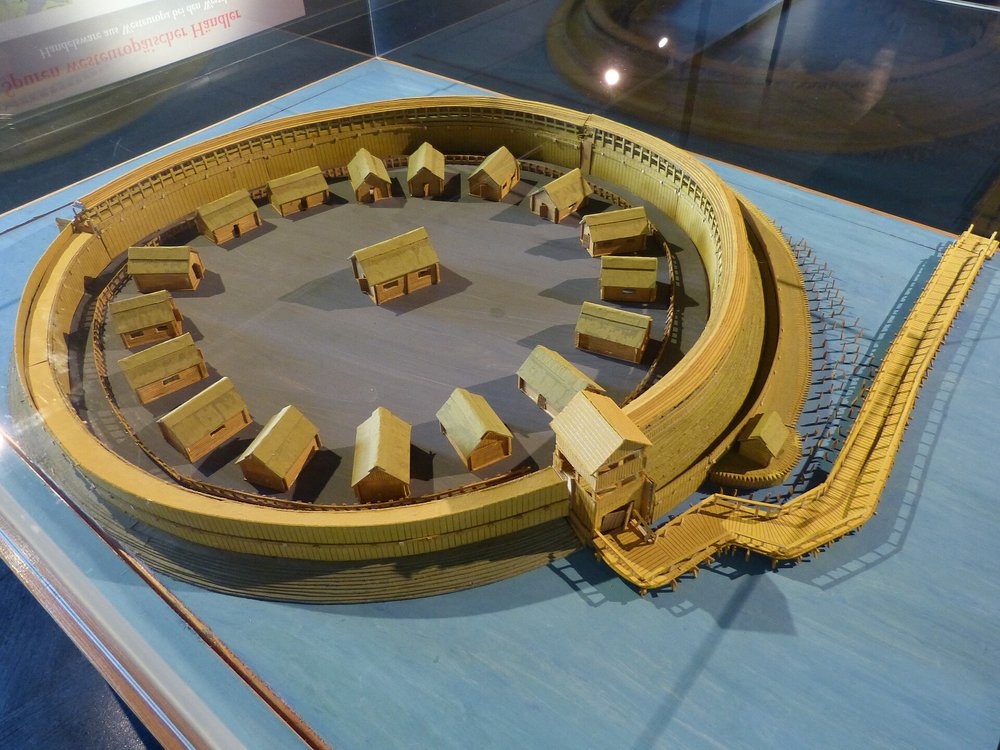
If no prince leads, authority must come from somewhere else. Among the Lutici it came from the sanctuary in the land of the Redarii: the temple-fortress Thietmar calls Riedegost, which later centuries knew as Rethra. There the war standards were kept, released only for a campaign. There the armies were sent off and received back. There lay the temple treasure, fed by the gifts laid down after victorious expeditions. And there a two-stage oracle – first lots, then a sacred horse led over crossed spears – decided whether an enterprise was begun at all. Only if both stages gave the same sign did they set out.
The details of the place and its cult we have treated at length elsewhere: with the Lutici, whose article sets Rethra, Zuarasici and the rising of 983 in context. What matters here is only the political mechanism: the sanctuary replaced the dynasty. Whoever held it held the leadership – without a single throne.
From this followed a position of power that shows clearly in the sources. The priests of Riedegost did not merely guard the images and the horse; they conducted the sacrifices, read the lots and represented the confederation outwards. In negotiations with the Empire and with Poland they appear as intermediaries. A people with no prince who could be bought, married off or baptised was hard for its neighbours to grasp – and precisely that intangibility secured the freedom of the Lutici for generations.
In the summer of 983 the Elbe Slavic forces rose under Lutician leadership. On 29 June Havelberg fell, three days later the Brandenburg, seat of Margrave Dietrich of Haldensleben and of a bishop. The church treasure was plundered, the clergy taken captive, the land laid waste as far as the river Tanger; even Magdeburg was threatened until a hastily assembled Saxon army pushed the attackers back behind the Elbe in late July or early August. Helmold reports that the rising began after an assembly at Rethra – that is, in the land of the Redarii.
The consequences were considerable. The bishops of Havelberg and Brandenburg lived from then on outside their dioceses, mostly at the royal court, and church organisation east of the Elbe came to a standstill for roughly two centuries. Whether one may call this a turning point in the fate of central Europe is another question – more on that below.
Twenty years later one of the strangest constellations of the Middle Ages came about. In 1003 Henry II concluded an alliance with the pagan Lutici and from 1004 waged war against Christian Poland under Bolesław I. In 1005 and 1017 Lutician contingents marched with the imperial army – and they carried their divine images with them, ahead of the troops. Thietmar saw exactly this and recorded it in his chronicle with undisguised revulsion; at this point he even addresses his reader directly and warns him to keep away from such a cult.
For the Redarii the alliance was a success: it secured them decades in which nobody seriously pursued their conversion. The price was Polish raids into their territory.
The military high point came immediately before the rupture. In 1056 the Lutici annihilated a Saxon army under William of the Nordmark near Havelberg. A year later they turned on one another.
Adam of Bremen describes the war as a quarrel over leadership and power among the four peoples. Precision is needed here, because the popular short version is wrong. Adam writes that the Tollensians and Redarii, although the Kessini helped them, were overcome by the Circipani. The war was renewed – and the Redarii were crushed. At the third attempt the Circipani were victorious again. Beaten three times, the losers called in outside powers: the Obodrite prince Gottschalk, Duke Bernhard of Saxony and the king of the Danes. For seven weeks the Circipani held out against the host of the three rulers before buying peace with fifteen thousand talents of silver. Adam's closing verdict is bitter, and it is aimed at his own side: of Christianity there was no mention, the victors were intent only on plunder.
This is the turning point of the whole subject. The Redarii had exercised leadership because they held the sanctuary. When other member peoples were no longer willing to pay for that leadership, there was no means of enforcing it – no king, no standing army, no administration. All that remained was to ask yesterday's enemy for help. A people that does this has ceased to be a leading power.
The confederation recovered once more, briefly. In 1066 Bishop John of Mecklenburg was captured, his severed head set on a spear and offered in the sanctuary. Revenge followed in 1068: Bishop Burchard II of Halberstadt pushed through to the sanctuary and carried off the sacred horse. The Annales Augustani record the place under the name Rheda – it is the last contemporary mention. Afterwards cultic and military supremacy in the West Slavic north passed to Arkona among the Rani.
Whether the sanctuary perished for good in 1068 is an open question. Ebo, a biographer of Otto of Bamberg, reports the destruction of a Lutician town together with its temple by King Lothair of Supplinburg; the literature dates this to about 1125 to 1127, but the place is not named.
The twelfth century cleared the field. The eastern Lutician territories between the Peene, Tollense, Uecker and Oder were subdued by the Pomeranian duke Wartislaw I; in 1128 the magnates there accepted Christianity at an assembly in Usedom, and Otto of Bamberg had the temples of Wolgast and Gützkow destroyed. In 1147 the Wendish Crusade was directed against the Obodrites and the Lutici. In the end the country was divided between the Duchy of Pomerania, the Duchy of Mecklenburg and the Margraviate of Brandenburg.
The last documentary echo comes in a foundation. In August 1170 Duke Casimir of Pomerania founded Broda Abbey on Lake Tollense and endowed it with 33 villages – in the region where Neubrandenburg, Burg Stargard, Neustrelitz and Penzlin stand today. The tradition names as its task the Christianisation of the subjugated Redarii. Their land, the terra Stargardiensis, passed to the Brandenburg margraves in the Treaty of Kremmen on 20 June 1236 and later came to Mecklenburg. The name of the people vanishes from the records; the land remains.
Archaeologically the land of the Redarii is well studied and nevertheless mute, because potsherds carry no ethnic names. On the Schlossberg above the Breiter Luzin near Feldberg lies a Slavic hilltop stronghold of the seventh to ninth centuries, its main fort rising up to 36 metres above the water. Robert Beltz named Feldberg pottery after finds made there in 1922; it is one of the leading forms of early Elbe Slavic ceramics.
The largest known settlement complex in Redarian territory lies at the southern end of Lake Tollense and in the adjoining lake Lieps. Excavations by Eike Gringmuth-Dallmer and Adolf Hollnagel brought a wooden idol of Slavic date to light on the Fischerinsel. According to the results of Volker Schmidt, the island of Hanfwerder held a centre of a noble ruling class with a temple, indicated by numerous skeletons of sacrificial animals; on the Fischerinsel there was a market settlement reached by a wooden bridge, with a further cult site apparently open to the wider population. That is a great deal – and it is still no proof of Riedegost.
What is documented
The Redarii can be traced in four narrative sources: Widukind of Corvey (c. 967), Thietmar of Merseburg (1012–1018), Adam of Bremen (c. 1070–1076) and Helmold of Bosau (c. 1167); to these come charters of Otto I, among them the form Riadri of 14 October 936, and the Annales Augustani with the form Rheda. Securely attested are the battle of Lenzen on 4 September 929, the rising of 983 with the fall of Havelberg on 29 June, the alliance with Henry II from 1003, the civil war of 1056/57, the sacrifice of Bishop John's head in 1066, the campaign of Burchard II of Halberstadt in 1068 and the foundation of Broda Abbey in 1170. Archaeologically secure are the Feldberg stronghold (7th–9th c.) and the late Slavic settlement complex of Lieps and Lake Tollense, with a temple structure on Hanfwerder and a wooden idol from the Fischerinsel. Thietmar's sentence that no single lord presides over the Lutici is the clearest statement on the constitution of this confederation that we possess.
No subject in north German regional history has attracted so many searchers. Ernst von Kirchberg named Demmin around 1379, Albert Krantz named Burg Stargard in 1519, Bernhard Latomus argued for Prillwitz in 1610, and David Franck followed him in 1753. Since Gustav Oesten's excavations at the end of the nineteenth century archaeology has joined the search. By now more than thirty places have been proposed, and the regional bibliography of Mecklenburg-Vorpommern lists over three hundred titles on the subject.
Nothing has been found. The long-favoured Schlossberg near Feldberg was ruled out after excavations in 1967 showed that the stronghold no longer existed at the time of the destruction in the eleventh century. The two main sources also contradict each other: in Thietmar the fortress lies beside a lake, in Adam it is entirely surrounded by one; Thietmar counts three gates, Adam nine. The nine is today mostly read as a symbolic number, an allusion to the nine arms of the Styx – Adam wanted to sketch a place of the underworld, not supply a ground plan. That the name Rethra has been a registered trademark since 2003 and serves as a marketing term in the region is perhaps the most honest punchline of the entire search.
How strong the pull of this subject was is shown by a scandal of the eighteenth century. From 1768 several dozen bronze figures and bronze plates surfaced in Neubrandenburg in the collections of the Sponholz family of goldsmiths, some bearing runic characters, some the word Rethra. In 1771 Andreas Gottlieb Masch published them together with Daniel Woge's illustrations as the religious antiquities of the Obotrites. The learned world was electrified; as late as 1794 Count Jan Potocki travelled to Neubrandenburg to study them.
They were forgeries. In the nineteenth century Franz Boll set out the critical history of these pieces, and since then they have been recognised for what they are: skilful inventions of their own time. Their effect long outlasted the exposure, and to this day images of the Prillwitz idols circulate in popular accounts as supposed depictions of the gods of Rethra.
Myth check
"The god of Rethra was called Radegast." In Thietmar the place is called Riedegost and the god Zuarasici. Only Adam of Bremen turns Redigast into the name of the god and Rethre into the name of the place, and Helmold follows him. Whether Adam knew a different tradition or confused place and deity is still disputed; scholarship mostly regards Thietmar's form as the more original. The popular "Radegast" is therefore above all a matter of reception history.
"Rethra has been located." No. More than thirty sites have been proposed and no find carries the name. Feldberg was ruled out in 1967. The Lieps and Lake Tollense settlement complex is the most promising area, no more than that.
"The Prillwitz idols show the gods of Rethra." They are eighteenth-century forgeries.
"The four tribes of the Lutici." Adam and Helmold do name four peoples, yet the number four is also a chronicler's ordering device: the Bavarian Geographer already gives the Wilzi four regiones, and Adam himself says the quarrel was over leadership and power. The Bavarian Geographer, incidentally, does not name the Redarii at all.
"In 1057 the Redarii and Tollensians faced the Kessini and Circipani." That tidy two-against-two scheme comes from secondary literature. Adam writes that the Kessini helped the Tollensians and Redarii – and that the Circipani won three times. The Redarii lost this war.
"983 was the turning point in the fate of central Europe." Wolfgang H. Fritze put it that way in 1984. Gerd Althoff and others point out that contemporary sources outside Saxony barely register the rising and that border conflicts of this kind occurred almost every year. 983 becomes a catastrophe only if one assumes an Ottonian programme of construction that it destroyed.
Anyone driving through the Mecklenburg Lake District today drives through the land of the Redarii without a single sign saying so. The language gives it away nonetheless. The river Tollense carries a Slavic name going back to a word for lowland and flat valley; it gave its name to the lake, to the Tollensian people and to the Tollensewinkel. Neubrandenburg, Neustrelitz, Penzlin, Prillwitz, Burg Stargard, Wustrow, Demmin – in that list almost nothing is German in origin except the prefixes.
The endings are the marker: -ow, -itz, -in, along with formations in -gard. Around 1,300 place names between the Bay of Wismar and the middle Peene have been examined for their Slavic origin. The Redarii perished as a people and their language fell silent – but the map of northern Germany still speaks it in fragments. Anyone interested in this connection will find the same trail among the other West Slavic peoples, from the Sorbs in Lusatia to the Daleminzi on the Elbe and the Hevelli on the Havel.
At the end stands a finding that looks like a contradiction and is not one. The Redarii were powerful enough to survive four decades of Ottonian campaigns, to smash an ecclesiastical province in 983 and to serve an emperor as an ally. They nevertheless left fewer traces than smaller neighbours – no ruler's grave, no coin, no dynasty, no treaty text.
This is no accident but the reverse side of their constitution. A confederation without a ruler produces no charters, because there is nobody to issue them. It produces no genealogies, because there is no family whose claim needs justifying. And it leaves no successor to tend its memory: when the land was divided between Pomerania, Mecklenburg and Brandenburg, nobody was left who called himself a Redarian. What remained was the picture drawn by their enemies – a triangular rampart in a dark wood, a horse led over crossed spears, and a name that scholarship still cannot explain.
The Lutici · The Tollensians · The Circipani · The Kessini · The Obodrites · The Rani · The Hevelli.
