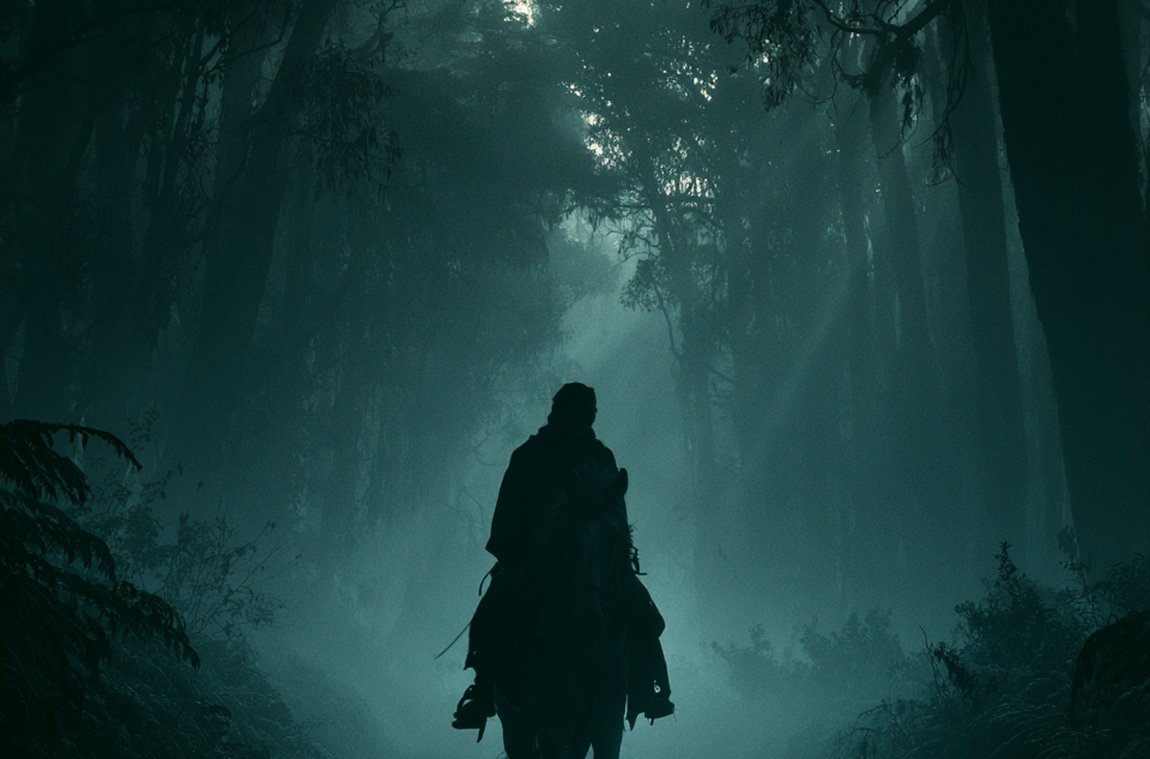
Hermod (Old Norse Hermóðr) is the god who, after Baldr has been killed, rides Odin's eight-legged stallion Sleipnir for nine nights down into the realm of the dead to ransom Baldr from Hel. He reaches her hall, wins a bargain and returns with gifts from the dead – yet because one giantess refuses to weep, Baldr stays below. Only Snorri Sturluson tells the full story, in the 13th century, and who Hermóðr originally was is still debated. Here is what the sources actually say.
Picture Asgard in the moment after the unthinkable. Baldr, the brightest and best-loved of the gods, lies dead, struck by a sprig of mistletoe thrown by his blind brother Höðr and guided by Loki. Snorri says the gods were so stunned that words failed them and all that came was weeping. Into that silence Frigg, Baldr's mother, puts a question that is also a promise: which of the Æsir wants to win all her love and favour by riding the road to Hel, finding Baldr there and offering the goddess of the dead a ransom to let him come home?
One of them steps forward. Snorri calls him Hermóðr inn hvati – "Hermod the Swift" or "the Bold". The Old Norse hvatr describes someone quick, keen and ready to act. That is about all the characterisation he gets. In the surviving mythology Hermod is almost entirely this one scene: the man who rides of his own free will to the place nobody wants to go.
He does not stand for strength like Thor or for hard-won wisdom like Odin. He stands for loyalty that reaches beyond death. And he comes with questions that have no tidy answers. Was he Odin's son? A hero who only later became a god? And what does a Danish tyrant-king from the Old English Beowulf have to do with him?
Almost everything we know about Hermod's ride comes from a single text: Gylfaginning ("The Tricking of Gylfi"), the first major part of the Prose Edda, written by the Icelandic scholar and politician Snorri Sturluson around 1220–1225. In the usual numbering it is chapter 49, the chapter of Baldr's death. Snorri worked from older poems and often quotes them – but for the ride itself he cites no verse at all. Whether he was retelling a lost poem or embroidering oral tradition, we cannot say.
One detail matters for everything that follows. In the Codex Regius of Snorri's Edda, usually regarded as the best manuscript, Hermod is called sveinn Óðins – "Odin's boy". Other manuscripts read sonr Óðins, "Odin's son". Sveinn can mean a boy or son, but also a young retainer or servant. So even in Snorri, Hermod's parentage rests on a single word.
For the journey Hermod is given the finest horse in the world: Sleipnir, Odin's eight-legged stallion, born to Loki when he had taken the shape of a mare. In Norse tradition Sleipnir is the horse that crosses boundaries – between the worlds, and between the living and the dead.
Then the ride begins. For nine nights, Snorri says, Hermod rides through dark and deep valleys, so dark that he can see nothing. Nine is the sacred number of the North: nine worlds, nine nights Odin hangs on the tree, nine mothers of Heimdall. And the road leads downward and northward, into cold and darkness rather than the flames of a Christian hell.
At last the darkness ends at a river. It is called Gjöll, "the Roaring" or "the Resounding", and across it runs the Gjallarbrú, the Gjöll bridge, which Snorri describes as thatched with gleaming gold. We follow this road and its stations in more detail in The Road to Hel – Gjallarbrú, Móðguðr and Náströnd.
A guardian waits on the bridge. Her name is Móðguðr, which probably means something like "battle-fury" – the etymology is not entirely certain. She asks Hermod his name and kin, and then says one of the most haunting things in the whole tale. In paraphrase (our own rendering): yesterday five troops of dead men rode over this bridge, yet the bridge thunders no less under you alone – and you do not have the colour of dead men. Why do you ride here on the road to Hel?
Those two observations hold a whole idea of death. The dead are light: five full troops make less noise than one living rider. And the dead have their own colour, a pallor by which they can be recognised. Hermod answers plainly that he is looking for Baldr. Móðguðr confirms that Baldr has crossed and points the way: down and to the north lies the road to Hel.
At the end of the road stands a fence or gate – often called Helgrind, "Hel's gate", in modern retellings; Snorri simply says grind, the gate. Hermod dismounts, tightens the girth, mounts again and spurs Sleipnir on. The horse leaps so high and so hard over the gate that it touches it nowhere.
This leap is the iconic image of the story, and rightly so. Hermod does not come through the door; he goes over it, by a route no dead soul would take. The border between worlds becomes something physical here: it can be crossed, but only on the strongest horse in existence.
Hermod rides on to the hall, dismounts and goes in. There he sees his brother Baldr sitting in the high seat, the place of honour. He stays the night. Baldr is a guest of rank, not a prisoner in a dungeon. That fits the wider picture: in Snorri, Hel is not a place of punishment for sinners but the realm where most of the dead go. Read more in Hel – goddess of the dead, realm of the dead, and the long life of a word.
In the morning Hermod asks Hel to let Baldr ride home with him. Hel does not refuse. She sets a test. In paraphrase (our own rendering): now it shall be seen whether Baldr is as beloved as people say. If all things in the world, living and dead, weep for him, he may return to the Æsir. But if anyone speaks against it or will not weep, he stays with Hel.
The Old Norse is short and merciless: ef allir hlutir í heiminum, kykvir ok dauðir, gráta hann – "if all things in the world, quick and dead, weep for him". Hel here is not a cruel witch but a ruler who sets terms. There is no more talk of gold. The price is unanimity.
The condition mirrors what came before. Frigg had made every thing in the world swear not to harm Baldr, overlooking only the young mistletoe. Now every thing must take part again, this time in grief – and once more a single gap is enough to ruin everything.
When Hermod leaves, Baldr and his wife Nanna walk him out of the hall. According to Snorri, Nanna had died of grief at Baldr's funeral and been burned with him on the pyre. The two give Hermod gifts to take back – one of the most moving details in the Edda.
Baldr takes the ring Draupnir and sends it back to Odin as a keepsake. Odin had laid this ring on his son's pyre. Draupnir, "the Dripper", is the ring from which eight rings of equal weight drip every ninth night. A ring that endlessly multiplies travels back from the dead to the living. Comfort, farewell, a sign that the bond is not entirely broken? Snorri does not explain the gesture. He simply tells it.
Nanna sends Frigg a ripti, a linen cloth or veil, along with other gifts, and Fulla, Frigg's attendant, receives a gold finger-ring. Small household things from the house of the dead – anyone who has lost someone knows what such objects are worth. Hermod rides back to Asgard, reports everything he has seen and heard, and hands over the gifts.
Now the Æsir send messengers all over the world, asking everything to weep Baldr out of Hel. And it nearly works. People and animals weep, the earth, the stones, the trees and all metals – just as, Snorri adds, you will have seen these things weep when they come out of frost into warmth. Dew beading on stone, iron sweating in a warm room, branches dripping in a thaw: in Snorri's telling, that is the world's grief for Baldr.
As the messengers head home, believing their task complete, they find a giantess in a cave. Her name is Þökk. She too is asked to weep Baldr out of Hel, and she answers with a verse that Snorri quotes. In our own rendering:
Þökk will weep with dry tears for Baldr's burning. Living or dead, the old man's son was no joy to me. Let Hel hold what she has.Gylfaginning 49, our own rendering of Þökk's verse
Þökk means "thanks" – a bitter irony for the one creature that refuses any gratitude. Then comes the crucial sentence: en þess geta menn at þar hafi verit Loki Laufeyjarson – "and people suppose that this was Loki, Laufey's son". Snorri reports a supposition, not a fact – but he follows it straight away with Loki's flight and punishment, so the narrative logic is clear enough.
So Baldr stays with Hel. Hermod's ride fails not for lack of strength or courage but because of a single tear withheld. In the North, death is final, even for a god. Only after Ragnarök, says the Völuspá, do Baldr and Höðr return to a renewed world – see What Comes After Ragnarök?
Hermod's name turns up in far older texts too, above all in the Hákonarmál, the memorial poem that the Norwegian court skald Eyvindr skáldaspillir composed for King Hákon the Good. Hákon fell around 961 at the battle of Fitjar, so the poem is roughly 250 years older than Gylfaginning.
In the Hákonarmál, valkyries bring the fallen king to Valhalla. In stanza 14 Odin, here called Hroptatýr, gives the order to go and meet him, and the two he sends are Hermóðr and Bragi. In paraphrase: Hermóðr and Bragi, said Hroptatýr, go to meet the prince, for a king who seems a champion is coming here to the hall.
Here Hermóðr is not a rider to the underworld but one of the hosts of Valhalla. Beside him stands Bragi, who in Snorri is the god of poetry. Whether Bragi is already imagined as a god in the Hákonarmál, or as the deified skald Bragi Boddason, is disputed – and it is just as open whether Hermóðr is a god or an honoured hero among the dead. A close parallel appears in the Eiríksmál, where Odin sends the heroes Sigmund and Sinfjötli to welcome Eric Bloodaxe. Valhalla's welcoming party, in other words, could be made up of famous dead men.
A second poetic witness is the Hyndluljóð, the "Lay of Hyndla", preserved only in the great Icelandic compilation Flateyjarbók from the late 14th century. The poem itself is probably older, but hard to date. In its second stanza the goddess Freyja praises Odin as a generous patron of heroes. In paraphrase: let us ask the Father of Hosts to be gracious; he rewards and gives gold to the worthy. He gave Hermóðr helmet and mail-coat, and Sigmund a sword.
Here Hermóðr is clearly a hero gifted by Odin, not a son living in the house of the gods. He stands beside Sigmund, the great hero of the Völsung line. Helmet and byrnie make him one of Odin's equipped followers.
That gives us three pictures: in Snorri, a young god who rides to the underworld; in the Hákonarmál, a dweller in Valhalla; in the Hyndluljóð, an earthly hero armed by Odin. Do they fit together?
One answer: there was originally a famous hero called Hermóðr, favoured by Odin, who lived on in Valhalla after his death; later tradition turned him into Odin's son. Snorri's sveinn Óðins in the Codex Regius would fit neatly – "Odin's retainer" rather than "Odin's son". Another answer: these are two or more different bearers of the same name, a god and a hero, merged only by modern readers. Either way, the poems show Hermóðr as a hero, and only Snorri makes him clearly a god.
A further piece of evidence comes from the Nafnaþulur, versified name-lists attached to some manuscripts of the Prose Edda. One of them lists Odin's sons, and Hermóðr is among them, alongside Baldr, Víðarr, Váli, Thor, Heimdall and Yngvi-Freyr. But the list is regarded as a later addition, is missing from some manuscripts and includes names nobody else counts as Odin's sons. Anyone who calls Hermod Odin's son with confidence is, in the end, relying mostly on Snorri.
And the name? Hermóðr is most likely built from herr, "army, host", and móðr, "courage, wrath, mood" – roughly "war-spirit" or "battle-courage". It suits a warrior hero better than a messenger.
The name has an exact Old English counterpart: Heremod. He appears twice in Beowulf. After Beowulf's victory over Grendel, a singer at the court of the Danish king Hrothgar praises Sigemund the dragon-slayer and sets Heremod against him as a foil (line 901 ff.). Heremod's strength in battle failed; among the Jutes (Eotenas) he fell into the power of enemies and was done to death; for too long he had brought his people grief.
Later, in Hrothgar's great speech of warning to Beowulf (from line 1709), Heremod is the cautionary example once more. He did not grow to be a blessing to the Danes; in his rage he killed his table-companions and comrades, gave no rings to the Danes as custom demanded, and died joyless and alone. In Beowulf, Heremod is the textbook bad king: stingy, violent, isolated.
The name also appears in Anglo-Saxon royal genealogies. Asser, the biographer of Alfred the Great, gives Alfred's pedigree at the end of the 9th century and names a Heremod as son of Itermon and father of Sceldi – that is, Scyld, the mythical founder of the Danish Scyldings. In Beowulf, by contrast, Scyld arrives over the sea as a foundling; whether the poet knew a version in which Heremod's son was set adrift after his father's fall is speculation.
Is this Heremod the same as the Norse Hermóðr? Linguistically, the names are the same; that much is undisputed. Whether the same legendary figure stands behind them is an open question. In favour: both are rooted in Scandinavian heroic legend, and the Hermóðr of the Hyndluljóð is a hero in Odin's favour. Against: Heremod is a warning example, while Hermóðr appears only in a positive light. In Saxo Grammaticus, a tyrant called Lotherus rules before Skjöld and is overthrown by his people – a striking parallel. But Saxo knows no Hermod, and his version of the Baldr story has no ride to the underworld.
In short: no Viking Age image can be securely identified as Hermod. Gotland picture stones show riders on eight-legged horses, for example on the Tjängvide stone. They are usually read as Odin on Sleipnir or as a dead warrior arriving in Valhalla. Nothing in these images distinguishes a Hermod from Odin or any other rider.
The same goes for the gold bracteates, the stamped gold pendants of the 5th and 6th centuries. The scholar Karl Hauck interpreted one group, the so-called three-god bracteates, as an image of Baldr's death: a central figure, a figure holding a branch, a third figure at the side. The reading is influential but disputed – and no Hermod has been identified on them.
Hermod only becomes visible much later: in Icelandic Edda manuscripts of the 18th century and then among 19th-century illustrators, who loved to stage the leap over Hel's gate as dramatically as possible.
Hermod's ride belongs to one of the oldest story-patterns we know: a living person travelling to the underworld to bring back someone who has died. The most famous comparison is Orpheus, who goes down into Hades to free Eurydice and fails through one mistake – the forbidden backward glance. With Hermod, the failure is someone else's, but the shape is related.
That does not mean one story borrowed from the other. But the pattern was alive in the North. In the eddic Baldrs draumar, Odin himself rides Sleipnir down to Niflhel to question a dead seeress about Baldr's ominous dreams. Saxo, in the first book of the Gesta Danorum, tells how King Hadingus is led beneath the earth by a mysterious woman, across a river, past fighting armies, up to a wall over which she throws a cockerel that crows again on the other side. And the Norwegian folk ballad Draumkvedet, written down in the 19th century, still knows the Gjallarbrui, the perilous bridge on the way to the otherworld.
Graves with horses, bridles and saddles also show that death could be imagined as a journey – though whether people pictured exactly the road to Hel that Snorri describes, we cannot know.
When we think about a Hermod motif in our workshop in Alsdorf, one image stands at the centre: the leap over Hel's gate. On natural slate the scene works especially well, because the laser opens the dark stone up into light – the light of the living in the realm of the dead, quite literally.
For the design we would rather follow the visual language of the Gotland picture stones than fantasy illustration: clean outlines, stylised legs, no horned helmets, no special effects. It remains a modern design after Snorri's text, not a copy of a Viking image, because none exists. For an inscription, Hel's condition suggests itself – allir hlutir gráta, "all things weep" – or simply the name in Younger Futhark runes. As a memorial plaque for someone you would have given anything to bring back, this motif carries a meaning few other scenes from the Edda can match.
Who is Hermod in Norse mythology? According to Snorri's Gylfaginning, Hermod (Hermóðr) is a son or young retainer of Odin who rides Sleipnir to Hel after Baldr's death to bring him back. Older poems show him as a hero and as one who welcomes the fallen in Valhalla.
Why does Hermod ride to Hel? Frigg asks for one of the Æsir to ride to Hel and offer a ransom for Baldr. Hermod volunteers and rides Odin's horse Sleipnir for nine nights to Hel's hall.
What does Hel demand for Baldr's release? All things in the world, living and dead, must weep for Baldr. If a single one refuses, he stays. The giantess Þökk refuses – and people suppose she was Loki.
Is Hermod a son of Odin? Essentially only Snorri says so, and even there the best manuscript reads "Odin's boy" rather than "Odin's son". Whether he was originally a god or a hero is debated.
What did Hermod bring back from Hel? Baldr sent the ring Draupnir back to Odin, Nanna sent Frigg a linen cloth and other gifts, and Fulla received a gold finger-ring.
Is Hermod the same as Heremod in Beowulf? The names are linguistically identical. Whether Beowulf's Danish tyrant-king and the Norse Hermóðr are the same legendary figure remains an open question.
For courage. For remembrance. For legends that live on.
Baldr’s Death · Hel · Hringhorni · Loki.
There are scenes in Norse poetry that take your breath away. Hervör’s night walk to the grave-mound of her dead father …
Read more →When the shining god Baldr dies, the Æsir give him the most splendid funeral of the North – upon Hringhorni, the …
Read more →It begins with a drunken braggart and ends with a splinter in the thunder god's skull. The tale of Thor and Hrungnir is …
Read more →In their grief for the shining god Baldr, even the gods reach their limits. His funeral ship stands fast in the sand …
Read more →