In the summer of 789 Charlemagne led the only army of his reign that he personally took deep into Slavic territory across the Elbe and towards the north-east. Its target was a confederation the Frankish scribes called the Wilzi. What that confederation actually was – a people, an alliance, or a convenient label used by foreign observers – has never been settled. This article deals with the eighth and ninth centuries, that is, with the Wilzi themselves, not with the Lutici, who appear only two hundred years later.
Not a single sentence written by the Wilzi themselves survives. No treaty, no inscription, no chronicle from their own hand. Everything we know about them stands in Latin texts produced inside the Frankish realm, by men who treated the confederation either as a military problem or as a backdrop for their king’s glory. That is not a marginal note. It is the governing condition for every statement that can be made about them.
Their settlement area lay, according to current research, in eastern Mecklenburg, in Western Pomerania and in the north of present-day Brandenburg: along the Peene, around the Tollensesee and the Kummerower See, on Usedom, in the Uckermark, and in the south along the Havel and the Spree. That places them west of the Obodrites, north of the Sorbs and west of the Pomeranians. It is a map reconstructed from written passages, not read off boundary stones.
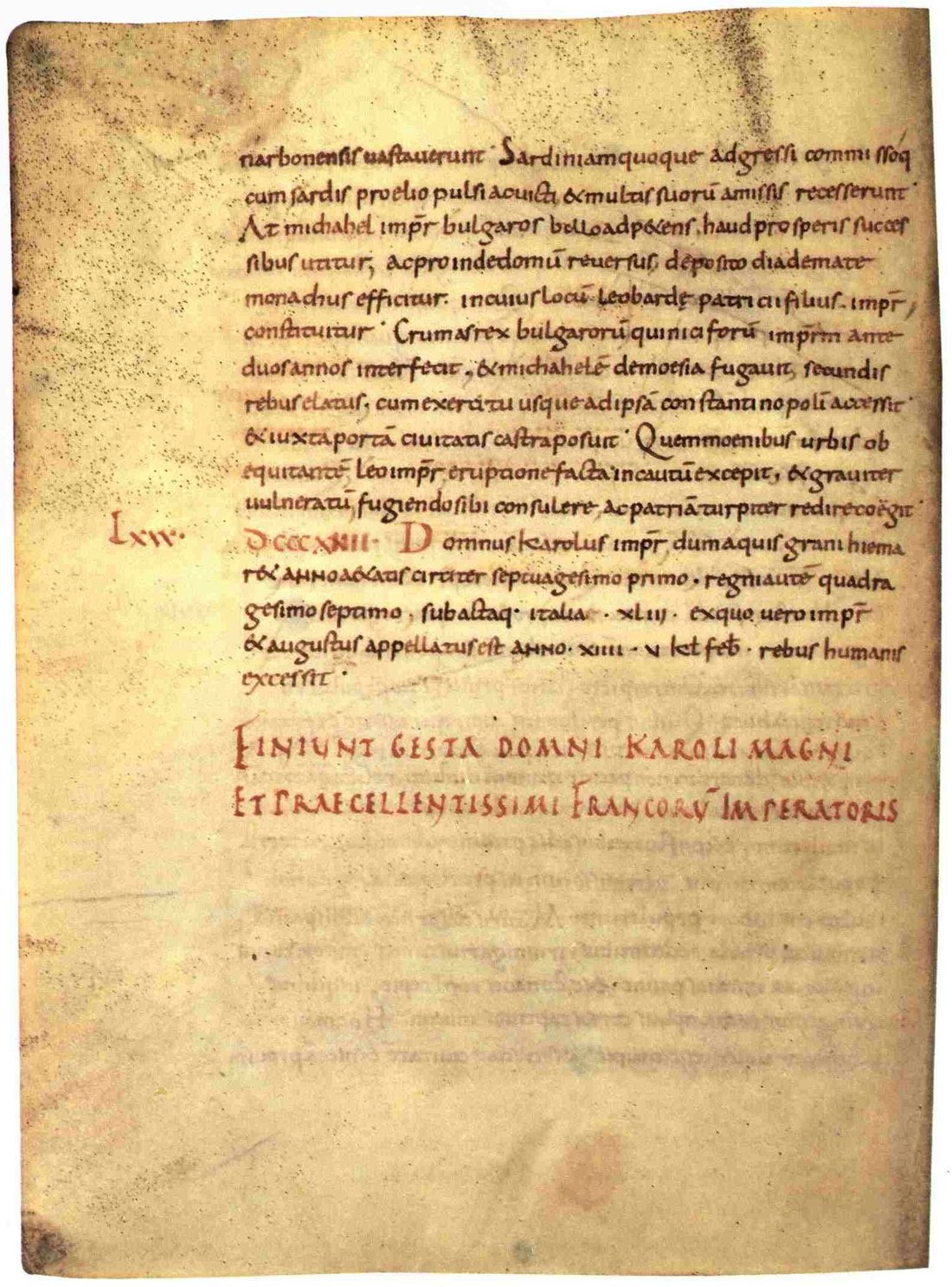
The principal source is the Annales regni Francorum, the Royal Frankish Annals. They report on the Wilzi for the years 789, 799, 808 to 812 and 823. To these may be added the revised version of the same annals, Einhard’s Vita Karoli Magni, a final mention in the Annals of Saint-Bertin for 839, and the list of figures known as the Bavarian Geographer. That is the whole corpus. For roughly one hundred and fifty years in the life of a substantial confederation we have fewer than a dozen usable passages.
Those passages are also anything but neutral. The annalists took an interest in the Wilzi precisely when a Carolingian ruler marched against them, subjugated them or adjudicated between them. Between the entries lie gaps of ten and twenty years in which nothing is recorded – not because nothing happened, but because nobody saw a reason to write it down. Anyone building a history of the confederation out of this material is building on holes.
The immediate cause named in the Frankish texts was continued Wilzi raiding against the Obodrites, who had long been allied with the Franks. The Wilzi, so the account runs, could not be restrained by royal instruction. That is the victors’ justification, and its function is to present the campaign as the enforcement of law.
The structural reason lies deeper. The Saxon wars had entered their decisive phase, and the Frankish realm wanted the Elbe as an imperial frontier with pacified neighbours beyond it. Dragovit’s sphere of influence, however, reached past the Wilzi settlement area proper as far as the middle Elbe: the Linones around Lenzen, the Smeldingi and the Bethenici were subject to him or allied with him. As long as that held, a power with a say of its own sat directly behind the freshly conquered Saxon frontier.
Charlemagne assembled an army of Franks, Saxons, Frisians, Sorbs and Obodrites – notably, therefore, with Slavic allies fighting Slavic opponents. The Frisians, according to the tradition, came up the Elbe by ship. The annals record for 789 that the march went into those parts of Slavic country whose name is Wilze. The revised version adds that everything was laid waste with fire and sword and that the confederation, for all its numbers, could not withstand the royal army for long.
The end was not a battle but an opening. Dragovit came out of his stronghold with his people, handed over the hostages demanded of him and swore an oath. The other magnates and chieftains of the Slavs followed. Charlemagne left no garrison behind. That matches the Carolingian conception of a frontier on the Elbe: the aim was quiet in the approaches, not rule over the land.
The annals call Dragovit rex and say that he surpassed the other petty princes of the Wilzi in nobility of descent and in the authority of age. It is one of the very few passages in which a Frankish source lets slip something about the internal order of the confederation: there were several lords, and one stood above them – not as a sole ruler, but as first among others who could be named.
How that precedence came about is unknown. Whether it was hereditary, elective, or required Frankish confirmation appears in no source. Where popular accounts supply regnal dates for Dragovit, such as roughly 740 to 810, those figures come from later scholarship and genealogical compilations rather than from the annals. Nor do the contemporary texts say that he had to pay tribute or admit missionaries; that is embellishment from older narrative histories.
The sources call the place of submission civitas Dragawiti, the stronghold or district of Dragovit. The site carries no name of its own. The form Dragowitburg, current in guidebooks and online, is a modern coinage and appears in no medieval text.
Where the place lay is an open question. German-language scholarship leans predominantly towards the Peene region near Demmin, most recently towards a specific rampart site at Vorwerk. Other proposals put the stronghold on the Havel, with an eye on the later Brandenburg. Both are interpretations: there is no find, no inscription and no unambiguous itinerary in the annals that could decide the matter. A map with the civitas Dragawiti marked on it shows a hypothesis, not an excavated site.
Einhard, who described Charlemagne’s life a generation later, sets the war in a geography. He describes the Baltic as a gulf running eastwards from the western ocean, with Danes and Swedes – “whom we call Northmen” – along the northern shore and Slavs and Aisti along the southern. Among those southern peoples, he says, the Welatabi were the foremost. That is the frame a Carolingian scholar gave the confederation: not a marginal people, but one of the powers that mattered on the Baltic.
His motibus ita conpositis, Sclavis, qui nostra consuetudine Wilzi, proprie vero, id est sua locutione, Welatabi dicuntur, bellum inlatum est. – When these disturbances had been settled, war was made upon the Slavs whom we, by our custom, call Wilzi, but who properly, that is in their own speech, are called Welatabi.Einhard, Vita Karoli Magni 12; translation: Glanz & Gravur (original text in the public domain)
The sentence is valuable because it separates the two levels of naming explicitly. Einhard knows that Wilzi is the customary Frankish label, and he knows that the people concerned used a different word for themselves. He names the Welatabi a second time in his list of the peoples Charlemagne fought.
The name Wilze first appears in 789. Linguistically it is regarded as Slavic. The derivation most widely held in scholarship traces it to a root meaning high or great, hence roughly “the great ones” or “the giants”; the forms Welatabi and Veleti belong to the same series. This is not certain, because an etymology explains a word, not a people.
A derivation from the Slavic word for wolf is also widespread. It sounds good, it fits the picture of a warlike frontier people, and it occurs above all in popular writing and in older literature that draws on side-forms such as Volki. As an explanation of the transmitted name Wilze, however, it is not secure. Passing it on as fact means selling an interpretation as a finding.
At the end of the eighth century the confederation consisted of several small tribes, each headed by a regulus. We do not know the names of those small tribes. The Frankish sources simply do not give them, because they were irrelevant to Frankish purposes. What was negotiated was negotiated with the overlord.
That raises this article’s central question. Were the Wilzi a people with a common origin and a common self-designation – or were they an umbrella under which Frankish observers gathered several groups because those groups acted together and had a single spokesman? Einhard’s remark about the self-designation argues for a degree of shared identity. The complete absence of individual tribal names, and the speed with which the confederation lost cohesion after 789, argue rather for the umbrella. Scholarship is divided.
The only source that offers orders of magnitude is the list known, after its place of preservation, as the Bavarian Geographer. The entry reads Vuilci, in qua ciuitates XCV et regiones IIII: ninety-five civitates and four regiones. The list records a subdivision into regiones for only three securely identifiable confederations – Obodrites, Wilzi, Sorbs – and one unknown group. That is a strong indication that the compiler knew the Wilzi to be composite.
But what a civitas means in this text is unresolved. Stronghold, settlement chamber or administrative district – the debate has run for decades. The dating is contested too; recent work places the first section in the late ninth century and the surviving manuscript in the tenth. The figure of ninety-five is therefore not a census but a number of unknown origin in a list of unknown purpose. The common equation of the four regiones with the later attested Kessini, Redarii, Tollensani and Circipani has not prevailed, if only because of the interval of time.
Charlemagne changed little politically in 789 – but the little he changed lay on the Elbe. He placed the small tribes of the Prignitz, the Linones, Smeldingi and Bethenici, under the overlordship of the Obodrites and their ruler Witzan, with whom he had concluded an alliance. Wilzi influence was thereby cut off from the middle Elbe.
The arrangement did not last a generation. As early as 799 Charlemagne had to send his son of the same name to the Elbe frontier to settle disputes between Wilzi and Obodrites over primacy in the Prignitz. That strip of land was no sideshow: the connections between the Elbe and the Baltic region ran together there, and whoever controlled it controlled access to the imperial frontier.
The second dense phase of reporting begins in 808. In that year the Danish king Godfred attacked the Obodrites and destroyed their Baltic market at Reric. In the same movement the Linones and Smeldingi fell away from the Obodrites and returned to Wilzi influence, while the Wilzi pushed into the Obodrite heartland from the east, plundered it and withdrew.
In 809 the relationship reversed: the Obodrite overlord Drasco laid waste Wilzi territory and then took the largest stronghold of the Smeldingi. In 810 the Wilzi destroyed the Frankish fort of Hohbuoki on the Elbe, built only the previous year, where an imperial envoy and an East Saxon garrison were stationed. In 812 three Frankish army divisions marched with the Obodrites into the Prignitz against the Wilzi. The outcome was not a decision but the situation of before 789: Wilzi influence again reached the middle Elbe.
The single most revealing notice stands under the year 823. The populus Wilzorum is said to have installed Milegast, son of Liub, as overlord, then deposed him, and afterwards designated his brother Cealadragus. Something resembling a constitutional organ appears here, an acting people or an assembly.
The story does not end there, however. The quarrelling brothers travelled to the Frankish emperor and asked Louis the Pious for a decision – and only that decision appears to have carried binding force. Who stood behind the populus Wilzorum, and how far its resolutions reached, cannot be reconstructed from a single sentence.
Under the year 839 the Wilzi appear for the last time in a Frankish narrative source: in the Annals of Saint-Bertin, in a joint Sorb and Wilzi attack on Saxon territory. After that the reports break off. What remains are list entries – the Bavarian Geographer and the Anglo-Saxon table of peoples in the Orosius adaptation from the time of Alfred the Great, which equates the Wilzi with the Hevelli.
That equation is probably a mistake made at a distance: Widukind of Corvey can still distinguish cleanly between Wilzi and Hevelli in 929, and the Bavarian Geographer lists the two separately. The silence of the sources after 839 does not, incidentally, mean that the confederation had ceased to exist. It means that it had ceased to matter to Frankish scribes.
Within the reconstructed settlement area, find concentrations lie in the Peene region, on Usedom, south-east of Malchin, near Altentreptow, at the Tollensesee, at the Kummerower See and in the Uckermark. To these belong the Baltic sites where trade becomes tangible – Menzlin on the Peene and Ralswiek on Rügen are among the best known.
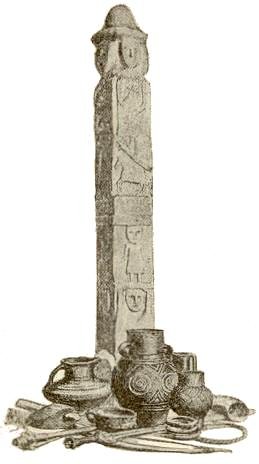
A type fossil of the period is the pottery named after the rampart at Feldberg, wheel-turned ware with comb and wave-band decoration, belonging to the eighth and early ninth centuries. The Feldberg site itself shows how much caution is required: in 1924 Carl Schuchhardt took it for the long-sought Rethra; excavations under Joachim Herrmann demonstrated in 1967 that the fort had been abandoned long before the Rethra period. And the general point Sebastian Brather has made for West Slavic archaeology stands: a ceramic style is a phenomenon of craft and distribution, not a passport. Pots do not name tribes.
The equation Wilzi equals Lutici is so convenient that it appears everywhere. It is at the very least imprecise. The Wilzi confederation disintegrated by the middle of the tenth century; the Lutici league emerges only after the Slavic revolt of 983 and becomes tangible in Adam of Bremen. More than a century separates them.
More important than the interval is the difference in constitution. The Wilzi had an overlord with whom one could negotiate – which is exactly what made a submission possible in 789. The Lutici league had no central leadership but an assembly, and its tribes decided together. A strand of scholarship going back to Wolfgang H. Fritze therefore regards the Lutici not as legal successors but as a new formation on part of the former Wilzi territory. Overlap in space is not continuity.
All of this took place on our doorstep: on the Havel and the Spree, on the Peene and the Tollense, along the Baltic coast between Demmin and the Oder. It is north German history, not a remote chapter. And it is a good test of how we handle the past in general. We know the Wilzi solely through the eyes of those who marched against them; we know not a single name of their constituent tribes; we do not know for certain where their most important stronghold stood. Naming that honestly costs nothing. It buys a clear view of the gaps – and here the gaps are the most honest thing the record has to offer.
The name appears in 789 as Wilze in the Royal Frankish Annals. In that year Charlemagne led an army of Franks, Saxons, Frisians, Sorbs and Obodrites against the confederation; the overlord Dragovit opened his stronghold, handed over hostages and swore an oath of loyalty, and further princes followed. Einhard states expressly in the Vita Karoli Magni that Wilzi is the Frankish term and Welatabi the self-designation. The Bavarian Geographer records ninety-five civitates and four regiones for the Vuilci. Also attested are the defection of the Linones and Smeldingi in 808, the Obodrite counterstroke of 809, the destruction of the Frankish fort of Hohbuoki by the Wilzi in 810, the campaign of 812, and the succession dispute over Milegast and Cealadragus in 823, decided by Louis the Pious. The last narrative mention stands under 839.
The name Wilzi is widely said to derive from the Slavic word for wolf. That is an interpretation, not a secure etymology; scholarship leans rather towards a root meaning high or great. The fortress name Dragowitburg is a modern coinage – the sources say only civitas Dragawiti, and its location remains open between the Peene and the Havel regions. Regnal dates for Dragovit such as 740 to 810, together with tribute payments and admitted missionaries, come from later literature rather than from the annals. Wilzi and Lutici are not the same thing: more than a century separates the collapse of the one from the appearance of the other, and their constitutions differ fundamentally. The Anglo-Saxon table of peoples equates Wilzi and Hevelli – an error made at a distance, since the continental sources keep them apart. And when Widukind of Corvey lists the Wilzi among the peoples made tributary by Henry I in 928 or 929, this is read today as glorification of Henry by comparison with Charlemagne; Henry I never led a campaign against the Wilzi.

The Liutizi · The Abodrites · The Hevelli · The Redarii · The Rani (Rügen) · The Sorbs · The Wagri.
All History & Finds articles →
Many call the Varus battle the „big bang of Germany". Yet another battle shaped our lands far more deeply – one in …
Read more →