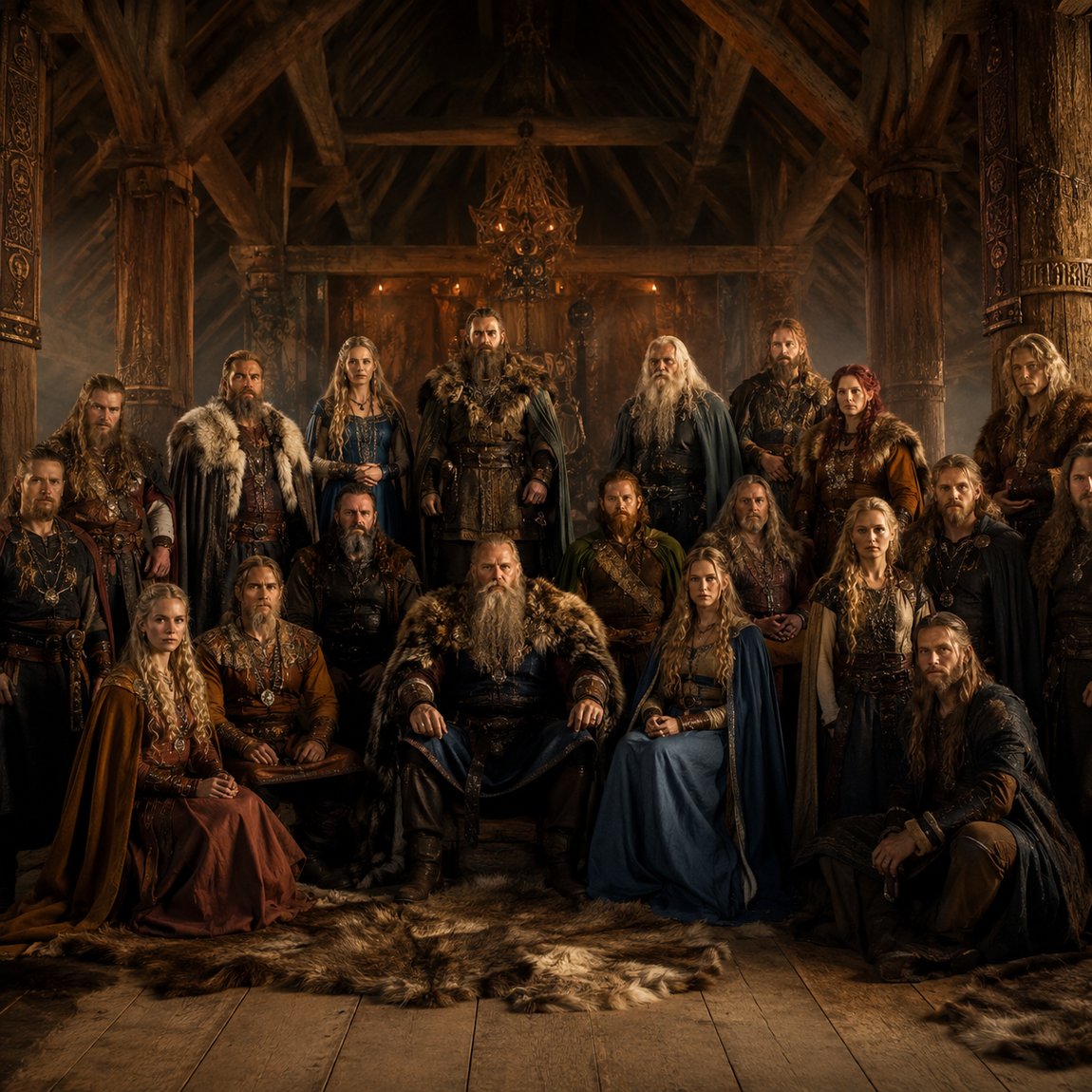
Who were the gods of the Viking Age really – and how many were there anyway? This overview is a reference work: it sorts the Norse gods into Aesir and Vanir, introduces the most important figures in short portraits, and links to the individual articles for the depth. First, a note of caution: much of what sounds so tidy today we owe to Snorri Sturluson in the 13th century – the old gods were far more layered and contradictory than any table can show.
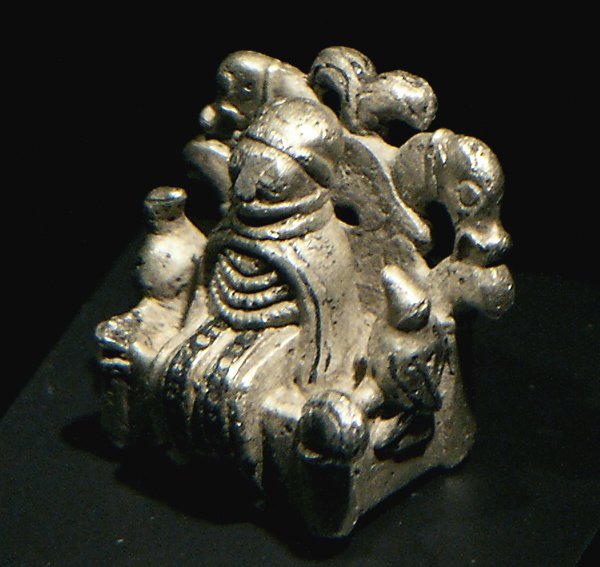
People like to picture the Norse divine world as a neatly ordered shelf: here the war god, there the goddess of love, behind them the thunder god with his hammer. That very picture is the first mistake. The people of the Viking Age did not dedicate a dictionary to their gods; they wove their names into cult sites, weekdays and sagas. What we call "knowledge of the gods" today is a reconstruction from fragments – from skaldic verse, runestones, place names and, above all, two Icelandic collections of texts written down centuries after the conversion.
This article is not meant to be a second great pantheon portrait, but a signpost. It structures the world of the gods, gives a short portrait of each major figure, and sends you to the relevant individual article for the full story. If you are looking for the goddesses specifically, you will find them gathered in the hub of Norse goddesses.
The Norse sources know two families of gods. The Aesir (Old Norse æsir) are the gods around Odin: rule, war, law, poetry, order. The Vanir (vanir) stand for fertility, prosperity, sea and weather – among them Njörðr, Freyr and Freyja. According to tradition, the first war in the world raged between the two kindreds, the War of the Vanir, which ended with a peace and an exchange of hostages: the Vanir went to live among the Aesir, and since then both have been worshipped together.
This very exchange explains why the distinction blurs in practice. Freyr and Freyja count as Vanir, yet dwell among the Aesir; Njörðr sits in the council of the gods. So anyone asking "Is Freyja an Asyn or a Vanir?" gets an honest answer only with a "both, in that order." A fuller placing of the two kindreds is given in the pantheon article.
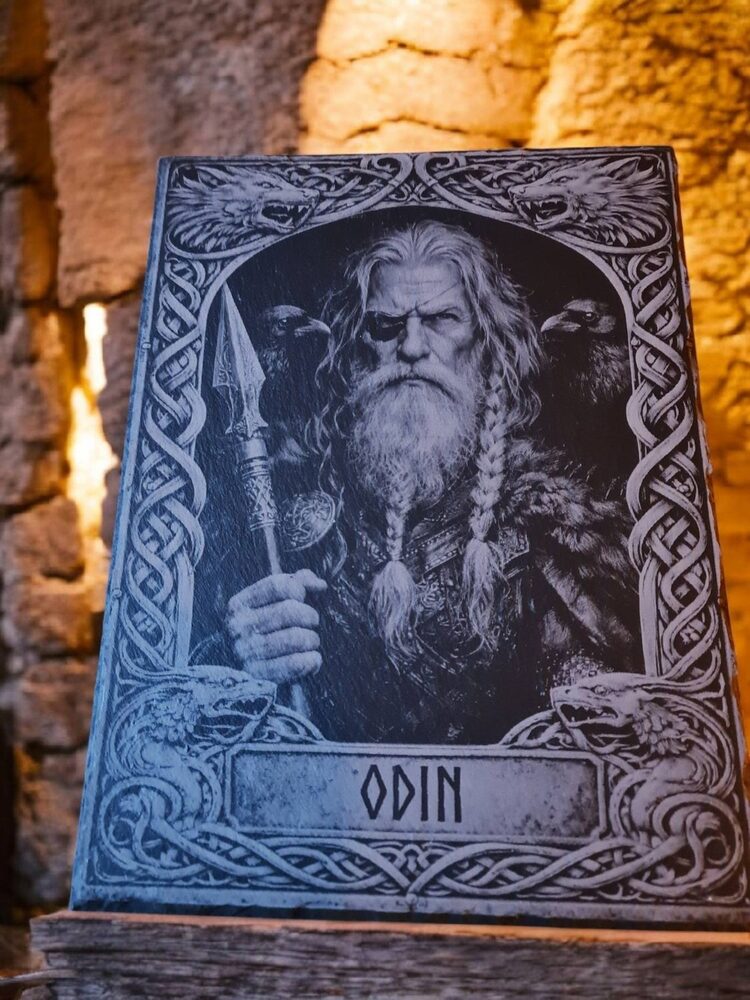
At the top stands Odin, yet "war god" falls far short. He is the god of poetry and ecstasy, of runes and wisdom, ruler of Valhalla and at the same time a restless wanderer who gave an eye for a drink from Mímir's well and hung nine nights on the World Tree to win the runes. Odin is cunning, uncanny, unreliable towards his own heroes – a god who raises kings up and lets them fall. Anyone who imagines him only as a bearded warlord has missed half of him. His continental counterpart is Wodan (see below).
Thor (Old Norse Þórr) was probably the god closest to the common people of the North. With the hammer Mjöllnir he holds the giants in check; he stands for weather, protection, order and sheer strength. Thor's-hammer amulets are among the most common cult objects of the Viking Age, and the consecration formula Þórr vígi ("may Thor hallow") appears on several runestones. Where Odin surrounded kings and skalds, Thor was the god the farmer and the seafarer turned to. His continental relative is Donar.
Tyr (Týr) is the god of law and the oath – the god who laid his hand in the jaws of the wolf Fenrir so the gods could bind him. His name is the oldest attested Germanic divine name of all and lives on in Tuesday.
Baldr is the radiant, beloved son of Odin, whose death through Loki's schemes heralds the end of the world – one of the most moving tales of the Edda. Heimdall is the watchful guardian at the bridge Bifröst, who will blow the Gjallarhorn at Ragnarök; he sees and hears almost everything. Bragi, finally, is the god of the poetic art, the skald among the gods – a link between the world of the gods and the craft of verse.
No figure resists every pigeonhole as much as Loki. He lives among the Aesir yet is of giant descent – neither wholly one nor wholly the other. Loki is the cunning boundary-crosser, helper and destroyer in one: sometimes he procures the gods their most precious treasures and rescues them from self-inflicted trouble, sometimes he sets in motion the disaster that leads to Baldr's death and thus to the end of the world. He is father of the Midgard Serpent, the wolf Fenrir and the death-goddess Hel – and at the same time, in the shape of a mare, mother of Odin's eight-legged steed Sleipnir. Loki is no "devil" of the Edda, even if later Christian interpretation liked to read him that way; he is the necessary unrest in the system, without which the stories would stand still.
Freyr is the Vanir god of fertility, peace and the good year – a god one asked for harvest and prosperity, connected with sun, rain and the wealth of the farmsteads. Snorri calls him the foremost of the Vanir; his sacred animal is the boar, his folding ship Skíðblaðnir a marvel made by the dwarves. His father Njörðr is the god of the sea, of seafaring and of the riches that come from trade and fishing; whoever wanted a good voyage and full nets called on him. Both show that the North knew not only war and Valhalla, but equally the sober plea for peace and prosperity (ár ok friðr) – the formula tied to the great sacrificial feasts. Freyr's sister Freyja is the best-known Vanir goddess – her portrait belongs in the goddesses' hub.
Not every god has a great myth. Ullr is the god of the bow, the yew and winter – probably very old and once important, yet barely tangible in the stories; his name survives in many Swedish place names.
Vidar and Vali are the silent avengers: Vidar slays the wolf Fenrir after Odin's fall, Vali avenges Baldr – both survive Ragnarök and carry the world into the new age. Forseti is the god of the verdict and of reconciliation, whose hall Glitnir is said to be the best place for a just judgement. Hœnir, finally, gave humankind its wit (óðr) according to the Völuspá, accompanied Odin at the creation of Ask and Embla, and survives the end of the world as one of the few gods – strikingly often silent and hard to grasp.
The goddesses of the North deserve a space of their own, and they get it in the hub of Norse goddesses. There you will find Frigg, queen of the Aesir and Odin's wife; Freyja, the mightiest Vanir with her ties to love, death and magic (seiðr); Idun, keeper of the apples; Sif with the golden hair; and a whole series of lesser figures whom Snorri lists. In the Gylfaginning Snorri states expressly that the goddesses are no fewer and no less holy than the gods – a hint at how incomplete our picture of the goddesses is today.
"Twelve are the divine Aesir; no less holy are the goddesses, and no less mighty in power."Paraphrased after Snorri Sturluson, Gylfaginning (Prose Edda), 13th c.; rendering following Simrock 1851
To the question "How many Norse gods were there?" there is no clean answer. In his Prose Edda Snorri likes to count twelve leading Aesir and just as many goddesses, yet even in his own work more names appear than fit into those groups of twelve. The Grímnismál lists halls and figures, the Þulur (name-lists of the skalds) string together dozens of by-names. Some "gods" may be no more than by-names of Odin; other figures are so thinly attested that we do not know whether they ever enjoyed a cult. The honest answer is: there was no fixed number and no canon – the world of the gods was a living, regionally varied web.
Knowledge of the gods is not only a list of names but also a matter of practice. The people of the Viking Age did not worship their gods in great stone temples on the Roman model, but at farmsteads, in halls and at holy places in the landscape – at groves, springs and stones. The central ritual was the blót, the sacrifice: a shared feast of drink, food and the plea for "a good year and peace." Which god one called on depended on the concern and the region. The farmer asked Thor for protection and Freyr for the harvest, the seafarer asked Njörðr for a calm crossing, the skald and the king asked Odin for poetry, victory and lasting fame. There was no priestly caste in the Christian sense; often the master or mistress of the farm was also the leader of the cult. This down-to-earth quality explains why the cult left its mark in place names, amulets and runestones – and hardly in dogmatic texts. More on this in the overview of Germanic religion.
The Norse gods did not fall from the sky – they are the Scandinavian form of a shared Germanic heritage. Odin corresponds to the continental Wodan (attested in the Second Merseburg Charm and in Wednesday – "Wodan's day"). Thor corresponds to Donar (Thursday), Tyr to the old sky- and war-god Tiwaz/Ziu (Tuesday). How these names hang together and what the votive stones on the Lower Rhine reveal is treated in detail in the articles on Wodan, Donar and Ziu and on Germanic religion.
What matters is the emphasis on "related, not identical": the continental Wodan of the 8th century and the Icelandic Odin of Snorri's Edda are separated by centuries, language areas and an entirely different source environment. One must not simply pull the rich Norse mythology over the thinner continental evidence – nor the other way round.
Hardly any image sits as firmly as that of clearly divided departments: Thor = thunder, Freyja = love, Tyr = war. It was never that tidy. Odin is a war god and a poet's god and a sorcerer and a god of the dead; Freyja has to do with love, with death (she chooses half the slain) and with magic. The gods of the Edda are contradictory, layered figures, not heads of department.
Treat this page as a map. For the great stories go to Odin, Thor and Loki, the god at the edge – that cunning boundary-crosser who is neither wholly Ase nor wholly giant, who sometimes saves the gods and sometimes drives them to ruin. For the Vanir go to Freyr and Njörðr, for the goddesses to the goddesses' hub, for the continental roots to Germanic religion. And if you are after the big picture, the pantheon article is waiting.
At Glanz & Gravur we meet these gods daily as motifs – on slate plaques, lanterns and rune sets. It matters to us to show them honestly: as what the sources allow, and not as fantasy kitsch. For the old gods of the North are strong enough that they have no need of invention at all.
Odin · Thor · Loki · Freyr – god of fertility · The Norse pantheon · Norse Goddesses · Wodan, Donar & Ziu.
All History & Finds articles →
Somewhere a story must begin. For the kingdom of Denmark this beginning is a man named Gorm – Gorm the Old, the first …
Read more →Few stones shaped early-medieval prestige craft the way deep-red garnet did. Sliced wafer-thin and set into golden …
Read more →In 865 an army landed in England that did not want to raid and sail home, but to stay: the „Great Heathen Army". Two …
Read more →