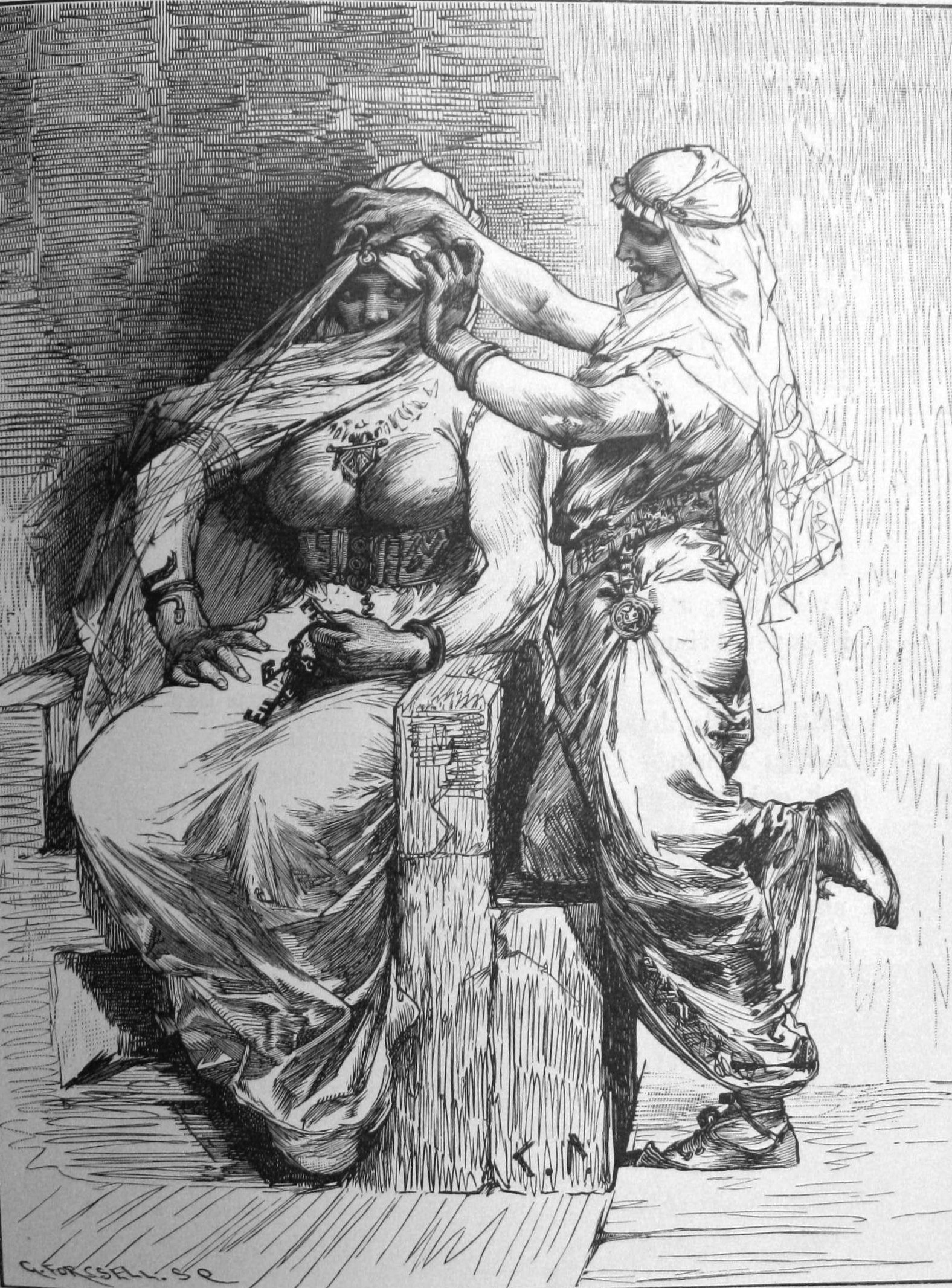
A god wakes up and reaches into empty air. The hammer that keeps the giants out of Asgard is gone, and the thief wants the goddess Freyja as ransom. What follows is probably the funniest piece in the Poetic Edda: 32 stanzas in which bearded Thor is tied into bridal linen, eats an ox and eight salmon, and ends by killing an entire family of giants. This article walks through the poem stanza by stanza and then separates what the text says from what scholars have made of it. How old is Þrymskviða? Why does Snorri never mention it? And does the famous hammer blessing prove a wedding custom?
Þrymskviða ("the lay of Þrymr", often anglicised as Thrymskvida) survives in a single medieval manuscript: the Codex Regius of the Poetic Edda (GKS 2365 4to), written in Iceland around 1270. According to Edward Pettit, editor of a recent dual-language edition, it occupies folios 17r to 18r, between Lokasenna and Völundarkviða. More on the manuscript is in our overview of the Edda.
The poem has 32 stanzas in fornyrðislag, "old story metre": short alliterating lines without end rhyme, the standard narrative metre of eddic verse. Henry Adams Bellows merges two stanzas, splits another and counts the closing line separately, which gives him 33. I follow the numbering of Guðni Jónsson's edition, as does our source archive with the full text in Old Norse, Karl Simrock's German and Bellows's English.
The first stanza begins without any preamble. "Angry was Vingþórr when he awoke and missed his hammer"; he shakes his beard, shakes his hair, and "the son of Jörð" – Earth – gropes about him. Vingþórr is a byname of Thor, as is Hlórriði. In stanza 2 Thor tells Loki first, in a sentence that sums up the situation: what nobody on earth or in heaven knows – áss er stolinn hamri, "the god has been robbed of his hammer".
The two ask Freyja for her fjaðrhamr, the feather-coat that gives its wearer flight (st. 3). Freyja hands it over without hesitation: she would give it even if it were made of gold, and lend it even if it were silver (st. 4). Loki flies off, "the feather-coat whirred", out of the courts of the Æsir and into the world of the giants (st. 5).
There Þrymr sits on a mound, "lord of the thurses" (þursa dróttinn; thurs is one of the words for giant), twisting golden leashes for his dogs and trimming his horses' manes (st. 6). Þrymr asks how things stand with the Æsir and the elves and why Loki has come alone to Jötunheim; Loki answers that things stand badly and asks straight out about the hammer (st. 7). He has hidden it "eight leagues beneath the earth", and nobody will get it back who does not bring him Freyja as his wife (st. 8).
How Þrymr got the hammer the poem does not say. Loki flies back and Thor intercepts him in the middle of the courtyard (st. 9). He demands the news at once, "in the air", and adds a proverb: a man who sits forgets his story, and a man who lies down tells lies (st. 10). Loki reports (st. 11), and the two go to Freyja a second time.
This time Thor does not ask, he orders: "Bind on the bridal linen, Freyja; we two shall drive to Jötunheim" (st. 12). Freyja grows angry and snorts, the whole hall of the Æsir shakes, and "the great necklace of the Brísings" bursts (st. 13). People would think her the most man-crazed of women (vergjarnasta), she says, if she drove with Thor to the land of the giants.
The gods and goddesses gather at the thing, the assembly, and deliberate how Hlórriði might recover his hammer (st. 14). This stanza recurs almost word for word at the opening of another eddic poem, Baldrs draumar, as the Swedish historian of religion Tommy Kuusela also notes. Such overlaps show a poet working with fixed formulas.
The idea comes from Heimdall, "whitest of the Æsir", who saw far ahead "like the other Vanir" (st. 15): bind Thor in bridal linen, let him wear the great Brísing necklace, let keys jingle at his side and women's clothes fall about his knees, broad stones sit on his breast and his head be neatly dressed (st. 15–16).
Thor resists in a single sentence, the most important one in the poem: Mik munu æsir argan kalla – "the Æsir will call me argr if I let myself be bound in bridal linen" (st. 17). Simrock translates "weibisch", Bellows "unmanly". Loki, "Laufey's son", cuts him short: be silent, Thor; giants will soon be living in Asgard unless you fetch your hammer (st. 18). Stanza 19 repeats Heimdall's list as action, and in stanza 20 Loki volunteers to come along as maidservant (ambótt).
One detail is lost in translation. In stanza 12 Thor says "we two" to Freyja with tvau, the neuter form that Old Norse uses for a pair made up of a man and a woman. For Loki's line in stanza 20 Guðni Jónsson prints tvær, the feminine form, "we two women"; Pettit reads tvau there as well and remarks that Loki thereby classes one of the two as female. Either way, the grammar is in on the joke.
The goats are driven home and hurried into harness; mountains break, the earth burns with flame, "Odin's son drove to Jötunheim" (st. 21). Þrymr meanwhile has the benches strewn with straw and announces the bride: Freyja, "Njörðr's daughter from Nóatún" (st. 22). He owns gold-horned cows, jet-black oxen, treasures and necklaces in plenty – only Freyja was missing (st. 23).
In the evening ale is carried in for the giants. The bride eats one ox, eight salmon and all the dainties meant for the women, and "Sif's husband" drinks three casks of mead (st. 24). Thor is named after his wife Sif here of all places. Þrymr never saw brides bite more sharply, nor a maiden drink more mead (st. 25). The "very clever maidservant" has the answer ready: Freyja ate nothing for eight nights, so eager was she for Jötunheim (st. 26).
Þrymr bends under the linen, wanting a kiss, and leaps back the whole length of the hall: why are Freyja's eyes so terrible? Fire seems to burn from them (st. 27). Loki again: for eight nights she did not sleep (st. 28). Eight leagues, eight salmon, eight nights – the number runs through the poem. Two suspicions, two excuses in identical wording: comic technique.
First a minor character steps in: "the wretched sister of the giants", who dares to ask for a bridal gift. The bride should slip red rings from her hands if she wants her affection (st. 29). Then Þrymr speaks the poem's most quoted words:
Then loud spake Thrym, the giants' leader:
"Bring in the hammer to hallow the bride;
On the maiden's knees let Mjollnir lie,
That us both the band of Vor may bless."Þrymskviða, st. 30, translated by Henry Adams Bellows (The Poetic Edda, 1923)
The original of the last line is vígið okkr saman Várar hendi, "hallow us together by the hand of Vár" – a goddess is named. Bellows keeps her, as "Vor"; Simrock's German smooths her away into "according to marriage custom".
Hlórriði's heart laughs in his breast when he, "the hard-minded one", recognises the hammer; he kills Þrymr first and then crushes the giant's whole kin (st. 31). He kills the old sister too: she got a blow instead of shillings and a hammer stroke instead of many rings. "So Odin's son came by his hammer again" (st. 32).
Þrymr exists practically only in this poem. Rudolf Simek's dictionary glosses his name as "noise". Outside Þrymskviða he appears in the þulur, the name lists appended to Snorri's Edda, and according to Simek (cited here at second hand) that entry probably derives from the poem itself. More on the words for giants is in the article on the giants.
Loki is no antagonist here but Thor's helper: he flies, negotiates, persuades and lies for him. That fits a skaldic stanza quoted in Snorri's Skáldskaparmál which, as Pettit notes, calls him "Thor's confidant" (Þórs rúni). That he stole the hammer himself is not in the poem. More in our portrait of Loki.
Freyja appears twice and shows two faces: generous with the feather-coat, immovable when asked to become a giant's bride. Heimdall has exactly one scene. The line that he sees ahead "like the other Vanir" is a puzzle, since he otherwise counts among the Æsir. Pettit allows two explanations: the poet saw no sharp difference between Æsir and Vanir, or he knew a tradition now lost.
The necklace is called men Brísinga in the poem, "neck-ornament of the Brísings". In stanza 13 it bursts when Freyja rages; in stanzas 15 and 19 it is part of the disguise: whoever wears it is taken for Freyja. Where it came from Þrymskviða does not say; that is the subject of the article on Brísingamen.
Stanza 30 makes three statements. The hammer is to be carried in "to hallow the bride" (brúði at vígja); it is to be laid in the maiden's lap or on her knees (í meyjar kné); and the couple are to be hallowed together "by the hand of Vár". According to Snorri's Gylfaginning, Vár is a goddess who listens to the oaths and agreements made between men and women and takes vengeance on those who break them. The verb vígja, "to hallow, consecrate", is used of Thor elsewhere as well: he hallows the hides of his goats and Baldr's pyre with the hammer, and some runestones ask Thor to hallow the runes. See the article on Thor's hammer.
Older scholarship concluded from this that in the pre-Christian North a bride was hallowed with a hammer. Three objections stand against it. First, Þrymskviða is the only text that describes such an act. Second, the scene belongs to a comedy and is its hinge: somehow the hammer has to come within Thor's reach. Third, the weight of the evidence depends on the age of the poem. If it is late, a Christian poet may have invented the scene or derived it from the familiar motif of the hallowing hammer.
Pettit calls the hammer an "obviously phallic object" and thinks it possible that laying it in the lap symbolises the consummation of the marriage. He also points out that vígja can carry a threatening overtone – "to consign to perdition" – so that Þrymr unwittingly orders his own end. The same hallowing formula is at issue in our article on the Canterbury charm. On weddings generally, see rites of passage in the pre-Christian North.
The word argr (also ragr; the noun is ergi) was among the gravest insults Old Norse knew. Pettit describes it as a strongly pejorative adjective denoting "perverse deviance from one's rightful nature": it could brand a man as effeminate for wearing women's clothes, as a coward in battle, or as the one who willingly took the woman's part in sex between men. The fundamental study is by Preben Meulengracht Sørensen (in English as "The Unmanly Man", 1983); Kuusela quotes from it the sentence that the mere suggestion of a man in a female role was enough to symbolise unmanliness. On such slander in law and society, see insults and níð.
So stanza 17 is more than vanity: Thor fears a charge that could strip a man of his honour. How to read the poem from there is disputed. Pettit calls it the height of eddic humour and speaks of a "drag queen" comedy magnified by Thor's exaggerated masculinity.
Kuusela argues the other way: Thor is drawn as emphatically masculine throughout and is never actually treated as effeminate. Nobody calls Thor argr; he only fears it. Under the linen his hunger, thirst and stare stay the same, and the poem calls him "Odin's son" and "Sif's husband" while he wears the dress. The disguise lasts exactly as long as the hammer is missing. Loki, who in other myths takes the shape of a woman or a mare himself, becomes a maidservant without a word of protest and so forms the quiet contrast. In Lokasenna, Odin and Loki throw this very word argr at each other.
The manuscript fixes only the latest limit: the poem existed by about 1270. Before that, according to Pettit, proposals range from the ninth century to the middle of the thirteenth. Older scholarship regarded Þrymskviða as heathen and very old; Finnur Jónsson, as Kuusela reports, placed it in ninth-century Norway. In favour of age stand the frequent filler particle um/of before verbs, regarded as a linguistic fossil, and some half-lines that only scan with older, longer word forms. Pettit considers both uncertain: a poet can archaise on purpose.
The other side points to the silence of the rest of the tradition. Snorri Sturluson, who collected many Thor stories around 1220, does not mention the theft of the hammer, and no heathen skald alludes to it. Add the burlesque tone, the ballad-like repetitions and phrases that also occur in other eddic poems. Jan de Vries, according to Kuusela, took the whole poem as a joke; Peter Hallberg, as Kuusela reports, saw a lampoon by a Christian author and proposed Snorri himself. Kuusela gives the mid-thirteenth century as the usual dating; in his account the folklorist Frog sees a mythological burlesque for a Christian audience in thirteenth-century Iceland. McKinnell for his part, according to Pettit, argued for an origin in the Anglo-Norse Danelaw with later revision in Iceland.
Two objections to the late dating deserve mention. Kuusela remarks that comedy is no indicator of age: mockery of the holy exists in Christian traditions too, and irreverent stories about gods also stand in eddic poems regarded as old. And missing evidence does not prove that a story was unknown. The formula most likely to command agreement is the one John Lindow found in 1997 (quoted here from Aurelijus Vijūnas): a very late reworking of very early materials. The text would then be young, the tale not. On why eddic poems are so hard to date, see How Christian is the Edda?
Folktale research supports the age of the story. It classifies the plot as tale type ATU 1148B, "The Theft of the Thunder Instrument", combined with the motif of the substituted bride. Pettit points to related stories in Baltic tradition. Within Norse tradition it resembles three stories Snorri knows: the abduction of Iðunn by Þjazi, in which Loki likewise flies in Freyja's feather-coat; Thor's journey to Geirröðr, which he has to undertake without his hammer; and the building of Asgard's wall, where a giant demands Freyja as his wage. Giants desiring goddesses and gods relying on cunning are stock elements; only the wedding dress is new.
In Iceland the story was recast in the late Middle Ages. Þrymlur is a cycle of three rímur – rhymed, stanzaic narrative poems, a form cultivated in Iceland for centuries. The editors of the 2020 critical edition, Lee Colwill and Haukur Þorgeirsson, place it between about 1350 and 1450, with caution. It survives only in Staðarhólsbók (AM 604 g 4to), a manuscript of rímur from the middle of the sixteenth century. According to Andrew McGillivray's review, Þrymlur follows the eddic poem closely in structure but drops Thor's objection to the disguise and paints the scenes in Jötunheim more coarsely and violently.
On the mainland the story lived on as a ballad, listed in the catalogue of Scandinavian ballad types as E 126. The Danish version, "Tord af Havsgaard", is number 1 in Svend Grundtvig's collection of old Danish ballads; according to Vijūnas its oldest printed text appeared in 1591 with Anders Sørensen Vedel. The Swedish version, "Tors hammarhämtning", is said to be transmitted from the seventeenth century (I have seen that only on Wikipedia); the oldest Norwegian record, "Thore Kalls viise" from Hallingdal, dates from 1750 according to Vijūnas. The giant is Tossegreve in Danish and Norwegian and Trolltram in Swedish, and Freyja turns into forms such as "Frøieborg". The ballads also have a scene the eddic poem lacks: many giants haul in the heavy hammer, and the bride lifts it with ease – with one hand or with two fingers, depending on the version.
How the versions relate is open. Sophus Bugge and Moltke Moe derived the ballads directly from Þrymlur in 1897. Vijūnas, who compared seventeen versions, regards Þrymskviða as the most archaic text overall but holds that some scenes are better preserved in later versions.
Jón Ásgeirsson's opera "Þrymskviða" was first performed in 1974; it counts as the first Icelandic opera. The poem is often linked with the Eyrarland figure, a seated bronze man a little over six centimetres tall, usually dated to around the year 1000 and found near Akureyri: it is said to show Thor at the moment he grips the hammer on his knees. That is a suggestion, not a finding; Pettit calls even the identification as Thor only "possible".
What is Þrymskviða about? The giant Þrymr steals Thor's hammer and demands Freyja as his bride. Freyja refuses, so on Heimdall's advice Thor goes to Jötunheim disguised as the bride, with Loki as maidservant. When the hammer is brought in to hallow the bride, Thor seizes it and kills the giants.
How old is Þrymskviða? It was written down around 1270. Its date of composition is disputed; proposals range from the ninth to the thirteenth century, and the late dating has most supporters today. The story itself is thought to be considerably older than the surviving text.
Why does Snorri not mention the theft of the hammer? That cannot be settled. Either he did not know the poem – it did not yet exist or was not circulating in Iceland – or he left it out. The suggestion that he wrote it himself is one scholar's view without evidence.
What does the name Þrymr mean? It is usually glossed as "noise" or "uproar". Otherwise the giant occurs only in a name list that, according to Simek, probably depends on the poem.
Where can I read Þrymskviða in full? Karl Simrock's German translation (1851) and Henry Adams Bellows's English one (1923) are in the public domain. Both stand alongside the Old Norse text, stanza by stanza, in our source archive.
Thor · Thor's Hammer · Hymiskviða: Thor, the cauldron and the serpent on the hook · Loki · Freyja.
They howled like wolves, wore the pelts of predators and were reckoned the most dangerous fighters of the North: the …
Read more →Utgard-Loki is the giant king of Útgarðr who humiliates Thor with illusions in Snorri Sturluson's Gylfaginning …
Read more →In the late tenth century an Icelander composes a praise-poem for the most powerful man in Norway and calls it "Lack of …
Read more →Almost everything we think we know about the Norse order of the world hangs on a single poem of some sixty stanzas. It …
Read more →