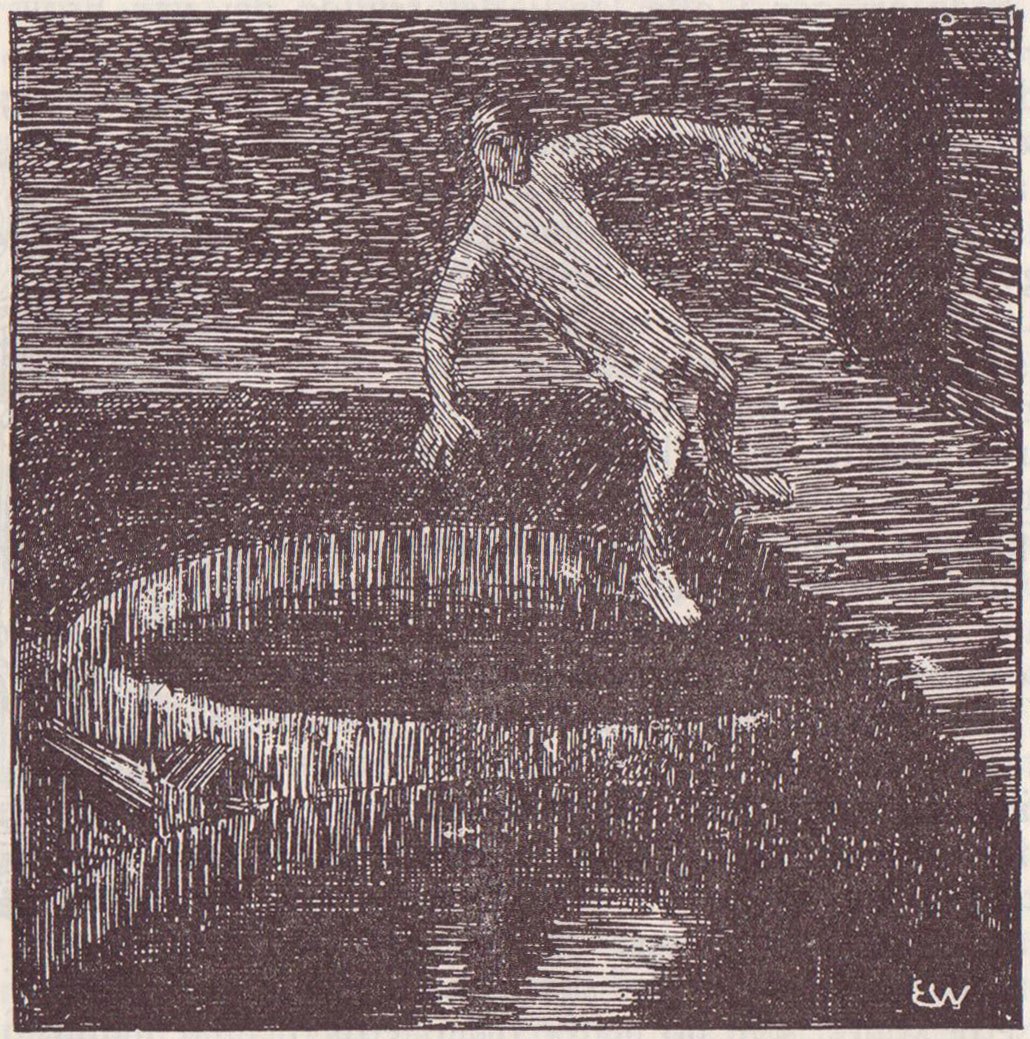
One king drowns in a vat of mead, another follows a dwarf into a rock, a third is sacrificed by his own people for a better harvest. Before them stands an Odin who is no god at all but a warlord and sorcerer from the river Don, who moves north, lays down laws and dies in his bed. This is how Snorri Sturluson opens his book of kings. This article walks through the saga, shows the poem it rests on, and asks how much of it can be tested.
Ynglinga saga is the first piece of Heimskringla, the great collection of kings' sagas attributed to Snorri Sturluson. In the edition by Linder and Haggson (1869–72) its first sentence reads: “Kringla heimsins, sú er mannfólkit byggir, er mjök vágskorin” – the circle of the world, where mankind lives, is much cut by bays. Its first two words later became the title of the whole work.
No source says when the saga was written. “About 1225” and “about 1230” are both in circulation, and both are estimates. I number the chapters as that edition does on heimskringla.no; other editions may differ.
The text falls into two unequal parts. The first thirteen chapters tell of Odin, Njörðr, Freyr and Freyja as people of a distant past. Then comes a long chain of kings, first in Sweden, finally in Norway, and almost every one gets a single thing: the story of his death.
Snorri starts with geography. Great seas reach in from the ocean, and a river divides the continents: its proper name, “at réttu”, is Tanais, but it was once called Tanakvísl or Vanakvísl. Tanais is the ancient name of the Don. The north of this region Snorri calls Svíþjóð, and he fills it generously with giants, dwarfs and “blámenn”, with beasts and dragons of astonishing size.
East of Tanakvísl, in Asia, lies a land called Ásaland or Ásaheimr, and its chief stronghold is Ásgarðr. A chieftain named Odin rules there. Twelve temple priests, “hofgoðar”, stand highest; they are called “díar” or “dróttnar”. The Asgard of myth has become a town on a map. The whole construction hangs on the similar sound of “Æsir” and “Asia”, which is no evidence for a migration.
The method has a name. Euhemerism is the view that gods were originally humans, kings or sorcerers, who came to be worshipped after death. The term goes back to the ancient writer Euhemerus. It let a thirteenth-century Christian Icelander tell the old stories without granting the old gods any reality.
Snorri uses the device twice, and the two versions do not match. In the Prologue to his Edda, whose Old Norse text is in our source archive, Odin comes from Troy, “þar sem vér köllum Tyrkland”. He travels north by way of Saxland and founds Sigtún. He installs a son named Sæmingr in Norway, and in Sweden he is succeeded by a son named Yngvi, from whom the Ynglings descend. In Ynglinga saga Troy is gone. Tyrkland is merely nearby, south of a mountain range. Yngvi is no longer Odin's son but a second name of Freyr, and Sæmingr is the son of Odin and Skaði. The two texts show an author cutting his material to fit each work, not one fixed, ancient tradition of a “migration of the Æsir”.
This Odin is human down to his family troubles: in chapter 3 his brothers Vé and Vili take his wife Frigg while he is away.
Chapter 4 reports the war between Æsir and Vanir. Snorri tells it as a border war between two peoples that ends in a draw and an exchange of hostages. The Vanir give their best men, Njörðr the Wealthy and his son Freyr. The Æsir send Hœnir and with him Mímir. Hœnir is at once made a chieftain in Vanaheimr but decides nothing alone. The Vanir behead Mímir and send the head to the Æsir. The Æsir also receive Kvasir, the wisest of the Vanir.
For details see the Æsir–Vanir war. What matters for Ynglinga saga is that the exchange brings the future ancestors of the Ynglings to the Æsir. Snorri records one awkward detail. Among the Vanir, Njörðr had his own sister as wife, and that was forbidden among the Æsir.
In chapter 5 Odin sets out. Roman leaders, “Rúmverja höfðingjar”, are crossing the world and subduing its peoples. But Odin is “forspár ok fjölkunnigr”, foresighted and skilled in magic, and knows that his descendants will live in the northern part of the world. He travels west into Garðaríki, the lands of the later Rus, then south into Saxland and finally to an island in the sea, at the place now called “Óðinsey í Fjóni”, Odense on Funen.
From there he sends Gefjon to look for land. With oxen she ploughs a piece out of Sweden, and it becomes the island of Zealand. Snorri backs this with a stanza introduced by “Svá kvat Bragi hinn gamli”. The same stanza by the skald Bragi stands in the first chapter of Gylfaginning. Snorri names no poem in either place; assigning it to Ragnarsdrápa is an editorial decision. Odin himself settles at “old Sigtúnir” and hands out residences: Njörðr at Nóatún, Freyr at Uppsala, Heimdallr at Himinbjörg, Thor at Þrúðvangr, Baldr at Breiðablik.
Snorri now lists what Odin could do. He speaks in verse: “mælti hann alt hendingum, svá sem nú er þat kveðit, er skáldskapr heitir” – he said everything in rhymes, as that is now recited which is called poetry. In battle he makes his enemies “blindir eða daufir eða óttafullir”, blind, deaf or afraid. His own men go without mail coats; “þat er kallaðr berserksgangr”. It is a much-quoted passage on the berserker.
In chapter 7 Odin changes shape: “Óðinn skipti hömum; lá þá búkrinn sem sofinn eða dauðr, en hann var þá fugl eða dýr, fiskr eða ormr.” His body lies as if asleep or dead while he is bird, beast, fish or serpent. He carries Mímir's head with him and owns two ravens that he has taught to speak; the names Huginn and Muninn do not appear in the passage as I have seen it. Last comes seiðr, a kind of sorcery. So much “ergi”, unmanliness, went with it that men could not practise it without shame, “ok var gyðjunum kend sú íþrótt” – and so this skill was taught to the priestesses.
How much of this reflects pre-Christian practice is open. The account is there to explain why people took a man for a god.
Chapter 8 is headed “Lagasetning Óðins”, Odin's lawgiving. Snorri traces cremation, mounds, memorial stones and the yearly sacrifices back to one lawgiver.
“Svá setti hann, at alla dauða menn skyldi brenna ok bera á bál með þeim eign þeirra; sagði hann svá, at með þvílíkum auðœfum skyldi hverr koma til Valhallar, sem hann hafði á bál.” – “He laid down that all dead men should be burned and their property carried onto the pyre with them; he said that each man would come to Valhöll with such wealth as he had on the pyre.”
Snorri Sturluson, Ynglinga saga, ch. 8 (chapter count of the edition by Linder/Haggson 1869–72, text from heimskringla.no); translation: our own, from the Old Norse wording
For men of rank a mound was to be raised in their memory, and for everyone in whom there was “nökkut mannsmót”, some manly worth, standing stones. Then the calendar: a sacrifice towards winter for a good year, one at midwinter for growth, a third in summer, “þat var sigrblót”, the sacrifice for victory. All Svíþjóð paid Odin a tax for this, a penny for every nose.
Cremation graves under mounds are archaeologically attested, for instance at Gamla Uppsala. All that follows is that Snorri knew what old graves looked like. The three festivals, too, are set out in this form only in this one late source. On the afterlife itself see Valhalla.
Chapters 9 to 13 let the gods die one by one. First Snorri settles a marriage: Njörðr weds Skaði, she will not stay with him and later joins Odin. One of their sons is Sæmingr; to him, Snorri says with a stanza by Eyvindr skáldaspillir, Earl Hákon the Mighty traced his line. The earls of Lade thus gain a divine ancestor too.
Odin dies in chapter 10 without a fight: “Óðinn varð sóttdauðr í Svíþjóð”, he died of sickness. Before that he has himself marked with a spear point (“geirsoddi”) and declares that he is going to Goðheimr. The Swedes believe he has returned to the old Ásgarðr. Njörðr follows; he too dies of sickness and has himself marked for Odin, and both are burned.
Freyr builds a great temple, “hof mikit”, at Uppsala. In his days the peace of Fróði begins, “Fróða friðr”. His other name is Yngvi, and after him his descendants are called Ynglingar. When he falls ill, his closest men secretly place him in a mound with a door and three windows and claim for three winters that he is still alive. The tribute goes into the mound, the gold through one window, the silver through another.
Freyja outlives them all. She keeps up the sacrifices. Her husband is Óðr, her daughters Hnoss and Gersemi. The prose introduction to Grottasöngr knows the peace of Fróði too, there as the peace of the Danish king Fróði in the time of Augustus; that Fróði visits a Swedish king named Fjölnir.
With Fjölnir, Freyr's son, chapter 14 begins the line of kings who are no longer gods. Here Snorri also names his authority for the first time: “Svá segir Þjóðólfr hinn hvinverski”. Fjölnir is a guest of Fróði on Zealand, gets up drunk in the night, falls into a huge vat of mead, the “mjaðarker”, and dies in it.
His son is mostly called Svegðir in the edition used here, Sveigðir in one passage and in other editions. He has vowed to seek Goðheimr and “Odin the Old”. At a rock a dwarf stands in the doorway and calls him in. The king runs into the stone and never comes out, which fits the dwarfs as dwellers in rock. Vanlandi is trampled by a “mara”, a night spirit, and suffocates. Vísburr is burned in his house by his own sons.
Agni is hanged by his neck-ring in his sleep, Álfr and Yngvi kill each other in the hall, Jörundr is hanged at the Limfjord, Egill is gored by a bull, Aðils falls from his horse at a sacrifice, Önundr is buried by a landslide. Ingjaldr “illráði”, the Ill-Ruler, burns six kings in the “hall of seven kings” at Uppsala in chapter 40 and in the end dies in a fire himself, together with Ása.
Of these kings' victories or laws we hear almost nothing. The chapter survey, which I could evaluate only through a retrieval tool, shows a pattern: where a stanza by Þjóðólfr stands, there is a death story; where none stands, Snorri fills in from other material, such as the fall of Hrólfr kraki in chapter 34.
Under Dómaldi, chapter 18, there is famine. The Swedes hold great sacrifices at Uppsala. The first autumn they sacrifice oxen, and the harvest does not improve. The second autumn they turn to “mannblót”, human sacrifice, and things get worse if anything. In the third autumn the leading men decide that the king is the cause. They kill him and redden the altars with his blood, “rjóða stalla með blóði hans”.
Aun, chapter 29, does not want to die. He sacrifices one son after another to Odin and each time receives more years of life. At the end the text says: “Þá blótaði hann hinum níunda syni sínum, ok lifði þá enn 10 vetr” – he sacrificed his ninth son and lived ten more winters. The Swedes refuse him the tenth. He dies of old age; the saga has a word for it, “Ánasótt”, Aun's sickness.
Óláfr trételgja, chapter 47, sits in Värmland. When famine breaks out the people blame him: he was “lítill blótmaðr”, no great sacrificer. They burn him in his house and give him to Odin for good harvests.
These chapters are the basis for the idea of sacral kingship, in which the ruler answers for harvest and peace with his life. Whether that ever existed as an institution is an old dispute; evidence outside this tradition is thin. For the archaeology see our article on human sacrifice.
Beneath Snorri's narrative lies a poem. Ynglingatal, the “enumeration of the Ynglings”, is traditionally ascribed to the Norwegian skald Þjóðólfr of Hvinir and said to have been composed for Rögnvaldr heiðumhæri, by Snorri's pedigree a cousin of Harald Fairhair. It is usually said to have 27 stanzas in the metre kviðuháttr, each naming a king and his death. It survives as a whole only because Snorri builds it into his prose stanza by stanza.
Its age is contested. Older scholarship – Keyser, Munch, Gustav Storm and Finnur Jónsson are named – placed the poem in the late ninth century. In 1990/91 Claus Krag argued that it was composed only in the twelfth century; in the deaths of the first four kings he saw the four elements of Empedocles and thus learned influence. This met firm opposition. Dagfinn Skre backs the counter-arguments, among them that its places and names mattered only until the Viking Age. Olof Sundqvist pointed to traces of a Swedish tradition in kennings, place names and personal names. Bergsveinn Birgisson holds the poem to be old but, given the often ridiculous deaths, not a praise poem. I know these positions only from the English Wikipedia summary, not from the works themselves.
The prose, then, is a work of the thirteenth century, and the stanzas may be some three hundred years older. What Snorri adds in between, for instance that Fjölnir was drunk, may come from lost stories or from his own reading of obscure kennings.
Snorri is not the only one who knows the line. Historia Norwegiae, a short Latin history of Norway, contains its own version of the Yngling list. Its date is uncertain; according to the Wikipedia account most scholars favour a time between 1170 and 1220. It survives in a single manuscript written about 1500 to 1510 and now kept in Edinburgh.
Of Fjölnir the Latin writer says only that he was “in dolio medonis dimersus”, drowned in a vat of mead, which agrees with Snorri. On Dómaldi he differs: “Sweones suspendentes pro fertilitate frugum deæ Cereri hostiam obtulerunt”, the Swedes hanged him and offered him to the goddess Ceres for the fertility of the crops. A rope instead of blood on altars, and a goddess with a Roman name: two authors understood the same tradition differently.
Briefer still is Ari Þorgilsson's Íslendingabók from the early twelfth century, which ends with a bare list of names. It reads: “iii Freyr. iiii Fjölnir. sá er dó at Friðfróða. v Svegðir”. A century before Snorri, then, Fjölnir is already the one “who died at Peace-Fróði's”. The line is therefore older than Ynglinga saga; for the elaborated stories that cannot be shown.
Can any of these kings be found in the landscape? According to the saga Aun, Egill and Aðils are buried at Uppsala. Linking the three great mounds there with them is a twentieth-century hypothesis; see Gamla Uppsala.
Óttarr is named most often. In chapter 31 Snorri says that Óttarr sailed to Denmark, raided in Vendsyssel and fell in the Limfjord. The Danes lay his body on a mound, carve a wooden crow and send it to Sweden: their king was worth no more. “Þeir kölluðu síðan Óttarr vendilkráku”, from then on he was called Vendel-crow. Historia Norwegiae likewise puts the death in a “Vendel” in Denmark. The stanza Snorri quotes names Vendil and the weapons of the Danes, “fyrir Dana vápnum”, but not where that Vendil lies.
There is a parish called Vendel in Swedish Uppland, which gave the Vendel Period its name, and in it a large mound called Ottarshögen. It was excavated in 1914–16. Sune Lindqvist reported a wooden vessel with cremated remains, few grave goods and a pierced, worn Roman gold solidus struck no later than 477. The name of the mound, however, is attested only from the seventeenth century. Whether it preserves old memory or comes from scholars who knew their Snorri remains open.
There is also a witness from outside. The Old English Beowulf has an Ohthere of the Swedish royal house with a son Eadgils, though it never calls him king. The names correspond to Óttarr and Aðils. Stories about the two were thus known beyond Scandinavia. No date and no grave follows from that.
After Ingjaldr the Swedish line breaks off. Óláfr trételgja sits in Värmland, Hálfdan hvítbeinn becomes king in Norway, dies at Þótn and is, the saga says, buried at Skíringssalr. Hálfdan the Mild is said to lie at Borre. The scene is now Vestfold on the Oslofjord. The line runs on towards Guðröðr the Hunter-King, Óláfr Geirstaðaálfr and Rögnvaldr heiðumhæri; I have not seen the ending itself, as the retrieved text broke off in chapter 53.
The next saga in Heimskringla belongs to Halfdan the Black, father of Harald Fairhair. The aim is reached: the thirteenth-century Norwegian royal house has a pedigree running back through Uppsala to Freyr and Odin. Matching the great mounds of Vestfold with names from this list is, in the words of the survey article on Ynglingatal, at best educated guessing. For the later, better attested rulers see the Nordic kings.
What is Ynglinga saga? The first saga of Heimskringla. It tells the legendary prehistory of the Norwegian royal house, from Odin in Asia through the kings at Uppsala to Vestfold.
Who wrote it, and when? It is attributed to Snorri Sturluson and usually placed around 1225 to 1230. There is no exact date.
Is Odin a god in Ynglinga saga? No. He is a war leader and sorcerer whom people worship as a god after his death. This reading is called euhemerism.
What is Ynglingatal? A poem ascribed to Þjóðólfr of Hvinir that lists the deaths of the Yngling kings. Snorri quotes it as evidence. Its date is debated.
Are the kings of the saga historical? For the Swedish kings this cannot be shown. Óttarr and Aðils come closest, because their names also occur in Beowulf. Nothing beyond the names is secured by that.
Heimskringla: Snorri's history of the kings · Snorri Sturluson · The war of the Aesir and Vanir · Odin · Freyr – god of fertility.
A sea-giant brews ale for the gods, gold replaces the hearth fire, and in the middle of a sacred peace Loki kills a …
Read more →A thrown stone, a dead otter, a skin stuffed with gold and a dwarf who curses his treasure: the story of Andvari is …
Read more →She comes neither clothed nor naked, neither fed nor hungry, neither alone nor accompanied – and so wins a king …
Read more →Baldr dies when his blind brother Höðr throws a sprig of mistletoe at him – the one plant Frigg never made swear an …
Read more →